VIDEOWatch
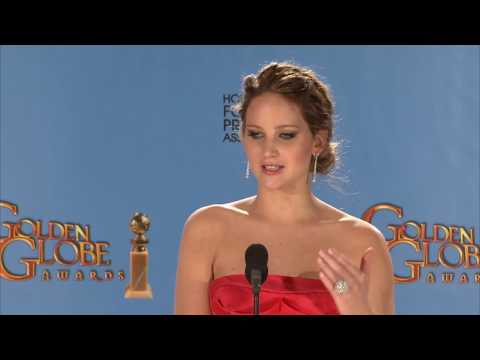
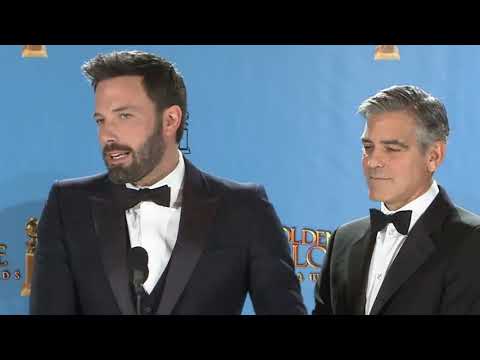
4 clips · 4:14 total
For licensing inquiries please contact reelinintheyears.com. How licensing works →
AUDIOListen
Episode #451 · Ben Affleck, George Clooney, Daniel Day Lewis, Jennifer Lawrence and moreJanuary 2013 · 00:10:25
TRANSCRIPTRead
Show full transcript
0:00Hi. [inaudible] Probably the hardest thing I had to do, directorially anyway, had to do with trying to have three different tones and make them work together as one movie. I was lucky. I was supported by a great cast. I had really good producers who helped me organize what was, for me anyway, kind of a leviathan production: several continents, different cities, a lot of extras, all that kind of... you know, we were sort of a poor man's David Lean movie in that way. But, you know, I got lucky and I'm really pleased. [inaudible] All the President's Men [inaudible]? Well, it sounds like you got us, you know, heavy. No, that was a big influence for the CIA stuff.
0:46We emulated everything from the way they used to move the dolly, to some of the color tones, to that sort of texture of the 70s, to a sort of tone, the way the men kind of talked to one another. And it was an era when it was basically male-dominated offices, whether it was the Washington Post or the CIA, you know, the CIA at that time. There was not one woman that worked anywhere except as a secretary in the whole place. So it was a very different feel, and we used All the President's Men because it was the most perfect, you know, well-done example of that. It was a great thing to know what you're talking about in the era. What was it like... [inaudible] and how did you decide to practice? No, he didn't really... Bob isn't really... I mean, he's really wonderful to work with. He's a very generous, giving actor.
1:33And we just kind of went for it. I just found out the other night at a Q&A, it was the first take, because I remembered the first time that I went in, I did all of the lines right, and then for the rest of the day I was like, ah, I couldn't get all of the sports teams right. So it was actually pretty... and with him, I could actually see his character. I could see him kind of turning around to Tiffany. And he's the ideal... I mean, obviously he's a legend, but he's just an ideal actor to work off of. He's so giving. Okay, so [inaudible] the first time you heard your British accent was after the last day, after the last night. [inaudible] So when did you start the character,
2:18like, in what role did you want to bring to you? The trouble with even trying to answer a question like that, I find, is that everything that comes out of my mouth seems to be a reductive expression of something that... I mean, I still haven't found a way of really understanding myself what happened in the last couple of years. I'm just amazed by the whole thing. And already it's beginning to take on that strangeness, which is not uncommon to me, where you feel really that somebody else did that. But I talked to Steven a good bit before we started
3:04making the film, so it's not like, you know, he discovered me ready-made as Abraham Lincoln. But I think that whole thing, which tends to be spoken about on my behalf, because I try not to talk about it too much, but that whole thing takes on a mystique which is not really representative, to me, of the work itself. Because it seems so clear to me that I and most of my colleagues really do the same thing, in different ways maybe, but we go to these great lengths to try and create a world for ourselves, and within that world we try and create an understanding of the lives that we're expressing in that world. And for me,
3:52that's where the pleasure of the work is. So what would seem crazier to me is to jump in and out of that world, or in and out of the experience of that character, because that's really where I want to be. I guess finally there is some kind of mystery, because it either works or it doesn't work, and you've no idea what makes the difference. But it's just the joy of that work, really. [inaudible] a little bit about that, and how [inaudible] Christoph's [inaudible]? I don't think anyone else could play that. No, nobody could play that, and the character wouldn't have existed if I had never met Christoph. And if Christoph's mother had never met Christoph's father, there would be no King Schultz, that's for sure. I don't even think it was even a conscious decision that, oh,
4:40I'm going to put this German bounty hunter slash dentist into my Black Western. I actually started writing the first scene, and he literally flowed out of the pen fully formed. [inaudible] You have all these crazy lines, like "fortuitous turn of events," "Django and I together." In the film... Talk about crafting, when you sat down with Quentin, looking at this script for the first time, how did you create Dr. King Schultz? I didn't. Quentin did. He created it. You know, if you work like I do, I feel always, in a way, obligated to fulfill the author's intention. So if you have the author sitting next to you, it helps a lot.
5:26Yet I'm not into changing anything. I'm not into trying to drag it to my level. I do my best to live up to what's required of me on account of the text. Hugh, this is for you. [inaudible] how difficult was that? That's crazy. Yeah, no, it's crazy. Don't ever do it again. My trainer had been a bodybuilder, and he said, you know, by the way, if you want to lose like 10 pounds really quick, and particularly from your cheeks, to make your eyes really sunken, just don't drink any liquid for 36 hours. I was like, all right. And about 20 hours into it, I was like, what have I started? This is crazy. Yeah, I was not a good guy to be around that day.
6:15I had a headache from about hour 16, and by 36 hours, it was... do not, anyone, try this. Could I just point out that any suggestion he was making that he was grumpy is a complete lie. This guy has never been grumpy. I have never seen this guy grumpy in 14 weeks, in a year of knowing him. So I just want to put the record straight. So he could probably go without water for 70 hours and still not get grumpy. Back from the acting perspective, what do you bring to the direction that maybe a director from another perspective couldn't bring? So what was the first question? I'm sorry, it was a laugh. What was the first question? [inaudible] I think that's my voice. I see the big picture, not the details. Most actors are detail people, and I'm a macro person, and I love the complete voice of being a director,
7:10so that it sounds like you, it feels like you, it's a full signature. What am I like, and what makes me different? Because I'm an actor, I think that I talk to actors in a different way. I talk to them as if I was one of them, and I'm inside their process. I know how to be inside their process without being invasive. But I also feel that the thing that I bring to directing is that I didn't become a director because I wanted to use fancy cranes and big fancy cameras. I came to it really from the perspective of authentic emotion, and that's how I design my shots, that's how I decide on my locations,
7:59that's how I figure out the costumes, that's how I do the rewrites. It's about the authenticity of the emotions. It's not about, like, wouldn't it be cool if there was an explosion. Yeah, hi. The interrogation scene. [inaudible] It actually was a gift. Lesli Linka Glatter, who's a fabulous dancer, actually, the director, was directing, and she... is that wrong? Did I get that? No, no. She's nominated, she's that fantastic. I didn't read the list, I'm sorry. And she allowed it to run like a piece of theatre, and coming from the theatre, that actually is the best and most productive way to work, for me personally.
8:53So there were very few pickups, and actually we were running takes with multiple actors, because actually the scene is longer than just the scene with Claire. It starts with Rupert Friend. And we were running takes that were lasting 20, 21 minutes long, and we were just running, so it was like rehearsing a play in the theatre and doing a chunk of the play. And that's probably why it's come out as richly as it has. [inaudible] Hi. Well, I think it'd be interesting to see her become a mom. And I'm not just saying that because, you know, I am one. But maybe I am. I am very myopic right now. Now I want all my friends to become moms.
9:38You know, I'm really bossy about it. So I think I just want Carrie to become a mom, because, you know, I can't imagine any other reality now, and I want everybody to join in. It's fun. But, you know, that would be interesting, because it's so antithetical to who she is. But who knows? The writers are much better at this than I am. Congratulations. How close [inaudible] Marty [inaudible]? I feel like they were kind of similar. Oh, that's interesting. I haven't really thought of that. I mean, I know that they both wanted to win at all costs, and they both have the ability to sort of turn a blind eye to truth to make it happen. But for me, that was where the comparisons ended, as far as how I attempted to approach it. But that's interesting. I hadn't thought about that before.
ABOUTThe archive
This interview is part of the Matt Schichter Interviews archive: more than 700 conversations with musicians, actors and filmmakers recorded between 2003 and 2014, beginning with The BackStage Pass, one of the first podcasts (2003). The archive also became Matt's short documentary Lennon or McCartney. Matt Schichter is now a Glasgow-based producer, line producer and music documentary director: he directed CFNY: The Spirit of Radio (PBS, TVO) and line produced Faith (TIFF and Rome 2026). His films → · UK film producer and line producer → · More about Matt →
Listen to the full archive on Apple Podcasts or Spotify.