Lennon or McCartney? Benedict Cumberbatch’s answer: Lennon. Watch the moment. See every artist’s answer. Take the quiz.
VIDEOWatch
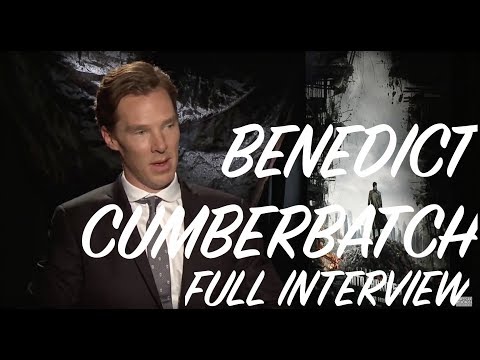
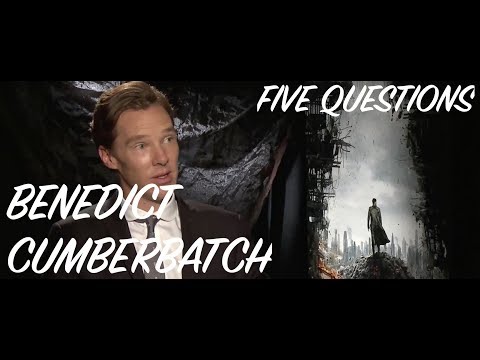
3 clips · 10:49 total
For licensing inquiries please contact reelinintheyears.com. How licensing works →
AUDIOListen
Episode #445 · Benedict CumberbatchDecember 2012 · 00:05:58
Episode #704 · Benedict Cumberbatch #2September 2014 · 00:05:07
TRANSCRIPTRead
Show full transcript
0:13The world is safe. It is an illusion, a lie told to protect you. Enjoy these final moments of peace. But I have returned to have my vengeance. So how are we doing? Good, thank you. Excellent. How are you? I'm doing fantastic. Excellent. Sitting across from Sherlock. This is a great blessing. Thank you very much. So this is a different role though. Yeah. Very different role, I think. Very different. So I guess we'll start with who is John Harrison, as much as you can say. Sure. No, John Harrison is a home-grown terrorist. He's somebody who's fighting for something very noble, but using methods which are pretty questionable, as most acts of terrorism are. He's somebody who's incredibly adept at close hand-to-hand combat as well as weaponry, and as well as psychological warfare.
1:01He's incredibly manipulative. He knows how to get into people's minds and affect their loyalties and strengths and apply their weaknesses. And that was fun to do as an actor, as well as the action scenes of this badass kick-ass. That sounds a little similar to Sherlock. In the mental game kind of thing. No? Yeah. Although I'd say if you're talking about manipulation, it's probably nearer a Moriarty, in the sense that he's somebody who initiates rather than resolves actions, people's actions. Sherlock is about the deducing and finding out motivations after the event. And yes, of course he provokes certain people into certain behaviors in order to distinguish whether they're telling the truth or not, whether they're in any way implicated or guilty.
1:48But yeah, no, I think there are not that many similarities. So how do you go about creating a character like this? You and JJ sitting down discussing stuff? Yeah, very much so. And I leaned very heavily, because of how late I was cast, on make-up and wardrobe and all the brilliant artistry that that involves, because they had a visual idea, and to run with that and understand the whole process of where this character lies in this film. And it's incredibly helpful. So I worked a lot from the outside in on this one. It's not always the way I work. But when you're sort of doing things at double speed, it's important to get some kind of grappling hooks as you're climbing up the edifice. What do you mean by double speed? Well, it was just a very quick turnaround. I was cast about, I don't know, was it six weeks or something before I first stepped on set?
2:33Yeah, it was very, very fast for a film like this. So once you're processed and we were getting the score to cast the villain, he thought, I've got all the home teams, great. And there was just one thing missing from the pack of cards and he forgot about it. Very important one. Well, glad they got you on board, I'm sure. Well, he's apparently very happy, which is great, because that's all you set out to do as an actor, and eventually this big. And it's an interesting one, because obviously that kind of casting comes with huge weights of expectation from Trekkies and fans of the first film as well, who have become Trekkies from that. And that's something that can be overly daunting. But when you actually just focus your attention on looking after your director and making sure that he's happy with the promise he's invested in you and the trust he's invested in you,
3:19you can kind of just keep sane about that. Has the fandom already started to hit now that things have leaked? I don't really get involved in that too much. I know there's been a lot of response, which is great, and I hear some of it's been really favourable, most of it in fact. So, yeah, but I mean, you know, I can't wait to see the film, I can't remember what it is. What happened? Have you seen the nine minutes? And you've seen the nine minutes, which is spectacular. I'd never seen anything in IMAX before, which is shaming and I'm embarrassed about that. But really glad I waited, because it was just so thrilling and all-encompassing and totally... It's mesmerising. It's a really immersive experience. 3D IMAX is an extraordinary way to watch film. And I think, you know, yes, this is a big summer blockbuster, but what JJ does superlatively, I think, is marry spectacle with character.
4:10So you care about every, you know, I'm going to give a vague bracket of description, of peril or spectacle, let's say, without describing the scenes, that these characters are sort of ensnared by or endure, because you know them. We know them from the first film, obviously, that's a given, but right at the top of the film, they're in serious peril. There's not really a moment to breathe in this, which is fantastic. I love the duality of your character. We're low on time, so we do something called... Sure, sure, sure. A quick question for the audience. For sure. Script or improv? Oh, God, that's important. I love improv. I love scripts. You know, I come from a world of English literature and the great canon of our dramatists, so script, but improv as well.
4:57Come on, you can't hedge, an actor's got to call it. That's not fair. Lennon or McCartney? Is that one fair? That's what God's saying. Well, I play John Harrison, so I've got to say Lennon, haven't I? Cool. Or Harrison. Yeah. You didn't ask that. No, I didn't. Your biggest influence as an actor? Christ. Probably my parents. A huge wave of talented actors. Mark Rylance, Stephen Dillane, Katie Mitchell as a director, Thea Sharrock as a director, Dominic Cooke. Dominic Cooke, I mean, you can't, ah, this deal. Alright. Role you're most proud of? Oh, God, this is... Christ. That's a question. Alright, this one might be easier. In one word, Star Trek. Darkness. So, shall we begin?
0:09This war, we're not winning it. If you speak a word of what I'm about to show you, you will be executed for high treason. It's beautiful. It's the greatest encryption device in history, and the Germans use it for all communications. Everyone thinks Enigma is unbreakable. Let me try and we'll know for sure. Mr Turing, do you know how many died because of Enigma? Three, while we've been having this conversation. So last year you flew from this festival to make this movie? Yes, I did, yeah. Where was the prep time? Well, I'd been prepping it, and I think it was in the middle of shooting it actually. So, yeah, we just... I can't remember, what was it, September? I would have been in the middle of shooting it, or just about to begin. What choices did you make to find Alan? I was just talking to Matthew.
0:56What choices did I make? How did I go about finding... The character choices, [inaudible]. Oh sure. The voice. Yeah, okay, so through my research and collaboration with the designer, the production designer and the costume designer, hair and makeup as well, trying to change his hairline a little bit and match up to some of the images we have of him. As a young man. I had a full set of teeth, different teeth in, slightly changed the shape of my mouth to be able to sort of have an overbite. And also just to sort of go about trying to create a stammer that wasn't intrusive on the sort of momentum of the film, but was also true to him, because he did have a very bad stammer. And I just researched a lot about that time at Bletchley, as much as is now known about it.
1:45There are lots of books that have flooded the market in recent history because of the Official Secrets Act coming to an end. Obviously, biographies of his that have existed for a while, like Andrew Hodges', which has continued being updated because new revelations come up, but a very, very thorough piece of work, as is Leavitt's biography, and Copeland, and all sorts of other people. So the usual route, and then cherry-picking from that what suited this extraordinary script and Morten's vision for the story. So the usual collaboration of me going away and scavenging stuff and coming back with my homework and picking and choosing what suits both an intriguing and entertaining and amusing and moving narrative, as well as the truth to a man who was incredibly important and existed and needs to be remembered in all his glory.
2:30When I said I was talking to you today, my Twitter exploded with questions. So I'm going to throw one at you. What surprised you the most about Turing during your research? I wouldn't say surprised. But what was the great revelation for me was how intrinsically involved he was with his world and everybody around him. He wasn't an isolated genius formulating theory. He was someone who put his science and discovery into practice. He felt and understood everything before he actually knew it, if you know what I mean. So even if it was just the thing of linguistics and just the very specific meaning, the literal translation of certain words, it was one question posited to him which made him lie down in a field in Cambridge and dream up what it would be like to build a machine. It was an expression or a slight phrasing of a question that spurred that thought and basically gave birth to the computer age, which is just astonishing.
3:20So all these incredible achievements, which are outside of understanding for a simple actor who doesn't know anything about pure math, suddenly were rooted in very human, empathizable moments of environment, people, things that happen to us that can knock us off track and make us think about things in a more lateral or cryptic way. And that fascinated me about him, and the tragedy is that's exactly what his whole life was. The secrets of his work were completely sewn in with the secrets of his life. By the time he was being prosecuted and injected with estrogen at the end of his life, for being homosexual, he had everything in that. It made me understand why there would be a panic attack, why he would have these surges of uncontrollable, unfiltered emotion,
4:06in someone who had been so able to deal with and assimilate all the slights and all the suppression of love and his way of being, and manifest that into something positive. Every night, again, this would just be too much. But even within that hell of those two years, he turned it to his advantage as well. He worked on morphogenesis, which is the mutation of cells under environmental conditions, which he was obviously experiencing in his body through estrogen injections. He's a remarkable, remarkable man. I want to keep talking, but I got to let you go. You do? Not yet. I got to do five questions. Five quick questions, one-word answers. Script or improv? Improv. Stage or screen? Screen. Hitchcock or Kubrick? This is all bollocks, by the way. I don't mean any of this, because it's just, you know, Hitchcock.
4:51Lennon or McCartney? Oh, Ringo. In one word, The Imitation Game. Film. No words. It's reductive bullshit. I know, you make them, like I do with everybody. Okay, right. Let's meet you again. Yeah.
ABOUTThe archive
This interview is part of the Matt Schichter Interviews archive: more than 700 conversations with musicians, actors and filmmakers recorded between 2003 and 2014, beginning with The BackStage Pass, one of the first podcasts (2003). The archive also became Matt's short documentary Lennon or McCartney. Matt Schichter is now a Glasgow-based producer, line producer and music documentary director: he directed CFNY: The Spirit of Radio (PBS, TVO) and line produced Faith (TIFF and Rome 2026). His films → · UK film producer and line producer → · More about Matt →
Listen to the full archive on Apple Podcasts or Spotify.