Lennon or McCartney? Gavin DeGraw’s answer: McCartney. Watch the moment. See every artist’s answer. Take the quiz.
SONGSWhat Gavin DeGraw said about the songs
“Not Over You”
Gavin DeGraw said "Not Over You" came out of his first real co-writing, with Ryan Tedder.
“Sweeter was my first attempt at actually writing with other people... But when I had a positive experience co-writing, I thought, wow, I never would have written Not Over You without someone else in the room, without Ryan Tedder in the room.”
VIDEOWatch
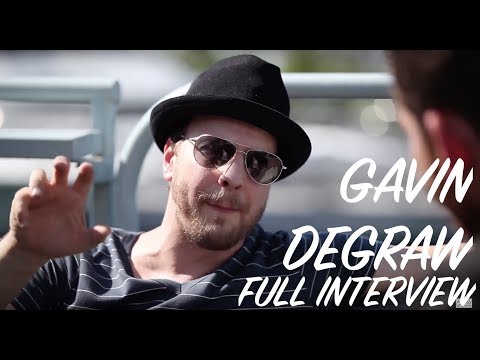
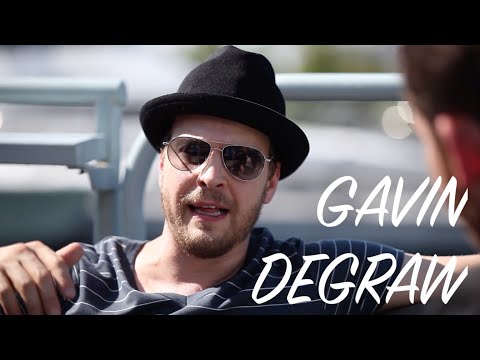
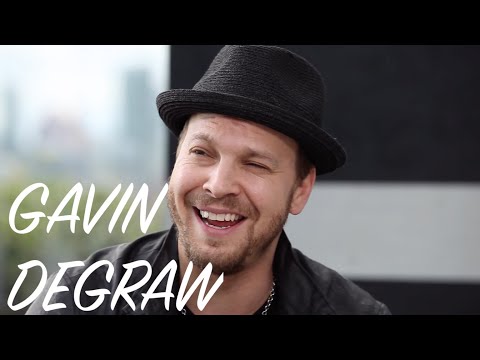
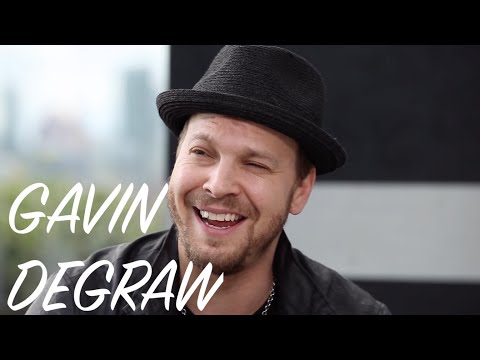
6 clips · 40:08 total
For licensing inquiries please contact reelinintheyears.com. How licensing works →
AUDIOListen
Episode #3 · Gavin DeGrawSeptember 2003 · 00:21:23
Episode #562 · Gavin DeGraw #2July 2013 · 00:10:27
Episode #658 · Gavin DeGraw #3May 2014 · 00:17:11
TRANSCRIPTRead
Show full transcript
Part 1
0:00A songwriter, I guess I take some different angles on relationships and life. I like to mix it up and I don't want to be too predictable as far as the musician is concerned, the singing musician is concerned. And you're only as good as you are the night that people see. G.B. I haven't felt like there's so many rules You know what I mean And we can feel through this destruction As we are standing on our feet So, since you warned me with me You laughed the father through With every word you say
1:01And I All really want is you You're sticking around I see you every day But you have to follow through You have to follow through These, being in motion, they just keep me alive They keep me in tune Oh, look what I'm holding here in my fire This is for you And my true eyes to frigid So if not, it don't mind my heart So, since you warned me with me You laughed the father through
2:02With every word you say Now I am all he wanted's you Give me a stick around, I'll see you every day But you have to follow through You have to follow through The words you say to me are unlike anything You're never been saved All I want you to do to me is un-lighten it, please That's never been Now, my two hobbies to preach it You're so if not, it'd go on my heart You're the soul, since you want to be with me
3:06You left the father through With that few words you say If I hardly wanted you You just fit around I'll see you every day So, since you want to be with me You left the father's room With every word you say And I already wanted you You just sit around I'll see you every day But you have to follow through You have to follow through You're gonna have to follow This is the start of something good. Don't you agree? I called an open mic that I had heard about. They said it was $10. I said, well, can you waive that charge?
4:12I'm a professional, quote unquote. They were like, no, sorry, that's the deal, the host has told me. I said, well, look, my name is Gavin DeGraw. I'm going to get up there, but I got a gig tonight. Later on, I need you to let me up on stage when I show up so I can make my gig downtown afterwards, because this open mic was on the Upper West Side. And so I hop on a train and I go uptown and I show up and I say I'm Gavin. They got me up on stage about five minutes later. I sing, and then like three quarters of the way through the tune I started doing some, you know, musical ear candy, you know, just stuff that's supposed to impress people. And it was working. It was working on them, and they got up and they started screaming and waving their hands and
4:54and they were clapping, and I was like, yeah, this is working, you know? So I finished the tune and I walked out and I left my business card with the hostess and I went off to another open mic, you know what I mean? I had no gig that night, so I was just trying to get a gig. I met Clive and he kind of gave me a breakdown on what he was going to do for me, and I looked at his roster as far as the people who he has worked with and the careers that he had developed, and they were careers. They weren't like, you know... Yeah, exactly. And so that's what I was interested in, was having a career, not having a hit song, not having a hit record, but rather, you know, even if you don't sell records, that you develop sort of an artist that people go, oh, that's a name I recognize, I hear they're really
5:43good and I hear they're notable and they're legit. And he developed a lot of legit artists, and that was what was appealing to me. To make a hit record that's not legit at all is worse than having no success, to me, because then you're noticeably bad. It was a lot of pressure playing for the type of audience that was out there. You know, I was sitting up on stage and I was looking out there and I was looking at Howard Stern and Carly Simon and... Yeah, dude. Yeah, Aretha Franklin. There's so many people there, man. Oh, nothing from the ground is good enough
6:53Body rise, it was full of me Oh, chariot, you're golden When it's all walking down Upon this place Oh, chariot, I'm singing out loud You guide me, give me your strength Remember seeking moon to birth brings me mirrors of the birth The sun was just yellow energy It was a living from the sun Keeping an open feel to sand It just filled the morning
7:53Cover me We're bringing back More than a memory Oh, chariot You're moving when you're talking Upon this place, oh, Cheria I'm singing about to guide me Give me your strength You'll be my vacation away from this place You know what I want to guide me
9:08Give me your strength Give me your strength Tocratic Give me your surprise bld Give me your surprise Give me your strength Give me your T vacuum Give me Fontaine Carry on Give it to me Carry on Give me your story Oh, carry on I think the coolest thing that happened to me there didn't even really happen to me
10:11I was just kind of in the back tent at the same time as Neil Young. This is awesome. That was good enough. You know, like waiting at the catering table, you know, a couple people down holding an empty plate waiting for my food was close enough. It was pretty cool, man. I was like, wow, they're going to serve me with the same spoon that they serve... I'm going to do the yam and the turkey. I can't believe it. I would have a Neil head. Did Neil get the cobbler? I don't have the cobbler too. Oh, Neil doesn't eat meat. Oh, okay, I don't eat meat today. Here's your salad on the menu. Not only did Neil Young turn Gavin into a crazed man, but telling the story of his encounter with former Queen guitarist Brian May
10:57after a show turned him into a giggling schoolgirl. Queen? Queen played? Really? Yeah, and Brian May... I was walking through the crowd later on, I was walking through the tables, you know, on my way to meet somebody. And Brian May grabbed me, like this. He'd get my arm, he'd say, hey. I was like, hey. I was like, oh, you're Brian May. Yeah, you built your own guitar with your dad, you know. And I was like, oh, man, you're awesome. He's like, no, man, I just want to tell you that you did a great job. You did a great job. I was like, man, you're Brian May. Ha ha ha! Man, that was cool. That was cool. I saw you there last night. Standing in the dark. You were acting so in love.
11:42Your hand upon his heart. last night Standing in the dark You were acting so Your head upon his heart you we just I'm a friend. At least that's what you said, now I know better. From these fingers in your hair, I forgive you for what you've done. You say that I'm the one. I've had other options too. But all I want is you Girl, your body fits me like a love
12:48If your shell will make me word to love By you because friends At least that's what you said That one oh better From this fingers in your hair, I forgive you for what you've done. And you say that I'm the one. It's not my stop to lay it on the line. But you don't leave me with a dark tie. If you say that I'm the one, you make me afraid
14:08At least that's what you said, now I know better From this fingers in your head, I'm for you, you What you've done, if you say that I'm the one I think it definitely helps get the word out on artists and then it's up to the audience as far as like their honor system you know if they if they love an artist to go hey you know what we're gonna reward the label for finding this artist and bringing this artist to the public eye you know what I mean I mean I prefer both obviously because if they didn't buy the album then the labels that sign the artists are gonna go hey we're never gonna
15:15make our money back off the artist. We can't let this artist make another record because we don't have the money. It's not a good business decision. And so as far as spreading the word around, the combination of the labels helping find these artists, advertising them, getting them a website, helping them find street teams and organize stuff like that, and then bringing them to audiences, and then audiences going, hey, look what we found, and they start spreading the word online also. I mean, the combination of the two is outstanding. Whereas if I was just some random brother, you know, hanging out in his hometown making music, and I never had sort of a big push, it would never, I mean, it would never manifest the way
15:58it has without the label helping out. And then sort of going here quickly, 20,000 people spread the word, all at the same time on the internet, as opposed to here, two people spread the word. You know, it would take that many more years, you know? But the two of them definitely do work hand in hand, as far as, you know, a bunch of people talking about me on the internet would never necessarily get me the opportunity to play on the Carson Daly show, you know, to get that first go, hey, here's Gavin on Carson, and then have those people from Carson go, bam, online, and start talking about it, you know, on other people's message boards, and they're like, hey, this dude's alright. Let's check him out.
16:46Well, he's just an amazing writer. He tried a lot of things musically, and he did take a lot of different positions on life and went into lots of different perspectives on songwriting. And, you know, he would let you know he was depressed, or he would let you know he was having phone sex or whatever it was. You know what I mean? It's just a fantasy. It's just a fantasy. And it's got that breathing on the chorus. It's like, it's all dirty. It's just great to hear, dude. It's like mixing up his record to go from that to Scenes from an Italian Restaurant. You know, or say, it's like, oh, I didn't want to do it, but I got too lonely. Had to call you up in the middle of the night.
17:30It's great. It's awful hard to try to make love long distance. And great lyricist, man. Great, there's this great melody maker, strong piano player, incredibly underrated singer. He's a great singer, and a lot of people forget that he's a great singer, and I think a lot of it's because he often stays so straight with his melody when he's singing that he doesn't bother to go off and do vocalizations, you know, like riffs, which I'm sure he could do, but he's more trying to make sure that you hear a good, strong melody and you're making out the words so you can relate to the song. The appeal to me is that he has a rapport with the audience. Well, you feel like he's just this kind of regular guy who
18:19happens to be a great songwriter, but the rapport that he develops with the audience, sort of, I don't know how it takes place exactly, but he sort of talks to you. You know, I mean, he's talking to 10,000 people, or however many thousands of people are in the room, but it's like he's just telling a story to a group of people at dinner. I don't wanna get too close See this isn't where my head is if you knew me I'm not like this, but I just found someone special And that's really something special if you knew me I still need you anyway
19:20I believe you verified So I haven't got the time Girl, that just felt someone special And that's really something special If you knew, I still need you anyway I knew you And the sky opened up In the soil of the sun I'm dreaming of my true love I don't need to be so strange Oh my life just to change I'm amazing, I'm attracted
20:18I'm tetra-link-distracted And I'm trying to be verbal And I'm back into this circle Without doubt someone's vessel That's really something so different Nice to meet you Nice to meet you Nice to meet you Hey, hey, hey Nice to meet you anyway Nice to meet you everywhere Nice to meet you everywhere
Part 2
0:00Hey, I'm Gavin DeGraw and you're watching MSN Exclusives. With this guy. I'm gonna keep seeing my dancing rain on my health and skill trip for how can I explain the truth of best I ever have. Gavin, thanks for doing this, man. Thanks for having me. Good to see you. Ten years later. Ten years later, man. And there's race cars behind us. It's the Indy here in Toronto. Lots of cars, man. Do you dig race cars? I love the cars. We love the cars. I love cars, man. I like racing. Where do you live? Is it a car city or a subway city?
0:57You're in New York? You know what, I'm more now in Nashville. Okay, so that's why you opened up the second location. Exactly, we still have the National Underground in New York. That's right there. So what is it, for people who are going to New York? Is it a tourist destination, what is it? Whether you're going to New York or Nashville, we have a couple of small bar, restaurant, music venues called the National Underground, where we basically want to feature up-and-coming acts that are coming through town or that live in town. You know, in a couple of great music cities, which would be New York and Nashville, of course. So, you know, you can really tap into the local culture in places like that and know that you're gonna get
1:36great talent, just the nature of those two cities. Might people show up and see a potential Gavin DeGraw surprise appearance at one of the places? You never know. You never know. Yeah, I mean, I like to drop in there when I have time off. So I go in there and check out bands, check out musicians. When do you have time off? When was the last time you had time off? I had a day off. A day, okay. Yeah, I get a day off here and there. And I just spent about a week or two in Nashville. Mixing this record? Or where's the record up to? Because last I heard there was a bridge. Like the last puzzle piece was a bridge that you had to finish, and then the record was going to be done. Exactly. I think we've completed that part now.
2:10And I was in Nashville over the last couple of weeks, and I spent a little time there, and I went to one of my favorite studios in the world called Blackbird Studio. Yeah, Blackbird Studio is just beautiful. It's owned by John McBride of John and Martina McBride. Wonderful guy, great place. Unbelievable gear they have. So I got on the phone with Ryan Tedder, and we were really done with the song other than the bridge. So we just needed to bang out that bridge. What is it about Ryan that complements your writing so well? Everyone's writing with Ryan Tedder these days, so many people. He's the guy. He's a really great talent, you know. He's an easy guy to work with because he's just overflowing
2:57with ideas, but he doesn't just spill out ideas and say, okay, they're all great ideas. You know, he has a good barometer on what's a good idea and what's just an idea. You know what I mean? So he's a producer of sorts of your writing? He is a producer, but I really find him to be a really strong writer. I really enjoy songwriting with him. And his production happens to suit the type of stuff that he writes, you know, and the type of stuff that we were writing together. Was he on Best I Ever Had? Is that you and him, or is that you? No, Best I Ever Had is with Martin Johnson. Who's that? Martin Johnson came out of a group called Boys Like Girls. Oh, okay. Yes. I know them. You know what?
3:41It's a pop punk group. Yeah, yeah. Martin's musical taste expands well beyond the one genre. But I think that's the nature of the business, is that the artists themselves aren't consumed with the genre, you know, and they just want good talent. You know, we like good songwriting and we like good production and, you know, good talent. And so Martin's somebody who's able to blend into other people's genres when he's working with them, you know, and he's a really great, great guy to work with. And I think you'll be seeing a lot more of the same coming up. I do want to talk... my thing died because of the sun. Oh man, oh no. So I lost all my questions.
4:25That's all right. Because I love the tune, because it's got poignant lyrics. You're talking about drones, you're talking about the war, you're talking about Antarctica. Absolutely. But it's also fun. It's got this like Subterranean Homesick Blues kind of, like you're just shouting out rhymes, right? Oh yeah. Kind of thing. Yeah. And it fits with Train too. Because it's almost got Pat's cadence, the way he's been rhyming his singles lately. What we wanted to do is, A, we wanted to be present. We wanted it to be in the now, you know, and on top of that we wanted it to be something that was reminiscent of what's going on right now stylistically out there in the music scene. And there was a lot of things happening stylistically
5:04in the music scene. There really are no rules, but there are certain things that are surfacing again and again, at least within the last year or so. You know, one of the things that's been surfacing is the Americana movement. You know, the Lumineers, Mumford, this and that, you know. So granted, that style of music has been around since, you know, before recorded music, but it's a moment right now where pop culture's embracing that sound, and that's one of the sounds that I happen to love. So Martin and I started writing according to what that sound was, just a quick little jangly acoustic guitar thing, which has been used a gazillion times over the last couple hundred years. But we wanted to modernize it and throw in some other
5:52production pieces that would bring it to a new place and incorporate some of the other things that have been happening musically, some of the synthesized sounds and some of the big reverb sounds. And, you know, there's a lot of other flavors in there. And the horns and stuff. The horns and stuff, exactly, man. So the beauty of the landscape right now, musically, is that there really are no rules. However the journey has happened in pop culture and pop music, the ears that are embracing popular sound have become very, very varied in their taste. So as a musician, as a songwriter, I'm very lucky to be in it right now at this moment. Even much more open terrain than there was five years ago, or ten years ago, or even two years ago.
6:45So does the record span genres, or does it stay more with the Americana? No, it does. You like to try and change things up. I like to change things up for sure. So the record itself... Make a Move, is that what it's called? Make a Move, yeah. I think that's what we're calling it right now. You know what I mean? That's what I've heard. That was on a shirt or something. But right there, I mean, there's another song written with a completely different thing. I mean, we're basing it on the acoustic guitar, but it's me and Ammar and Dan and Benny Blanco. So it's a whole nother thing. Benny Blanco, you know, from the Maroon 5 song Moves Like Jagger. So just a lot of different styles. You know, I think that the idea of sticking
7:22with one particular style as a musician, at least for me at the moment, doesn't really interest me, you know? I like lots of different styles. So I do that for myself. I enjoy it. So on the topic of styles, you're a dancer now. When I can be. Are you adding dancing to the show? Is there a move? A move. I wouldn't call myself a dancer. Right. I move. But you've had more training than most people now, I think. You know what? Yeah, I had a few weeks of it, eight weeks about. And I got to tell you, man, doing that Dancing with the Stars show, it really opened me up. Kind of helped correct the way I stand a little bit. I don't hunch as badly as I did. You know, I didn't realize when I was up on stage, just sitting at the piano, I had a little
8:06Quasimodo thing going on. Man, I didn't realize, you know? But I think that Karina Smirnoff, you know, my dance partner from the show, really kind of shed light on that for me. You know, it really helped me kind of correct a lot of that problem I had. So doing the show really kind of opened my mind to that and really opened my mind to the other forms of art, you know? Kind of giving that whole thing respect, because it's not the easiest thing in the world to do, you know? Absolutely. It's a great, great thing. It's a million degrees out here, so I'm gonna let you go. It's a million degrees, bro, and you're wearing a black do. I know, I got it. How do you stand it? I'm dying right now. It's unbelievable. It's crazy.
8:42So we do something called Five Questions. Five quick questions, one-word answers. Road or studio? I love the road. Lennon or McCartney? Sure. It's tough, bro. I love them both. I mean, you couldn't have one without the other for me. I like both their solo careers, but as the Beatles, it was just something else. When you hear a song, what usually hits you first: lyric, melody or rhythm? Tough to say. I'll tell you the first thing that hits me, if it's not good: a bad lyric. You think a bad lyric can ruin a great melody? Although you can get away with a bad melody with a great lyric. Yeah. If someone's never heard Gavin DeGraw, what song do they start with? If no one's ever heard Gavin DeGraw,
9:28what tune do they start with? Oh. For me, a first listen song I would like them to hear, well, there's some of those on the new album, but I would say check out the Sweeter album and check out a song called Stealing, and check out a song called You Know Where I'm At. You Know Where I'm At. I'd say to check those two out. Those are dear to me, very much. And my heart as a writer. In one word, Gavin DeGraw. A lot of one-word album titles, now that I'm thinking about it. Funny. Funny is good. How funny? You made me laugh last time. Tell me about the Neil Young story. I'd love to keep going, but we're dying. It's too hot. And I know you're getting another video. It's hot as hell, man.
Part 3
0:00I don't care where we sleep tonight I don't care if they're too around tight You know what to do Make a move You can throw away your phone Make me leave that way I'll go I'm talking to you So let's start with this. Someone was just showing me a video of you playing on a plane. Oh, God. That's a different place for a gig. What was it like? It was awesome. It was so cool. It was so cool. But it was scary because we didn't have any gear, you know? But we were asked, hey, when you do this thing, it would be a cool thing to do. And I said, well, yeah, I mean, it's a great idea, although I would feel a little guilty keeping people captive in a tube and kind of forcing the music upon them.
1:05You know what I mean? Because there's nowhere else to escape. I mean, you go to the bathroom in a plane and that's about it, but there's only so many of those. Yeah, that's fair. You know what I mean? And you're blocking the exit to the back and front. That's right. Yeah, so what we did was we took the, you know, the little PA overhead, kind of, you know, the CB that truckers use. Yeah. Yeah, and I sang into that, and I had my drummer kind of, I don't know what he was tapping on, but it sounded like a little bit of that going on. It was minimalist. Yeah. And my guitar player, of course, Bart, has guitar, because, you know, those are portable. Drums not so portable. No, not so much.
1:48And piano definitely. Doesn't look like the little mini ones or whatever, one of those really little keyboards or whatever. Doesn't matter. Those are weird, right? You know, again, they make a really weird instrument called a melodica, I think it's called, you blow into it. Yeah, oh, a melodica. That's what it is. And you go blow into it. They're like that. But what's the weirdest? I don't think I have the wind capacity for that, really. As a singer, you'd figure. No. Yeah, I'd be focused on my breathing, and, you know, even the accordion throws me off, because you've got to feed it the air, throws off my rhythm. I'm just gonna go something dirty, but I'm not gonna go with it, never mind.
2:22Yeah, yeah, I understand. I know what you're gonna say. I'm gonna segue that into: what's the weirdest instrument on this record? The weirdest instrument on this record? Like, what was something random that you threw on there? I don't know if there were any weird instruments on this record. What was the strangest thing that maybe you haven't put on a record before? I mean, there's a lot of horns on this record. There's a mixture of stuff on this record. I think a lot of that has to do with there being so many different producers on the record. But there's things that some producers do that you can't really identify what is happening. You know what I mean? Because they throw in so many different ingredients
2:58that you can't really pick one out, and you're not sure, and you start taking wild guesses, like, hey, is that a banjo and a synth and a drum at the same time? And they pick and choose certain things to strike at the exact same time, so you can't necessarily pick out one instrument that's playing a part, which is kind of the cool thing about it, though. Is that what you're bringing to live with the band? Just say have fun, go figure it out? You know, it's tough, because I was always very much a purist about performing live. And so I became really consumed with, well, if you can't perform it live, then don't bother putting it on the record, right? Which was a specific way to go about doing things.
3:42But it keeps you a little bit, well, I'd say limited as far as what your end result is on a record, you know. And then I started to experiment more with more producers and more people and more players, and then you start realizing that you can't necessarily make your vision happen without using more and more tracks sometimes, you know. And so ultimately what happens is there'll be some songs during the set where you go, okay, we'll run a track system on a few of these songs to give it some more of that size. I can't bring out 30 people to play on stage. There's simply just not the space up there. And a lot of people would probably have an issue with me taking out 20 buses to cart people around.
4:29The environmentalists would go crazy. So anyway, you have to keep a lot of other factors in mind when you're cutting a record. And then, of course, when you're performing it live, you do the best you can. You try to get the closest to the record that you can. Then at the same time, when we play live, we introduce new musical ideas that aren't necessarily on the record. That's a good segue to my next question. I was listening to the stripped record a couple weeks ago, and I was like, I wonder if he's pulling different arrangements out for the old songs, just to keep it interesting for himself, right? Yeah, absolutely. The stripped record was an idea that I had come up with my old, my first A&R guy, a great guy named James Diener.
5:10I said, you know, I had already released Chariot. I said, but even Chariot at the time for me felt overproduced, because I was a guy who played in barrooms and played on the street and stuff like that. So everything sounded overproduced to me. If they had more than three instruments, it sounded overproduced to me. So, yeah, you wouldn't have made this record. Yeah, exactly. So I said, I'd like to go in and recut all the songs, you know. He said, cool, let's do it, you know. And so we went in and we recut the whole record. It took one day. And I brought in some guys who I had played with before I ever cut a record, you know, and some guys who had been with me as well for a long time. So I already knew how to communicate with them,
6:01you know, my old way. And so that allowed me to take an approach to the songs that wouldn't be heard on the first major release of Chariot, because it simply, honestly, was too lo-fi to put out into the world at the time, honestly, you know? Right now I think it would work even better, perhaps, than the original debut record. But what happens is tastes change. And I think music is a form of the fashion world. The different styles come in and out, and certain production styles come in and out. Lo-fi is in right now. Hi-fi was in a few years ago. You know what I mean? And we all keep finding our niches. And I like to play with that, but everybody likes to play with that, because it's all part of the guessing
6:59game of keeping things interesting. Yeah. It works for the crowd. It works for the crowd. And so what we'll do tonight is we'll mix it up. And we won't do the stripped stuff, but we will do some reinventions of old songs. So what's changed the most? What song are you working on now that you're like, I kind of wish I'd written it that way, or rearranged it? Are there any? Well, yeah. I mean, I think all of them. I think what happens is, I guess, over time you feel like you're getting better at certain things. Thank God it isn't sports, because with sports you just get worse over time. But you know how it is. The curve is, once you're past 15 you start declining. With music, a man's voice doesn't really start to mature until he's in his 40s.
7:47That's a good segue to Billy. Which is fascinating. Yeah, Billy, right. Because he's still hitting those notes that he hit 30 years ago, right? It's amazing. The guy is 65 years old, and he hasn't lost a single thing. I actually think he's improved. He's so comfortable on stage. Is that what you took away from the experience? Comfort. Incredible, just incredible comfort. When I was 15, I went to see him perform live. And after the show, I got in the car, I remember saying to my family, I said, I think I know what I want to do now. And my father says, what do you want to do? I said, I want to do what that guy just did on stage. So my father says that, and that's what you'll do.
8:34So since then, it's been the journey, really inspired by watching him put on a show. Because he was so comfortable on stage and comfortable with his audience, and his audience felt like they knew him. There was a real camaraderie between him and his music and his fan base, you know, something I had never seen before, and something that I don't know if I've seen since, really, to be honest with you. So he's so connected to them, you know. There's a real common man-like ability in his lyric, and from the perspective of his audience to him, they feel there's a real camaraderie there. Well, you told me something about his lyrics. I wrote it down, too. It's like he's talking to you, telling a story at the dinner table.
9:29It really is. It's what you told me like ten years ago. Yeah, it really is. Have you taken that into your songwriting? Are you trying to do that? You know, I always try to compare myself to people much better than me. So it's something that I constantly apply, yet always feel like I'm just barely accomplishing. You know what I mean? And so it's important, look, the reality is, it's good to have goals. I don't know, I mean, I meant more of the telling you. It's good to have goals like that. It's telling the story, though, I didn't mean comparing it. Yeah, yeah. Because I heard you say you had a bit more of a persona when you're co-writing. Like you're able to take on a Dylan, right? Like take on a different personality.
10:15100%. And I think that's one of the... So you're the next Billy Joel, as of now. Right, okay. Yeah, so first of all, I do, I think that's a major part of songwriting. I think that a lot of writers use that technique, you know, taking on a character, putting yourself in someone else's shoes and saying, I'm going to be that person for the sake of this song, right? Tell their story first person, if I can, or think of an artist and think to yourself, what would such-and-such an artist's song be, you know? What would their voice want to sing? What melody would suit their voice? And you come up with something like that and write a song from that standpoint or that approach, you know?
10:58And I think that taking approaches like that allows your collection of songs to be a lot more interesting and more diverse. And on top of that, I think one thing that obviously adds to that is co-writing. I was really uptight about co-writing prior to my last record, prior to Sweeter. And Sweeter was my first attempt at actually writing with other people. And so a few of the songs off that record were co-writes, and the rest were written alone, like I was used to doing on all my other records. But when I had a positive experience co-writing, I thought, wow, I never would have written Not Over You without someone else in the room, without Ryan Tedder in the room. Or Run Every Time without Andrew Frampton in the room.
11:50And I thought to myself, wow, this just never would have come out of me without someone else throwing in their opinions and their ideas too. And so when I went into the studio for Make a Move, I let everyone know that I wanted to continue the co-writing thing, because it made writing more interesting and it made everything happen so much faster. It just expedited the process and alleviated all that strain of, you have to get it all done by yourself, and you have a deadline, and you have to stay focused. When you're in a room with someone else, you keep each other on target. Which song flowed the quickest, then? For this record? Yeah. God, it's hard to say. What was the hardest one? And we'll go to the flip side.
12:43Make a Move took a couple of days of going back and forth across a coffee table with a couple of guys. And I can't tell you how many pitchers of coffee we had trying to come up with an idea. I mean, you know, just endless amounts of caffeine going, no, no, that's not good enough, no, that's not good enough either, you know? And that goes on and on and on. What's that? When did the oo-oos come in? I'm not gonna try and sing it here on camera for you. Oh. Oh. I think, yeah, it's funny too, the way that works, because, you know, you see a lot of music where different sounds represent different eras, even vocalizations that aren't words. Okay, in the 60s there was a lot of
13:41sha-la-la-la-las, early to mid 60s, right? Yeah. Sha-la-la-la, that's early to mid 60s style completely, right? Yeah. And then the thing was, I think, more of a 70s thing, right? A 70s R&B thing. Yeah. And then as top 40 pop music became more urban, those sounds came back into the rock songs and the other pop songs and things like that. So there's so much R&B, classic R&B, in modern rock and roll and in modern pop music. So, you know, as we move forward, as we continue to progress musically, we have more and more influences from the past, obviously, and we start to recycle things that work, things that stood out to us from older records that we like to listen to, and things like that.
14:39And we find ways to fit them into the stuff that we're writing now, you know? And so you get a... That's not gonna get it right. Oh, oh, oh, oh, oh, oh, oh, oh, oh, oh. And that is really almost like O'Jays style, you know? And it's something very, very R&B, like four or five guys getting together, Four Tops style thing there, but 70s to me. You know, I put different production styles on it, so it adds a whole other flair to what that would be. I want to keep going, but the show's starting. I got to let you go. Yeah, man. I'm sorry, man. Let's do five questions. I talk a lot. Sorry, but I'm doing an interview. Okay, good. Good. Five quick questions, one-word answers. Yeah. Oh, it's tough. You've done these before?
15:24I'd say I think that McCartney is highly underrated for how groundbreaking his concepts were. I'm going to give you the proof in the pudding. The proof is Helter Skelter. That was McCartney. Although I'm a huge Lennon fan. One-word answers, Gavin. Sorry. A Day in the Life is my favorite Beatles song. Yet Helter Skelter was, in my opinion, the groundbreaking rock and roll song. And the whole thing is, I'm going to say... And that was what we're doing. I disagree. You what? I don't disagree. When you hear a song, what usually hits you first: lyric, melody or rhythm? I'll tell you what stands out to me the most when it's bad. Lyric. Cool. I think that lyric.
16:11Lyric. You gotta go. Lyric is the most important. And the reason is, that's what people identify with ultimately. They identify with the subject matter. Yeah, they can feel the rhythm. They can like a melody, but they identify with lyric. You know what I mean? I do, and I want to keep talking with you. Sorry, good. If someone's never heard Gavin DeGraw before, what song do they start with? Oh, come on. I don't know. I was just a soldier last time. Soldier, I'm really proud of. I think that's what you said about it. Soldier, I'm very proud of. That's a special one. I'm going to feed you the answer, so that won't work. Thank you. Soldier, to me, is a song that... it never had its day in the sun.
16:49Well, keep playing it live. It never had a fair shake. Let it live on. Never had a fair shake. In one word? Yes. One word, Gavin DeGraw. Oh. Excitable. That's a good one. Thanks, man. Thank you so much, man. Nice to see you again. Yeah, you too. Cool. Appreciate it. I like your place. This is very nice. Yeah, we should. I'm going to go to the beach. I'm going to go to the beach. I'm going to go to the beach. I'm going to go to the beach. I'm going to go to the beach. I'm going to go to the beach.
ABOUTThe archive
This interview is part of the Matt Schichter Interviews archive: more than 700 conversations with musicians, actors and filmmakers recorded between 2003 and 2014, beginning with The BackStage Pass, one of the first podcasts (2003). The archive also became Matt's short documentary Lennon or McCartney. Matt Schichter is now a Glasgow-based producer, line producer and music documentary director: he directed CFNY: The Spirit of Radio (PBS, TVO) and line produced Faith (TIFF and Rome 2026). His films → · UK film producer and line producer → · More about Matt →
Listen to the full archive on Apple Podcasts or Spotify.