Lennon or McCartney? Gina Gershon’s answer: Lennon. Watch the moment. See every artist’s answer. Take the quiz.
VIDEOWatch
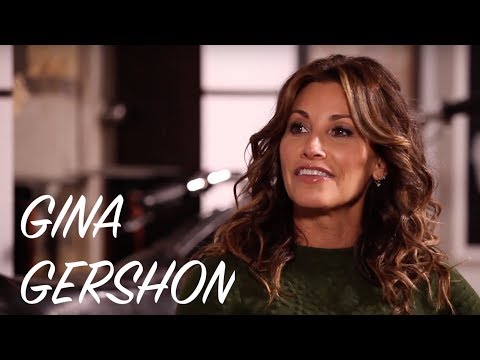
2 clips · 32:04 total
For licensing inquiries please contact reelinintheyears.com. How licensing works →
AUDIOListen
Episode #495 · Gina GershonMarch 2013 · 00:16:44
TRANSCRIPTRead
Show full transcript
0:06I was a girl in power since I died with a woman. It's Versace, ladies. Why don't you go about a story? Your husbands will be happy. Hurry up with my damn massage. Hurry up with my damn massage. I am Versace. Well, Donatella, thank you. I like your green shoes. Thank you. See you here. Fashion. Yeah. How much fashion went into... I know you love research for roles. So how much research went into this? Into Donatella, a lot. I mean, as much as I could possibly do, you know? Where does it start? What do you mean, where does it start? Do you meet with her? Like, where do you start to research for someone who's alive?
0:51I know, in a matter. You know what? I've done a couple movies now where I've played people who are alive. And if they're really involved and it's their story and they're producing it, you know, you learn a lot about them. And of course they're there all the time. One girl was helpful. Another time I played someone and I became so sympathetic with her, I didn't really do my job. Because you start protecting the character, and where you maybe should go like this, you feel like, I don't know, you feel like, I don't want to show that part of them. It's not good. I don't know. You protect them on a weird, unconscious level. So I was kind of glad not to have met Donatella. Although I can't believe we haven't met. We have quite a few friends in common. But luckily there's a lot of videos on her.
1:38And she's done a lot of interviews, and I read a lot of interviews, and I read the book that it was based on. So. Did you do any of this dream research? I hear you have a very interesting dream process. I did. I always did dream work. Yeah, I did some of that. And then after a while, it was such an intense shoot, I started literally dreaming parts of the show and parts of things that I would see. It was actually horrible. Yeah, it was tough. It looked like the intervention scene might have been a little tough. Oh, before I go away? Before Donatella goes away. Yeah. I mean, you know, when she's wasted, she's just in kind of a different state. Yeah, they're all very emotional scenes. I mean, it's a very emotional role, and she goes through a lot of trauma, and there's a lot of craziness that she deals with.
2:26I really have a lot of respect for her, that she went through this and then she got herself out and she's thriving now. You know, she really found her own voice. During the period, that's difficult, you know. I mean, she was thrust into this world. I mean, she was there, but she'd never run a company like that before, and then you're forced to do it under someone else's vision. You're a part of it, but you'd like to do it a little bit differently, you know. So I have a lot of respect for her. Speaking of that vision, I know you did two episodes of Just Shoot Me way back when. So did you know each other? Oh, you know, I didn't remember him until I saw him. I was like, oh my God. Yeah, totally, as soon as I saw him. How did you two craft that brother-sister thing? Did you go out and hang out beforehand to try and build a brother-sister bond?
3:12No, we just got along really well. I think he's really good, and he does his job, and hopefully I do my job well. But we did have a very nice chemistry together. Yeah, it looked it. Naturally, you know. So it was very easy. The Lenny Kravitz line, was that your own? Was that written there for you? Because I was like, oh, that fits perfectly. I think I threw that in. Well, it does make sense, because I think she said, you know, she really liked Lenny Kravitz and she likes Prince. Lenny did a show with her before. So I think it said Prince, but when I was saying it with the accent, they couldn't understand, because it sounded like "Fiends," you know, Prince or whatever, right? And so then I said, forget it, I'm saying Lenny. So I just said Lenny anyway, which made me happy, and it made perfect sense. Talking about the accent, I was watching Curb, I watch the whole thing every year or whatever.
4:01And it kind of reminds me of that accent a little bit, the way you were going with it. Well, that one's a weird Russian kind of not-real accent that I just made up. I don't know what that accent is. Right, okay. That's where I was going. They wanted an accent that you can't place. I'm like, okay, here's this. So where do you come up with that? Do you just try something and hope for the best? You know what, when it comes to comedy, I've been realizing more and more... I just finished a movie last night. That's a comedy. Last night? Last night. I know. I think they are so tired. When it comes to comedy or parts that are really outrageous, I really just don't think. I just don't think. It's better. And I just do whatever comes out. So it's just a completely instinctual, kind of impulsive performance.
4:48Hopefully it works. It works or it doesn't. But I think if it doesn't work, you'll find out really quickly, and then you just change it pretty quickly. What's the comedy? Can you talk about it or no? I could talk about it a little bit. You know, they're just finishing up this week. Lorne Michaels produced it with a lot of the Saturday Night Live cast and some of the writers and directors. I think it's going to be actually really good. Just kind of a sweet comedy. Yeah. It'll be out next year, I guess. When I was doing research, I found that the Ugly Betty character was kind of based on Donatella a little bit. You can't believe anything you read on the internet. I will say that to you straight, to all you good people out there. Especially IMDb. It's like lie.com, I think. Or just misinformation.com.
5:33I mean, it just doesn't work, because people just put their own spin on things and then it becomes the truth, and then you're like, it has nothing to do with reality. That character was based... well, it was another comedy, so I didn't really want to think so much. I just thought it would be funny to really distort my face and to make it look like she's done all this plastic surgery but lies about it all the time, but it's so obvious. I don't know why I thought that was so funny. And I was a little bit obsessed with Cicciolina. You remember, the porn star who became part of the Italian Parliament and was married to Jeff Koons, or was with Jeff Koons. Anyway, I saw some show that he did, and then I became a little bit obsessed with this blonde character.
6:18And so that's when the Ugly Betty thing came around. I think unconsciously I just went, oh, I need to be blonde and this and fake. And I said, if I could be all like that, I'll do it. They're like, yeah, do what you want. And then once I was in, again, I didn't really think so much. You just kind of go for it. Right. Did you think about this one? Oh, yeah. So drama is different than comedy in that way? Yeah. I mean, to me, when I'm doing a drama, it's really thought out and it's researched and it's layered, and there's issues and psychology. I mean, it's a deeper sort of performance. Not that comedy isn't. But when it's, you know, kind of balls-out crazy comedy, like, you know, Curb or Ugly Betty or what I was doing last night, especially if it's improv stuff, then I just kind of think about an idea, and then it's easier.
7:13It's better. It works out better. It seems to just go. Is it easier to leave the character at home, then, when it comes to comedy, if you're not as deeply involved in it? Yeah, probably. Interesting. Probably. I had nowhere to go with that. That was just my question. Well, it's just like, if you're doing heavy scenes and emotional scenes, you have to be much more concentrated, you know, and on the set I don't sit there and joke around with people as much. I just kind of stay in my own little world. Whereas when you're doing, to me, a comedy, you have to stay light and easy. So it's almost mandatory to joke around and talk to people and stay in a good mood. Is it hard to leave the character, then? Does it stay with you? I mean, no, I really try to leave the character at the end of each day. You know, you don't want to take that person home. Wiping your feet is always a good rule.
8:02But, you know, on something like Donatella, where it's such an intense shoot in such a short amount of time, and you're in every scene and you're working like 17 hours a day, day after day after day, you know, you wake up talking like that and you go to sleep talking like that. There were so many scenes to do, so it was all I was thinking about. It was like, you know, acting boot camp or something. Right. So do you get rid of the accent off set? We did phoners with a couple of The Walking Dead people, and there's British guys who play these Southerners. Yeah. And they say for muscle memory reasons, from the moment they get to Atlanta until they leave, they're in an American voice. Yeah. I mean, until I got her voice, and it was pretty specific... I realized that I found myself speaking that way quite a bit. You know, I mean, even if I didn't know. When I'm on the set, I want to keep it going, because I don't want to fall back into, like, you know, my Valley accent or something.
8:56So yeah, I will definitely keep it going. And then, you know, if no one's around and you're talking to cab drivers, you're like, why not? It's like rehearsal, without anyone knowing. But then after a while, you just keep talking like that. I forget that I'm speaking in a weird accent. My friends tell me I do that quite a bit. What's your favorite accent to go into? I'm usually mimicking people. Like, you know, if I hear something, then I'll just start like a parrot, and I'll start talking in the accent. I think it's funny. But, you know, I like accents. I like accents a lot. I like them for characters. It's like another way in. That makes sense. Yeah. I don't know how I'm going to segue that into this, but we're going to nonetheless, because it comes out in a month on paperback. Another way in. Yeah. Oh, why not? It works. But it could almost be a movie, some of the stuff you're doing.
9:43It is. Down in the grass with the pee and all that stuff. I know. A couple people have said, are you going to make this into a movie? Have you thought about it? Originally, I started writing it as a film, because a friend of mine was like, darling, you know, you have to do this as a film, it's fantastic. And I made a structure of it, but then I ended up playing my album. You know, I'd just finished a CD, and I decided, oh, I'll tell the Cleo story with this thematically. It works. So then I took that structure and I just kind of placed it in between songs, because I thought, oh, this will be theatrical and fun. And then I started thinking about it as a TV show, because someone liked it. So I started working on that, and then all of a sudden someone said, no, you do a book. And the book made sense for a lot of reasons at that moment in my life.
10:30And so after finishing the book, I was just like, oh, I'm over the Cleo thing. How is Cleo doing? He's good. 16, 17 years old? He'll be 17 this month, next month. Amazing. Yeah, he's turning into an old man. He's like, you know, he's all brown and kind of crooked now. He's really cute. So it's out in stores now, Amazon, online, all bookstores everywhere. People still go to bookstores, like I did yesterday to get this. Good for you. I'm so glad they had it in the bookstore, because I think part of the reason they wanted to make it into paperback, with a paperback-friendly title, is because I think a lot of the bookstores were nervous because of the title. Why? Why would they be nervous about the title? I don't know. I have no idea. I don't see any of them. Or on certain TV shows. So, I mean, to me the only upside to the paperback... clearly I like the original title, and I love this cover better.
11:19Although the cover is cute for the paperback. But I was so crazy writing this, and I had a deadline, and I forgot to put my foreword in. I literally just spaced out. So at least I got to put the foreword, you know, the bridge foreword, into the paperback. Speaking about the title, were you nervous about it? Or is it like, this needs to be the title, knowing it would cause a little bit of controversy? I never had any other title in my head. In fact, I didn't even want the In Search of Cleo before it. Well, that's the record, right, as well? It was the record. But to me, the title was always How I Found My Pussy and Lost My Mind. I just wanted that as the whole book. I didn't want my face on the cover. I just wanted the title, because I thought it was funny. If I saw that, I'd be like, what is that? But then the book companies said no, no, we have to put something before it. Let's put the In Search of Cleo before.
12:07And I'm like, wait, but that's the name of my record. It's kind of weird. Well, maybe now it will be your thing. Like production company, all this kind of stuff. In Search of Cleo, like, your thing. And my record has nothing to do with Cleo. The only reason I called it In Search of Cleo is because when I did the story as I was playing... it was originally going to be called, I think, Midnight Girl. That was going to be the record, you know, the title. But then I thought, oh, I'm doing the one-woman show with that, I'll just call it In Search of Cleo, so people, when they come to the show, that's what they get. I really screwed myself there. No. It's a bad choice. Anyway, it is what it is. Cool. But In Search of Cleo, it actually means, like, what people do in order to find love. It's kind of analogous for that.
12:53So for the record, it makes sense. But there's no songs about Cleo at all. So maybe people can have their own interpretations. That's right. You talked about the record, and just as a giant music fan, as a big Paul Simon fan: you played jaw harp on a Paul Simon song? Is this true, or is this another one of these internet falsehoods? No, that's actually true. That came about because I met Herbie Hancock, and I was doing my record, and I don't know, I was feeling very confident that day. And I just said, listen, you know, we should play together sometime. I don't know what I was thinking. You know, he's my hero. I think I was so nervous, and you say stuff. He's like, what do you play? I said the jaw harp. And I knew he said he was making this record. I said, well, it could be cool on this thing. I don't know what I was saying. I think I was so nervous.
13:40I was just talking out of sheer energy. And he's like, yeah, yeah, I'll call you. And I'm thinking, oh my God, just shut up. And then out of the blue, he's like, Gina, it's Herbie, you know, you got your harps with you? And I was like, oh God, why did I say this? I said, yes. He said, just come to the studio, we're doing a Paul Simon track. And I was like, oh my God, this seems crazy. But I went and I played, and Paul was like, yeah, it's pretty good. Yeah, yeah, come on, I'm going there. I mean, so it was interesting. He played with it. So he buried it. It's an ambiance piece, but it was so fun. Does music psych you up for a character? Do you listen to music to get into roles? Yeah. Like what? I guess for Donatella, since we're talking about that. Like, there's certain songs that if I want to go for a certain emotion, I'll listen to certain songs.
14:30And it just, you know, puts me in that sort of place. Makes sense. You know, music's so emotional. Or, you know, if you're tired and then you put on one of your upbeat, happy songs, because you have to be up, you know. I mean, it's an easy way to get there for me. Sure. We do something called Five Questions. Five quick questions, one word answers. But there's a sixth one, because I found out who your favorite musicians are. It's on the internet. There's a lot of it. Yeah. Well, you said it in a video interview. So if that's a lie, then... I was just making it up. I'm sure I do that. Improv or script? Depends on who's written it. I would say usually improv. I really like it. Improv depends on who the other people I'm doing it with are, if they're really amazing at improv. If the script's a beautifully written script... Cool. Stage or screen?
15:16I like both. Lennon or McCartney? Lennon. I'm not going to say all of the announcements for you. Tom Waits or Elvis Costello? I don't know why I feel so guilty about saying that. Everyone does. Everyone does. Elvis Costello and Tom Waits, you literally can't do that to me, because I hold each one in such high esteem. Like, I'd have to say Elvis Costello, but I love Tom Waits. Well, that one's not a lie, though. Those are the two favorites. Did I say the two favorites? Yeah, they're definitely up there for me. Cool. Meisner or Stanislavski? Eh, I don't know. I've been getting on a lot lately, actually, is the neither. It's interesting. I think, you know, I've studied everything, basically, at this point. And I think sometimes they all work, and they all mishmash into something at a certain point. You know?
16:01Sure. Sometimes you need sensory stuff, but other times you just need a certain spontaneity. I know. Everything. Cool. That's a one-word answer. Everything. Everything. In one word, House of Versace? Fabulous. I don't know. If you want to put me on a leash, it better be diamond-studded, or you can kiss me. I was always crazy, even before the drugs.
ABOUTThe archive
This interview is part of the Matt Schichter Interviews archive: more than 700 conversations with musicians, actors and filmmakers recorded between 2003 and 2014, beginning with The BackStage Pass, one of the first podcasts (2003). The archive also became Matt's short documentary Lennon or McCartney. Matt Schichter is now a Glasgow-based producer, line producer and music documentary director: he directed CFNY: The Spirit of Radio (PBS, TVO) and line produced Faith (TIFF and Rome 2026). His films → · UK film producer and line producer → · More about Matt →
Listen to the full archive on Apple Podcasts or Spotify.