Lennon or McCartney? Dan Reynolds & Wayne Sermon answered: McCartney. Watch the moment. See every artist’s answer. Take the quiz.
SONGSWhat Imagine Dragons said about the songs
“It's Time”
Imagine Dragons revealed that the first demo of "It's Time" had the verses that later became "Amsterdam."
“the first demo had the lyrics from 'Amsterdam.'... And the chorus was 'It's Time.' So that was the very first demo that you wrote. And we decided to actually rewrite the verses to 'It's Time,' and then we used those verses for 'Amsterdam.' Used that for 'Amsterdam,' wrote a new chorus for 'Amsterdam.'”
“Amsterdam”
Imagine Dragons explained that the verses of "Amsterdam" were first written for "It's Time."
“the first demo had the lyrics from 'Amsterdam.'... And the chorus was 'It's Time.'... And we decided to actually rewrite the verses to 'It's Time,' and then we used those verses for 'Amsterdam.' Used that for 'Amsterdam,' wrote a new chorus for 'Amsterdam.'”
VIDEOWatch
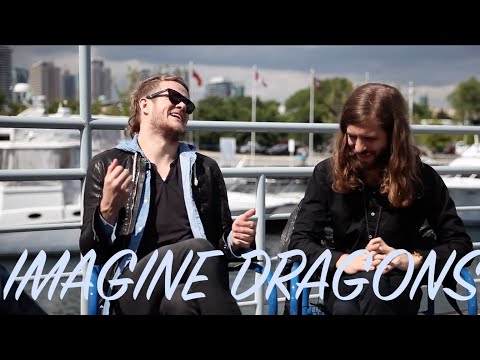
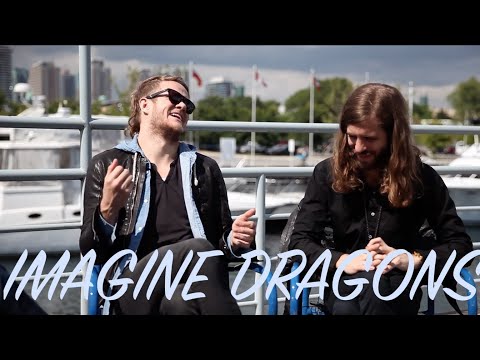
3 clips · 18:13 total
For licensing inquiries please contact reelinintheyears.com. How licensing works →
TRANSCRIPTRead
Show full transcript
Part 1
0:00Well, I guess we'll just dive into it. I mean, I saw you guys play at South By last year, because I saw the band name and it's like, "Oh, that sounds like an interesting name. Let's go see what they sound like." And since that point, it seems like you guys have just been on a path that I don't think any band that played South By last year could have imagined. I don't think any of us could have hoped or dreamed, even, for where it's gone. You know, it's funny, because it's really been a four-year kind of slow, long grind for us, but this last year has just been a skyrocket. I feel like we kind of got to that precipice where the scale kind of tipped, or the snowball effect, whatever it is. We're just extremely grateful for it. Because
0:43especially when you go to South By, you see, man, there's so many talented, wonderful bands that deserve to be able to tour internationally and have success. And so to be where we are, we're just grateful to be here. Because it's partial luck, it's partial hard work, so it's great. Absolutely. And I thought maybe we'll go back, since you're talking about working at it, working your ass off for three years. I heard you used to beg hotels in Vegas to just let you guys play, just to get out there and show pieces. So, go ahead. No, no, it sounds like you were gonna say something, so maybe I don't need to ask a question. Yeah, well, yeah, we went through all the hotels and just tried to get as much stage time,
1:33because we understood that we needed to get as much time on stage together. That's where you really kind of mould together as artists. But also because we were dirt poor. We had no money and needed money to pay rent for this little tiny house that we rented out together. And so, yeah, we really took any gig we could get, and we played six-hour gigs at different casinos, and, you know, it was what it was, to pay the bills. And, you know, you've got to put in a lot of time on stage before you get to the point where you're playing late-night TV or anything like that, because it really prepares you for it, you know. And did that stuff prepare you for the live setup that you guys have now? I mean, it's unusual to see a frontman with, I don't know what is
2:31it, like a three-foot, 36-inch bass drum? I don't know how big that thing is, but it's massive. Well, no, that's my old one. That's my tiny one now. We got this one, it's like five foot and 300 pounds, a taiko drum built in Asia. Really, really cool. But yeah, you'll see that on the upcoming shows for this one. So how did that go? As well as a concert drum. Right. But how do you decide that that's how you want to present yourselves on stage? Because it is very different than most bands. Sure. Yeah, you know, before I sang, before I did songwriting, I was a drummer. I played in a little garage band growing up and took drum lessons for a couple of years. A lot of percussion and world instrumentation.
3:15I never wanted to leave that behind fully. There's nothing like being the drummer in a band on stage, feeling the rhythm, and you can aggressively beat on something. There's something very masculine and kind of tribal about that. And so we wanted to... well, I really wanted to incorporate that into our live show, and the guys were down with it as well. And it just kind of organically built from the beginning. It was a small floor drum in the very beginning that I played, and that wasn't enough, because we wanted a deeper bass sound, you know, and we wanted an even bigger sound. So, you know, we just think all of us are very [inaudible], both organic and electric. And what about when it comes to writing for you?
4:09Where do you start? Coming from the drumming background, with programming or a beat? Do you start on a guitar? How do you guys... I know you have a lot of songwriting... so how does it start? It does very often start [inaudible]. A lot of people in the band work on the computer, work with Logic a lot. Start with a beat on my end, on the computer, Wayne with guitars. Both of us will either build some sort of [inaudible] kind of with maybe some synth, or, you know, the guitar or a melody. Yeah, I think that... rhythmic, as well as, you know, we write... it's very beat-driven, to make you move, you know, that you feel...
5:08I think that, you know, in many places, you know, people could hear a song and maybe not understand what we are saying, but they can understand the rhythm of it. And so I always have been a big believer in strong rhythms. I think there's a music... and so I've always been drawn towards it. Is that why you chose Alex to be the producer? I mean, coming from a hip-hop background, it must be... I think it might be the first time... I don't know his discography off by heart, but as far as I know, I don't think... Yeah, it really kind of is. We really are kind of the first rock band. I mean, he worked a little bit with Foster the People, I think, kind of following in YouTube. But this was the first album that he had done
6:02that was rock-based. And, you know, I think it really, surprisingly, was a perfect match, because in our sound, I'd say, well, you know, we're a rock band, but we try to fuse the organics, kind of being a rock band, with electric beats, and then kind of bring those two worlds together and meet somewhere in the middle. And it enabled us to be able to... you know, it's one thing to hear something in your head, and it's another thing to be able to achieve that. Like, how do we adjust the frequency or EQ there so that we get that low roar from the bass,
7:01so that we really create that big sound that we wanted on the record? The other thing that a producer does, having seen this first-hand in studios before, is that they deal with egos a lot. They have to be there for the band to talk to, through a period, especially for you guys this year, where your song hit before the record was done. So what was it like? Was there advice he was giving you? Was there pressure on you? Was there worry from you guys in the band, making the record over the summer after already having had success? It's not like you had the chance to put out the record and then let it kind of go. Right. I think it was good, because Alex came to the band as an honest, just genuine fan of the band.
7:51We've written... it's kind of... and he brought a bigger, long experience to the table to achieve the songs. And so he's a perfect producer, because he knows when to be hands-off and just let the artist breathe and do their thing, but he also knows how to kind of step in and say, you know, "Here's my two cents. What do you guys think?" And generally his two cents are worth, you know, two million. Like, you know, he's very understated in everything that he says. One of the main things he taught us was, no matter how you get a sound, if it sounds right, it's correct. And I think before we met him we really felt like, well, yeah, that's a demo, you know, how we recorded that guitar, it was just in our laptop.
8:49So now we need to record it into a nice microphone, because it's time to record. But Alex kind of would step in and say, "Well, did it sound right when you recorded it?" "Through the microphone? How does that sound?" "Well, yeah, it sounds good, actually." "Okay, then it's right." Vocals and scratch, you know, like the hand claps, even the stomp, the original stomp, through the computer microphone, you know, in my kitchen late at night, those were kept. There's a lot of that on the record. I love that, man. I love when that organic stuff just ends up in there on the records. Totally. Totally. So to move from the record a little bit to the live show, because that's what you're gonna be doing for the rest of your lives, and
9:41especially the rest of this year. It seems like you guys have been on the road about a month, and it doesn't stop, at least for the foreseeable future. So what have you done to prepare for life on the road? Have you had one? Yeah, we really have. We've toured the whole four years we've been together, but it's getting more intense for sure. Like, this whole year is already planned ahead. The entire year is already... you know, we're going to Asia, and we're going to Spain, you know, so things have really filled out. But it could be daunting, I think, if you really look at it that way. I've always learned just taking it a day at a time, and being in the city that you're in, and then the next day.
10:36If you look at the schedule, I think it gets a little overwhelming. Yeah, that goes to something Wayne said about you, that you're more spur of the moment and he's more of an over-analytical person. So I'm sure for him, maybe having that schedule helps him, and you just want to stay away from it. Exactly. I've always kind of been an in-the-moment type person, and Wayne is pretty opposite, and it actually works out. Absolutely. And the whole Lennon-McCartney thing... [inaudible] the Beatles or anything, but, you know, yeah. So who's gonna go out... well, you're getting there. We'll see how things go. So Ben gets in a lot of trouble, I hear. Have you been able to tame him?
11:16That's a good thing. No, the answer to that is a big fat no. But, you know, we love that about him. I don't think I would, even if I could, because it's [inaudible]. But every city we're in, he can get into trouble, you know. [inaudible] into everything, broke [inaudible], jail. I've gotten... I don't want to get into it, because of his reputation. But [inaudible]. And he keeps us on our toes. We all are a bit of pranksters as well, so we always try to get each other in trouble, prank each other. That again... I was gonna ask you about what recent pranks have gone down, but
12:14I don't think we have too much time here. But if you've got something quickly? Yeah, yeah. Well, you know, we have this thing going on right now. It just happens every night, it seems like, where our [inaudible] is a vegetarian, so we're always finding ways to prank him. The other night... well, we don't go as far as that, but the [inaudible], we took his stage water and marinated ham in it, and then we took the ham out, of course, and then that was the stage water. And he definitely drank it, and we got [inaudible] about it. The second we told him, he was like, "I knew something tasted weird about it," and threw up all over the place, threw up the whole evening. It was pretty good, actually. [inaudible] throw up, and I felt
13:04a little bit bad about it, but not that bad, because he's really [inaudible] and he still eats, like, meat broth. You know, I mean, if you have broths, it's been cooked in meat. So if he didn't, we wouldn't go there, but he's already gone there himself, so I don't feel that bad about it. Ham juice, though, that's so gross. And last night we actually put roast beef all over his keyboard, right when he came out at the show. He had to take the roast beef off. We've done that to him a couple of times now, but it never gets old. That's great. All right, then, before I let you go, five quick questions I ask everybody, one-word answers. Okay. Road or studio? Lennon or McCartney? When you hear a song, what usually hits you first: lyrics, melody or rhythm? Song
13:55you've written you're most proud of? And in one word, Imagine Dragons?
Part 2
0:00Wayne and I are kind of the primary... we do the groundwork. So Wayne will either create a demo or guitar riff, you know, send it to me, and I write all the lyrics and melody, or I'll have a demo and he'll write on it. And then we bring it to the rest of the band, and then we kind of put it in the live band setting. But yeah, it always starts on Wayne's or my laptop, kind of. And I can't remember who said this... Oh, it must have been you, because I only talked to you before. That he's a perfectionist, a little over-analytical, and you're the more spur of the moment. Yeah. So it's kind of like a Lennon-McCartney relationship in a way. Yeah, I think we really balance each other out well in that fact.
0:35I think that Wayne definitely is a perfectionist, and more methodical and slow, and I can sometimes be a little hasty and just kind of in the moment. And that's good, because if it was just me... then I would never get any songs done. I'd always just be working on a song, because it's not ready yet. So it's good that he's around. How do you know when a song is done? You have to give it to him. Well, from a production standpoint, I mean, we throw as much of it at the wall as will stick, really. I mean, we have to peel stuff away. We throw as much as we can, and then when it feels like too much, we actually peel stuff back. That's usually what happens, rather than adding and adding.
1:15It's just like... We're definitely big fans of the editing process. We believe in creating, creating, editing, recreating, editing, recreating. And that's always been... you know, Night Visions, there were like over a hundred demos that we had that went into kind of the catalogue of what could be on Night Visions. And then we peeled that back to 50, and then we played around with those songs and traded them up, and then we peeled that back to 20, and then recorded 20 in the studio. And then from that, it ended up being what made the album, which was like 12 songs or something. So we really believe in creating, creating, creating. What song went through the most revisions? Like arrangement changes, and it was like, what's going on, just to make it work?
1:54Yeah, that one, you know, and I was also thinking just the other day about "It's Time" and how that whole thing happened. I was just remembering this: the first demo had the lyrics from "Amsterdam." Yeah. And the chorus was "It's Time." So that was the very first demo that you wrote. And we decided to actually rewrite the verses to "It's Time," and then we used those verses for "Amsterdam." Used that for "Amsterdam," wrote a new chorus for "Amsterdam." So that's pretty typical. That's a good example of the editing process. Nothing's ever done until it's done. So we try out all sorts of things.
ABOUTThe archive
This interview is part of the Matt Schichter Interviews archive: more than 700 conversations with musicians, actors and filmmakers recorded between 2003 and 2014, beginning with The BackStage Pass, one of the first podcasts (2003). The archive also became Matt's short documentary Lennon or McCartney. Matt Schichter is now a Glasgow-based producer, line producer and music documentary director: he directed CFNY: The Spirit of Radio (PBS, TVO) and line produced Faith (TIFF and Rome 2026). His films → · UK film producer and line producer → · More about Matt →
Listen to the full archive on Apple Podcasts or Spotify.