VIDEOWatch
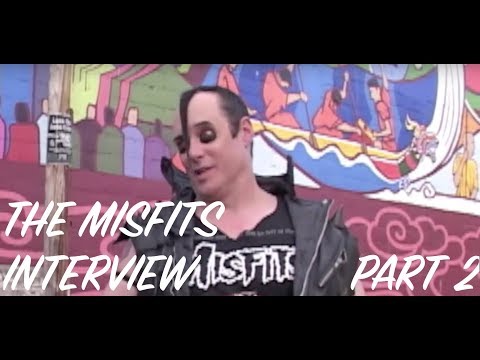
2 clips · 15:29 total
For licensing inquiries please contact reelinintheyears.com. How licensing works →
AUDIOListen
Episode #197 · The Misfits (Jerry Only)June 2010 · 00:15:31
TRANSCRIPTRead
Show full transcript
0:01Thanks so much, Jerry. Thank you so much. My pleasure. For coming on the show. Oh, well, thank you for having us. You're in Vancouver now after a little stop down south, way down south. Yeah, yeah. Argentina, Chile, all those, all the World Cup countries. Do they have the fever going now? Well, they've always had fever, those people. I think it's something you get in the water, but it was really good. South American fans are really big for us. The Ramones kind of changed the way they think down there. Oh, yeah. So the Ramones used to play the football stadiums with 80,000 people, four nights in a row. Wow. So, you know, there's a really big following down there. Great. Let's go back to the beginning, to the Ramones and all that. How does a kid growing up on 50s music, Ronnie Spector, all that kind of stuff, turn into a Misfit? Well, you know, I think it has a lot to do with Godzilla and Rodan and things like this.
0:49Well, the thing was I grew up listening to 50s music. And in 1974 I saw David Bowie's tour, Diamond Dogs, and the sort of theatrics, and said to myself, that's what I want to do. But the most important thing that you do in any kind of art, whether it's a talk show, whether it's a band or whether it's as an artist, is that you find something that fits you and that really projects what you are. You know, I'm very fortunate. You know, I was still in high school when I found this band. And, you know, it's who we are and what we do. You know, we transform. We took, you know, what the Ramones were pushing, understood the value of the music, switched it into something that was very sci-fi. And, you know, just took it into a darker place. You know, I think that really separates us from the rest of the punk bands that are out there.
1:35Or were out there. Yeah, yeah. Everybody's gone now. Well, there's people trying it. Yeah, yeah. That was an opening for you tonight. Oh, cool. Yeah. You mentioned high school and got me thinking, you got a bass like two months before the Misfits started? Yeah. Actually, I ordered it for Christmas and it didn't come in till like February. And I took lessons in March, and in April I was in a band. And then about ten months from there we cut our first album. So why did you get a bass? Well, the kid that sat next to me, he got killed in a car accident not soon after. But we were talking about music. And I was playing sports at the time. I said, you know, I'd really like to play guitar, I've followed music my whole life. And he goes to me, well, he says, you know, you should get a guitar. And I said, yeah, I don't know if I got the patience. He said, get a bass. And he says, you just play single notes, you know.
2:21He was absolutely right. He made me so much wear in there. And over time you went on to become a pretty good bass player. Oh, well, yeah. Well, I'm a pretty good guitar player. The bass I got down. But I'm playing guitar too, you know, to write and do things like this. And singing is pretty recent too. Yeah, well, you know, a long time ago I realized that if you don't know something, you ask. And with the vocals, I kind of got thrust into the job. It wasn't really something I was looking to do. But after, you know, so many people that just got me real aggravated, I said, you know what, screw it, I'm going to do it. And I take vocal lessons from a guy named Don Lawrence. He does Jagger, and Bono, and Bon Jovi, and Joey Ramone, Christina Aguilera, what's her name, Lady Gaga's one of his. Oh, yeah. So it's all good. New album, working on it? Yes.
3:06Very excited. Yeah, because I'm almost ready to go. What are we waiting on? Well, we're leaving for the studio July 19th. And then we go to Europe and we come back and mix it. So we'll have it hopefully, maybe not for Halloween, but definitely for Christmas. Not a little different. Well, I really like it, you know. So, well, look, the thing is, you know, when you're working on something, either you do it right or you don't do it at all. That's the way I look at it. And, you know, I went through a lot of different lineup changes, even over the last couple of years. And I finally got guys I really like working with. And I'm real excited about the new tunes. And I think our new artwork is great. And I think our new crew is great. And I think everything's pumping. And I got people now that aren't going to screw everything up once I get it going. So, you know, I'm finally at that point. And, you know, I'm going to save it a moment.
3:51I enjoy what I do and the music is going to show. There have been a lot of, like you said, a lot of member changes over the years. I heard it was because guys didn't fit the image. They didn't conform to the image. Oh, no, no. People just don't do what they're supposed to do. Well, no, but that's what I mean, what you're supposed to do. Well, no, you're supposed to show up. You're supposed to be there when you have a gig. You know what I mean? When you do a video shoot with George Romero, you're supposed to be at the fucking video, too. Yeah. You know, that's all. I mean, you know, that's all it boils down to. You know, you want to be somebody and just don't want to put in the time. Well, that's half the rock and roll attitude that you'll find from a lot of people. Half the rock and roll. We want to play music, but we don't want to put a lot of time in. Yeah, we don't want to work. Well, yeah, you don't want to do the business part. Yeah. And I think the business part is probably the most important part, you know, other than the creativity. Yeah. You know, yeah. I mean, come on. Everybody has on nights and off nights playing live.
4:38I mean, playing live is being able to go out and impact people. Make people understand what you're doing and really, you know, inspire them to pursue things. And I think that's what we do. I mean, we've done that from day one. If you look at the bands that looked at us and saw visions, I mean, you got Metallica, Guns N' Roses, you know, Pantera. I ran into Pepper from COC when he was playing with Superjoint. He's sitting in a pool with a bottle of jazz. It was because of your Three Hits from Hell record I started playing. So I get this all the time, but, you know, but that's not it. I mean, the thing is that, you know, I know what we're capable of and we have it. We haven't quite hit it yet. And I'm still looking for it. So really? Well, yeah, you know, I always think of it like Paul Anka once. What's the best song you ever wrote? He said, you know, he's been, have a rainy. Yeah. Still working on it.
5:23What are the new songs you're writing about? Is it still the same? It's a lot more groove, grindy kind of stuff, but I kind of have a really big assortment in there. And that's what I like. I like variety. You mentioned the business side being very important. Yeah. Looking at you now, I mean, the merch from the Misfits, it's almost a bigger thing than the band to a degree, right? Well, it's a bigger thing than most bands. Yeah. That's true. So, no, the image is very important. We're very specific about what we do. Like when we did action figures, we got action figure of the year. You know, everything we do is grade A. We, you know, we grew up in a machine shop, so we make all our own stuff. We build our own jackets and our bikes and all our stuff, and our guitars we make. We, you know, put together the drum kit. So we kind of do a little bit of everything.
6:09The most important thing is when you're working on something, you figure out what your resources are and how you can manipulate them into putting you where you want to be. And that's something that we've mastered. And in today's music business, you know, a few years back, the whole music business imploded. Right. Okay. Went down, you know, the whole bottom dropped out. And it dropped out because of your new formats of media. You got people that now, you know, all music is free if you look hard enough. So the thing is, it's not about music really now. It's about packaging and presentation. Yeah. And we've always been the best at that. You have. Yeah. So I mean, you know, the way I look at it is, you know, the future belongs to us. So, but you know, that's why, you know, I'm not worried about volume. I'm worried about quality. And I'm really excited about making a record. I think everybody's going to like it.
6:55You have a big tour coming up this summer playing? Oh, no, none. Well, no, for the next couple weeks. Oh, for here. Oh, yeah. We're kind of important. No, for us. This is a short run. You know what I mean? Well, we have it for two weeks. We did a week in South America. We did a week here. But Canada's always been good for us. I mean, back in the day, the first time we played outside of New York City was Toronto. Oh, yeah. Yeah, at the Horseshoe. So, yeah. I mean, so that was our first run. And then we played a place called the Shock Theater that we got snowed out. That sounds like a perfect venue. Yeah, it was. Talk about CBGB in the heyday and what it was like back then. Good place to hang out. Played there the first show I ever did. Played there the last time, 30 years later, trying to save the place. So, you know, we were kind of inseminated there and then just split.
7:41You know, we moved into other venues and other avenues. CBGB was unique because Hilly's philosophy was you needed to be an original band. If you played a cover song, he kicked you right out the door. But if you had a band, or Lindsey had a band, anybody that had a band could go in there and play any song. No matter how much you suck, it didn't matter. Do you know what I mean? He had bands like Suicide would play in there, Television played there. Bands that wound up, Blondie would play there, the Heartbreakers, the Dolls. I mean, everybody. And really he set a format. He set a pedestal for people to come out and be different and create the vision. I mean, so, you know, Hilly was kind of like the savior of the music scene in the 70s.
8:26And a good friend of mine, you know, we always hung out at the merchandising shows together. He always would merchandise the stuff. Oh, his stuff's as big as he almost did. Yeah, he was like my grandfather. We used to hang out a lot. But, you know, the thing was that CBGB was that, you know, it's sad that it had to go, and it was, you know, it had its day. And I think that today, like I said, I mean, anybody can write a book and put it out on Amazon. And anybody can make an album and put it out for free on their thing. So, you know, the world's here, you know, a bag of oysters right now. You can do whatever you want. For sure. There's a quote from you saying the Misfits took rock and roll to a place nobody wanted it to go. Well, yeah, that's true. What do you mean by that? Well, the thing was that we took it right out of the business. Rock and roll became a business when the Colonel signed Elvis, okay, and took Elvis, and Elvis tried to get away from him
9:16and couldn't afford to buy himself out of his own contract. Right. Right. All he needed was a million bucks. Today, a million bucks, we spend that on lunch, right? So, you know, now we're talking trillions. One time, billions was a big number. Now everything's trillions. Yeah. So the thing is that when Elvis kind of became a business and rock and roll became a business, then the Beatles came down the pipe and the Stones, okay, Jimi Hendrix tried to do it, but he died. Okay. And then we did it, but we did it in such a way, like when the Ramones did it, they were still in the groove where they were working with Sire Records and they were kind of mainstream on the radio. We're not on the radio. You know what I mean? We're not on TV and we still exist and we're still able to keep going. And I think we took rock and roll to a position where the do-it-yourselfer could conquer the business world, you know?
10:04It's like, you know, the creation of Bill Gates and the candy, you know, on the screen for the video, for the computer. You know, all of a sudden everything is different. It's a whole new board game. Yeah. Well, you were on TV for a little bit there with wrestling. Well, yeah, yeah, yeah. I wouldn't do that anymore. No, that was a win. I bought a ring, you know, that's something. Did you, a ring? Yeah, I got it home. Cool. Yeah, we tried. Yeah, we're ready. So a couple of names I want to throw out, you just give me some quick thoughts. First, the Clash. Corporate. All right. But, however, Joe Strummer, and, you know, great thing, great thing. But the bridge between old and new. Right. Okay. The Ramones, still obscure. Okay, but the Clash with Combat Rock and "Rock the Casbah," all that shit. Right?
10:50Okay. Blending the reggae into mainstream radio with punk rock music. You can't beat it. But the people who know the Clash don't really know their punk rock shit, which is their best stuff. That's true. You know what I mean? Sex Pistols. Gimmick. Gimmick. Great album. Big deal. But I heard you knew, you stayed with Sid's mom for a little while. I met Sid Vicious the night he died. Really? I made him dinner. Me and his mom. I got his boots. I turned them in at the Rock and Roll Hall of Fame. They'll be on display. Sad story. Very kid with all the hype and all the media at his fingertips. Okay, but he couldn't hold on to the ball. Okay. You know, killed his girlfriend? We'll never know. Okay. Wound up in prison. Wound up looking at 20 to life.
11:37Okay. Who knows? You know what I mean? Gets out on a weekend. Hangs out with the same idiots that got him there in the fucking first place. Buying all kinds of dope. The coroner said that they thought it was the purest dope they'd ever seen. So I mean, you don't go hooking up your buddy who's been in prison, that's clean, with this kind of shit. So I mean, you know, look, his mom was a really nice lady to me. I hooked her up because I was the only one in New York that had a car, because I was from Jersey. So I took her to the morgue. I took her to the cemetery. She couldn't put the ashes on Nancy's grave because Nancy was Jewish and Sid wasn't Jewish and the family didn't want it. So in a blizzard we went down to Philadelphia and snuck her through the fence. You know what I mean? It's crazy stuff. You've had some interesting grave stories. Yeah. Well, in the end you're all going to have a grave story.
12:23Okay. So it's a good lyric for when you're forced. Well, yeah. We got that array. So, you know, but the thing is, what you got to realize is that it's easy to die and it's easy to destroy shit, and it's hard to live and it's hard to make something great. So, you know, you got to really decide what you're going to do. Some people, I guess it's like the Night at the Museum, some people are thrust into greatness and some people, you know, have it thrust upon them. So, you know, in our case, you know, we've had to always push to make it happen. And we've always put, you know, living ahead of dying and, you know, vision ahead of money. And, you know, that's really why I think we're substantial. Glenn Danzig. He was a good friend. I really wish Glenn had friends like I was to him.
13:10You know what I mean? I don't know if he does or he doesn't, but I always wish Glenn the best. And, you know, I miss him. But, you know, I have a lot of little kids that follow me around. And the thing is, I wouldn't sell them one bad thought that might screw them over. You know what I mean? I mean, we might talk shit, but, you know, we back it up. So, you know, the thing is that, you know, we got a lot of really intelligent kids, artists, writers, you know, visionaries. I mean, George Romero is our fan. I mean, you know, people that can go out and create. I mean, we're like an icon for creators. And really that's what we wanted to be. We wanted to be something that mattered. Because after you're gone, you know, your heirs get your money. And, you know, I see it happen with like the Ramones and people like that. I mean, it's just like, you know, it loses.
13:57It's lusty. You know what I mean? People argue over money and they don't worry about what's the integrity of the band. What's the best thing for the people who are in the band? You know what I mean? So, you know, I protect that. My son works with me. He does our tour managing and our sound. Oh, yeah. Yeah. And everything, he's in charge of everything. So I'm teaching him what I want it to be and teaching him how to make that happen. So even when something happens to us, we keep going. Jimi Hendrix just passed up Elvis as the biggest selling record person of all time. Which means that people have finally moved from the 50s into the 60s. Do you follow what I mean? Okay. You're coming up on the same list. Now, in the next 20 years, they're going to move to the 70s and they're going to find the Ramones. The Ramones will be the biggest oldies act on oldies radio stations of all time.
14:46They have the greatest songs and they have millions of them. Okay. Back in the 50s, everybody had one hit. Yeah. Okay. Chuck Berry, two or three hits. And then the Ramones will be on four or five. Do you know what I mean? The Ramones, 87. You know, it's two minutes long. Yeah. "Rockaway Beach," "Rock 'n' Roll High School." You know what I mean? "Do You Remember Rock 'n' Roll Radio?" Rock and roll. The Ramones will be rock and roll for your grandkids. So, you know, we will always be dark and under the table. And, you know, I accept that. I trade that bassness for pinpoint accuracy. So that's the trade. In one word, the Misfits. Forever. Thank you. Appreciate it. Thank you. Man, good job.
15:31Thank you.
PRESSCoverage
ABOUTThe archive
This interview is part of the Matt Schichter Interviews archive: more than 700 conversations with musicians, actors and filmmakers recorded between 2003 and 2014, beginning with The BackStage Pass, one of the first podcasts (2003). The archive also became Matt's short documentary Lennon or McCartney. Matt Schichter is now a Glasgow-based producer, line producer and music documentary director: he directed CFNY: The Spirit of Radio (PBS, TVO) and line produced Faith (TIFF and Rome 2026). His films → · UK film producer and line producer → · More about Matt →
Listen to the full archive on Apple Podcasts or Spotify.