SONGSWhat Will Hoge said about the songs
“The Wreckage”
Will Hoge said the record was written after his motorcycle accident, though the title song is about holding a relationship together.
“the record was written after the accident. And I guess really everything that I've done since the accident is somehow, indirectly at least, related to it. You know, the record isn't a motorcycle record. It's about a relationship that you're trying to hold the pieces together.”
VIDEOWatch
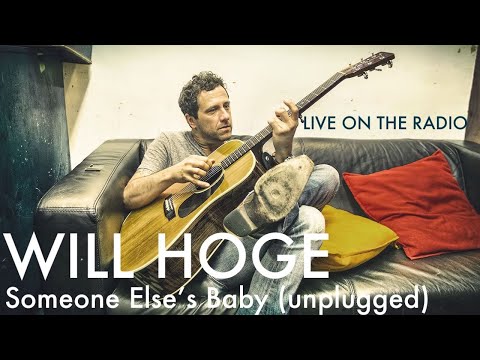
8:22 total
For licensing inquiries please contact reelinintheyears.com. How licensing works →
AUDIOListen
Episode #80 · Will HogeJune 2006 · 00:16:37
Episode #212 · Will Hoge #2June 2010 · 00:08:19
TRANSCRIPTRead
Show full transcript
0:00Off with that. You guys like hip-hop? I love it. Yeah? Yeah. Can you incorporate that into the show at all and do any hip-hop covers? Not a lot. You ever think about it? Maybe tonight? What song? Whichever one you want to hear. Whatever. Maybe some Tupac? Yeah, he's my favorite. Are you bullshitting me? I think he's really good. Yeah? Really good. Or he is, depending on if you think he's still alive. I think he is. What about you? I don't know. The verdict's still out on him. Fair enough. You guys want to start off with a song? Let people hear what you guys sound like? Yeah. What do you feel like playing? It's called Love From a Scar. One, two, three, four.
4:03Cool. Thank you. When did you write it? How'd you write it? It's about... wrote it for this last record that just came out. I guess it's been, I don't know, eight months ago, something like that, maybe. Play it live every night? Yeah, we'll be working on it tonight. Cool. You sound amazing. Thank you. It was really cool. First time up in Canada? Actually, we were out here in January before. First time up here in the warm weather. Yeah. It's really hot today, actually. Especially in here. It is really warm in here. Is it like that in Nashville? What's the weather like in Nashville? Kind of like this. Sticky, humid kind of? Yeah, y'all don't know anything about humid. No. All right. It's not humid at all compared to home. Yeah. It's good. You get all the seasons down there, so it's nice. Yeah. I can imagine. Yeah, that was a real surprise for us when we were up here in the winter.
4:50People still running around in shorts and talking about how it was cold. Snow on the ground. We were all freezing to death. Yeah, that was a big difference. Cool. What was it like for you growing up in Nashville? I mean, the music seems to have just been amazing. Yeah, it's still a great music town. It's Music City, USA. Just so much great music. I mean, it's obviously been known for country music for years and years, but there's so many other things going on there, coming out of there at this point. It's just a real creative musical town. It's a great place to live and work. I think we're all excited about being there. Cool. Have you played the Opry at all? Actually, yeah, I've been to the Opry House and the original place, the Ryman Auditorium,
5:35where they started years ago. It's still a theatre downtown. They do a lot of great shows there. It's an amazing venue. Nice. What's your favorite venue to play so far? I mean, you've traveled across the country. The Ryman in Nashville is really one of probably the best musical environments anywhere. It's just an amazing room. It's one of those old rooms that was a church originally, so it's just got those vibes. It was built for sound when there wasn't huge amplification. It's one of those places you can stand on stage and just play guitar and sing, and it sounds incredible. It's a real magical place to play. What's your live set like? Is it just the three of you, or do you have a drummer? No, we're a four-piece: a bass player and another guitar player. Is that it? Yeah, that's it. Nice stuff. Yeah.
6:20Cool. You like this stripped-down stuff? It sounds cool. Yeah, it's cool. It's a real pain to try to haul a drum kit in here. Oh, I can imagine. Yeah. You guys want to play another song? Yeah, sure. What do you want to play? It's called Packer Full of Chains. One, two, three. Nice.
9:33That's kind of good. Thank you. I assume that song's about not being played on radio and that kind of stuff. It is, in fact. And people in Hollywood not enjoying your tunes. Exactly. You kind of don't need that anymore with downloading music. You can just get out there on the internet and pick up anybody's tunes. How do you guys feel about that? I mean, I think we're all real big supporters of the internet, and that whole thing has been a real leveling thing for the playing field. Like you just said, there's bands that obviously for years have depended on, you know, you have to have a record label and you have to have all of these things. And those things are still nice. I mean, if you can get someone else's money to help you get your record out to people, obviously it can be really helpful. But there are ways, I guess we're proof of that, that you can do it on your own. It takes a lot more work, I can imagine, sometimes, but that's the thing.
10:18I mean, this is a lifestyle for us. It's not something we're doing just because we want to be rich by Thursday. It'd be great. Yeah. So it's a great way to get your stuff out there. That whole downloading thing and file sharing has been real helpful for us. So I hope that as that technology continues to spread, we'll kind of stay on the cutting edge of that and be able to break into some new markets and win over some new fans. That just seems to be what you're doing here. Hope so. Yeah. You think it'll get rid of the whole album concept? I mean, The Man Who Killed Love obviously is an album. You put the tracks in order in a certain way you wanted to hear it, but kids aren't going to have the artwork and stuff like that. Yeah, I don't think it'll get rid of it, per se. You know, I think that there are still people that are really big music fans. A lot of us in the band still enjoy the concept of, you know, going and having a physical thing that you can look at and hold.
11:09But I think that there are probably younger kids that will have never done that. So I think that there will be people that will never own an album. They download it straight from your website, they'll download the artwork and be done with it. And that's fine too. And I think there'll always be a place for a physical recording. I think there are people that enjoy that concept and having the collection. It's kind of like saying, you know, we'll get rid of books. Yeah, it's starting to happen. Kind of. I think that there will be people that will do it, but there'll always be the old-fashioned guy that will go back and, you know, want to own a record. I hope so. I hope so. Yeah. Cool. Playing another song? Yeah, let's do one more. We'll do a lower tonight, or Somebody Else's Baby. It's up to y'all. Let's do... we got all up here.
11:54Let's do something else's baby. Alright. That's hard to learn. It's a desperate leap, but I'm a say. Oh God, he'll make it just one more day. Oh, the tape will be signed.
12:44You got it. Is that good?
16:04Thank you. We do this thing every week: five questions, five quick questions, one-word answers. Okay. iPod or CDs? iPod. Lennon or McCartney? Both. One or the other. You said one-word answers. Fair enough. Okay. Alcohol or marijuana? Yes. Song you've written you're most proud of? That doesn't have to be one word, though. Okay. Oh, song you're most proud of? Can't pick. Okay. And one word, Will Hoge? Rock. Cool. Thanks so much, guys. Really appreciate it. Thanks, man.
0:00Well, thanks so much. Yeah, well, thanks. Thanks for bringing us to the Greek Theatre. This is one hell of a room. Thanks, Sugarland, for bringing us to the Greek Theatre. So you've been on the road for a few weeks with them? This is the first night. We've known them for years, through different things, through different friends and bands and stuff like that, but this is the first night of playing together. Cool. You were just sound checking. What's the Greek sounding like? The very famous venue. Yeah, this is one of those places. There's a very short list of venues that you kind of keep that you want to play, and this is one. So we can check this one off now. What are some of the others? I'd assume the Ryman. The Ryman back home was certainly a big one. We've gotten to do that one twice, which was great. Red Rocks is another one. The Fillmore in San Francisco we've gotten to do. Is there any left on your list, or have you done them all now?
0:45Red Rocks. I still want to do Red Rocks. So if anybody's watching that has anything to do with that... We can get you on Red Rocks. Don't scratch it off the list. What records did you grow up with? Man, there were so many. My father was a musician. Before I was born, he grew up playing in bands, where he played bass and sang. Okay. And then eventually he ditched the bass and just was the singer. So I grew up kind of a generation removed, where all my friends were listening to bad '80s metal and stuff like that, and I was a lot of Rolling Stones and The Beatles and The Temptations, James Brown, Otis Redding, Bob Dylan, James Taylor. Just kind of, like I say, more of a '60s and '70s record collection than an '80s record collection. I read an interview with you saying there was a lot of that stuff, and there were four British bands as well.
1:30Yeah. What are the four? The Beatles, The Stones, The Kinks. And who was the other one? I'd just make that Led Zeppelin. Yeah. The usual four? Yeah. But The Kinks don't always make it, so why The Kinks for you? What drew you to Ray Davies? I don't know. Well, I think that there was a real... to me they were more raw. I think Buddy Holly was the invention of punk rock, to me. The three-piece just kind of banging things out, especially the early records. And to me The Kinks were more of that lineage, where The Beatles grew from this really core, beautiful songwriting and melodies and things like that, and The Stones came from that real bluesy background. And to me The Kinks kind of were right in the middle of those two things.
2:16But much more... The Kinks were way scarier than those other two. Yeah, he's a little out there. Yeah. He still is, for that matter. Yeah. How do you make a setlist for a show? Because you've got a lot of records now to go through and choose from. We do. I know Secondhand Heart comes out a lot. It does. That seems to be the one mainstay. Yeah, there's a few. I mean, shows like tonight, where we've only got 20 minutes, you just kind of throw... Well, what do you do for a show like this? Because it's not your audience. It's not. So you're either playing your biggest songs, or you're playing whatever the hell you want because no one's going to know them. Yeah, and it's kind of a combination of those two things. I mean, it depends on the environment. When we're the first band, you kind of... and maybe we shouldn't. Maybe we should just go out and do whatever the hell we want. But I think we try to cater a little bit to the folks that are sitting in their seats early, and try to gauge it kind of by the crowds.
3:04And some of it changes. I mean, luckily the band knows all the songs. So a lot of times the setlist... people will say after a show, can I get your setlist? And the setlist is never what we write down. It's usually the start, and then somewhere towards the end we'll get back on course. But it's more of just a guide than anything else. Cool. Well, let's talk about this new record, The Wreckage. Yeah. Is it named after the accident? The song... the record was written after the accident. And I guess really everything that I've done since the accident is somehow, indirectly at least, related to it. You know, the record isn't a motorcycle record. It's about a relationship that you're trying to hold the pieces together. It's got to get in there somehow.
3:50It does. And I think that's what it is. I think it's much more of a subliminal thing. It's not something that I thought about, like, let me sit down and write a bunch of songs about piecing things back together. But there was so much of that going on at the time. And The Wreckage... at the time, the song was written, and then we talked about the title of the album, that same thing. And we felt like it was kind of a tip of the cap to me and the band, and some of the fans that really stuck with us through the whole process. It was kind of a nod to them of thank you, and they'll know what that's about. And then folks that are just discovering the record, I don't think they're going to hear The Wreckage and then think, I wonder if he got in an accident. Hopefully they just think it's a cool title. What did you gain from that? I know a lot of people come out of these near-death experiences and are changed in a certain way.
4:38Yeah. And not to sound overly cheesy, I mean, it kind of changed everything. It really is one of those things where you just get a whole new perspective. I've always felt really fortunate to be able to do this for a living, and to have great friends around me and family and things like that. But just after that, all of those things get put in a much more bright light. Even my wife and kids and family and my band members and guys that have been there and stood by me through this whole thing. And as a songwriter, it really just refocused me on the craft of songwriting. People tell you you have your whole life to make your first record, and then six months to make every one after that. And this was the first time where I really got to step back.
5:26We were three quarters of the way done with the record, we thought, when the accident happened. And then we sort of stood back and looked at things and wrote a bunch more songs and changed some things. And that really put me back on the path of writing songs and making records, and not just touring all the time. So I think there were a lot of real positive things that came out of it in the end. I'm sure there were. Is it harder to be away from the family this time around, though? Yeah, it is. It's tough. I mean, we dealt with a lot of post-traumatic stress, I think, within the family, myself included. Getting back in a car and driving and being away and things like that. I mean, it's tough anytime that there's a wife and little kids at home, and this just makes it a little tougher. But it also makes it a little sweeter in the end too.
6:13We're still able to do this. We're still able to support my family doing this. It's been about a year. You seem to have a record every six months, like you're saying. Not every six months. But you're pretty consistent for an artist, because most people it's two, three years kind of thing. So you must have already started working on the next one. We have. We are about 90% done with it. Oh, no way. That will come out sometime in March. What does it sound like? Is it more of the same? No, it's a little more... This one is a little more song-oriented and a little more rooted in story-based songs. Stories on what? Is there a little bit of dragon? No. No monsters. Not yet. We've still got some songs to write. You know, we touched on a few things economically.
7:00There's a few things that are a little more family-derived, struggles within family, working-class folks and things like that. Just a little more topical in some of the songs than we've been in the past. And then we've still got some of that girls and cars. Well, you have to. That's rock and roll right there. Back to the genre thing for a second. I talk to a lot of young bands that are pitching their stuff to labels right now, and they're having trouble: it should be country, it should be pop. You kind of float in between the two. Did you have those kinds of struggles when you were getting started? It's easy to get caught in that. No, I didn't, because getting on a record label was never very important. The biggest thing to me was always, I wanted to write great songs. I wanted to be in a great band. I wanted to play music in front of people. I never stopped to think, I should be trying to do this or trying to do that.
7:50It was always just something I wanted to do. Whatever the songs are, I try to get to the core of those things. The fact that there was ever a record deal was always kind of a shock to me. The fact that there's been more than one at this point is an even bigger shock. I hope that's something that continues. It doesn't do me any good to worry about where the songs fit or anything like that. Hopefully that's somebody else's job. Cool. Thank you so much. Appreciate it, man. Thanks a lot. Thank you.
ABOUTThe archive
This interview is part of the Matt Schichter Interviews archive: more than 700 conversations with musicians, actors and filmmakers recorded between 2003 and 2014, beginning with The BackStage Pass, one of the first podcasts (2003). The archive also became Matt's short documentary Lennon or McCartney. Matt Schichter is now a Glasgow-based producer, line producer and music documentary director: he directed CFNY: The Spirit of Radio (PBS, TVO) and line produced Faith (TIFF and Rome 2026). His films → · UK film producer and line producer → · More about Matt →
Listen to the full archive on Apple Podcasts or Spotify.