Lennon or McCartney? Big Sean’s answer: McCartney. Watch the moment. See every artist’s answer. Take the quiz.
SONGSWhat Big Sean said about the songs
“Beware”
Big Sean explained how Lil Wayne ended up on the song.
“I was in the studio with Lil Wayne, and I was just playing him a couple things, and he heard that song. He was like, I got to be on that one... I didn't really want to have another feature on that song. I just wanted it to be me and Jhené Aiko.”
“First Chain”
Big Sean explained the Detroit realities behind his lines about the police.
“I talk about how the police only work 12-hour shifts, because in Detroit that's cheaper than the bailout... I've seen the abandoned houses and blocks, full blocks of abandoned houses.”
“Fire”
Big Sean said the song came from pure feeling.
“The song I did, 'Fire,' yeah, I had no concept. It was just like a feeling, and by the end of the song you were like, oh, yeah, there's a song”
“World Ablaze”
Big Sean explained the family illness that inspired the song.
“it was inspired by, really, who at the time was my old girlfriend, and her mom had, you know, been diagnosed with... a disease... I kind of more so wrote that song from their perspective, and just like, you know, when your world is on fire”
VIDEOWatch
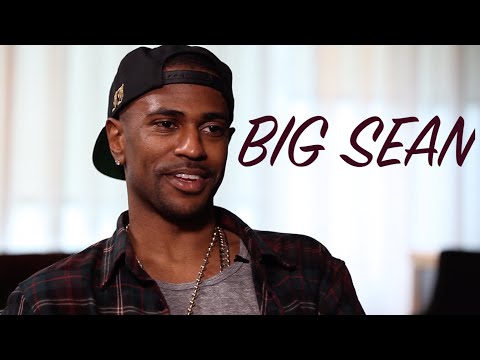
2 clips · 25:45 total
For licensing inquiries please contact reelinintheyears.com. How licensing works →
AUDIOListen
Episode #597 · Big SeanSeptember 2013 · 00:13:31
TRANSCRIPTRead
Show full transcript
0:06What's up, players, this is Big Sean, and you're watching MSN Exclusives. You shot right through my heart. Why you let these hoes tear what we had right apart? Oh, I'm so mad, I could have seen this coming right from the start. You should beware, beware, beware of a woman with a broken heart. Okay, ski smoke sleep car miss text woke spoke lie feel Lisa ill time kill mom still I got so... Do you want to talk about either writing that tune or shooting the video? It's just like you in front of a screen the whole time. Well, yeah, the video, I hooked up with the team DONDA, which is Kanye's company, and they were super creative, man, a lot of creative minds, and we collab on ideas for videos like "Beware,"
0:55"Fire," or whatever. So, you know, it's cool. As far as the song goes, my producer Key Wane is the one who produced it with the legendary Mike Dean. And I was in the studio with Lil Wayne, and I was just playing him a couple things, and he heard that song. He was like, I got to be on that one, that's the one, you know. Is that Lil Wayne? That kind of sounded like Lil... Yeah. So, you know, he hopped on it. And I didn't really want to have another feature on that song. I just wanted it to be me and Jhené Aiko. But every feature I have on Hall of Fame, it's because they add something to the record and they add a different perspective, and he added a different perspective to that song. So I liked it and kept it, and you know, it's Lil Wayne, man. So it's great. So are you taking their suggestions when you want a different perspective, or are you asking them, can you write about these themes? Or do you just let them do it?
1:42I let them do their thing, right? Especially artists like that. You know, with artists like Lil Wayne, it's not "I need you to do this for me." Yeah, he knows what he's doing. You know what I'm saying? Right. It's definitely a great... I had a great time doing the video, and some people relate to this song way more than others. You know, whoever's been in a dysfunctional relationship, they probably relate to this song way more. So, you know. Yeah. Last time you were here, a big thing happened. Somebody thought he saw Mase on a plane. He's like, no, it can't be Mase. Mase not coming for a show. Did he bring Mase on stage? Yeah. So what was that like? Did you know that was happening? I didn't know any of that was happening. I just knew I was coming. You know, I knew Kanye was coming too,
2:27because I heard he was coming. And so I knew that was a big deal. But you know, it was crazy how he did it for Toronto. It's awesome. And I do a homecoming show in Detroit all the time. I've only done it twice. So we just did the second one, where I brought Drake and Nicki and a couple other people to Detroit, and it was the second time I did it in a big arena, you know. It's great. But I think this is the fourth time Drake did the OVO. So, you know, it's great to see something like that for your city, when people come out and they feel so excited and a part of something. So I'm glad I could be a part of it. Were you a Biggie or a 'Pac kid? I was a Bad Boy kid, I would say. So I was into Biggie, you know what I'm saying? I was into, like, Mase. Mase and Biggie were like two of my favorites, man. Like Harlem World,
3:14and then, like, Ready to Die, you know, Life After Death, man, those were like some of my favorites. And I was so young. It was that pivotal point where it was just like, you know, videos like "Juicy" or videos like "Big Poppa," you know, all those videos, man, were my favorites. You know, or Mase, and all the shiny suits and stuff, man. That was some of my favorites. But I also loved, you know, I loved 'Pac. I loved Snoop, you know. I was a little snoo when Doggystyle was out. I was super young, and I remember playing Doggystyle at Thanksgiving one year. I got the CD from, I think, my older brother, and I was playing it, and I remember I got my ass whooped that day, because I was playing it in front of my grandparents, and they were like, what? You know,
4:02you hear Snoop, "Guess who's back in the motherfucking house with a fat dick for your..." you know, and it's just like I'm a little-ass boy playing this. You know, so all those moments, man, are like classic moments for me. So I attach to things differently, but as far as if I had to choose, I was definitely a Biggie... like, you know, I don't know why. I was just... right. Yeah, fair enough. So you're on tour now. Talk about tour a little bit. How are these songs coming out live? Oh, great. It's my first time performing a lot of songs from the new Hall of Fame live, and people are loving them. And we get to come to places like, you know, today we're in Toronto, which is so close to Detroit. Toronto always shows me love. I'm like, I'm from here, you know what I'm saying?
4:48So it's great to always come back to Canada too. You know, I'm touring with Cudi, you know, my brother. So we rip it up every night, man. These kids come out and go crazy. I was watching the documentary, and you see him in the studio on your track. Are you guys doing that one together live? You got to wait and see, man. You got to come to the show. But I mean, I don't give a fuck: yes, we do. That's the right way to plug the show, though. Yeah. No, but it is, it's a great moment too, you know what I'm saying? We're just having fun, man. Do you have a band with you? Because in that same documentary, you're talking about going into the booth with Steve playing the bass and having live instruments going on. Yeah. Do you have a band with you? Do you want to create more with the band? Yeah. A lot of shows we have a full band. Some shows, you got to see, it's unique how we have it. You know, we have some live instrumentation. I don't want to spoil it, but it's something unique, you know, how we have our drummers and everything. So it's not a full band.
5:38It's kind of like something special that we did for the tour. So, nice. Do you want to create with a band for a record? Because it's a different process than probably what you've been doing. Yeah, I mean, well, you know, everything we do has live elements. Every song, you know, we get live bass and live guitar and live, you know, pianos and everything on top of every track. So as far as that aspect of things goes, we do live bands all the time, and we do a lot of live bands for a lot of live shows too. But you know, a lot of people have bands, and sometimes we're just trying to elevate it to a cooler thing. Like, you know, at one time, instead of having a full band, I had four drummers on stage, and they all had electric drum pads and were synchronizing their drums together, you know what I'm saying? And it gave, like, you know, the live feel of a band,
6:26but it was really four drummers on electric pads that were controlling different instruments. So it was just new elements like that, you know. So a lot of people are gonna start stealing those ideas. It's like, no, that's all good. But you had it first. Yeah, patent, copyright that shit. Yeah. Does the beat influence the rhyme, or do you have rhymes and find beats that fit what you want to say? Both ways, man. It's just like, you know, bisexual shit, man. No. Yeah, it goes both ways, though. You know, it's like sometimes a beat is there and you get the lyrics to the beat. Sometimes you have a song, you need a beat to it. And you know, every song is different. Sometimes you have the concept, sometimes you don't have the concept, sometimes you just go in off of feeling, and
7:11What's one off this record where you just went off feeling, and just like, what came out of your mouth? "Fire." "Fire" was like that. Okay. The song I did, "Fire," yeah, I had no concept. It was just like a feeling, and by the end of the song you were like, oh, yeah, there's a song, you know. So yeah, things like that. It's no equation. It's not like E equals MC squared, whatever. It's just like whatever you feel. Right. "World Ablaze" must have been something you wrote up before. It feels like that would have been a hard song to write, maybe. Yeah, definitely. That song is one of my favorite songs, and it was a tune. Yeah, it was inspired by, really, who at the time was my old girlfriend, and
8:01her mom had, you know, been diagnosed with, like, you know, some... I don't want to put all their business out there, but a disease that... It touched me, you know. I never knew anybody who was like... you know, when you hear about things like cancer, this or that, and you know, it's heartbreaking and devastating, but when it's close to you like that, it's a whole nother thing, man. And you know, I could just imagine... I kind of more so wrote that song from their perspective, and just like, you know, when your world is on fire and things just keep going bad one after another, how that feels and how we all were feeling. You know, it was a tough time. And it has a couple other situations I refer to, but that's definitely a tough time.
8:50But I made that song for the people who need that, you know, to get through those times. And a lot of people have come up to me and been like, man, when my mom died, I was listening to "World Ablaze," and I just want to let you know, man, that really changed my life. And you know, that's what I made it for. Yeah, because I was reading a quote of you saying, I want to teach and make a lasting impact on people's lives with this album. Definitely sounds like it's happening. So yeah, what did you want to teach people, though? Man, I wanted to teach people that you can manifest anything you want and that you're your own creator. You know, I'm super spiritual, and I believe in that. I believe in the law of attraction. I believe in manifesting what you want, and just letting people know the components of how I made it happen. And maybe they can put that into what they got going on, and that could help inspire them. And I wanted to give them some motivation,
9:37inspiration, and I wanted to be a vessel for my city and let people know what was going on there, you know. It sounds like "First Chain." I talk about how the police only work 12-hour shifts, because in Detroit that's cheaper than the bailout, you know, or whatever. But it's just like, I remember seeing all these things happen. You know, my homies calling me, or, you know, I've seen it firsthand, I've experienced it. I've seen the abandoned houses and blocks, full blocks of abandoned houses. I've seen, like, you know, I've had friends who got raped walking to school. You know, like girls and stuff. My homies called me and been like, man, my little sister got raped. And all these things about drug addicts living in these abandoned houses. It's just crazy shit like that going on in the city, man. And you know,
10:23shortening the police hours at the station where we need police the most, you know, and all these different things. And you know, people could choose to care or not to care. But, you know, today it's Detroit, but it could be any city. You know, this could happen to anybody. We were like the backbone of the whole economy at one point. We were like the greatest city in America, you know, when the automotive industry was kicking in. And it was like, you know, it was crazy to see how it went from there to the most depressed city and to being bankrupt. And you know, but all in all, throughout the madness, I just want to show people that there's positivity there, and I think Hall of Fame is overall a positive album. Where did it start? When was that break that you noticed? The break of just like... what do you mean? Of you realizing, this is what I'm doing now. When I was just like...
11:13Well, when I was on the road after my first album, and I had a lot of cool radio songs that, you know, did good on radio and sold well and stuff. But, you know, it was seeing the kids that came up to me and were like, yo, man, you know, I look up to you, or I listen to you. Or, you know, there's one kid in Denver came up to me crying, like, man, I had you on my birthday cake. You know, he showed me a picture of his birthday cake and was like, man, anything you tell me, I'll do, man. Anything, dog. Just like, you know what I'm saying, I listen to you, I look up to you, man. And then I was like, oh shit, I better say something that's worthwhile and that could be influential to people. You know, I could still party and have fun like I do, and, like, you know, rap about whatever
11:59I want, but I also wanted to rap about the things that I believed in, man, because I'm a positive dude. I'm somebody who believes in, like I said, all these positive things, and it wasn't necessarily coming through my music all the way. And I just wanted to make sure I incorporated that more on this album. Do you feel like you nailed it? Everything you wanted to say? Yeah, I feel like nothing's perfect. You know, I'm never satisfied. I don't think anything I do is perfect. But I guess that's just, I'm still learning as an artist, and you know, I always want to be better. We do something called Five Questions, five quick questions, one-word answers. Okay. Road or studio? Studio. Lennon or McCartney? Yeah, McCartney. Okay. When you hear a song, what usually hits you first: lyrics, melody or rhythm? That's hard, man.
12:58It just depends what type of music, you know. Lyrics, melody or rhythm? Probably... I think it's like a tie between lyrics and melody. It's like one and the same. I'll pick melody. Okay, melody. If someone's never heard Big Sean before, what song do they start with? "Fire." Oh, you knew that one. Okay. In one word, Big Sean? Legendary. Thanks, man. I appreciate it. Thank you. Awesome.
ABOUTThe archive
This interview is part of the Matt Schichter Interviews archive: more than 700 conversations with musicians, actors and filmmakers recorded between 2003 and 2014, beginning with The BackStage Pass, one of the first podcasts (2003). The archive also became Matt's short documentary Lennon or McCartney. Matt Schichter is now a Glasgow-based producer, line producer and music documentary director: he directed CFNY: The Spirit of Radio (PBS, TVO) and line produced Faith (TIFF and Rome 2026). His films → · UK film producer and line producer → · More about Matt →
Listen to the full archive on Apple Podcasts or Spotify.