SONGSWhat Ian Thornley said about the songs
“My Life”
Ian Thornley said he wrote "My Life" on piano and that his daughter sings backup on it.
“My Life is something I wrote on piano... She's on My Life. She sang the backup. And the doo-doos, she took the really high octave.”
VIDEOWatch
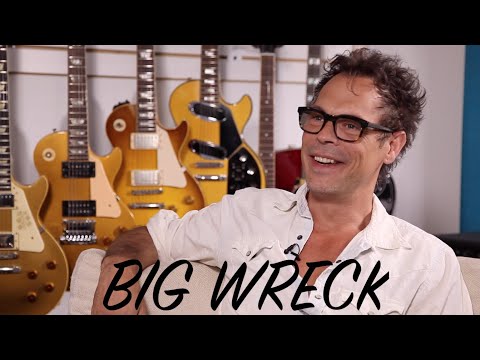
2 clips · 25:21 total
For licensing inquiries please contact reelinintheyears.com. How licensing works →
AUDIOListen
Episode #384 · Big WreckAugust 2012 · 00:14:28
Episode #655 · Big Wreck #2May 2014 · 00:24:59
TRANSCRIPTRead
Show full transcript
0:00Because we'll talk about the two of you trying to get this up this week and really trying to hit those West Coast dates. So you've done what, seven shows, thereabouts, yet? And how has it been? No, go ahead, finish. I'm not even sure. I haven't done a count, but it's around there. We're still sort of early on in the tour. How's it going? It's been going great. Yeah, I mean, the shows so far have been progressively better from our end. I can't really speak for Theory, I don't know, but I think they seem to be going well for them as well. And it's a lot to try and pack as much music as we like to play into one show. It's a lot to pack that into
0:46seventy-five minutes, and I'm sure they probably have the same issue, because with this co-headlining thing it's hard to, you know, it's hard to build a set that keeps the serious fans and the not-so-serious fans all happy. You know, you want to play songs that people will know, but you also want to play maybe a little less well-known stuff. Like, what are the fans going to hear? Well, I think we've reached a sort of happy medium, and we've been altering the set just slightly every night. You know, just in certain spots where, if I feel like I'm losing them, that is like...
1:33and then, you know, we end up, the next night will be a little more just straightforward, and okay, let's just give them hits. I don't really know, because it's hard to keep your finger on the pulse of a crowd before you go out, you know. Sure. Does playing theaters change the way that works for you guys? I guess it would have to, right? Yeah, no, soft-seaters. We did a run in the spring of all soft-seaters, or as many of those as we could get ourselves into, and that was definitely, you know, we built a set around the fact that we need people to be sitting there and listening to a concert. You know, it's not going to a big rock show where it's like football practice in front of the singer, you know.
2:19So that was one thing. This is more of a rock and roll thing, where, you know, we tried to pace the set so that there's a whole bunch of everything, and I think that's what we've arrived at. There's a little bit of something for everybody. Well, yeah, I mean, you must play Thornley songs too. It's basically the same band, right, but with Brian involved now. Yeah, essentially. So who made that first call? Because I find it so interesting. I mean, I'd listen to these records of yours years ago playing on the radio, and then you start with the Thornley stuff, and then I see a Big Wreck record come by a couple months ago, and it's like, oh my God. So who made that first phone call? How did that happen? I just missed him. I mean, we were so tight for so long, and we were making music in college, and we started
3:07the band initially together. Our relationship, just after Big Wreck, all those relationships were sort of strained for a good number of years, and I just missed him, and we'd both done enough, and I'd offer an olive branch and, you know, see if there was still a friendship there. So that's essentially what it was. It wasn't, "Hey man, let's put the band back together and go play some shit," nothing like that. It was just because I missed my buddy.
3:54Right. And then as we were hanging out, that's how Paulo... We had a Thornley show and Paulo couldn't make the Thornley show, and he suggested Brian, because Brian was right there when we got the announcement for this [inaudible] play, and Paulo's like, oh, I can't do that one, I'm going to be in Portugal. And then he said, well, why don't you ask Brian to fill in? So that's essentially how the whole thing... I mean, it's a long, convoluted story, but everything just sort of fell into place that way. And what about songwriting-wise and musically together? Did you guys, you know, come back to where you left off? I still do the writing. I still do most of the writing on my own. Always
4:44writing. So you write where you are, you know, and from home. And I do a lot of the work in the basement, you know, where you can get a lot of the ideas down really quickly, just throw them into a Pro Tools session and save them for a later date. Is that it, though? You're typically in the basement by yourself with a guitar, or a bunch of guitars, I would assume, knowing you. Oh yeah, yeah, yeah. Do you write on piano, or is it always guitar? No, oftentimes on piano, but it usually gets moved over. But, you know, if there was an integral piano part, I might have it in the mix somewhere. I'm just wondering, from a songwriting perspective, you typically gravitate towards a guitar, though? Oh yeah, definitely. And then, because you play in so many tunings, I don't even know where to start asking you about what guitar you choose to pick up. Like, how do
5:31you know, I'm gonna go with B flat for this one? After years of doing it, you tend to know what tunings elicit what out of you, you know. Oftentimes you can stumble on a tuning while looking for an overdub. For example, you're overdubbing acoustic guitars just to lift the chorus a little bit, but you want them to have, as opposed to barring everything and chording, you can just find these interesting tunings and interesting voicings. You just sort of follow your ear, and then before you know it, you've no idea where you are from where you
6:18started, you know. You've got all these new shapes and these new sounds, and then you can just leave that guitar there and move on to something else, and then the next day you pick that guitar up and go, what was I doing? And then you've got a whole new song. You never know. What about a song like, I guess we'll go with Albatross, just because it was the first thing, and it is in a different tuning as far as I can tell. Like, there's 12-strings going? Yeah. Okay. Two 12-strings and an acoustic is what I'm gathering out of that mix. So is that right or am I crazy? Nope, I think there's two electric 12s, and I know there's an acoustic 12 in there somewhere too. So talk about coming up with that song, and how do you pull that off live with
7:03just... I guess I saw you with a double neck in the video. Yeah, well, there's three of us, so that makes it easier, you know. But even with three guitar players, there's still stuff that sort of gets, not left out, but sort of abbreviated. Sure. You know, you find shortcuts that work appropriately live, that don't lose the essence of the song and keep things rolling along. What's really essential to be heard in a certain section, who's got an available set of fingers in this change, and, you know, you just sort of divvy up the parts appropriately. But yeah, that's a fun challenge, and that's actually a lot easier than you would assume, you know, playing the riff and playing behind my
7:52vocal and then going to the six-string for the sort of slide solo bits, you know. You must get applause. I mean, people love the double neck. You must get applause every night whenever you pull it out. Yeah, I think for a lot of the Big Wreck fans, they know what's coming. Right on. That's funny. But that makes me think about Brian again, because you're talking about, you know, you have three guitar players, and having people in the band, obviously it might not change the songwriting, but it will certainly change the way the songs sound, because everyone's got their own feel, everyone's got their own vibe when they play. So what does Brian bring to your music that, I guess, I don't know, maybe it wasn't lacking, but that you missed and are now enjoying about having him on stage again with you? Well, like you said, he has a very particular feel and vibe to his playing that I think complements mine
8:39very well, and live it really is a nice blend of three totally different voices on the instrument. More essential to me, the more I think about it, is just having, you know, because when you're in the studio making decisions about stuff, whether or not to put something in there or to try this or do that, it's real easy to have a seed of doubt planted in there, you know, and then next thing you know, an idea that could have grown into something wonderful has been squashed. And I mean, most guitar players are really opinionated. I'm certainly no exception, nor is Brian.
9:27It's just nice that our opinions usually line up. So if I have this idea about, oh, what if this was a harmonized solo, and then some, you know, some schmuck with a suit on says, no, those don't sell, those aren't big on radio right now, you know, if Brian wasn't around, I might be prone to listen to this guy. Yeah, well, I guess so. I mean, I want to be current. As opposed to having Brian there, and Brian'd be like, fuck that, man, that would be awesome. And then it'd be like, yes, okay, I was right, you know. It's just nice to have my brother back in that sense, that it's like, no, no, no, the initial gut instinct was right. And how are the songs living live now? Because I talk to a lot of artists, and I don't know if you're this way in the
10:14studio, but the song is done because it needs to be done. Maybe you would have kept going to try and perfect it. So have the songs evolved, I guess, from the newer record, live, and moved towards something that you didn't expect them to go to? Certain ones have, yeah. Like what? I mean, well, Glass Room is a very tame and sort of precise kind of '70s pop song. Live, I don't think we played it in, like, there's some weird audience thing, like Winners Only, we played it once there. But we played it, we put it in the set.
11:03I think we've done it once or twice, but yeah, it's turned into, there's a little more urgency to it, there's a little more aggression to it live. I mean, we have the ability to play it pretty much exactly like the album, I mean tonally, and we can cover all the parts. It's just when you lean on it, it just, you know, I love how they grow and continue to grow forever. Yeah, you know, and they certainly do. We don't have too much time here, but I found this out in research today, the Velvet Revolver thing. So I was wondering how that all came about. I guess you knew Myles. You guys played together at one point, or there was some crossover? Yeah, oh yeah, yeah, no, I've known Myles for years. We toured together when he was
11:51with Mayfield Four, right, and have remained friends since. That must have been '98. Oh wow, okay. Yeah. So how did that call come? And I heard you didn't want to do it because, I don't know, you feel naked without the guitar? Yeah, it's not that I didn't want to do it, it's just that I didn't want to do it without a guitar. Right. And I think Slash was on the same page with me, and, you know, we got along musically very well, and we got along personally. Very, very great guys, and genuine, authentic dudes, you know. It's not like that at all.
12:40Yeah, just very real dudes and very down to earth. And yeah, it was a great few hours, you know. My voice sounded great over their stuff, and I think Slash thought it sounded great. He comes out and is like, well, Ian, can you try it without the guitar? And I was like, well, no, I just can't, you know. I can't imagine myself being one of those guys. I could have given it a whirl, but I just, you know, my shield, and it's my frontman moves without a guitar on. You know what I'm saying?
13:26It's a very different thing to tackle the stage without having an instrument. Exactly, man. I don't have any tambourine moves, you know. There's always that guy in front of the mirror with the tennis racket. That would have been me. I was never the guy with, you know, sort of grabbing a hairbrush and being like, watch this. I was always more of a Keith than a Mick. That's how I put it. All right, and that's how we'll close it. That's amazing. So we do something called five questions. Five quick questions, one-word answers. Okay. Road or studio? Lennon or McCartney? When you hear a song, what usually hits you first: lyrics, melody or rhythm? Melody. Song you've written you're most proud of?
14:12I don't know. All right, Albatross. That one went number one, so that's why I'll say Albatross. Yeah. And I love them all equally, but that one, apparently everybody else loves it more, so there you go. In one word, Big Wreck?
0:00And then the rest, I just want it to be Strats this time. It's hard to get away from these fucking things, but I'm going to try. Well, I know it's one of them, right? I'm one of them. Oh, on Ghosts. And I remember when we talked last time, with the last record too, that I just love that thin, like, Knopfler-sounding... The Strat, yeah. The Strat right into the amp. I like to juice it with a little bit of compression, though. But it is a sound that for me is such a...
0:45Is it a Knopfler thing? Yeah, I would say... I mean, there's a lot of people that use that sound. Yeah. I just go to that all the time. But this thing is... Oh, yeah. Me too. I mean, I'm such a huge Knopfler freak. So let's start with your guitar influences, maybe, since we're rolling. Mark Knopfler and going back. Yeah. Well, yeah, Mark Knopfler has been huge. Initially, obviously, like Communiqué and the first record, those two albums were huge for me. And that sound, which I later found out was really, really similar to J.J. Cale records that were out just before it. Like, the sound of the albums is very... I'm like, whoa, this is the first two Dire Straits records. And it's like, no, that's J.J. Cale.
1:31What? So... But obviously, his playing and his tone is what we're talking about here. Yeah. You know, you can try as hard as you can to nick it, but unless you're him, you're not going to do it. Is that what you try and do, though, when you hear them? When I was young, that was the aim. With a Knopfler or with a Ry Cooder or with a Stevie Ray or with a Steve Morse or an Eric Johnson, you try and you spend as much time as you can and you try to get... Okay, but what does it feel like to make those noises? And, you know, try to get it as close as you can. And I can get pretty close to some of them, but, you know, the more you learn, the more you realize you have to learn. So the closer you get, you realize that you're further away.
2:18You know, because those guys are just doing what they do. So eventually, I think, going through all those phases of different guitar players, and I'm still doing it. I'm still trying to rip stuff from people and figure out how they're doing what they're doing. What did you lean on for this record? I think, you know, it's just sort of what hat are you going to put on kind of thing. For a solo, it's, you know, A, does the song need a solo? Does the song want a solo? Does it sound redundant or self-indulgent or whatever? And sometimes even that's cool. I've been guilty of that. Well, on stage it works, though. Yeah, on stage, if the time's right and the vibe is there and the crowd's into it, then why not?
3:05But I think it was definitely... I mean, some solos just write themselves. This has to be that. And initially, it's just the sound. You just know what kind of sound it's supposed to be. And then I know what's going to come out of my hands if I have that sound. Anything on this record that just kind of... Oh, yeah. Well, yeah. Most of them, actually. But some of them, I remember the solo for Ghosts, I was all over the map trying to find... I was initially going for sort of a Robben Ford thing. It was bluesy, but there were more color notes and there was more, you know, I don't want to say jazz or outside, but there was a little more expansive phrasing, if you will. For lack of a better term.
3:50And the tone was a little more semi-hollow and just a little bit of breakup. And I think it was Roberto Acapinti, the bass player, who came by and he's like, it's great. Just do a Stevie thing with it. Just Albert King it, man. And I was like, oh. Just grab a Strat, and then it's just like 10 minutes later, you have... That was the solo. And that's for the demo. And when we went in, it was just a lot more about mic placement. How do we get that nice... How do I get as close to that sound? That is really hard. That's the sound that comes from the hands. For me, it's painful. The first solo in Ghosts was painful, because it's on a Strat with heavy strings and high action, and you really have to lean in. Well, the second solo was on a Suhr.
4:37And it's just that buttery... I mean, I can just play that thing for hours and hours and get the sweetest tones imaginable with almost no effort. And surprisingly, when you dig into the Suhr, it gives you more back, whereas most guitars that play that easily just kind of wither away. Right. On the opposite end of the question I asked you, what was the hardest one? Like, what took the most rewriting and going over? Solo-wise? No, like songwriting, lyrics, whatever took the longest. I don't know, they all came together pretty quickly, because they were all pretty much sketches of tunes, ready to be fleshed out into real songs. So how long did some of these go back? Do they go back a while? Like, ideas from before?
5:22It's all over the map. All over the map. Some of the intros, the intro for Diamonds. I mean, Diamonds is a riff that Brian sent me over the phone. He's been sending me a bunch of riffs. He lives out in Sarnia. So while we were doing this whole process and pre-production and demoing, he's sending little ideas and everything else. And then I heard the one for Diamonds and I was like, I said, this is something I can use. And it was in an even weirder time signature than it is now. Like, it flipped out. It was really cool, but for me, harder to follow. So I just sort of... Do you gravitate towards that stuff? The stuff that's harder to follow? Yes and no. I like the stuff that for me is easy to just...
6:09It's natural. It's easy to listen to. And then if you dissect it, it's like, oh, that's the stuff that I get turned on by. Like Across the Universe or something like that, where there's these weird turnarounds and things that just... They fit with the song. But if you actually sit down and analyze it, why does it get me off so much? Why do I love this? It's just the natural curiosity of a musician. So many people reference that song, though. That's interesting. Well, because you don't notice it. And a lot of the Beatles stuff is like that. You don't notice that something really trippy just happened. Something feels weird, but that's what's happening in the song. Solsbury Hill, for instance, is an odd time signature. Sting does it a lot.
6:57But it's a... Yeah, I love that stuff. But I love it when it's like, oh, you just wrote a verse in 10? That's wicked. You know what I mean? As opposed to, like, you're just getting lost in the story and lost in the vibe of the song. I've heard you on stage, you still go back to the... When you're playing a song, I'd say there's not muscle memory for you. And a lot of people don't do that. You get yourself back in the position from when you wrote it. Yeah. No, the other night, two nights ago in Sudbury, I started choking up during Blown Wide Open. Towards the end of the song, I don't know what happened or why. I was just really overtired, or, you know, it was a little raw emotionally, and yeah, I choked up and I couldn't really sing the last few words. It was weird. That's crazy. And that's something that I had to think about for a few minutes
7:43afterwards. Like, I've played this song a thousand times. And yeah, it's just maybe, you know, whatever thought kind of popped into my head on the outside while we were performing. And just like, man, this song still gets me after all these years, and then that's all it takes. Oh, oh, oh. You know? Are there songs that you can't perform because of the... Oh, yeah. Really? Yeah, yeah. Like, what's the... There's songs on this new record that I can't even rehearse. So that's interesting. So you write a record knowing, you know, people listen to the record, but you also need to go on tour with them, right? Sometimes you can get past it, but I don't like to. You know what I mean? The emotional connection to something is... I mean, what are you doing if you're not that committed to it on that level? Then why am I charging people money to come watch me play a tune?
8:31You can just listen to it at home. Yeah. You know, but there are songs on the record that were real hard to get through. Like what? On this one? Oh, yeah. Like War Baby, for instance. Was it challenging? That was a little slower, right? Yeah. And that's a cover. A Tom Robinson song, but it's been a part of... And it's hard for you to get through a cover? Yeah. Interesting. Well, it's been sort of woven into the fabric of my life since I was a kid. Like, my dad came home with the 12-inch single version of it. I mean, there's a bunch of different versions of War Baby that he did, and that's the version that I gravitated towards. And I've been looking for a way to do it for years, like since college. So what made it feel right this time?
9:17That's interesting. I don't know. I just... I was sure, let's try it. Because I've tried it before. I've tried jamming on it. And I was like, well, let's try it. We just tried it and it started working. And I just changed the groove up a little bit for the chorus and added some extra background vocal things. And instead of the sax solo, I sort of mimicked a lot of his lines from the sax solo with the guitar. And I don't know. It's just such a well-written song. The lyrics are brilliant, and they cut right through me. And to sing them with any authenticity is hard, because you kind of have to go to that place.
10:03And it really is like walking the tightrope. Because if you go too far one way or the other, you fall off. And, you know, now it sounds like you're thinking. And now it's either that way or you're trying not to. It was really hard. But I think, for me, that's what I want out of that song. You know what I mean? That's what I want to feel when I listen to it. Hopefully that translates for other people. But I'm old enough to not really care if... Do you know what I mean? That's what I think it's all about. When did that change? I don't think it's ever changed. It's always been there.
10:48I've just sort of focused on other things at different times throughout my career, if you want to call it that. I feel like young bands probably care more about the image, or not the image, but you want to please people, right? Until you get that success. And you're like, oh, you know what? People dig what I do. You may never get the success. Now I'm at that point. You know what I mean? If I'm not going to get the success, I'd rather be happy. You have the success. You have the success. No. To a certain degree, I'm able to scratch out a living doing music. So that to me is success. Absolutely. Especially doing music that I love doing. I'm not playing music that I don't want to play. Which is winning the whole thing to me. But yeah, if I'm going to do the same sort of thing, like still struggling and getting
11:40by, just like millions and millions and millions of people do, if I have the choice to be able to make the music that I love making, or have to do things that are compromised for maybe a shot at getting that, now everyone's going to love it. Say, I've heard you say you did that, though, a little bit. Yeah. And I think the Thornley thing was a conscious... that's what we were going for. So how do you purposely write a hit song? Like, what is it you're willing to do? What changes in the process? There's a billion theories. For you. Like, when you... I don't know how to say it. But you have. Yeah. That's just, hey man, you know. I would never have picked Albatross to go number one. I would never have picked that as a hit.
12:27I had this beautiful song and a beautiful centerpiece for that record. But that goes against the grain of any rule that I've heard about writing a hit song, because you need to hit the chorus within the first minute. I don't even start singing till the first minute. There's two guitar solos in it. I don't know. I mean, I know there's all the theories. I've heard all the theories on what you need to write music for the big machine. That's just not my bag. It's hard for me to even play that stuff. It's hard for me to listen to it. Yeah. Yeah. Once you've swum in the deep end, it's tough to, you know, I don't want to be in a wading pool. No, I get it.
13:12I feel like you have to play those songs live because people do want to hear them. Well, yeah. Like a song like Come Again, for instance. Yeah. That's like eight minutes when we play it live. Maybe more, depending on if we go off on a tangent. So it's, we sort of, because I think the impetus, like the initial spark for the song is usually genuine. It comes from the right place for me. And it's just sort of the system that it goes through to become something that's going to be consumer-friendly. You know what I mean? So, chop that, word's too big, that chord's too expensive, whatever, whatever. Simplify, dumb down, whatever you want to call it, to play the game. You know, you take your beautiful little essence of an idea and then bastardize it.
14:04And it still doesn't, you know, get you a huge front gate and, you know, an armed security guard and a private jet. This is a pretty nice room, though, man. I like it down here. I can spend some time down here. Oh, this is the only room in the house that's like this. Well, actually, since we're in here, I should bring this up, because people would probably be like, what the hell, where are they? This is my basement. This is my man cave. This is where, you know, I guess most of the songs are written, right, and recorded. Yeah. Well, it's hard to do when everyone's yelling and screaming upstairs. Yeah. But I'm noticing a lot of electrics and just one, I guess the Dobro too, but just one acoustic. Yeah, there's a couple more acoustics in the back. No, I didn't see anything in the back before.
14:49Yeah. You ever go back to piano to write? Because I heard you started on piano. Yeah. My Life is something I wrote on piano. Right. Yeah. One of these. But it must be a nice change to go to different instruments. I know, well, I thought it was an interesting flavor to add to the record. I thought that would have been a great first single to go with. Like, the new single from Big Wreck and those nice keys, piano. But, you know, that's not my area, as I said before. But yeah, you know, it's fun to go back to, but it's also a bit of a sore spot because I used to be good. You know, now it's like, I'm just really sort of ham-fisted. You know, my daughter's coming up quick on that.
15:37Oh, really? Oh, yeah. So, you know, she came to the studio. And what song is she on? She's on My Life. She sang the backup. And the doo-doos, she took the really high octave. We actually mixed her down a bit because it was almost like chipmunks, you know, it's such a high little voice. That's awesome. But it's nice because it sort of stretches that part out a little. Yeah, so, talking about harmonies, that harmony bridge. Oh, I love that. Thanks. So, it's different. Yeah, that was a Nick idea. Initially, we had sort of a guitar solo thing. Same changes. Like, we changed the chords a little bit from the rest of the song, and there was a little guitar thing.
16:23There were a couple of background vocals that were sort of doing some oohs. And then Nick, right before we went into the studio, when we were doing pre-production, he was like, no, no, no, no. All vocals. And I knew exactly, at least I hoped I knew what he was saying. I was like, you mean like we were doing like a Queen, Beach Boys vocal thing, right? And he was like, yep. I was like, yeah, that's going to be so great. And I just sort of imagined it in my head. It was really easy. Like, I just sort of went in and just started humming. It's all you? Yeah. It took like an hour. It's almost like, as low as I can go and as high as I can go, and everything in between. Yeah. It's different. I mean, it's nothing that hasn't been done before. But it's always nice to hear, though. Yeah, it's, you know, made me love the tune.
17:08You know, because initially I was like, it just sounds like a Police rip, and it's a little too down the center for me. But now it's just something else. I don't know if this applies, but you were just saying, how does having three guitars in the band change things? Like, is it easier to kind of be like, here, you take this part, I'll take this part? Yeah. Because generally the guys aren't really around when we're doing the pre-production and demoing, and oftentimes the recording, just because it's often about time, you know, and getting everybody in the same place. And then I'll... no, I was doing it over here, and this has this sound. But playing it live, it definitely, you know, it definitely takes a load off, because
17:54I don't necessarily think differently when putting stuff together in the studio, like, oh, well, this is going to be easy because we can take that, that, that. There's still stuff that we have to cheat live. So one guy is going to have to sort of play this half of this part and then go on to that part for the next section, and then we swap. And there's a lot of choreography that goes on between myself and Paulo and Brian to try to get this stuff to translate live. Is that rehearsal part fun? Trying to figure out who's going to take that part? It can be. I don't know what I'm talking about. It can be, and sometimes not really. But there's a lot of train wrecks, you know. But yeah, when we get it right, it's quite a thing. Because, I mean, those guys are phenomenal guitarists. So it's, you know, it's a joy to play with them. And when we get it right, I don't think there's any ego or anything like that involved
18:41at all with this band. So it's, you know, it's just all about the song and getting the performance right. Speaking of performance, we talked about Slash and Velvet Revolver last time. But I noticed you're playing a show with Slash and Kennedy in the summer. You think something? I don't know. And a little jam on stage? I don't know. Well, Myles is an old friend, right? Like, him and I go way back. And, you know, yeah, I love Myles, and he's just such a phenomenal singer. I've gotten a lot of tips from him over the years as far as maintenance goes. I've never taken, like, a vocal... Yeah, I've never taken a vocal lesson, but he's like a trained dude, and he knows a lot about how all this stuff works. Which is why coffee is for you. That's your drinking option. Yeah, as I'm having a cough.
19:28But I don't have to sing tomorrow. Right. But no, it's, I don't know, because Myles has sung on our stuff before. Where's he? What's he on? It was going to be on the second album. Oh yeah. I just, I needed that beautiful voice in the bridge, and then it was a big scream-a-thon at the end of the song, where I was just going to do my best Robert Plant stuff. And then I asked Myles, I was like, you want to do it with me? And so we both were just screaming at the end. It's a lot of fun. But I can't scream as high as he can. Wow. But no, I mean, who knows? I doubt it. Right. I doubt it. Who knows? People wonder about these things. Yeah, but you never know what the setup is backstage and what the vibe is and how sound
20:16checks are going. And there's always some hiccup. Do you look forward to that stuff? I know a lot of musicians don't like to just jam. Like, if you're sitting in a circle at a campfire and people are just like, oh, no, I don't want to do that. I love it. I've never been very good at just sort of, you know, playing a Stones tune or something. You know what I mean? Like, if I know the song, if I've heard it before, I could pretty much figure it out. I've been lucky that way. But with words and verses and, you know, I'm not going to sit down and play Brown Eyed Girl or whatever, like, it's just not... But no, as far as picking a groove and picking a tune that's, you know, what for us would be a standard, like a rock and roll standard.
21:03And then just... Myles used to come up at the end of every set for Big Wreck when he was with Mayfield Four. And then we'd have him up, because not a lot of people know, but he's a ripping guitar player. Like, ripping. No, I didn't know that. Oh, he's unbelievable. And she's not too. The opposite of what you're wearing did something for. Yeah, exactly. I was like, Myles, she'd have done that. But no, he is. Yeah. And so, yeah, we'd just have a lot of fun with it. And just, you know, call and answer and trading fours and cutting heads and all that stuff. Nice. So, yeah, I love doing that. Guitar players usually are like that. I'm not into that, like, cutting heads and all that sort of pissing contest stuff. I've outgrown that. No, it's just about the enjoyment of, you know, giving somebody else the stage
21:53and seeing what they do. But having said that, when somebody gives you a little poke, it's like, all right, it's on. Let's do this. Let's see what you got. Well, let's see what you got with this. We do something called five questions. All right. Five quick questions. One-word answers. One-word answers. Road or studio? Both. He said that last time. Lennon or McCartney? McCartney. When you hear a song, what usually hits you first: lyrics, melody, or rhythm? Melody. If someone's never heard Big Wreck before, what song do they start with? I digress. Track two on the second.
22:40In one word, Big Wreck? Big Wreck. Coffee. That was a good word. Yeah, coffee. No, no, no. Last time you said authentic. Authentic. Okay. Let's say Big Wreck. Quality. Quality's good. Quality. Usually I close it there, but I do want to ask you about bookending the record with a reprise, "reprees." I've never known how to say that word. We were saying "reprise," and I heard somebody else say "reprees." So no one knows the answer to that. Why the decision to do that? To do the same tune?
23:25Or just, I guess, the chorus of the other one. Twofold. Initially, the acoustic guitar part was something that I was going to add on to the chorus of the main version of the song. And the voicings are just, I mean, it's only in standard tuning, and the voicings are really pretty. It's only in standard tuning. Yeah. The song is in, like, drop B flat. It's ridiculously low. And I just thought it would be nice to have something up here, but that's being taken care of by some other ding-dongs, heavily affected guitars. So the acoustics didn't really fit. And then I just soloed the acoustics and the vocals. I don't know, it was like, I'm going to go to the hats tonight. It was nice.
24:10And we didn't want to end the record with a cover. And then I was like, well, now I want to do a whole acoustic version of A Place to Call Home. But you're going to lose the weight of that sort of bluesy verse. It doesn't really translate to standard-tuning acoustic. So yeah, I think it's just dreamy and beautiful. It's a lovely send-off at the end of a record. We were thinking maybe a hidden track or whatever, but that's an old trick. So I wanted to just put it on there and call it what it is. A reprise, "reprees." Who knows? Reprise, "reprees." I'm not sure. We'll never know. Maybe people can tweet us answers. Yeah. Hashtag reprise, "reprees." Something else.
24:56I don't know. Thanks again. No problem. Cheers. Thank you. Yeah. My pleasure.
ABOUTThe archive
This interview is part of the Matt Schichter Interviews archive: more than 700 conversations with musicians, actors and filmmakers recorded between 2003 and 2014, beginning with The BackStage Pass, one of the first podcasts (2003). The archive also became Matt's short documentary Lennon or McCartney. Matt Schichter is now a Glasgow-based producer, line producer and music documentary director: he directed CFNY: The Spirit of Radio (PBS, TVO) and line produced Faith (TIFF and Rome 2026). His films → · UK film producer and line producer → · More about Matt →
Listen to the full archive on Apple Podcasts or Spotify.