Lennon or McCartney? Dan Mangan’s answer: Lennon. Watch the moment. See every artist’s answer. Take the quiz.
SONGSWhat Dan Mangan said about the songs
“Jeopardy”
Dan Mangan explains that every line is a question and the song moves from personal demons to the wider world.
“every lyric in the song is a question... So that song is kind of about me and my own demons and drinks, and so there's a lot of me in that first verse. And the second verse is entirely different... It sort of goes from me to the greater world”
“Oh Fortune”
Dan Mangan says the title track is not about Carl Orff but about funerals and families reuniting.
“I'm aware that there is Orff, Carl Orff's 'O Fortuna,' but that wasn't really where it was coming from... Talking about being dead and being at a funeral, and being at your own funeral, and kind of saying, don't be sad, just be happy.”
“If I Am Dead”
Dan Mangan explains the hindsight theme of the chorus.
“Yeah, the chorus, 'if only we'd known,' sort of like, what are we doing? What are we doing to each other? What are we doing to the world? We're always so full of hindsight, but so doomed to repeat all of our mistakes”
“Starts with Them, Ends with Us”
Dan Mangan explains the song grew out of a teenage trip to Guatemala and was first titled after it.
“So that song is kind of about the civil war in Guatemala, but it's any civil war. It was originally called 'Guatemala,' and then I changed it... I wanted it to be about that feeling of living in a society where you can't tell your opinions to anyone”
“About As Helpful As You Can Be Without Being Any Help At All”
Dan Mangan cites the novel The Luck of Ginger Coffey as an influence on the opening track.
“That song was in my brain for years, and when we recorded it, we had a guy named Eyvind Kang out of Seattle do all the arrangements for it... there's a book called The Luck of Ginger Coffey, about this guy from Ireland”
“Daffodil”
Dan Mangan says the love song felt too pretty, so the band buried it in noise.
“I wrote it and I was like, no, that song's too pretty, too pretty, too pretty. It's too much of a love song, so let's make it filthy. So we just had to add as many layers of chaotic noise to it as possible.”
“Regarding Death and Dying”
Dan Mangan explains the layer of noise under the folk melody.
“It's like a little old traditional-sounding folk song, and it's too pretty, I'm gonna mess it up. So I got Kenton to lay down a few layers of chaos... The song itself has no regard for all the noise going on underneath.”
VIDEOWatch
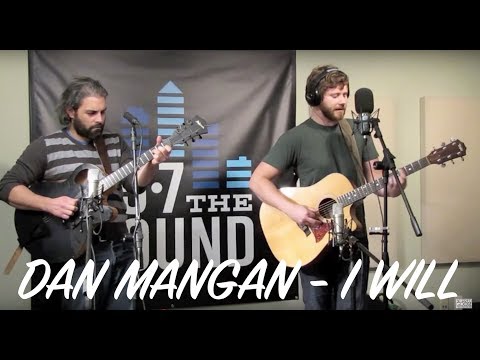
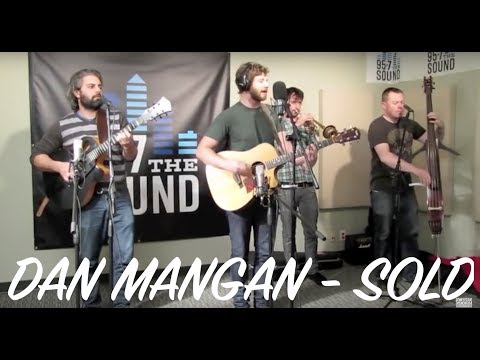
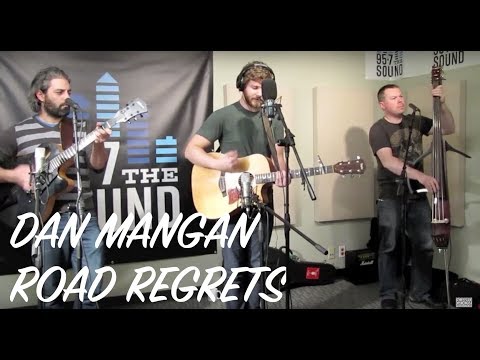
31:47 total
For licensing inquiries please contact reelinintheyears.com. How licensing works →
AUDIOListen
Episode #311 · Dan ManganJuly 2011 · 00:31:47
TRANSCRIPTRead
Show full transcript
0:03How's life? How are things? Things are good. Things are kind of crazy, just continually progressing and not a lot of time at home, but you know how she goes. That's the idea. That's the lifestyle you signed up for when you started making discs. Which is a nice little segue into where we're going to go with this interview, because we're just going to talk about this new record pretty much. Well, where are you at with it now? I mean, it's still not out, you're playing shows. How are you feeling about the record so far? It's funny, you know, when I was first done I needed space from it, and I'd been in it for too long, too deep, and kind of needed time. So I took about six weeks and I didn't hear hardly a lick of it in all that time. And then now, as things are moving on, we're getting into the more
0:53logistical aspects of the record release as opposed to the heavy creative ones, and kind of coming back to it a little bit more and starting to actually enjoy it again, which is really nice, and getting a little bit more objective perspective on it. It's also kind of nice and it's exciting. Generally the response that we've had from the team is really great. And I think that it's a total departure from everything I've done previously and it's a new direction. And it's something that we kind of had to go in head first and not worry about radio or not worry about whatever else, and just kind of get something done that felt really good. Were you worried about radio on the last record? I don't see you as the kind of guy that worries about that kind of stuff too much.
1:40No, no, and that was just it. We fluked out. We ended up being on the radio, but it was never something I thought about with the last record. And so all of a sudden there's this pressure. It's like there's all these radio stations that now have a relationship with your music, and they're expecting something that they can play. So there's this weird thing where you're like, well, now do I have to make something that's gonna work out for that? And of course the answer is no. I mean, you just have to do what feels right, and we fluked out last time and maybe we'll fluke out again. And if we don't, then that's fine, and then it's just not a radio record, and that's gonna be just okay. Well, having said that though, there are songs that will work on radio. I mean, I know the singles are gonna be "Rows of Houses" and "Post-War Blues."
2:25I think, well, on certain stations, the ones that played off the first record probably will play these ones too. Yeah, no, I think that they will. I think just in general the range that we're in, the kind of dynamic musical space that we exist in, is not so crazy or so outside of what all radio is. It's just a matter of, I don't know, it's an interesting thing, dealing with radio, and I've had a love relationship with it the last few years. There's been all these new radio stations across Canada that are playing music that I never would have expected on radio stations before, maybe only on college radio. It's cool. It's amazing that it gets embraced that way, and I've seen how that can change a career. I've witnessed it firsthand,
3:13how being played on the radio can open up so many doors. That's interesting you say that. I actually wanted to talk a lot about the record, but that's interesting, because I'm starting to feel a trend the other way, of radio not breaking bands as much anymore. But you're saying it's helped you? Absolutely. I mean, it used to be a bit of a golden ticket. It used to be kind of like, well, if someone was on the radio, well then, man, you're gonna be huge, because if you were on the radio then it meant that you had all of the infrastructure that went along with being a band that got played on the radio. So maybe you were on a major label, maybe you had a huge marketing budget or something like that, a giant team behind you. Whereas now, with these kind of non-commercial triple-A stations happening in Canada, you're getting bands that have hardly toured out of their
4:05own city getting played on the radio, which is a totally different thing. So it's without having that crazy infrastructure alongside of it. It's a different kind of experience, but it has opened... it's unbelievable the things that radio did for me in Vancouver and across Canada. And even we can go down to some places in the States, cities that I had never thought that we'd be touring, and there's these big crowds because they heard us on the station. So I don't know, it's a bizarre thing. I never used to listen to the radio, to be honest. I mean, it was just CBC, and now I'm finding we're driving to these towns and kind of breeze through the FM dial and I'm hearing some good music again. Yeah, I think that the musical landscape that we exist in now is probably stronger than it's ever been. Not that
4:54all the best bands are existing now and bands before now weren't as good, I wouldn't say that at all, but I just think that there's more good music than ever before. I think that it used to be that we relied on a handful of bands to give us all the best music, and now you can pick and choose. I mean, there's thousands and thousands of amazing bands, and if they want to put it online and you want to hear it, you can find them in 30 seconds. Yeah. Okay, so explain how you're releasing this record then, because it's different now. You're right, people can find anything online whenever they want really. Even, I'm sure, some of the new songs of yours are popping up on YouTube from live performances, or those acoustic tunes that you did the other day. How is this one being rolled out? The record is coming out September 27th, but it's done, and it's sitting there. It feels weird to not do anything.
5:41Yeah, how come it's just sitting there? How come it's not out for fans or something? You know, I think that it has to do with the scheduling of a record label and the scheduling of publicists and all those kinds of things. I mean, it's a world that I previously didn't really exist in. And I wonder how it differs for you? It's fine. It's awesome, because the people that I work with have really been hand-picked. I made a really important decision a long time ago that I never wanted to enter a business relationship with somebody who I would second-guess about introducing to my family. Everyone that I work with, I think that they have a really strong understanding of what I'm about, and they're good people, and
6:27every step along the way it hasn't felt dirty. I think that's the main thing. I think that there's this underlying thing that as soon as you have a team, or as soon as you're working with a record label, then you're no longer grassroots and you're selling out or something. It's like, it's not about being afraid of success. It's about being afraid of dirty success, and it's a very different thing, as long as you're going about it in a really honest and vivid way, and everybody who's in your team gets you and your record. It's great. Yeah, and going with Arts & Crafts is probably, at least in my opinion, the best choice you could make in Canada. Yeah, absolutely. And the way that that came about was really organic and mind-blowing. Like, I
7:17respected that record label for so long, and I don't even think that I had sent them my record, just because I assumed they wouldn't like it. So when it all happened, it was crazy. I feel kind of like I hit the jackpot when it comes to Canadian record labels, just because they've had such a great legacy of amazing bands and really credible music, and it's a great aesthetic. There's something about the record label, it just feels really good, and they're great. When I started to get to know them as actual people, that's when I really got it, that they're in it for the right reasons. And you said you didn't send them your music because it didn't fit with what they did. Well,
8:04this record fits more in terms of production, I suppose, with what Arts & Crafts does, just leaning towards a more full-band atmospheric, lots of soaring guitars and horns and textures and strings. And it feels bigger, this record, than the last one. Yeah, it's interesting, because I think it is bigger. I think that is an appropriate term. It's a good adjective. Thank you. But it's also slightly less flashy in a way. There's something about it, it's not as shiny as the last record, but it's bigger and it's deeper and it's more complicated. What I hope is that it's the kind of record that lasts a long time. I think that if you tap into a kind of sonic landscape sometimes in recording that is immediately gripping,
8:49that can build you a quick audience, but I don't know if that's the same kind of thing that sticks around in people. It's one thing to get stuck in their head, but it's another thing to get into people's guts. And you want to get into their guts? Because that's what my favorite music does to me, so that's exactly what we want to do to other people. I think that it's more chaotic and it's a little bit more spooky or something like that. Well, you're talking about death a lot on it, and burning a lot as well. Yeah, I think I spent a lot of time on trains and planes and a lot of time traveling on big pieces of metal really quickly, you know, like a cinder block in front of a train track or something like that. I don't know.
9:39I guess I had a crazy couple of years. When the last record came out, we really did go from playing tiny little bars and coffee shops to getting these opportunities to play massive festivals and share stages with bands that we really adored, and quickly. You kind of start to imagine that it must end soon, like things must go pear-shaped really, it's too good. So I think, also, we spent a lot of time driving through wilderness and driving through isolated landscape, which got me thinking a lot about the woods and rural communities. There's a couple songs on the record that are a departure for me in songwriting. I used to write basically solely from what I thought about the world.
10:29I think on this record, on a handful of songs, I'm putting in a character that I've conjured in my brain, and a lot of that came out of imagining what it would be like to work at a gas station halfway between Sault Ste. Marie and Thunder Bay. And it's just long stretches of highway. People commute into Toronto and spend an hour and a half on the highway in the morning and an hour and a half on the highway on the way home, and that seems crazy to me, but what about driving an hour to the gas station where you work and an hour home, in the middle of nowhere, and basically sitting all day alone? What about owning that gas station for 20 years to give to your kids,
11:18but your kids don't want anything to do with it, so they move to Thunder Bay and they work at Denny's? It's an interesting thing, living way out there. It's a different existence than I've known for most of my life. It's mostly been the city. And so I don't know, those are some things that toss around in my brain. Yeah, would you ever want to do that? Would you ever want to live in the middle of nowhere, though? Yeah, I think so. It's pretty charming, the idea of going and having a nice little garden and living in the middle of nowhere. I don't know, it seems all right. Sounds like you're able to write pretty much anywhere. You can write in the van, write in the bus. Yeah, that's something I've been fortunately blessed with, to have kind of been able to do that. I mean, when I first started writing, I was writing in my bedroom because I spent a lot of time at home. As things progressed and I was touring a lot,
12:06it was sort of fight or flight. Either you learn how to write on the road or you don't, and I wasn't spending any time not on the road, so I had to learn how to write on the road. It's a different thing. I keep writing things down, and I put napkins in my pocket with phrases and accumulate them, and I write things into my phone, and I text message myself things. I'm a really, really slow writer. It takes me, like, 16 months to write one song. I'm writing slowly and subtly all the time, and that's what works for me. Everyone's got their own process, and what works for me is just to keep an ongoing process, to just always be writing, even when I'm not feeling incredibly creative. Are there any stream of consciousness songs on this record? Have you ever written like that?
12:56I think, I mean, the last song on the record is called "Jeopardy," and every lyric in the song is a question. It's like a big exercise in rhetorical prose. That is stream of consciousness for me, the first verse. So that song is kind of about me and my own demons and drinks, and so there's a lot of me in that first verse. And the second verse is entirely different. It's much broader. It sort of goes from me to the greater world, and starts asking questions about what is unity and what is a line about? Well, what happens when all flags burn together? It's sort of like, if one flag burns, then that's unfair, because there's all these other flags and they're gonna take advantage of that. But what if all the flags just burned at the same time?
13:42That would be a different thing. You're probably right, unfortunately. Since we're talking about that song, though, that's the last song on the record, you've got this very big band, like 1920s kind of horn section ending. Just a fantastic way to end the record. Thank you. Yeah, that song, we could have gone a couple different directions, and I'd been listening to a lot of Sam Cooke and feeling very inspired by that 1950s pop sound. And so everything was recorded like it was recorded in the '50s, in mono, with ribbon mics, and we tried to go pretty authentic on it, and it ended up being this weird kind of combo of '50s soul pop with a bit of a burlesque sound.
14:33It's hard to really peg it down, but it is kind of a bigger band feel, and we just performed that song live for the very first time with a big 15-piece band in Vancouver on Sunday night. It was a lot of fun. There's not a lot of points in our set where we just have a really long, drawn-out solo, and in this particular one, you've got the horn section cooking and then you've got this great big solo between the guitar and the trumpet, and they're kind of battling almost. It's great. Is it the same band pretty much? Yeah, there's been some changes and there's been some additions, but the core of the band has mostly been steady throughout the last couple years. And the same band that's on the record too? Yes. Yeah, I can't remember what interview I was reading, you talking about something about this record being
15:22less about you and more about the band as a whole. So did they contribute to the writing process, or did you bring in all the songs pretty much finished? Yeah, I mean, the songs were written, but in terms of the arrangements, it's very band-y. There were times in the last couple years, we'd end up in Norman, Oklahoma or something like that, there's nine people in the crowd, so I would literally just start playing a song that they had never heard, and they would just kind of play along and they would figure it out. We didn't have any time to rehearse because we were never at home, so basically a lot of these songs were literally arranged on stage in front of people, which was a nice organic experience, because it meant that there was kind of a sense of urgency to it, and it meant that there's a sense of improvisation to it more than anything. But I think the record previous, I had performed those songs solo so many times.
16:12I'd been all over the world with my guitar, so by the time we got to the studio, those songs were already in my head. I'd figured them out. I knew what I wanted to do. Whereas the last batch of songs, they weren't that solidified. They were still ideas. They were totally infinite with possibilities. So I came to the band and said, all these songs, what do you guys want to do? And luckily I've got a really great band, and I don't know how I keep holding on to them. They all come from totally different directions than me. A lot of them are heavily entrenched in the improvisational free jazz world, and it's hell scheduling our tours, because these guys are getting offers to go play jazz festivals in Prague and
16:59so we're trying to keep everybody home now and then, and trying to keep everybody's career going. The guys in my band have four or five bands apiece, and somehow we manage to keep it together. Have you talked about this record before, or is this the first, or close to it? Yeah, I haven't done that many interviews yet about this record. It's funny, throughout the process of a record release you learn to talk about your record and you try to formulate your thoughts in a coherent manner. But it is interesting, in talking about the record you get to kind of know your record again a second time. Yeah, well, and it hasn't been that long since you recorded. I'm sure if I asked you these questions three years from now there'd be very different answers than right now. Certainly, certainly. Well, because the songs are like children, and
17:46records are like photographs of your children. So your children grow up and they change, and every live show you play, the songs change and they grow up. The songs are infinite. They will continue to grow and evolve as you grow and evolve. But a record is finite. It is finished. It is done. It is a photograph of your child and it's never gonna change. So you can look back at that photograph, you can listen to the album and know that's where the song was then. And then you can play the song now, or you can look at your grown-up kid now, and know, okay, well, that's what they are now. So your opinions of your kid change. I don't have any kids, but your opinions of your songs, your opinions of your work, change and develop. What song has undergone the most change, then? Well, it's interesting.
18:32I like the second song on the record, "How Darwinian," and I think it's entirely different than any song that I've recorded before. It's kind of moody and Radiohead-y. It's funny, there's this really interesting thing going on in Kenton's drumming on this record, because on one hand the drums are really subtle on a number of songs. They're not crazy high in the mix. It doesn't sound like rock drumming, but it doesn't sound like jazz drumming. There's this really subtle, understated kind of nature to his playing on this record, but at the same time there's incredible kicking, rhythmic forward propulsion on the record too. It's a sad record, all the death and isolation, but it moves. I
19:22I'm proud to say that it's not a sorrowful, sad-sounding record all the time. It's got some real rhythm to it and it kicks. So that's really cool for me, to just sit back and appreciate other people's performances. I mean, my favorite parts of the record are the parts where I'm just enjoying the other things that aren't me. Yeah. Well, what do you love about harmonics? I noticed a lot of harmonics on your records. Harmonics, like on the 12th fret or the 7th fret of the guitar? Oh, interesting, I hadn't really thought of that. They're all over there. Well, you know what I mean, though, they're all over the place. Yeah, you know what, that's not me. There's maybe a couple that are me. No, but you would still have final say, wouldn't you? Being like,
20:08"You know what, I don't like that," or "Keep doing that, that sounds good." That kind of stuff. Yeah, right. I mean, I guess that's all Gord Grdina. I give Gord a seriously long leash. I basically say to the whole band, just do whatever you want, and if I don't like it, I'll tell you. So I give them a really long leash to be playful, and generally what I find is that whatever they do, I like it, so I don't really have to direct them all that much. And it's true, actually. I think "Post-War Blues" has a lot of harmonics on it. That's where I was gonna go next. Yeah, kind of really muted, quick, fast, harmonic-sounding electric guitar. Yeah, it's interesting. I think that I like things that aren't perfectly predictable or beautiful. Society, human people, we're all flawed, and that's what makes us great.
20:54Our flaws, our collection of flaws, is sort of what our defining characteristics of our personality are. Lots of flubs, a lot of flubbed guitar notes on this record, and a lot of weird note choices on this record in terms of the guitar that a lot of people would just delete and redo and try and get a cleaner, more fluid-sounding take or something. But for me, I feel like a lot of those flub notes, that's what happened. That was the moment of what was happening in his guitar at that moment. And I don't know, I didn't want to mess with that. I want to let that breathe and live. And then, of course, coming back to it, those are my favorite parts. One of my favorite parts of the record is "Starts with Them, Ends with Us."
21:39Oh, yeah, 'cause I think I know your thoughts on war just from Facebook posts and whatnot. How hard is it to write a song where, I would think you want to kind of protest the idea of war, but you also want to stay respectful to the troops? Yeah, riding that thin line. That song is, I would almost say, it's not even an anti-war song so much as an anti-manipulation song. It's about controlling people, and it just frustrates me that the same governments that want to send poor kids off to war are the same governments that cut veterans' rights and don't want to take care of those kids when they come home, and they're still poor, but now they're all messed up in the head. This is a huge evil. I'd been listening to some radio programs on PTSD, and reading on post-traumatic stress disorder, and
22:24shell shock is such a heavy thing, and it's almost not really respected. It's like, somebody's foot gets cut off, well, man, that's terrible, we've got to understand that. But if they're psychologically damaged for the rest of their life, it's not seen as as heavy. So the song is a bit of a protest against just unethical and irresponsible governance more than just plain anti-war. I understand that there are times when war is necessary, but it's kind of hard to believe that most of the ones that happen are necessary and couldn't have been dealt with otherwise. And I'd love to delve into that with you sometime, but I know we don't have too much time, so let's keep going through some songs, as fun as that would be. "If I Am Dead," back to the burning, back to the death, back to the leaves,
23:11themes. A little acoustic ballad. I guess there's two slow songs on the record, there's that and "Daffodil." It's like a living will. Yeah, I'd say images of death and what do I want to happen when I die. I mean, that song too touches on, there's that line, "dying breeds gather beneath fallen trees, heads of leaves." Yeah, the chorus, "if only we'd known," sort of like, what are we doing? What are we doing to each other? What are we doing to the world? We're always so full of hindsight, but so doomed to repeat all of our mistakes and carry out in the present all the things that we've damned in the past. And I think that happens on a societal level and it happens on a personal level. We all do it.
23:59If only I'd known, sort of like, if only I'd known I was gonna die, well, I would have lived differently. But of course I always knew I was gonna die, so why didn't I live differently? "Daffodil," the slowest song on the record. You mention a whole bunch of flowers in it. Just a cute little love song. Yeah. It's the kind of song my grandfather would have liked. It sounds like it was written in the '20s or '30s. Yeah. I told you, I ripped it off. Actually, I did write it. Just clearing the air. You know, it's funny, it's one of the things where I wrote it and I was like, no, that song's too pretty, too pretty, too pretty. It's too much of a love song, so let's make it filthy. So we just had to add as many layers of chaotic noise to it as possible.
24:51Right, run every instrument through a couple layers of distortion. Over the top. You talk about adding noise and big crescendos. The next song, "Starts with Them, Ends with Us," yeah, probably the biggest crescendo on the record, brings the tempo back into the record about halfway through. It lyrically reminds me of Lost, the TV show. Yeah. I went to Guatemala when I was about 17 or 18 maybe, in the break between grade 11 and 12. Growing up on the west side of Vancouver, I think my mom thought that I was getting a little bit too preoccupied with name-brand clothing and things like that, so she sent me down there to go see how other people live, and basically it was a trip going around to human rights organizations, and we went to all the slums and we met with people who were involved.
25:41It's the kind of gruesome outcome of the civil war that ended. It was kind of a dangerous time there, kind of interesting, but it was a beautiful, amazing trip, and I came home so grateful for all the things that I had. And I think that you have to leave to know what you have, right? It's so sad for people who do not travel, because they don't understand that their way of life is not the infrastructure or the basis or the norm. Their way of life is only one of millions of norms. So it really taught me a lesson. I came home a very different person after that. I kind of had a new level of appreciation for the bubble world that I was living in.
26:30So that song is kind of about the civil war in Guatemala, but it's any civil war. It was originally called "Guatemala," and then I changed it. Oh. Just because I didn't want it to just be about Guatemala. I wanted it to be about that feeling of living in a society where you can't tell your opinions to anyone in case... It's this thing about dissent, you know, them and us. Either you're with us or you're against us. Scariest words Bush ever said. It's terrible. Black and white, everything's black and white, there's no gray. The whole thing about being afraid to live your life in the country where you're from is crazy. Being afraid in the night someone's gonna come and get you. Yeah, we got lucky growing up here, huh? We did. "Oh Fortune," huge drums. The first one almost scares you, because you don't expect it
27:21at the beginning of this. There's a quick little fill at some point. The last record obviously was titled after Kurt Vonnegut. Is anything from "Oh Fortune," or was it just you had the song, and... I mean, I'm aware that there is Orff, Carl Orff's "O Fortuna," but that wasn't really where it was coming from. It's just back to isolation, back to the Thunder Bay thing, way up. Talking about being dead and being at a funeral, and being at your own funeral, and kind of saying, don't be sad, just be happy. And there's a big idea that if an old parent dies, and the kids have all moved away and are living in different places, if their death brings all the kids home, even though it's sad that there's a death,
28:07it's like a happy thing, because, well, at least it brought everyone together one more time. Why are you writing... we're the same age. Why are you writing about death so much? Do you feel it? I'm not even thinking about it too much yet. Just trying to get it out of me, I guess. Whatever's going on in my brain or in my heart is gonna come out, and I have to get through it. I have to work through it, and then I can move beyond it and do something different. On the topic of death songs, there's a song called "Regarding Death and Dying." There's this gospel hymn thing going on. It's gonna sound great when you're doing your theatre tours. And there's like a storm brewing of noise underneath. Yeah, that's another one. It's kind of like this nice little folk ditty. It's like a little old traditional-sounding folk song, and it's too pretty,
28:53I'm gonna mess it up. So I got Kenton to lay down a few layers of chaos, blend them all together, make some noise. The song itself has no regard for all the noise going on underneath. It's like two separate entities kind of coinciding. "Rows of Houses." I hear you're inspired by films and books when you write sometimes. Stand by Me. The song is about Stand by Me, it's kind of written from the perspective of Gordon, in the book or the movie. Well, you know what, actually, this is a confession. This is terrible. I've actually never read The Body. Oh, okay. I really should. It's a short novella. It's like 20 pages. Yeah, I know. Anyway, so Stand by Me. Yeah, I love that movie, it's great. And it really says a lot about growing up and what that means.
29:42And since we started with the last song on the disc, let's end with the first song on the disc, "About As Helpful As You Can Be Without Being Any Help At All." I love how the record ends with that huge big band crescendo. This almost sounds like the intro to Sgt. Pepper, with the string band tuning up and getting ready to go. Yeah, it was on purpose. That song was in my brain for years, and when we recorded it, we had a guy named Eyvind Kang out of Seattle do all the arrangements for it. Knocked it out of the park. It sounds like an introduction. The song is huge and it's grandiose, and that's kind of exactly what I loved about it. But yeah, there's a book called The Luck of Ginger Coffey, about this guy from Ireland living in the United States.
30:32He's got a family and can't really get a job together, and he's thinking about just never really doing all the things you want to do because you're so preoccupied with just getting the basic necessities, and feeling out of touch with the world and out of touch with luck, and kind of not letting it get you down. And kind of rather than the classic Neil Young "better to burn out than to fade away," it's like, rather than letting the world get you down, saying, well, you're not gonna burn me, I'm gonna burn myself. Which seems to be a theme of the record too. And before I let you go, we did this last time, but five quick questions, one-word answers, okay? Road or studio? Road. Lennon or McCartney? Lennon. Lyrics, melody or rhythm, what's most important in a song?
31:21Song you've written you're most proud of? Actually, you know what, better question, now that you have this new disc coming out: which of the new songs sounds best live? Cool. And in one word? Oh Fortune.
ABOUTThe archive
This interview is part of the Matt Schichter Interviews archive: more than 700 conversations with musicians, actors and filmmakers recorded between 2003 and 2014, beginning with The BackStage Pass, one of the first podcasts (2003). The archive also became Matt's short documentary Lennon or McCartney. Matt Schichter is now a Glasgow-based producer, line producer and music documentary director: he directed CFNY: The Spirit of Radio (PBS, TVO) and line produced Faith (TIFF and Rome 2026). His films → · UK film producer and line producer → · More about Matt →
Listen to the full archive on Apple Podcasts or Spotify.