Lennon or McCartney? Johnny Rzeznik & Robby Takac answered: McCartney, Lennon. Watch the moment. See every artist’s answer. Take the quiz.
SONGSWhat Goo Goo Dolls said about the songs
“Come to Me”
John Rzeznik names it among his best songs and links it to his partner.
John Rzeznik: “there's a song on the album called 'Come to Me,' which I think is, you know, one of the best songs I've ever written. And she definitely figures into the equation, that piece of music.”
“Bulletproof Angel”
John Rzeznik co-wrote the song with Andy Stochansky and explains why he started co-writing.
John Rzeznik: “He and I wrote a song for this album called 'Bulletproof Angel.'... Because I got tired of sitting in my room all by myself trying to do it.”
“Listen”
Robby Takac says the song grew from a John Rzeznik riff, which is why it sounds like older Goo Goo Dolls.
Robby Takac: “Off of a riff that John came up with, actually, so that's very okay that you say that.”
VIDEOWatch
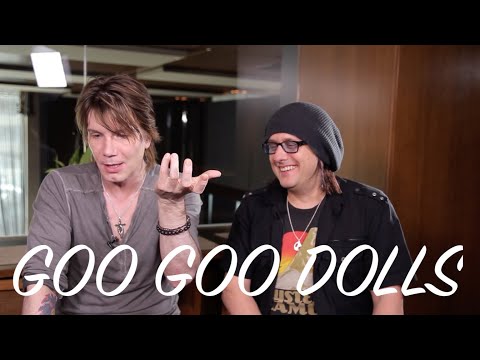
4 clips · 54:50 total
For licensing inquiries please contact reelinintheyears.com. How licensing works →
AUDIOListen
Episode #94 · Goo Goo DollsJanuary 2007 · 00:18:16
Episode #523 · Goo Goo DollsJune 2013 · 00:09:46
TRANSCRIPTRead
Show full transcript
0:00...whole generation of unbelievably incredible guitar players who have learned to make these weird chords. Oh, really? I've never tried. How do you play it? What's your tuning? Like shit? I don't even know what the tuning is. It's like a guitar set up for live shows. Yeah. Yeah, I mean, all my guitars, I have a different guitar for each song, each different tuning, because every song has a different tuning, you know, which is strange to me. That's not me, probably. Yeah, every song has a different tuning, so I have a guitar set up for that. How do you come up with the tunings? You just... Yeah, I sit, you know what I do with each chord, I like sitting on the sofa and just, you know, I'll just start banging away and twisting the strings.
0:48Just tuning and detuning strings and, you know, cutting strings off the guitar and doing things like that, and then hopefully it gets written down. Yeah, and then I generally, you know, I'll play with it and something will hit me, that I like the way it sounds, and I'll try to work on some chord shapes in there and see what kind of things I can do with it. And then I'll take a guitar tuner and then write it down in a book. Oh, it's cool. Put a piece of tape on it. Yeah, on a guitar that says, "Do not touch this guitar," to beat me. Yeah, pretty much. Yeah. What about you for the bass? Do you ever screw around with it like that? Yeah, you know, I mean, I just actually started doing an awful lot of that the past couple of records. Yeah, yeah, but more so just to kind of stay in the keys of the songs. Yeah, you have to kind of... Yes. We're tuning the bass for all songs, too. Yeah, me and my guy got a system. Yeah? What system is that?
1:39System of tossing basses back and forth during shows. That's awesome. Let's talk about the new record. Yeah. No Rob Cavallo this time, Glen Ballard. Did you record it in Buffalo too, or did you go to LA to do it? No, we recorded in LA with Glen. We wrote the whole record in Buffalo. Oh, yeah? A great six months, you know, just this nice self-imposed exile. Just got out of LA, you know, and immediately felt a lot more creative, you know. But then we went and worked with Glen because we wanted to do something different. Yeah. You know, we had made two or three records with Rob and it was just like, all right, now it's time for something new. So, you know, he understood, and, you know, we got to do what we got to do to make the best records we can. What did he bring to the process that's different than Rob?
2:24I mean, he's done Dave. He's done Alanis. Oh, you know, just a lot of positive energy. Like, Glen is very, very adept at making you forget the outside world, and he's really, really good at convincing you that what you're doing is a very important contribution to the world of art. Yes, and to the world, man. I mean, the world is large, you know, for the whole Katrina thing. So, yeah, you know, I mean... Yeah, that song came out of nowhere. It was really sort of interesting. Was it written about that? Did it come out... No, it came out after. It came out... So you wrote it before? I wrote it just before, and, you know, some producer at CNN adopted it as sort of the theme music for the relief efforts, and...
3:11You know, it's been used in a lot of things, and, you know, we were lucky enough to get down to New Orleans to the reopening of the Superdome, and you played... You know, down there, that was cool. I saw an interview with you guys doing that before you went on your bus tour around the city. What's it like down there? Messed up, dude, still? Yeah, it's still garbage. Yeah. Yeah, they need a lot of help down there still. There's still piles as high as houses that they haven't gone through, really, just of washed-up stuff, and it's just crazy, and they need a lot of help. And so, well, hopefully with this regime change that happened last night... I know. Are you guys Democrats, I take it, then, being musicians? Well, most of us are Democrats. Yeah, well, I think most people are, 'cause what's the third option? I mean, you know, I mean, I'm obviously
4:01politically leaning to the left, you know. Yeah. So, yeah, no, great day yesterday, man. Yeah, really cool, an amazing day, and a potentially amazing day in our history. Yeah, yeah, I think the entire world just took one sigh of relief, you know, because it was really, really, you know, six years of unchecked power, you know, and there's been a lot of abuse, and, you know, the country has been driven into, you know, just a massive amount of debt and lost a lot of goodwill around the world. And, you know, we need to start mending our fences around the world and refocusing our priorities onto more practical, urgent matters, you know. I mean, you know, it's like your song, "I was lying today..."
4:52"Today's the day the world begins again." Yeah, "Tonight's the night the world begins again." Yeah, so it's a very appropriate tune at the moment, I guess. Yes, it works that way. So you guys, I was reading something you guys said, you were writing a lot more together this time, rather than the last couple records, where it was more separate. I think it was you that said that. Yeah, it was just, I think we spent so much time together this time, much, much more time together in a room, you know. We were spending ten hours a day together, and, you know, so the writing process ended up a lot more cohesive this time than it was, yeah, sitting at my house writing and John sitting at his house writing. So, yeah, absolutely. You said there was an acoustic to writing, or how does it work together? Sort of pulling it together, you know. I had some ideas, and, you know, we brought them in.
5:38But I think just the process in general this time was a lot more... We went in, it was a lot more of a rock band. Yeah. Sitting making their rock together, as opposed to, you know, us writing some songs and bringing it in, making a record, and then presenting it to our rock band. Yeah. So how it went was cool, a little different this time around. "Listen" seems to be... What's one you sing? Seems to be one that kind of goes back to the old Goo Goo Dolls, kind of, not grunge sounding, but more alternative, you know, back in the day. Off of a riff that John came up with, actually, so that's very okay that you say that. Oh, that's cool. Yeah, yeah, it sounds like old Goos. Yeah. Well, that would make sense, because that's what that's... So everything was back down. Yeah, yeah. What's the direction for you guys now? I mean, the way I guess you kind of... Yeah, I mean, you must be screwing around with the guitars still and stuff. Or is it more this new, I don't want to say pop,
6:27kind of feel, but, you know, I mean, there's a difference between the old stuff and the new stuff in a way. Yeah, there's a difference between you today. Grow up, people move on, and, you know, you write different stuff. Yeah, that all works. I mean, you know, as long as it's coming from your gut, you know, I mean, I think that's the important thing, you know. Yeah, it's true. And just work from your gut and everything will be all right. But, you know, I don't know what it's gonna be. It's gonna be whatever I feel like. I always say I can't wait to hear what it sounds like, you know. Like, I can't wait till we write the songs so I can hear our next record. It really makes me excited. Are you guys writing stuff on the road or not? No, I'm taking some time off in January to start. Okay, this is a bad place to write music?
7:14But in Calgary? No, just on the road. On the road doesn't work, not for me it doesn't. Yeah. You got to be at home surroundings, that kind of... So, well, at least now... I don't like working at home either, though. I need a place to go and work. What, like sitting on a park bench or something? No, no, no. Downtown, the train station in Buffalo. Yeah, it's amazing. I mean, I need, like, you know, a studio or a space someplace I can go to and just, where, you know, nobody will hear me and I can freak out and do whatever the hell I want. Yeah. You know, I mean, if I want to take my pants off and write a song, I can, you know, it's not a problem. We always used to, like, in Buffalo when we were kids, there were always rehearsal halls around, you know, where you could go rehearse in a really nice place with a PA, et cetera. But we never wanted to, so we always ended up rehearsing in drippy, you know, 40-degree basements
8:04because we didn't want anybody to hear what we were doing, you know. It's a simple circle, though. Yeah, more than one builder. You know, I mean, if you're gonna... I think that's another thing we learned with Glen, you know, and, you know, it sort of fits into this. It's like, you know, you got to make a billion mistakes in order to make your best record. Yeah. You know, we always sort of self-censored ourselves into the positions, you know, that we were in, and I think that this time, you know, he really taught us to open things up a little bit more. That was the best lesson. I mean, you know, to get the best stuff you have to be experimental, you know, and, like, 99 out of 100 experiments are gonna suck, you know, and you have to realize that. But you have to at least let them see the light of day before you smash them.
8:50Yeah, you know, it's like, you know, it's okay, fine, okay, I'll play this twice, and if I still think it sucks, then we'll put it away. But, yeah, but at least it's getting done, you know. How many songs were recorded for this record? Oh, I think there's a couple left over somewhere. Yeah, there was one that kind of went away early, and then one that kind of went away right at the last minute. Yeah, so, yeah. But, you know, I mean, I tend to whittle down my songs to what I'm actually gonna wind up putting on the record, because it's like, you know, or maybe an extra one or two hanging around, but I'm not into the whole, you know, B-sides and rarities. It's like, well, you got that one record that kind of came out like that. Well, those were all songs that were on albums. It's just in February was different, right?
9:36Well, yeah, we re-recorded that. But the thing was, the way the record company worked us was that we were, you know, we wrote pop ballads, you know, and that's a pretty small, you know, part of the body of ten years. Yeah, it's a small part of the body of work, and that's when we... So we put a compilation together called What I Learned About Ego, Opinion, Art & Commerce. You know, it was all the songs that were, you know, deeply a part of what this band was all about, but a lot of people never got a chance to hear because they weren't on the radio. Yeah. You know, so, and it's sort of like the de-evolution of the band, you know. We started at...
10:24Where'd we start, with Gutterflower? Yeah, I think we started with Gutterflower and worked our way back to 1988. Yeah, so it's kind of interesting. Yeah, it's a cool record. Yeah, it's a cool record. It's one of my favorites. It's really cool, and "Acoustic #3" is on that too, which is nice. Yeah. You bought a studio in Buffalo. Are you part of that, or is it just your studio? Yeah, actually, I bought one years ago, and we just moved to the place that we've been working in since we were kids, actually. Closed for the past 10 years. Oh, wow. John and I now are gonna open up the room there, primarily to do our next record. Yeah, well, you were saying you need to go to your own little place. I was thinking that'd be the place. Yeah, we got some meetings. The guy that designed it did, like, Electric Lady. Oh, no way. And did the Record Plant. It's amazing. In 1973, I think he built it, something like that.
11:11So he's coming back. We're meeting with him next month, and we're gonna redesign the room with... That's amazing. That's gonna be really cool. Are you doing analog or digital? How are you gonna do it? Both. Yeah, you know, I'm not, you know, like a studio geek, because I am just into making records that sound really cool. Yeah. But, yeah, you know, I mean, we got a lot of old gear, a lot of, you know, analog stuff, a lot of tube gear, you know, and you mix that up with the digital world. Yeah, digital. You know, the digital world is inevitable. I mean, you know, it's gonna wind up in a digital format, but, you know, I mean, there's a lot of things that you can do to get it there that'll make it sound better, you know. Yeah, it's like Zeppelin records sound so much better than, you know, albums that are
11:58park records. Yeah. Yeah. I totally agree. Yeah. Our records don't sound as good as those records, because it's not the same. So, yeah, so, you know, we're trying to capture some of that, you know, get some of that on the way in. You know, it'd be pretty cool. Yeah, yeah, because he actually worked, you know, with Eddie Kramer on a lot of... No, not designing those. Yeah, designing rooms where, you know, they actually did those drums. Yeah. So, yeah, we're gonna get a big... and we have a big-ass drum room going, and, like, a whole big old console, you know, and it'll be fun. It's gonna be a good time. I mean, we'll never make a dime off it, and, you know, probably wind up selling everything in 10 years. You're musicians, like, a dream to own your own studio. Yeah, that dumb dream.
12:45Trust me, I've been living it for years. It's, you know, it is... It's all about it being a nonprofit organization. Yeah. And hopefully, you know, Catholic Charities or something will, you know, help fund us. Speaking of nonprofit organizations, this tour, you got people coming out, I heard, from different places in different cities, and you're asking people to give can donations. How does it all work? Explain to people what that's all about. Yeah, yeah. I actually wasn't sure if we were doing that here, but I'm glad that... Yeah, awesome, awesome. Yeah, good, I'm glad. Thank you very much. Yeah, USA Harvest. It's an organization that we work with that, I guess, has a sister organization up here, and they collect canned goods at our shows. We've been doing... What, about eight years we've been working with them now? Yeah, I believe we raised, well, last tour, last summer,
13:32kind of grow soon with the Counting Crows, you know, like a two-and-a-half, three-month tour, we raised over a million meals. So, and it's cool because you don't have to go through any bureaucracy. You don't have to go through any food bank or anything like that. It gets distributed within 24 hours directly to the shelters. That's amazing. And it's all volunteers, there's no money. It's just, you know, people helping their neighbors out, and that's a great thing. Yeah, it's like the '60s music, Live Aid, and I'm surprised more bands aren't doing that nowadays. Well, there are a few, you know. Green Day was really heavily involved with them, and Counting Crows and us, and, God, I forgot the other... Yeah, Van Halen. Van Halen was the one that really kind of started it all. Okay. Yeah, so, you know, we're just following in their footsteps, and
14:19I'm overwhelmed by the generosity of the people that come and see us, you know. Yeah. We're all just, you know, free-loving kind of people. Yeah. Tell me about the Crows tour. I saw you guys in Toronto, it was a great show. It was a great tour, you know, and they're really, really... I learned to... I'm a fan of theirs. I learned to appreciate their music a lot more. I mean, 'cause I was, you know, I always had my Counting Crows songs that I liked, you know. Like what? "A Long December." What the hell is it, that song? "Angels of the Silences," great tune. Yeah, you know, that's my favorite song by them. You know, but they're really, really great guys, a really great band, great players. Yeah, they are. Just forget it, you know, I mean, sonically, they're amazing. Switched up a few musicians over the years, though, in the bass, a couple. But, you know, I mean, that happens. Part of the evolution, man.
15:10Yeah, you know, awesome. Talk about downloading. You mentioned digital studio, that kind of stuff. I wonder about digital downloading, and when you guys started off, you must have been giving out cassette tapes back when you started, and, yeah, you know, to CDs. Yeah, and now, I mean, it's going away, I think. Yeah, I hope not. I mean, I like having the artwork and all that. What I think is a really interesting barometer of where the world is going is that the world-famous Tower Records on Sunset Boulevard in Hollywood is closing. No way. Closing down. Closing down. They're clearing the store. It's like... It's about... Yeah, I mean, like, we were just over in the UK, and it's still about small record shops, you know. I mean, that's, you know, local record stores, and they got the big ones there too, but they're able to coexist, you know,
15:57for some reason, over there. Interesting. But, you know, but, yeah, digital is going... It's gonna be all digital eventually. Yeah, you know, and it's cool. I mean, there's certain... rein it in, so we actually make some dough off it, you know. I mean, it was really hard to swallow when, you know, you sell, you know, 400, 500, 600,000 records, which is awesome now, which is great. It's great. But then you look online, and there's calculators for how many downloads. Yeah, there's like three million downloads of you, and you're like, and nobody paid, man. You know, I mean, it's a really nice teenage idea to think that you're screwing the man, but, you know, the record company makes their money back first.
16:47They make their money back off the first hundred thousand records, and it's like you're ultimately just screwing the bands, you know. And it's like, you know, we got to eat same as anybody else, you know. I mean, it's like if I, you know, came into your dorm room and stole your computer, you know. I mean, it's like you need your computer to, you know, to study and get your degree so you can get your high-paying job, you know. But if I decide, you know, screw you, computers should be free and they should be for everybody, yeah, I'm coming in and taking yours. I think people are more starting to understand that concept, you know. But I think, you know, it's just another one of those things, man. It's just the industry is mutating. Yeah, and we don't know which direction it's mutating, and it doesn't seem to be about
17:36just selling that entity, which is a CD, anymore, though. So, you know, people are trying to figure out what that thing is right now, and as wrecking as it is, it's pretty exciting at the same time, I think. Yeah, I mean, you know, there's potential in everything, and eventually, you know, I mean, ultimately, if there's a buck to be made, I mean, somebody's gonna figure out how to do it, you know. So, yeah, I mean, you know, it's cool. We just, you know, I mean, we're the last guys to get paid anyway from the record company. So it's kind of like, you know, I would much rather that people bought... my mortgage, my bank is the last one.
0:00Hey, we're the Goo Goo Dolls, I'm Robby. And I'm Mike. Hey, we're the Goo Goo Dolls, I'm Robby. And I'm John, and you are watching MSN Exclusives. Is that from Woot.com? I have so much to say. Yeah, yeah. Is that where you get your T-shirts? Woot? No, no, no, but Woot has some pretty amazing... Not how we got our shirts. No, no. No, we make those ourselves. Yeah.
0:45So, cool cottage industry. It's funny that you're so into technology, because you're not into the social media stuff. I don't touch the... I'm going to again, but... The record really is almost half too, though, now, right? Well, you have to. Well, the band, you know, the band's account. You know what it's like, you know, you're sitting there reading Twitter, and you're having a few pops, and then somebody says something nasty about your girlfriend. You start going at 'em, and then... But you don't drink. And then you lose. I'm gonna go to the... Just saying, you know what I mean? Back in the day. Back, yeah, when I was... On the last tour, I saw you guys on the last tour in Edmonton. It was a very, like, all-encompassing set of everything. How is that gonna change? I know you'd like to toss seven, eight new tunes in on tours. So how are these Matchbox shows gonna... What babies will always be in the set, every new, I guess?
1:32I guess you have to do "Iris." You have to do "Broadway," "Better Days." And "Name." Yeah, I mean, I think it's probably... Yeah, but there's more than that, man. There are more than that. So, too many hits. Like, it's beautiful. Yeah, yeah, you know, I mean, we have probably 10, 12 songs that we play pretty much every show. You kind of have to. Yeah. Do you feel like you have to? I mean, you have to dance a little bit. Yeah, you do. I mean, you know, they're spending their cash. Yeah. So coming out, you want to try to play everybody's favorite song, you know? And you got a better shot at it when you go for the big ones. Nice. Yeah, it gets harder and harder every year to write the set list. But, you know, we're pretty... They're a long way. Yeah, I think. Say that for someone who needs it. That's their life.
2:18Who said that? My friend Andy Stochansky worked on this record. That's crazy. Andy lived in my house. Andy lived in your house? Andy and his wife rented my house while I was living in New York. He and I wrote a song for this album called "Bulletproof Angel." And why are you co-writing? Because I got tired of sitting in my room all by myself trying to do it. Or, you know, I mean, you want to start to get other people's opinions and ideas about what's up. So what do you look for in a co-writer? Someone who writes something completely different than you would? Or someone that's similar, that way the idea is kind of... Someone with different strengths than me, and, you know, people who are my equal or better. Last time we talked, we talked about crazy tunings a lot.
3:04Yeah. Because you like your crazy tunings. What's the weirdest one for this record? Oh, wow. You know what? I twist the guitar strings up into whatever tuning, I take a tuner, I write it down, and then I immediately email it to my guitar tech. And then I forget what they are. It's just, yes, some crazy weird open tuning, which is actually... God, I can't even remember. It's just insane, though. It's really good. I think I'm going to start publishing the tunings and stuff like that on our website, just so you know, because there's a lot of people who ask about that. Well, do you have to match it to bass? Or to get the bass in each other the same way? No, no, I mean, it depends. Sometimes I'll use different guitars to match the key of the song a little bit.
3:53But I've been trying to do a little bit less of that, because we got 60, 70 guitars on stage right now. That's insane. You don't have room for any more. It's incredible. I mean, I roll out there with literally 35 guitars on stage. Are they all the same guitar? No, just every guitar is done... Well, now I'm using, like, 20 different guitars during one show. 20 different guitars with variations on tunings. And we have backups of everything too, so there's two of everything. You've got to have a backup for it. That's crazy. It's getting a little expensive. This is becoming a very bad habit.
4:40Touring with Matchbox, it'll be cool, though. Do you know them? Have you toured with them before? Have you played shows together? I've met Rob a couple of times, and one of the other guys I've met too. And they're just normal dudes. They're out doing their thing. You know, I'm really excited to do it, because it's one of those bills where it's like one and one equals three. And what we do is so different than what they do, and we're so often compared to each other. And I'm just excited to get out there and make it happen. It should have happened sooner. Big summer, man. Big summer. I mean, this is literally, other than opening for the Stones and Bon Jovi, which we were
5:25just along for the ride, playing 45 minutes, a set opening for them, this is the biggest tour that we've ever done in our entire career. Is that the No Security tour? No, no, no. One sounded on that. We were just about one era, something. No Security tour, right? Oh, since like 2000, something like that, 2001. So that must have been shows where you were sitting by the stage, being like, please play this song. Everything just must have been amazing. It was pretty amazing to watch them play. Yeah, and they played for so long, and we'd watch their sound checks, man. What do you learn, just performing with them, from watching a band like that? Do you at this point learn stuff? You learn to know your limitations when you see a band like the Stones playing, because there's no way to win.
6:11I mean, it's not like we're going to go up there and blow the Stones away. But I mean, if you're just trying to hold your own for your 45 minutes. Yeah, but I think the thing you learn when you watch a band like that, especially when you get a chance to see them, like, many, many nights in a row, you know, like, you see the Stones once, and it's sort of like that experience. Watch all the Stones. Oh my God, you go home. But, like, when you see them night after night, you realize, like, they're up there because they want to be up there, because they like to be up there. Like, you can't fake it like that every single night, you know, and go out there and give the kind of show they give every night, you know, not wanting to do it. And so I think just watching their enthusiasm, you know, and at that point, you know, they're probably well into their, you know, probably 60s, but, you know, probably
6:5760s, you know, like... It's like, yeah, punks. Yeah, you know, it's like, you know, the fact that they were out there still loving what they were doing every night. They sound checked sometimes for longer than their show would be. It's like, you know, just because they love to do it. So, you know, it was refreshing and felt really good. I'm going to keep going with that, but we don't have too much time. Because you told me once, during Gutterflower, there was writer's block or something, or nervousness, or you weren't sure why you had writer's block at the time. Yeah. But maybe looking back now, 10 years later, have you realized, was it a pressure to try and follow up those hits? Like what? Yeah, you know, yeah. Something like that sense. Yeah, you know, it's like, you know, a lot, I think writer's block comes down to just, you know, fear and anxiety. You're not going to be good enough, that, you know, you're not going to get what
7:42you want. You're not going to be who you want to be. I'm sorry, this is funny. This is like, while I'm applauding... This is like, you know, one of those morning radio shows, you know, where the guy's got the little box. It's actually happening. It's actually happening. This is actually happening. This is actually happening. You're overcoming this. Yeah. They're loving me out there. But, you know, yeah, you get nervous. I mean, you know, I'd be lying if I said, you know what? I'm a songwriter, I don't care if anybody likes my songs. Because I want everybody to love my songs. I want everybody to go, wow, you're awesome. You know, we all want that. You know, but it's unreasonable. The other question I was going to ask you, just in terms of looking back at things, you know, at a radio interview, like, three months ago, the guy asked you, do you know if any of these new songs are about your fiancée?
8:29And you said it's still too close, I can't tell you. That was three, four months ago. Yeah. The record's almost out. Yeah. If you've had time to live with these songs, have you realized? Yeah. You know, I figure, you know, there's a song on the album called "Come to Me," which I think is, you know, one of the best songs I've ever written. And she definitely figures into the equation, that piece of music. Five quick questions, one-word answers. Road or studio? Studio. Road. Lennon or McCartney? McCartney. Lennon. When you hear a song, what usually hits you first: lyrics, melody, or rhythm? Melody. Yeah, melody. Song you've written you're most proud of? "Come to Me." Oh, goodness. I think, I think "Happiest..." One word. "Happiest of Days," I think.
9:14The country is not what we're talking about. I know. One answer. No, it's "...of Days," I think. I think I just wrote a song on this new record called "Happiest of Days," and I'm pretty proud of it, yeah. In one word, Goo Goo Dolls. God. Wow, that's hard. Us. Us, yeah. Nice. Thanks, guys. Appreciate it. What a pleasure. Thanks for being here. Thanks for being here. Thanks.
ABOUTThe archive
This interview is part of the Matt Schichter Interviews archive: more than 700 conversations with musicians, actors and filmmakers recorded between 2003 and 2014, beginning with The BackStage Pass, one of the first podcasts (2003). The archive also became Matt's short documentary Lennon or McCartney. Matt Schichter is now a Glasgow-based producer, line producer and music documentary director: he directed CFNY: The Spirit of Radio (PBS, TVO) and line produced Faith (TIFF and Rome 2026). His films → · UK film producer and line producer → · More about Matt →
Listen to the full archive on Apple Podcasts or Spotify.