SONGSWhat Metric said about the songs
“Help I'm Alive”
Emily Haines said the song came from her stage fright.
Emily Haines: “I had struggled so much with exactly the feeling of that song, of like, I tremble, they're going to eat me alive. And then I really just was honest about how scared I was every time I stood up on stage... the chorus of that song is sort of like your own cheerleader”
“Synthetica”
Metric said the title track grew out of about 45 minutes of music and a word pinned to the studio wall.
Metric: “we put this word, 'void,' right in the middle of this huge thing... it was like the ominous sort of overseeing sound of the whole record... it was like 45 minutes of music or something that we managed to make into 'Synthetica.' And it was one of the last ones we finished”
“Dreams So Real”
Emily Haines took the song's title from a poem by her late father, Paul Haines.
Emily Haines: “An example is the song 'Dreams So Real' from Synthetica. He has a poem... 'Dreams so real, we wake up in them, remembering none of them, an odd woe stirring us so.'... with that song, I really struggled for a title for a long time. It was called 'The Song That Has No Name.'”
Emily Haines described what the song is wrestling with.
Emily Haines: “thematically that song is sort of looking at that question of, I don't know, doing this my whole life, I give everything to it, I hope I'm making a difference. But in the end, you realize you're just this little thing on the radio and you're just such a peripheral part of culture”
“Stadium Love”
Metric wrote the song while still playing clubs, imagining a stadium.
Emily Haines: “'Stadium Love' was such a sort of dream. It was just like, yeah, imagine a stadium. I mean, we were playing in clubs when we wrote that song... And then we found ourselves at the end of that cycle playing with Muse in an enormous dome in New Jersey.”
“Lost Kitten”
Emily Haines said the song started in Buenos Aires and touches on cultural expectations of girls.
Emily Haines: “I started that in Buenos Aires, actually, before Fantasies... A lot of times when I'm writing things, I think it's a lot of subconscious stuff. In that case, of cultural expectations of girls... This sort of sympathy you feel sometimes for young women, you're just like, do you want to be doing that?”
Emily Haines also appears in Matt Schichter’s documentary CFNY: The Spirit of Radio, free on PBS in the US and TVO in Canada.
VIDEOWatch
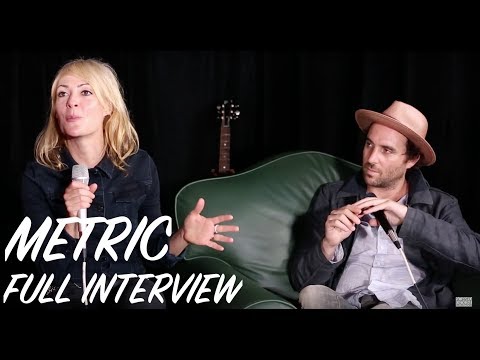
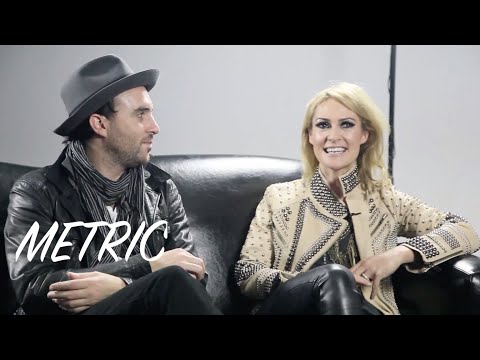
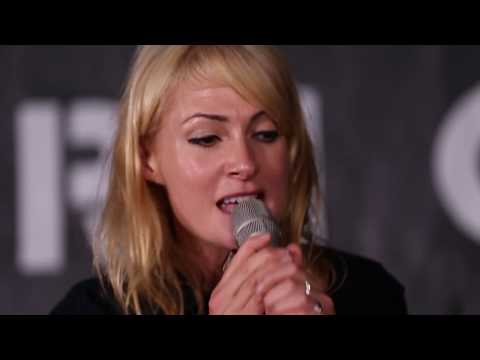
3 clips · 29:25 total
For licensing inquiries please contact reelinintheyears.com. How licensing works →
AUDIOListen
Episode #441 · MetricDecember 2012 · 00:12:32
Episode #547 · Metric #2July 2013 · 00:16:24
TRANSCRIPTRead
Show full transcript
0:29Awesome, we're at the Air Canada Centre and it's amazing. It is. It's really cool for you guys. It is. It's very exciting. I mean, it feels natural after being in arenas all across the country, but yeah. On the tour, I expect you to walk out tonight and be like, wow, but it's like they all kind of look the same. So good. They all look like rooms like this, I'm sure, for most of the day. Yeah. What's it been like playing in rooms like this across Canada, your home country? This is the hometown show tonight. It feels like there's a lot of hometown shows on there, doesn't it? Yeah, it's true. Well, we all went to school in different places in the country, and between the two bands, all the time we've spent in many cities like Vancouver, I mean pretty much every city, we've worked our way up from the smallest venue to the biggest. So we have a real connection with people who live there, and we've spent a lot of time in every city, so it's felt great. I mean, we were literally joking in Calgary that there was a week, probably back in
1:182004 or something like that, I think we spent 10 days just going back and forth between Calgary and Edmonton. We lived at the Days Inn on 16th Avenue Northwest or, I don't know, Calgary addresses don't make any sense, but we lived in this hotel for like 10 days, and ever since then we always joke, it's like, we're basically from Calgary at that point. From everywhere. And where's up from here? I know we're talking about that. We've got some plans for next year, but it was a good question. Yeah, there's definitely... there can't not be an up. There's always an up. But sometimes in the early days of being a band, the up is so clear. It's just, the venue that fits a hundred more people is up. Numbers are just up. And then there comes a point, not to say at all that we've reached the top of numbers,
2:03because that definitely hasn't happened, but you kind of reach a point where it's possible that all the people that would like your music know your music and like your music, in some territories. And I don't know, there's definitely an element of finding out what's next internally as opposed to externally. Yeah, and there's all the film stuff too that's around. We have our own studio. Jimmy's been doing another round of renovations on that. So there's a lot of possibilities of a lot of things that we can do. It's exciting. I'm writing an opera. All right, that wouldn't be surprising. I'm sure. We're working on that. Not writing an opera. I'm not. I was thinking maybe opera. Next up might be production stuff. So I think it was you that was talking about seeing Roger Waters at Coachella, and just the surround sound and really respecting the audience in terms of...
2:49Yeah, amazing. Yeah. So in terms of this tour, I guess the production value must have been up to do arenas across this country. Yeah, well, we work with such great people. We have such talented people that have been on our crew, a lot of them for many years. And I think it's kind of the same feeling for them, of having the opportunity to have a bigger canvas to work with, and I really love what they've come up with. Yeah, there's a lot of people involved every day. It's unbelievable when we come out. It's like the number of hard hats on the tables and the number of people who are really working around the clock to set the whole thing up. It's really impressive. Very talented people that we are fortunate to work with, for sure. I mean, we definitely share that sentiment of respecting the fact that people are coming into these huge rooms and we need to be able to fill the room
3:35with the show. And we like the idea of putting on a massive arena show, and we like big spectacle. And usually when people in our crew come up to us and pitch us on amazing ideas of lighting rigs and staging stuff, we always inevitably get the call from our manager that's like, why did they... I told them not to pitch you on that stuff, because I'm trying to make sure that you guys can live and pay rent, and yet you want to spend everything on four million lights for like three shows. Well, yeah, I mean, and that's the irony, is in this age it really is a labor of love, even at the level that we're at. It's just a very different industry than it was, as we joke, when people were making Eagles money. You have to be in it for something other than money, because that's
4:23not what's there. At least in our case, we put so much back into the whole thing, because the experience is the point. So we're not gonna come all this way and then cheat the audience out of... We want to give them the most incredible show that we can. So yeah, definitely not a recommended career path if you don't really love it. You touched on something there about the fans. You guys made a record before Synthetica that was more for you than for the fans, and you realized maybe we should do something more for the fans. So where's the disconnect between making something for yourself and making it for the fans? It was kind of more like we were hanging out, having a really good time at our own studio through the winter, and wrote way too many songs that had five-minute outros that were just us jamming and having a really good time,
5:08I think it was. And then at the end we kind of had to edit it down and add a few things and make it more of a Metric record. It was just really fun, frankly. It's just that we had not used any sort of objective eye. Yeah. And so when you make something without objectivity, you're gonna discover a few things once you step outside and come back and go, oh, it's so obvious that 14 minutes like that is really not necessary. And it wasn't necessarily like, oh my God, our fans aren't gonna like this. It's like, I am one of those fans and I didn't really like it. And I was identifying with what I knew they would feel, like what you want from a Metric record. It's like, yeah, we can all play, let's go to the Dakota and play till dawn, amazing. But, you know... Yeah, I love that place. But yeah, it was a pretty hilarious revelation, because we all had it at the same time, and
5:57we called Joules... Jimmy called Joules, our drummer, to say, hey, man, we're actually not done the record at all. And he said, yeah, I knew you were gonna say that, because it was too easy. It was too much fun. You've got to go back in and really push yourself. And that was that last stage at Electric Lady. It was really great to really tighten it up and bring it together. And Josh was saying it was the most comfortable that anyone's felt in the studio together. The success of Fantasies for us allowed us to not feel like we had to just fight for anything that we were gonna get, which is definitely how we felt on Old World Underground and Live It Out. We just felt like at any moment, if we made two bad decisions consecutively, the whole thing would be over. And we didn't feel that way after Fantasies. Fantasies sort of put us on a level where
6:44we had the buffer of maybe making a mistake, and that led to a level of comfort. We weren't so nervous about what was gonna happen. I also think that we've been working together for long enough at that point. We know who each other is, and we've come to terms with our own growth, and our growth as a group, and our growth as individuals, and friendships. We just work smoother together. When someone decides to throw their little hissy fit, which we all do, all four of us, outrageous... I would not say one member more than any other. I really genuinely wouldn't. Mine are ridiculous when they happen, and I'm pretty glad I don't have to see it from the outside. But we all know what to do now. No one gets offended. No one gets freaked out. No one gets
7:35annoyed or pissed off. You just take it in stride. It took 10 years of relationships, but now that we're there, it's easier. It's really boring. No, I'm just kidding. Did the success lead to more creativity, or did you need a break? I mean, you toured, what, pretty much two years. Really inspired at the time, like this. There's something that happens in a moment where, you know, we've always talked about the idea that the success of the band was so slow and steady, and in 2010 it did a thing that it had never done before, and that was a really exciting time. And I think we all came out of that time really juiced up. So we took that energy and just went right in with it. Yeah, and instead of pressure, it was actually the absence of
8:26fear or something. It was like Jimmy was saying, it was so nice for us to feel like finally people were listening. They seemed to understand. It was like, okay, yeah, we don't have to battle this every step of the way just to get our music heard. It felt like we finally kind of had some ears and we could develop as artists, as opposed to just trying to prove something. What about you as a lyricist? 'Cause I heard you say you were trying to be as honest as you could with this record without being autobiographical. Yeah, it's more like I just don't personally go in for the confessional tone. I'm not someone who writes lyrics from your journal, you know what I mean? It's just not my style, and the artists that I've really admired have taken a different tone. And I'm just personally kind of fascinated by the use of the pronoun, and how you can say "I" when you're talking about someone else and you can say "you" when you're talking about yourself, and just always exploring.
9:17Those are tricks that everybody knows, but always exploring what is the emotion of the community around you, your friends. I don't feel like I'm only speaking for myself when I write. I'm considering what I've seen happen in the lives of my bandmates and my friends and family and my city and the world, and just trying to be aware beyond your own little stupid problems. So, yeah. Did that answer the question? I think so. I mean, to tie it up, because we're gonna close things up with the friends thing: Stars are on tour with you. Yeah. Forever everyone's been talking about this, but are they coming on for songs? 'Cause Chris and Evan play on two of the tracks, at least, on this record. We talked about doing that. But on stage, you mean? Yeah.
10:04It was a little annoying, and then we just kind of... I don't know, there's an element of we just want to relax. We'd rather do what we've been doing, like they come to our bus after the show. Evan's got his little baby on tour, and he kind of needs to be a dad at moments, which is beautiful to see. But the tour has been... there's just gonna be tears later on, put it that way. Yeah, because it'll be over after tonight. And after the first night in Victoria, we realized that the last time these two bands shared a stage was March 2002. Where was that? Yeah, that was at Bottom of the Hill in San Francisco. And so it's 10 and a half years, and that's ridiculous. We'll probably try and find a way to do it again somehow. Before I let you go, five quick questions, one-word answers.
10:58Road or studio? Both. Road. You know, I'm gonna be brutal at this one. Okay. Well, I know we're currently road. When you hear a song, what usually hits you first: lyrics, melody or rhythm? Rhythm. Song you've written you're most proud of? I ask everyone these questions. I know they're not easy. I hate this format, the surefire, like rapid fire, like dogs or cats. I think they're a little more than dogs or cats. No, I'm sure people find it... I'm sure your viewers really enjoy it, but I just suck at it. Yeah, I love this. This is really... let me think. What was the question? Best song we ever wrote, "Hustle Rose." I really like that song. Well, then why don't we ever play it? Well, I have a little... What are you most excited to play tonight?
11:52"Gold Guns Girls," because I just get to solo like crazy. Good reason. All right, in one word? Ah, come on. In one... structure. Hey, that might be a good one. In one word, Metric: structure. Yeah. Finally I cracked the code of the surefire, the rapid fire, one-word answers. Just give the answer before the question. You can. Thank you. You've taught me a lot. Here to educate. Thanks, guys. Thank you. I appreciate it.
0:05So you guys just shot a video for "Lost Kitten"? We did, like a week ago. Tell me about this. What was that like? Well, I have to tell you, my favorite thing is not being in videos. I think it's kind of a strange medium, to be honest. And it's a time that's interesting, because of all the online viewing, you can get the online viewage. It's a whole other world for short films, for really great directors and people who want to do things that are outside the confines of, like, look hot and lean on a car. Which I've actually... I walked around a car in the "Youth Without Youth" video. I actually like that video. I think it got cut, though, didn't it? Did it? I think it was just my leg or something. For a minute it was like, hot car shot. I think we were like, Emily's leg makes that car look fat, so let's cut it. Nice. But so the "Lost Kitten" video, we're really excited, because we're working with this director called Sammy Rawal,
0:52he's a Canadian director, and a production company called Believe that's out of New York. And it's a really, really cool thing they did. I don't want to give too much away, but they went and shot in Mexico, and they're exploring all sorts of interesting mythological meanings of the search for the mother, for this sort of spiritual self that we're all kind of missing. And the protagonist is a highly unusual protagonist for what you would probably visualize. I've been sending out some little sneak peeks of it, and people are really freaking out that the protagonist is not actually a kitten. But then I just send them to that cat that's running for mayor in Mexico. I don't know if you saw that. I was just like, there's always Morris, the cat that's running for mayor. But I don't want to give too much away. But yes, I'm really excited to see the great work of Sammy and his whole team.
1:42It's going to be great. I'm trying to sound like a kitten in that song. I feel like you're trying to do the cutest voice possible. I know, I know, it's funny. It's funny, that song evolved over a long time. I started that in Buenos Aires, actually, before Fantasies. And it was this sort of, like, a kitten could rap or something. I don't know what the hell it is. And the storyline is highly... I don't know. A lot of times when I'm writing things, I think it's a lot of subconscious stuff. In that case, of cultural expectations of girls or something about that, of, like, kitten on the catwalk, high heel shoes, and, like, victim of the system, say it isn't so. This sort of sympathy you feel sometimes for young women, you're just like, do you want to be doing that? So, but in the end, hopefully it's just a great jam that people enjoy. So speaking of great jams, you guys just played through three great jams.
2:27You guys want to talk about writing one of those? Any of the three, I'll let you guys choose which one. Let's see. Well, I mean, the middle song, "Synthetica," it turned into this thing. At some point, we have this board in the studio, which is just soundproofing stuff that you can pin stuff up on, and we had all these ideas up on the board when we were making that record in particular. And there was everything from a chord change to a lyric to a song title, and it was like, yeah, sure, it was like an inspiration. And so we had this song that started out actually as a little Tokyo. And then it sort of kept evolving, and every single time I would go to an instrument, I'd be like, oh, I'm writing a new song, and it'd be the exact same chords, the exact same tempo, the same melody, and then Emily would be like, you wrote that like nine times in a row.
3:17And so every time it would have sort of one extra little section, and then one night we sat in the studio and we were like, I wonder if all of these things are going to come together to make this one big piece of music. So we went over to the other board and we put this word, "void," right in the middle of this huge thing. It was the only thing over there, and it was like the ominous sort of overseeing sound of the whole record. And eventually it got sort of whittled and whittled down. Yeah, I mean, it was like 45 minutes of music or something that we managed to make into "Synthetica." And it was one of the last ones we finished, because I struggled with the... now the lyrics flow really, they make sense. I hope they make sense to you. I feel like it's one of the more lyrically clear songs. But I struggled with that bridge. I struggled with little parts really passionately, like fought for the things I wanted to say.
4:07And a lot of what's interesting in our process, with Jimmy and I writing together, is, anyone who knows my solo material, I also like to write sort of abstract, more ethereal stuff that's not necessarily clear what the hell I'm talking about, but you get a feeling. So a lot of what we've been working on with Metric is being like, no, I kind of want to know what you're actually saying. I want to at least emotionally feel connected with what you're saying. So there's been a lot of... in that song, I'm like, how are these lyrics? And Jimmy would be like, totally, I have no idea what you're talking about. And I'd be like, damn, if you don't know, and you've been playing music with me for 15 years, someone who's just checking out the jam, what are they going to be like? What now? So it's been a really amazing process of just clarifying really what are you trying to say. I mean, you can get away with a lot of ambiguity lyrically, but my dad was a writer, so he was very serious about the value of each word and sort of austere use of language.
5:00So it's a good challenge. It's the direction I'm going with my writing. I was watching an interview with you yesterday preparing for this, and you mentioned your father. And I was wondering, have you ever thought about taking some of his words and putting them into tunes? Have you used his lyrics before? I actually have, and it's happened in a really beautiful... my father's passed away, in a sort of beautiful, ghostly way. An example is the song "Dreams So Real" from Synthetica. He has a poem, which I'm actually going to read for you from my mind and heart. It's a really good example of his writing, which is: "Dreams so real, we wake up in them, remembering none of them, an odd woe stirring us so." It's lovely. It's almost like a haiku or something. So with that song, I really struggled for a title for a long time. It was called "The Song That Has No Name." And people that care about us were just like, guys, you can't, no, that's not fair to the song.
5:52I loved that, too. Did you? I thought it was fun. It became "Dreams So Real." Yeah, it's a great title. It's connected with... and thematically that song is sort of looking at that question of, I don't know, doing this my whole life, I give everything to it, I hope I'm making a difference. But in the end, you realize you're just this little thing on the radio and you're just such a peripheral part of culture, in a way. And it's like, maybe I should be doing something completely else where I could genuinely help people, because, I don't know. You're doing something with a necklace, aren't you? What did I read? Oh, that's cool. Fleet for Hear Me. What is this? It's a beautiful project. A friend, she's a really amazing designer of jewelry and other things, and she's from Vancouver, and she started a company called Fleet. And she came up with this idea of doing a collaboration with this really amazing organization called Hear Me that finds a way to get equipment into schools or
6:39villages, places where kids have no way of getting just an instrument under their hands, or no way of capturing anything they might write. Which for me has been such a blessing, just to record it. My dad always said, whatever it is, if you're just playing a piano, just record it. Just give yourself that opportunity. So she did a collaboration with them, and we designed this... I wish I was wearing one. It's a pen. It looks just like kind of a cool necklace, but when you open it up, there's a pen. And it says, "believe in the power of songs," which is a line from "Dreams So Real." So, yeah, it's a nice thing to be part of. And it's a very small contribution to one thing, but it helps. It's better than nothing. So, "believe in the power of songs." I was going to ask you guys, for each of you, from either a musician's point of view or as a listener, where has the power of song brought you?
7:25I know. Manifest Destiny, man. Well, this morning it brought us to a bunch of airports. And you're leaving in an hour to go to Niagara, I was talking about it. Exactly. I mean, it's brought us everywhere we've ever gone. I think in the beginning we had a ridiculously naive sense of where a song could take you, and pretty sure we still maybe have a ridiculously naive sense of where songs can take us, because it keeps actually happening. A really good example of it, to me, is "Stadium Love." Fantasies was so well received, it was such a breakthrough album for us, but maybe some of you guys know the many years we spent before that, with Live It Out and Old World Underground. And so "Stadium Love" was such a sort of dream. It was just like, yeah, imagine a stadium.
8:10I mean, we were playing in clubs when we wrote that song. And then, throughout the life of that album, somehow we manifested this thing where, because of the song itself, in order to properly present it live, it was like, yeah, we should really up the production. And it sort of was a visualization, a sonic expression of where we wanted to go. And then we found ourselves at the end of that cycle playing with Muse in an enormous dome in New Jersey. In New Jersey, the one where cops gave us the escort out. I was just like, "Stadium Love," wow. As opposed to my tendency, which would be to write songs that are just like, this is what's wrong, this is what's bad, this is probably going to be this bad forever. And then you start to realize, where is that going to take me? Do I want to live with that?
8:58We started realizing at some point that, especially lyrically, you're repeating stuff every single night, and you're saying it with passion. So you should be careful what you're saying, because you're going to end up living whatever you're preaching and teaching and repeating on a daily basis. So we started realizing that maybe what we were writing would actually start to change the path of what was happening externally as well. And I think that was a powerful realization. Yeah, and "Help I'm Alive" was a big one for that too, for me, because it's just so nerve-racking to get in front of people. And especially in this time, you put yourself so out there, and anyone can throw anything at you, verbally or beer bottles or whatever. Twitter balls. Twitter balls, yeah. It's a really intense existence. And I had struggled so much with exactly the feeling of that song, of like, I tremble, they're going to eat me alive.
9:53And then I really just was honest about how scared I was every time I stood up on stage, and suddenly I had a song that, instead of fighting it or doing a lot of sort of "operation compensation," as we used to call it, like, I'm going to just run around up here and nobody will notice me, which is not really working... that's a way to express it so that I could own it. And then the chorus of that song is sort of like your own cheerleader, being like, if you're still alive, my regrets are few. It's like, you can do this, it's okay. And it really resonated with other people, I think, in the same way. So that was a good example of the power of songs, too. I was just thinking that you guys have to go to Niagara, and I do want to get some of these fan questions in. Audrey Lee: what's your favorite song to play on tour, and why? Why?
10:38Why? We actually answered this one the other day, and it's funny, because someone asked the question, what's your favorite song to play on tour, or what's the song that the set just doesn't feel complete unless you play it? Oh, yeah. And we sort of latched onto the second half of that, because we realized recently we've actually never played a show without playing "Dead Disco," not one. And it's a song from Old World Underground, which is 2003. We've tried. I believe you sent me an actual CD at my college radio station back in the day. Is that right? You used to mail them, right? Yeah, I used to put them in the envelope. Yeah, that's cool. And strangely, the song has become internally our biggest point of expression, because we've been playing it for so long, it's so free. We feel like we can do whatever we want to do within it.
11:26And it's taken us to so many different weird and awesome musical places where, we walk off stage, and it's become the thing that will guide us forward into the next musical direction. It's like our oldest child, in a sense, the pimply teenager of all of our songs. Yeah, and "Breathing Underwater" is just like a pristine little baby. Yeah. Does it fit better beside other songs in the set? Does it need to live in a certain place, at the beginning, at the end? It usually lives at the end. Near the end. It's hard to start the set with a 12-minute jam. We did that at that really horrible place in Milwaukee once. Yeah, we played this place called the Rave in Milwaukee that's, like, it's bad. It was right across from where Jeffrey Dahmer lived, like seriously.
12:11No, all the crew were like, hey, did you see Dahmer's place? It's like, no, no, no way. And then it was down in the basement, and they would shoot horror movies down there, like they'd fill it with water and shoot horror movies. It was just like, ahh! It was really loud. Everyone hated us. We just played "Dead Disco" for like 15 minutes and then ran away. That kind of leads into Kristen Turco's question: what is the thought process behind choosing which older songs to include in a set? Well, simply, it's the ones that we still know how to play. Yeah, true. We've talked about that a lot lately as well, because when you're out on the road, it's a pretty big production. We've got a lot of people, a big crew, and there's big trucks, and sometimes you're going into a festival setting where it's an hour, and there's just no room for, like, and now, track eight from album one.
12:57It's just not effective. So a lot of the last few years have been to really try to curate, for people who are maybe new to the band, the most impactful sort of collection of our past material. But I think we're hoping in the fall to open it up more and play some of the other ones, like "Ending Start" and "IOU" from Old World. We haven't played those in so long, and it's kind of cool. "Hustle Rose"? We've played it a bit. That's one of the ones she asked for. Oh, really? I think that one's going to come back. I think so. It's just a big production to keep everything going and find the time. And so I think it'd be nice for us musically. We ran into the producer from Old World Underground on the street in New York two days ago. It's so weird. That's Michael Andrews. He did the Donnie Darko soundtrack, and a bunch of soundtracks since then. Yeah. But he discovered us at the Silver Lake Lounge in LA.
13:43They were like, Anne Person there. We were talking about that song. He uses the word radical all the time. He's like, not "rad." He actually says, "radical, man." He's awesome. We were talking about that song and it just kind of came up, and I think it occurred to both me and Emily... it's come up in the past, but then running into him, and he's got a big beard, something about the beard and the "radical," it's more important. It's like, it's working, we've got to do this song. Yeah. A little comeback. You alluded to playing shows in the fall. The last time we saw you was the ACC here in November. So another tour past everyone kind of... Yeah, we're still putting it together. And I think the big thing we're trying to do is, you work so hard to get this thing up off the ground, and we're so happy that we did, but then you have to make sure you don't just repeat yourself. So it's multi-faceted. It's like everyone in their work and their life. You accomplish something and you're like, okay, good. But then you don't just go like, yep.
14:29It doesn't really get you anywhere. So we have to look at other sides of our musical ability. What do we want to make sure we keep developing? You don't want to become, like, I'm the girl that goes like this and sings "Stadium Love." I love that I can rock the faces off of 10,000 people, but I also like playing small clubs. I really like doing all the things in between. Playing the ACC for us was very much like, wow, we set out to do something at the beginning of this band, and that was it. And I think it opened up an opportunity to re-envision what might be in the future. Yeah, all sorts of possibilities of sonic things and different collaborations. I don't think I've totally come up with the answer for that yet, but I like the question. Yeah, we talked about it in November too, and I think you guys are still trying to figure it out. So a lot of things happened since then? Nothing.
15:14Certainly a couple of [inaudible]. Sitting around just going like, yep. Yeah. So last time we did five questions, it was interesting. We're going to see if this works again. I think you figured out how to crack the code last time. The lightning round. Exactly. But do you remember how you figured it out last time? What? No, what? Okay, we'll see if this happens. Road or studio? Studio right now. Yeah, studio right now. Lennon or McCartney? Don't do this to me. Ringo. Ha ha. James? Well, you just have to think George Harrison. Are you still reading? I just got to Harrison. Yeah. When you hear a song, what usually hits you first: lyrics, melody or rhythm? Rhythm. I think it's melody for me, probably. A song you've written you're most proud of? Aww. I've got to say, I mean, "Artificial Nocturne," kind of. Yeah. Yeah, I did. Yeah, I started the record like that.
15:59Yeah, I was going to say, that's why I started it. Okay. Yeah. Oh, maybe "Hustle Rose." Yeah, that's the good one. That's what you said last time. Yeah. In one word, Metric? Love, man. Yeah, family. Awesome. Thanks, guys. Bye.
ABOUTThe archive
This interview is part of the Matt Schichter Interviews archive: more than 700 conversations with musicians, actors and filmmakers recorded between 2003 and 2014, beginning with The BackStage Pass, one of the first podcasts (2003). The archive also became Matt's short documentary Lennon or McCartney. Matt Schichter is now a Glasgow-based producer, line producer and music documentary director: he directed CFNY: The Spirit of Radio (PBS, TVO) and line produced Faith (TIFF and Rome 2026). His films → · UK film producer and line producer → · More about Matt →
Listen to the full archive on Apple Podcasts or Spotify.