Lennon or McCartney? Kendrick Lamar’s answer: Lennon. Watch the moment. See every artist’s answer. Take the quiz.
SONGSWhat Kendrick Lamar said about the songs
“Swimming Pools (Drank) (Extended Version)”
Kendrick Lamar explained the story behind "Swimming Pools" before good kid, m.A.A.d city came out.
“being the kid and being at the house parties, and seeing how eventually they have an impact on me as I became the adult. I reflect on that between the first verse and the second verse. I really want to make it make sense, to still have fun and still have that charisma about it, and putting that metaphor in with the swimming pool and playing on words.”
“Sing About Me, I'm Dying of Thirst”
Kendrick Lamar said he knew what "Sing About Me" had to be about as soon as he heard the beat.
“When I heard, you know, the beat, I already knew what I wanted to talk about, because it had so much pain and emotion in that record, man. I just really wanted to dig deep into a real-life story of mine that, you know, had that perfect marriage with the drums and the little guitar plucks that's in there.”
“Give It 2 U”
Kendrick Lamar explained how he approached his verse on Robin Thicke's "Give It 2 U."
“I heard the record, I was like, yeah, this is crazy, a little bit out of my element, so I can challenge myself on it. And I just thought, flowing to the beat... Records like that, I really want to have fun on, you know. Don't want to think too hard on it. So I just vibed out to it.”
VIDEOWatch
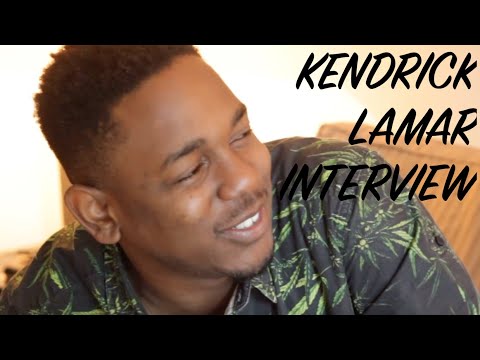
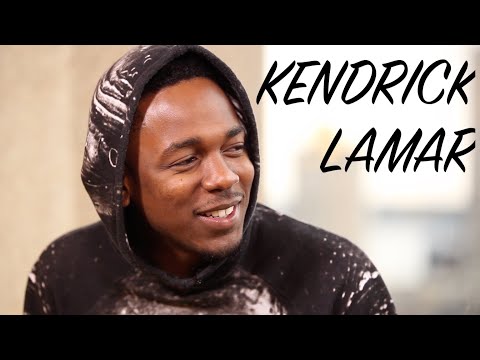
3 clips · 14:40 total
For licensing inquiries please contact reelinintheyears.com. How licensing works →
AUDIOListen
Episode #376 · Kendrick LamarJuly 2012 · 00:06:39
Episode #569 · Kendrick Lamar #2August 2013 · 00:09:03
TRANSCRIPTRead
Show full transcript
0:21I'm going to say that to the hotel. Let's go in there and speak with Kendrick Lamar. Dr. Dre thinks he's going to be the [inaudible] superstar. Kendrick Lamar, coming up. Baby. Baby. Now I grew around some people living their life in bottles. Granddaddy had the golden flask, backstroke every day in Chicago. Some people like the way... Good to see you. I'm excited for good kid, m.A.A.d city. I've been waiting for a while. Not a while, I mean, it seems like you're dropping a record every year. Yeah, we had a guy too. That's the day you're telling us. Man, people want to hear more from you, especially with all this hype going on. Yeah, exactly. October 22nd. That's good kid, m.A.A.d city. We're here to hold the whole structure and the breakdown and see what songs made it. Oh, the two songs we know, "The Recipe" and "Swimming Pools," are going on there? Yeah, more than likely.
1:07Well, let's talk about "Swimming Pools" then, because that's the newest one. And it's nice, because it brings you back to Section.80 a little bit, in the fact that you talk about drinking. It's fun, it's good, but it's also talking about the bad stuff too. Yeah, yeah. So then, I actually sprinkled that on there in Section.80, but this is my debut. I really want to tell a lot of other stories now. And that's one of the stories, one of the pieces to the puzzle: being the kid and being at the house parties, and seeing how eventually they have an impact on me as I became the adult. I reflect on that between the first verse and the second verse. I really want to make it make sense, to still have fun and still have that charisma about it, and putting that metaphor in with the swimming pool and playing on words. So I guess it's an all-around record, one of my favorite records.
1:54Since we're introducing you to a larger audience, I guess, with this being the first one out there for the world to hear: I hear your beginnings of hip hop is driving back from the hospital, and Big Daddy Kane is playing in the car. That's the story my mom's always telling me, you know, me being born in Compton, it's how I still call it, the biggest hospital. They put me in the car, my pops is playing Big Daddy Kane, driving back and shooting the scene with the young mother and cutting it up, and he's cold, I ain't crying, you know. Eventually, I probably started out with the music that day, just being the kid, being the infant and not crying out there. You know, you're kind of cool with the leg like I own that. So when did it start for you? When did you start rapping?
2:39I probably started rapping my whole life. I might as well say it now, just off the fact that I was reciting a whole lot of Dr. Dre, a whole lot of Snoop, when I was a kid watching videos. "Nuthin' but a 'G' Thang," "New York, New York," Snoop Dogg, Davey Single. I was learning all that as a kid, so I was rapping then. I started writing my own raps at 13. I was writing, throwing away papers, hiding them. Were you writing about girls back then? Yeah, I was writing about that all the time at that age. You know what I mean? Yeah, 13. I got into the studio at 16. I knew for me I wanted to do it because it was a high, the first time I heard my voice play back. I wanted to keep hearing it play back. So you're on the road with Wiz right now?
3:41Yeah. You were just kind of saying you want a band? You want to do a band thing? Yeah. So what kind of musicians, what would you bring into a band? What do you need? I started with Oscar. Oscar. You know, I said once I do a band, I want to, you know, headline my first major, major tour. That's the BET tour that's coming up, you know, September. It's gonna be 23 cities, so it's a big deal for me. And I said it's the perfect time, you know, to take the show to the next level. I just wanted to really show people that I can hold my own on the show without any, you know, supporting cast. And I did just that. I've done it now. Now I'm gonna take it to the next level and put that extra on it. Do you play anything? Or do you just... Uh-uh. I just navigate. I know, this is the way it should sound, right? Do you do that with Dre? Or do you just do what you do because you're amazing?
4:30No, I put my input on that. I'm not scared of that, because he want me to be that. He want me to be OP, to say the reason why, you know, he'd rather just work with my music anyway, because I was OP. And I'm not scared to go places that, you know, how did she heard from the West Coast. You know, there was something different. Is that difficult for you, him being a hero to you, you're saying? Yeah. So to be in that same creative space, how did you get to that point? Just off the fact of just not being scared, you know, to speak my opinion. You know, you come from a place where you're just a fan, but then eventually you have to come into this space where, you know, you're an artist now. You're an artist now. You made it now. You got to have your vision before you see it, because a lot of people can distract you from your vision if they're not understanding it.
5:19So I want to let him understand it and let everybody else around me understand it, you know, so we can all be together in the court. You know, and that's being as vocal as possible. Are you getting used to life on the road? I mean, this is your life now, I guess. Yeah, man. I hated it at first. Yeah? How come? Just being a wiggle man? I like the fact that I see different places. I'm a studio head when I don't have that studio, you know, to go to immediately, not running around so crazy. So I gotta get the studio bus down. Alright. Follow me behind you. Yeah, that's what I'm about to do. I'm always recording. I got so much stuff. Yeah. Great. So we do something called Five Questions, five quick questions, one-word answers. And I think I know the first one. Road or studio? Studio. Lennon or McCartney?
6:04Lennon. 'Pac or Biggie? 'Pac. When you hear a song, what usually hits you first: lyrics, melody or rhythm? Melody. Song you've written you're most proud of? "Dying of Thirst." In one word, Kendrick Lamar? Compton. Thank you, man. I appreciate it. Thank you. Lick the granny down, then lift the groove. Put the liquor on my top and fix the groove. Oh, it's shot. Drank. Sit down. Drank. Stand up. Drank. Pass out. Drank. Wake up. Drank. Faded. Drank.
0:05Yo, what's going on? I'm Kendrick Lamar, and right now you're watching MSN Exclusive. Thanks for doing this again, man, I appreciate it. Oh, man, no problem. good kid, m.A.A.d city's been out for almost a year now. Almost a year. So what's the year been like since the record came out? Because last time we talked, the record hadn't been out yet. It's been a tremendous year, man. A lot of accolades, a lot of people enjoyed the album. I've been touring all around the world, you know, from this album, and just seeing people respond and how they relate to it. So it's been a very, very productive year. Productive, as in you're enjoying life on the road, or just starting to get a little burnt out?
0:56I'm enjoying it. I'm enjoying it. It's one big blur sometimes, like a year went past that fast, because when you're constantly doing something every day, you don't really get to, like, you know, live in the moment, so to speak. And sometimes I really just sit back and really, you know, reflect on what I saw. I'm sure you look back at a lot of these interviews, people probably mention things and you're like, oh, yeah, I did that, that's right. Yeah, right. So speaking of interviews, we talked last summer about you getting a band and wanting a band. You didn't have a band at the time. Yeah. And now you have. So how has that changed the songs, bringing a band onto these tracks? It's just bringing the songs, like, 3D. Yeah, I like to call it 3D. You know, my album sounds like a short film, you know, so with the band behind it, they can do it a little bit bigger.
1:42Accentuate, you know, broad sounds, just to put the ideas in your face that much more. So, really dope. Do you want to try and record with the band? Like do a Roots kind of thing? I haven't thought about that. That might be a good idea. So I'm here to just give you the short film there. I hear there's another short film. I know you titled the record a short film, but now you're actually working on one, is that true? I've been writing ideas for an actual movie, a visual for it. About what? Based on the album a little bit, but I don't want to give it up too much. All right, fine, I'll move on to some notes. "California Love," because we didn't talk about this last time, and I thought... So you were on the set of the video, and you were like eight. How did you get on the set? They were shooting in my neighborhood in Compton, like right across the street from...
2:29It was on Rosecrans, you know, that's in my neighborhood. I mean, it's a long strip, you know, that's in Compton. My father seen it first, then just grabbed me. Down the street, I was like two blocks away, and he brought me out there. So 'Pac and Dre were on the street, and there's no security blocking them around? Oh, yeah, it was a lot of security. You weaved your way through? Yeah, but by the time I got out there, the crowd was a big, huge crowd. You know, back then, 'Pac and Dre, we look at them as, you know, Mecca. So it was a crazy moment. I was reading an interview you did with Erykah Badu interviewing you. That's one, a highlight. Amazing. Yes, though. And she asked you about... I forget what she asked you exactly, but you were talking about taking the negative and turning it into a positive. Yeah. So what was that moment? How did you decide that, you know what, this is not for me, this is the path I want to go down?
3:14I think probably the first time I heard my voice play back through them speakers. That was a positive thing. I caught it at 16, 17, and I wasn't that positive, you know, but it sparked the idea of, this might be something I want to do, you know. So by the time I was about 20, I really, really locked in, and I said, you know, this is it. You know, I'm 26 now, and I put in a lot of years, but that moment right there, hearing my voice play back, it sparked the idea. Did you like hearing your voice at first? A lot of people hear their voice on tape and they're like, oh, that's not what I sound like. I was like, damn, I sound like that? That's crazy. But I like it, though, when I hear it again. Does the beat influence the rhyme, or the rhyme influence the beat, vice versa?
4:02Sometimes the beat might influence it. Sometimes I might have an idea and come across a beat that, you know, has a perfect marriage with it. So however it comes, really. What was a beat on this record that you said, I need to figure out what to say on top of this? "Sing About Me." Well, it actually didn't really take too long. When I heard, you know, the beat, I already knew what I wanted to talk about, because it had so much pain and emotion in that record, man. I just really wanted to dig deep into a real-life story of mine that, you know, had that perfect marriage with the drums and the little guitar plucks that's in there. It's crazy. That's what you told me last time was the song you've written you're most proud of. Yeah, yeah, still, still. Well, I got a few. You got a few new ones? Fill up my notepad.
4:49That's kind of crazy. Okay. All right. Speaking of new tunes, one with Robin Thicke coming out. We got him on the show next week. Yeah. So tell me about this song so I can bring it up with him. Yeah, "Give It 2 U." He reached out, man. I've always been a fan of Robin Thicke, you know, so when he reached out to do the record... I heard the record. First off, I wanted to do it because he loved it, you know. And then I heard the record, I was like, yeah, this is crazy, a little bit out of my element, so I can challenge myself on it. And I just thought, flowing to the beat, you know, flowing to the beat, and he liked it. Yeah. So just a freestyle? Somewhat. Yeah. Okay. The majority of it. Records like that, I really want to have fun on, you know. Don't want to think too hard on it. So I just vibed out to it.
5:36When you're doing other stuff, like with J. Cole, for example, do you go in thinking about what they might want, as far as in terms of what you're talking about? Like, even when J. Cole comes on a track like yours, maybe I'll go with that one. So when J. Cole does a verse for you, do you then go back and say, I got to step up my game now, I gotta bring it to this level, I need to maybe talk about what he's talking about, or switch things up? Well, with somebody like Cole in particular, you definitely got to step it up. And that's exactly what happened on that record. I just felt like he inspired me, you know, by the extra verse, another verse on there. And that's exactly what happened, you know. And most of the time, you always got to bring your A game on any type of feature, because, you know, whoever you're working with, they're gonna bring that A game if they respect you, you know, like you respect them.
6:28Is there anyone... no, I'm not gonna ask you, is there anyone that hasn't respected you? I want to ask you: your first concert was Watch the Throne, is that true? Yeah. It was like three years ago? It was very true. It wasn't that long ago. How long was it? Like a year, two years ago? Watch the Throne, like two years ago, in Atlanta. That was my first concert. I actually bought tickets and went out to see it. So why did it take you so long to go see a show? Being a musician? We ain't have money growing up as a kid. We ain't have money to go out to concerts and see shows. So, and then by the time I started, you know, doing music, I was so much moving around and, you know, doing my own stuff, never really got the chance to sit back and enjoy. Jay-Z's concert was my first time ever seeing Jay-Z on stage, and
7:15it was bittersweet. It was bittersweet because that was like the best show I ever seen, without even seeing somebody else's show. So any time I go to somebody else's show, I'm like, damn, I would never be able to get that same feeling. Jay and Kanye, they put on a crazy-ass show. Well, it was huge, right, with the wolves and everything. So how does a Kendrick Lamar show try and step up to that? It gradually has to step up to that, you know. I don't want to force nothing. I don't want to force it to look like, you know, Jay-Z and Kanye. It's all about going through trial and error, you know. It's my first time out. We're doing great. Let's find our good points, let's find our bad points. Build on that first. Let's build on the content, and then probably next year
8:02it'll be close, you know, at least close to that level. It's all about developing, not trying to rush into things, right? Five quick questions, one-word answers. We did this last time, but I've kind of switched some of them since then. Cool. Road or studio? Studio. Lennon or McCartney? Lennon. 'Pac or Biggie? 'Pac. When you hear a song, what usually hits you first: lyrics, melody or rhythm? Melody. If someone's never heard Kendrick Lamar, what song do they start with? "HiiiPoWeR." In one word, Kendrick Lamar? Life. Life. Last time you said Compton. Yeah, this is a little broader. I like that, brother. That's dope. That's actually super dope, because if last time I said Compton and I say life this time, that means I've grown.
8:52Yeah, exactly. That's dope. Thanks, man. I appreciate it. Yeah.
ABOUTThe archive
This interview is part of the Matt Schichter Interviews archive: more than 700 conversations with musicians, actors and filmmakers recorded between 2003 and 2014, beginning with The BackStage Pass, one of the first podcasts (2003). The archive also became Matt's short documentary Lennon or McCartney. Matt Schichter is now a Glasgow-based producer, line producer and music documentary director: he directed CFNY: The Spirit of Radio (PBS, TVO) and line produced Faith (TIFF and Rome 2026). His films → · UK film producer and line producer → · More about Matt →
Listen to the full archive on Apple Podcasts or Spotify.