Lennon or McCartney? Scott Weiland’s answer: Lennon. Watch the moment. See every artist’s answer. Take the quiz.
SONGSWhat Scott Weiland said about the songs
“White Lightning”
Scott Weiland says this was the easiest song on the album to write, inspired by a film about a bootlegging family.
“'White Lightning'. It just kind of sounded like sort of Appalachian, sort of Blue Ridge Mountain kind of, like, dark blues, and really kind of sludgy. And I had just seen this really cool film about bootlegging, about this family of brothers... So I just kind of took images of that region and just threw in phrases about jalopies”
VIDEOWatch
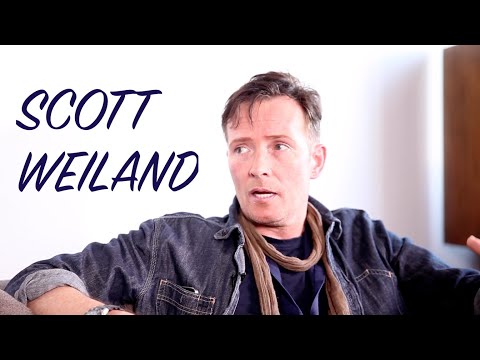
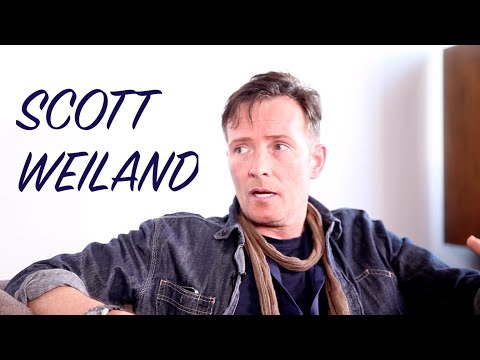
3 clips · 15:59 total
For licensing inquiries please contact reelinintheyears.com. How licensing works →
AUDIOListen
Episode #683 · Scott WeilandJuly 2014 · 00:14:00
TRANSCRIPTRead
Show full transcript
0:00So you're coming through our whole country. That's cool. Yeah. It's strange because we've always done good, and I've always been good in Vancouver before. But some of the shows on the west part of Canada, especially on the west coast area, aren't selling as well pre-sale. So all the fans of any of the bands that I've been in, or my solo stuff, and anyone interested in hearing what the music sounds like for the new record, please come to the show. Let's start with that. Let's start with Blaster. What can we expect? It's not a solo album like before. It's an album by me, but it's also a band.
0:48It's like Tom Petty was an enigma, obviously. It was Tom Petty and the Heartbreakers. The Heartbreakers were a band that were his band. You know, they were mates and they played like a band, same members. They didn't have changing members and everything. So I've had these guys back me up in my solo band for years now. And some of them even played on my last solo album, the double album, Happy in Galoshes. And I made those last two albums, 12 Bar Blues and Happy in Galoshes, as sort of a relief, a release, because the two bands that I had been in that were very successful, STP and Velvet Revolver, were very rock.
1:42Although STP had more variety of sound, it was a little bit more alternative. If I could make and write the songs that I wanted to, it was a way of letting things loose. Because you are sort of sharing all your bits of information, like musical information, and then it comes together that way as a band. So as a release to that, an homage to the kind of music that I listened to, I wanted to make basically, you know, art records. And at first I thought maybe the first one would do really well because it was,
2:32you know, hot off of STP, in days when people were still selling, you know, multi-platinum albums. But, you know, then I made Happy in Galoshes for the fans and for myself. This became something because the other guys in the band started hanging out a lot. We went to my cabin in Washington and started writing. And we started writing together as a band. And I decided I wanted to give it a name as a band: Scott Weiland and the Wildabouts, or Weiland and the Wildabouts. The name actually came from "Mellow Yellow".
3:22Donovan? Yeah, yeah. "I'm just wild about Saffron, she's just wild about me." So, yeah. Thanks for singing. I appreciate that. Yeah, it kind of sounds like it would be named after some 50s bad boy movie like The Wild One. That does sound like a Brando thing. Yeah. What do these guys bring to your writing? How's it changed your writing? We all are very close friends. We all have a very similar taste in music, and music that we grew up with, music that our parents grew up with, and music that is current now. So it's so easy. We talked about what we wanted. And I said,
4:08first of all, I want to make a rock and roll record again. I think that STP and Velvet Revolver fans aren't getting necessarily what they want from an art record and that kind of production. I think if we make a rock record, they'd be really, you know, they'd be into it. They'd be a lot more receptive. And we'd have a bigger audience, at least from the core audience, and we'd get new fans too. But I didn't want to make just a rock record, like hard rock and roll. I wanted to have it be retro modern, you know? I wanted to have influences from older music, yet use sounds, techniques of recording that are modern, and give it a
5:02combination, like that one-two combination of modern retro, retro modern, whatever you want to call it. It's, you know, go away from using big Marshall sounds and find obscure old fuzz boxes and all kinds of bizarre pedals. My guitar player's pedal board is about as big as a surfboard. I'm excited to see that out on the tour. It'll be fun. Yeah, it's a great band. So we started writing. And I said to everyone, you know what, before we get together and write as a group, we should demo our own songs, because everyone has, you know, some version of home Pro Tools. How do you demo? What do you work with? Well, I have my own studio, and so I'll just go over there and work over there.
5:52With an acoustic or...? Yeah, acoustic, plug it in, put down a beat and, you know, little keyboard sprinkles here and there. But this is not really like that. We used to be a five-piece. We're now a four-piece. And the reason for doing that was we started playing one time, like there were a couple times Doug was gone and we played, and we realized that it sounded a lot better as a four-piece. There was a lot more space between the beats, between the notes. Yeah. Right. I was talking about the tour there for a second. I just wanted to go with how are you going to choose a set list? Because, you know, people want to hear a certain... Yeah, we do. We play songs from both of my other bands.
6:40Other bands from the past, where we can kind of mold them into sounding like our sound, as if we were to have written them. So it all sort of flows seamlessly. And then we're playing about six new songs as well. Any covers? Because I remember... We do throw in... Yeah, we've done that. We've done Bowie covers. You know, there's a lot of Bowie covers we've done in the past. Same with the Doors. I hear you talk about Bowie a lot. Big, huge influence on you, eh? Yeah, definitely. How come? What's up with David Bowie? I think he understood the sensibility of how to, you know, have the media be interested.
7:31Where therefore you reach your fan base. And, you know, this is obviously pre-internet. But he understood not to take it too far. And that people's imagination only lasts so long, their interest, then they're onto something new. So you try to stay ahead of the game by reinventing yourself. I mean, Madonna took the same thing from Bowie, and people have taken it from Madonna, and it's something that's, you know, gone on. But I also like his voice. We have a very similar range. Both can sing baritone, and we both can sing in a tenor. And he uses his voice like an instrument, like, you know,
8:23Lennon does. And, you know, Morrison not really, Morrison has that sound. And that's the sound that everyone just looks towards and misses live. When did you realize you could do both? Because I was listening to the old records today, and I was like, oh, you started very low, and then as things progress, they get higher. Yeah, well, I think it was in just singing years in choir and learning, you know, big pieces, you know, Vivaldi's Gloria, Brahms, all kinds of stuff. I remember learning all 32 of the Brahms Liebeslieder Walzer, love song waltzes. And when I sang in first tenor, I had to sing
9:13with a completely clean, clear voice. Baritone, when you go into that register, it had more of a robust sound. And then just being in a band, I see, you know, the guitar players having effects, and using the effects and using different tone pots on their guitar, and turning the knobs a certain way affects the pickups. And if you can, as an instrumentalist, change your sound, I think the voice is just as much of an instrument. It's just a human instrument. Performance. What have you learned about performance? Because, I mean, no one performs like you. Everyone knows Scott Weiland's one of a kind on stage. Like, Wikipedia,
10:02I wonder what you think about this: "your onstage persona is known as being flamboyant and chaotic." I was like, those are two juxtaposed words. That's very interesting. Well, there's a sort of slinky kind of thing that is there, that is sensual. That was kind of a Stooges kind of thing, you know. Yeah, definitely. And then actually, I saw those sort of moves again from, like, you know, Mick Jagger, and from Perry Farrell, you know, early on, and I found my own piece. And then the chaotic part is, it's like the music. Some of it is, you know, very sensual and has a slinky side to it. And some of it's just, you know,
10:56full throttle. I was watching a video. I can't remember what song it was for, but you were performing. It was probably just people shooting in the studio, pretending you were recording a record, but you were still doing that performance in the booth. Do you do that? Or is it still a very...? Yeah, yeah, I do do that sometimes. Yeah. What about writing with different people? How has it changed? Like for these guys, writing with Velvet, writing with STP? Well, writing with Velvet and STP was very similar. Those guys would come up with the majority of all the musical ideas. Then we would arrange the song, or usually I'd arrange the song too, because something sounded like a verse and something else, you know, like an intro, sounded like it should be a chorus. I'd do that and then
11:43I write my melodies and I write my lyrics. Lyrics always come last? Yeah, because I think you have to have a melodic idea that gives you the tone of what the song is going to be about. What would you scratch out, like the hardest one to write, for you to figure out, okay, now it's done? None of them really. I can't say there's a hardest there because they're all different, really. What came the easiest then? Did something just spew onto paper? Like you just... Yeah, "White Lightning". It just kind of sounded like sort of Appalachian, sort of Blue Ridge Mountain kind of, like, dark blues, and really kind of sludgy. And I had just seen this really cool film about bootlegging, about this family of brothers that had the family business, and
12:37so they're bootlegging, and it's a really good movie, Tom Hardy's in it. And so I just kind of took images of that region and just threw in phrases about jalopies, just cruising through old wooden bridges. That's cool. So we end every interview with something called Five Questions. Five quick questions, one-word answers. Road or studio? Studio. Lennon or McCartney? Lennon. When you hear a song, what usually hits you first: lyrics, melody or rhythm? Melody. If someone's never heard Scott Weiland before, what song do they start with? New or old? Let's go one for each. Why not? STP, "Vaseline". "Set Me Free", VR.
13:37And for myself, I would probably say "Hotel Rio". In one word, Scott Weiland is...? Passionate. Oh, passionate. No one's said that before. I like that. Thanks, man, appreciate it.
PRESSCoverage
ABOUTThe archive
This interview is part of the Matt Schichter Interviews archive: more than 700 conversations with musicians, actors and filmmakers recorded between 2003 and 2014, beginning with The BackStage Pass, one of the first podcasts (2003). The archive also became Matt's short documentary Lennon or McCartney. Matt Schichter is now a Glasgow-based producer, line producer and music documentary director: he directed CFNY: The Spirit of Radio (PBS, TVO) and line produced Faith (TIFF and Rome 2026). His films → · UK film producer and line producer → · More about Matt →
Listen to the full archive on Apple Podcasts or Spotify.