Lennon or McCartney? Colin McDonald & John-Angus McDonald answered: Lennon, Lennon. Watch the moment. See every artist’s answer. Take the quiz.
SONGSWhat The Trews said about the songs
“Highway of Heroes”
The band explained they did not want to be seen as milking tragedy, so the single's earnings went to the Canadian Hero Fund.
“Our main concern was that we didn't come off like we were milking tragedy for any great gain. The song came, and the song was good... Maybe say the song came before the topic. But so we decided, when we put it out, that we would bring in the Canadian Hero Fund and direct all the money that was earned from the single to them.”
“Can't Stop Laughing”
The chorus line came from Newfoundland songwriter Ron Hynes in exchange for a drink.
“He told me if I bought him a glass of Jameson he'd give me a line for a chorus. For a $6 glass of Jameson, maybe even a bit more than that, I got: I can't stop laughing and I'm not even happy. We just took it back to the jam room and made a little story out of it.”
“Man of Two Minds”
The band said the song was co-written with a woman in Toronto and started as a song about a woman of two minds.
“I wrote it with a girl in Toronto, and it was actually a song about a woman of two minds, but I couldn't really sing about being a woman of two minds now, could I?”
“Under the Sun”
The band said the bridge of this song was the old chorus of an abandoned acoustic song whose parts were spread across the album.
“what ended up being the bridge in Under the Sun was the old chorus for that song... it was a very, very broken-down, intimate fingerpicking song that we had melodies for. And I guess we felt it would never float on its own. So we just sort of poached the best bits and spread them around into different jams.”
“Hermaphrodite”
The band said the comic song started as a pretty, 1950s-style tune and the lyric came from something that happened to their keyboard player.
“It was actually a really nice song. The melody and the chords are pretty. It was like a '50s show... And so it happened to our keyboard player in San Francisco. And nothing serious happened.”
“Naked”
The band explained their cover of Tracy Bonham's song came through producer Jack Douglas.
“That came through Jack Douglas... she's like, oh, I got a bunch of new songs written. She showed Aerosmith, like, a bunch of songs, and Naked was one of them.”
VIDEOWatch
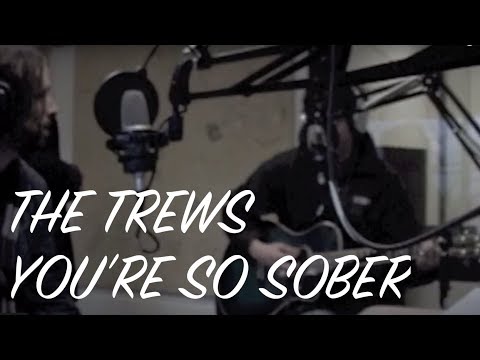
3 clips · 31:59 total
For licensing inquiries please contact reelinintheyears.com. How licensing works →
AUDIOListen
Episode #14 · The TrewsDecember 2003 · 00:31:28
Episode #57 · The Trews #2November 2005 · 00:41:14
Episode #141 · The Trews #3March 2009 · 00:19:39
Episode #283 · The Trews #4February 2011 · 00:11:53
Episode #440 · The Trews #5December 2012 · 00:29:39
Episode #654 · The Trews #6May 2014 · 00:12:43
TRANSCRIPTRead
Show full transcript
0:00How you guys doing today? Good, man, are you? I'm very good. Yeah, how's your tour with Nickelback, man, so far? It's been awesome, man. We just finished nine dates in a row. We went from Thunder Bay in Ontario all the way to Sydney, Nova Scotia. And then we picked up again out West. We're doing three more in Alberta later on this month. It's been a great experience playing in such big rooms every night and earning some of their fans ourselves. It's been a good time. Yeah, how about Three Days Grace? They cool guys on tour? They're awesome. We did a tour with Three Days Grace in September. We opened for them across the country and I think they're a large part of why we ended up on this bill. I think they like our band and we're very big fans of the band as well. So they're good friends and a great band. Cool. The name The Trews, where did that come from? We used to be called Trouser and then a couple of years ago we had to change because there's another band by the same name, and The Trews just kind of means the same thing and it sounds
0:47a bit cooler. So the Trouser EP, was that the band name, Trouser? Yeah. Cool. And is that all gonna be reprinted, or is that out of print right now? No, it's out of print. I don't think it'll be printed. You don't want it to come back? That's all old news. Cool. All right, well, we're gonna play a song right away. For people listening to your stuff, what do you guys want to hear, what song? Oh, we should just play the current single, Not Ready to Go. All right.
4:03Sean, your drummer, had a near-death experience in Newfoundland. That's right. He had blood poisoning. We had to rush him to the hospital around five in the morning, me and my girlfriend, and yeah, we rushed in the cab, bundled him in a cab, down to St. Clare's Hospital, and yeah, they did some work on him until seven in the morning. Got him all fixed up, and then he had to go back for more testing that afternoon, and he played the award show with an intravenous in his, whatever that was. What was it exactly? Was it like an IV, like a portable IV or something? Yeah, they just had, I think, whatever they were pumping him full of. They had a little bit of it attached to his arm and bandaged over. If you look closely at that performance, you can notice just, you know, behind his sleeve or just in front of his sleeve is a big white, sort of Michael Jackson-style white bandaging, which is just covering the needle that's in his vein as he performed at the ECMA award show just like two weeks ago Sunday, or three weeks ago Sunday.
4:51Still playing drums, that's crazy. Still playing drums, yeah. It put things in perspective, you know, the fact that we lost both of our awards. It put things in perspective because, you know, I mean, he almost died, so we had an interesting experience there. Yeah. Now, what was it like, you guys starting to get pretty big now? I assume you all had day jobs before this started? No? If you count playing covers in a bar in Mississauga as a day job. Oh yeah. We never had. We were always musicians, you know, we just always played and tried to make a living playing music, you know. We'd play wherever, whenever, as much as we could and just try to make enough for food. You know, like a résumé. Yeah, exactly. We didn't want to go out and, you know, do crappy day jobs. We wanted to, you know, play music all the time. We didn't get into it to, like, you know, work a day job until we get signed and then whatever. We were just more like, well, it's just being musicians no matter what, and you
5:36know, just keep it going like that. That's pretty cool. Yes, sir. Were you in high school? Yeah, in high school. I was in grade 10 and I did my first gig with these two guys anyway, Colin, my brother, and Jack being the bass player and a longtime friend. So, like, the three of us have been together since I was 15, and he was 14, Jack, and I was like 17 there. And yeah, we just, out of high school, when that all finished, we decided not to do, like you said, the day job thing. Decided that it would be more to our benefit or to our liking to keep playing music and just to find ways of playing music, and like just living, you know, just barely enough to get by, but, you know, making ends meet in a way. So that's kind of what really led to our move up to Ontario, because you can't really find a lot of work in Nova Scotia to play music. You kind of have to get a day job, and I don't think we wanted to
6:23go that way. So we tried to come to a place where we thought we could get more work, and that landed us in Southern Ontario just a couple of years ago. So that's sort of what brings us here. Why Niagara Falls in Ontario? Cheaper rent. Cheaper rent. Yeah, it just sort of happened that way. We were looking all over. We saw places in Hamilton, we saw places in Toronto, which we couldn't afford, and this place was just really affordable, and it was kind of a cool house and we could jam there, and we all lived in the same house, total communal sort of vibe, you know. But it didn't last long, because we've been on the road so much. Now we all live in St. Catharines, so that's sort of just beside Niagara Falls. There you go, the Golden Horseshoe, as it's called now. Yeah. All right, what song do you guys want to hear? Every Inambition. It was the first single off the record.
7:20It was on my mind.
10:02Not Ready to Go has really been making waves on MuchMusic and on the radio. Yeah, it's sort of been our surprise hit, because I mean, it was on the charts for a long, long time and it just, you know, recently started going to the top 20 and then the top 10. You know, it's going pretty good, and MuchMusic's been right behind it, so it's really cool. You know, it's like a third video, and it's nice to get some recognition for it, you know, so we didn't waste money making it, and people are actually seeing it. It's a cool video too. Is it all animated, pretty much? Pretty much, yeah. It was pretty cool. What was it like? Were you just playing in front of the screen for it? Yeah, we just played in front of green screens and we got back and watched it over Christmas. Like, the director sent us the copy and we just loved it. You know, we had nothing to do with the vision. I mean, we just let him go crazy, you know, and he did it on the cheap. His name is Steven Scott and he's a great, great director, and it just came out really cool, like those babies playing in the moment. I still love watching that video.
10:49What was it like? Was it hard to perform in front of a green screen, like to try and get into it? It was long. It was a long kind of eight-hour, it was more like a 13, 14-hour day, and we just spent so much time sitting around, and shooting is kind of boring. Yeah, that's the thing about video shoots, is bands don't sweat too much. You know, they spend most of their time eating catering and drinking coffee and napping. Hurry up and wait kind of scenario. Napping and dressing and chatting up the makeup girl, you know. I mean, there's not a lot that goes into it. We got to do a video in Cuba for Every Inambition, which we just heard. We had a bigger budget to work with, and this director came back to us with a treatment that involved us in Cuba, and it fit the budget, and we went for a week, and we spent most of the time just hanging around and drinking rum, and most of the band's work is pretty small, you know. You just get in front of the camera and pretend to play your song, you know, maybe
11:38three or four hours out of the day, and the rest of the time you just sort of kick it around. Is it fun? Is it a nice relaxing day as opposed to what you guys do? You know, it's really relaxing. Yeah, it was nice. Yeah, it was cool, but yeah, I don't think it's really relaxing. It's a lot of running around, but then just standing there and waiting for the shoot to commence and stuff. It's, you know, I mean, it's a necessary evil, but it's, you know, the worst part is where the lighting is really hot. Yeah. And, like, the makeup person's always there trying to make it look better. Like, it's just the way I look, I can't change it. We had Avril Lavigne's makeup artist doing ours for the last video. We're not going to find any common ground here. Leave me alone, go away. But she was nice, but she was driving me crazy. Yeah, she put the black eyeshadow around your eyes. Exactly. Makeup people, it's just so frustrating for, you know, a bunch of rough-looking guys. Like, you know, it's just like, what's the friggin' point?
12:24You know, just make us look the way we look. If anybody's going to buy a band like us, it ain't going to be because we got a nice haircut, you know what I mean? It's just going to be because of what we're doing, and let them take it or leave it. Don't try to, you know, don't try to polish it. You know, that's sort of what we're about anyway. But people seem to think they have to polish it constantly. Is that what it's like in the studio with Gordie? No, he's pretty cool. Gordie's like... Oh, that's where my number is. Yeah, only after the studio when we get all crazy. No, he's cool. Like, he's got really good taste in music, and there's a lot of really cool things happening when we're in the studio with him. It's like, you know, we try to make it sound like, you know, old Black Sabbath recordings or Led Zeppelin, and you know, that's a lot of fun because we all love that music, you know. We do, but he has a few things, but overall it's a pretty cool experience. I mean, compared to other producers, his bottom line is like making cool-sounding rock and roll. It's not like, you know, trying to write for the charts, you know. He doesn't, you know,
13:12I don't find he really does that. Well, he's from Big Sugar, right, so he knows what he's doing. What do you think he's taught you while you're in the studio? He just showed us where we sound best, you know. He helped us, like, find the vocal range where my voice is going to sound rockin' as opposed to, like, held back, and he helped us find, like, certain ways of making a song really impactful in three minutes, you know, as opposed to four or five minutes. You know, he showed us how to, you know, get really, really cool guitar tones. Yeah, it was a real treat to watch and work with the sounds. Yeah. Because he really kind of shines as a real original take on guitar sounds. This is kind of what he's most known for, I'd say. That's what I enjoyed the most about it. And I'm losing my voice because I have a cold. Sure enough. I'm not going through puberty. He sees. All right, pick another song. Tired of Waiting. This is going to be the next single off the record.
18:17Help you or harm you? Downloading? Yeah. Downloading. Don't do it. It's wrong. It's lazy. Buy CDs. I just think it's a terrible thing to have in the music industry. I think in a way the one good thing that downloading did was, like, it's kind of pressuring bands to put out 12 great songs with really cool packaging, and, you know, it's kind of eliminating the one-hit wonder, in the sense that people aren't going to buy a CD for one tune anymore. They're going to go to their computers. But as far as other bands that are putting out great records still, I mean, I think people should go and buy them. You know, it's just like a book. Like, what are you going to, you know, buying a book, it's a great book. It's like, it makes you look better, having a good book in your shelf. What are you going to do, just download like 2,000 pages of computer sheets and then leave it there? It's like the same thing with music. Like, it reflects on your personality to have a good collection of music. It makes you a higher person, I think, in a lot of ways. I just think it's such a low, stupid thing when we go to a show and people are like, I don't want to bother you, I downloaded it. You know, you just want to tell those people to smarten up, you know, and maybe spend a few
19:05less dollars on booze and maybe a bit more on some good CDs, you know what I mean? I don't know. Sorry for anybody I'm insulting, but I just don't agree with downloading. Well, if you're living with it, they're taking away from it. Yeah, exactly. I kind of wonder, you know, where all these bands' sales would be if it wasn't there. But I mean, the only thing I see positive about it is that it's putting bands out on the road to make up the extra money, and I think that is kind of what rock and roll is all about. I agree with what Colin just said. I don't think it's the right way to go, but bands are forced to come, you know, more bands are coming to Canada and going and playing many towns in Canada, you know, because they're just making up the difference, you know, whereas in the '80s you'd play like one show a year and sell like 14 million records. You know, it got maybe a little bit gluttonous. But bands should be on the road, they should be live, because if you can't do it there, you can't do it anywhere. Would you guys rather someone came to see you at a show or bought the CD?
19:52Yeah, right now, yeah, for sure. For sure I like people to come to the show, but it would be nice if we were selling, you know, a ton more records to be able to take time off to go write a really good record. Like, I think that if you're always forced to be on the road because that's the only way you can make it happen, it's hard to write, you know, killer songs in the dressing room. Maybe you can, but I think it would be nice to be able to go away and write a really great record, if people buy that as well. So. You guys have a show coming up in the States. Have you guys played the States before? Yeah, we've played the border towns quite a bit. Like, we play in Lewiston, New York, Buffalo, Rochester, not Rochester, but, like, Newport, Tonawanda, North Tonawanda, yeah, like that area. They're really cool. Like, they get a lot of Canadian radio and they're really supportive of Canadian rock bands, and like a lot of bands like the Headstones and 54-40 and the Tragically Hip, they always did well in those areas because they got so much Canadian radio and stuff, and we do all right there, and it's fun. You guys planning on maybe embarking a little more south?
20:38We're hoping to, for sure. You go with Nickelback? Once we get a record out. Our record hasn't come out there, so as soon as that happens, then we'll tour, and I really look forward to it. I look forward to there being maybe two and three-hour drives between cities as opposed to 10 and 12 in Canada. So I mean, I think that would be a real cool thing. I look forward to it. All right, you're gonna play a song for us on the acoustic? Yeah, this one's The Year Sober, on the acoustic guitar here, live in the studio with Colin MacDonald. I love to say you love me but I'm as humble as a bumblebee. I walk if you come with me or I make rhomba for all to see.
21:32I have the weather day by the way. Did you love me girl? The words I'm mumbled as she leave I'll be okay. As long as you want people you don't fumble and you don't grieve. You don't think weather you don't think why.
22:20So sober you poke me at your soul. Make it worthy if you're rebel the bold debris as night fades day begins.
23:05I'm noticing lately that the wind's saying the struggle in the breeze. I have the weather on my side. Oh sober you only broke your soul. So sober you. Oh your soul so.
23:56This is just crazy. Your soul so. That was beautiful. Thanks, man. All right, we do a thing called 20 Questions. 20 quick questions. You ready? Yeah. Favorite city to play? St. John's, Newfoundland. Everyone get in charge.
24:41Oh, okay. Favorite city to play? Quick, you. How was it? Favorite song to play live? How was the more sweet? How quick did you play? Hurry up, you idiot. Tired of Waiting. Oh, when you leave. What's in your CD player right now? Tragically Hip, Music @ Work. Elvis Costello, Blood and Chocolate, and the first Black Sabbath record. Hurry up, you. The Black Keys. I don't have it yet, but it will be tomorrow. Jack? Joe Strummer, Streetcore. If you could play on anyone's album, who would it be? Play the full record? If you could play on anyone's album. Oh. Aerosmith or Bob Dylan for me. Tom Petty, or just Tom Petty for now. It's only a good thing. The Lowest of the Low.
25:26What instrument would you like to learn? The tabla. The mandolin. The liberal. If your band wasn't called The Trews, what would it be called? The Assholes. Worst-case scenario. I came up with that too quick. If you weren't a musician, what would you be doing? I'd be a full-time dreamer. I would be a guitar tech. Porn star. I'd be selling pencils on the beach somewhere. Favorite sport? Hockey. Hurry up. Badminton. Favorite album? I'd be a guitar tech. I'd be a porn star. I'd be a porn star. I'd be selling pencils on the beach somewhere. Favorite sport? Sgt. Pepper's Lonely Hearts Club Band. Nevermind by Nirvana. Sell phone by John-Angus.
26:13Lennon or McCartney? Lennon. It's kind of like yin without yang, though. I'm going to say Lennon, but love McCartney. They were totally different. One-word answer: Britney Spears. Idiot. Hot. That was two. Idiot. Hot. Idiot once. Idiot. That's one word. All right. George W. Bush. Idiot. I don't know. The season. Jack. Jack. All right. Best concert you've ever been to? Aerosmith. I'd say Aerosmith or AC/DC. Tragically Hip. Both. You get one answer. Tragically Aerosmith. Aero-Hip. AC/DC. The Songs.
26:5950 Cent or Ja Rule? 50 Cent or Ja Rule? 50 Cent or Ja Rule? You know what? I don't know. I don't know. Well, Ja Rule is the poser. Ja Rule is the poser. 50 Cent is the real deal, right? That's what's being marketed. Ja Rule is the one that goes out with the asses and holes. That's Jay-Z. Come on. I respect the guy that goes out with the asses and holes. I don't know what the other guy is. Beyoncé rocks. Favorite movie? I'd say, what did I just watch? A Beautiful Mind. That's a good movie. Pirates of the Caribbean. Pirates of the Caribbean. That's right. I just saw that last week. I think it's good. Favorite food? Italian. Subway. Meat. Meat of any kind. Alcohol or marijuana? Alcohol. I don't even say alcohol. Yeah, I think, well, good. Best bar in the world? Marquee Club. Where's that?
27:44Halifax. I would like to comment or open back the door. The Highland Tap. In Niagara Falls. Yeah. The house. Coolest celebrity you've met? Harrison Ford. Chris. I'm a fan of the house. I'm a fan of the house. I'm a fan of the house. I'm a fan of the house. I'm a fan of the house. Chris. Chris. Rich Robinson. Chad Kroeger. He's actually a really cool guy. Was he? Yeah, really cool. The only one in Nickelback that's a cool guy. Awesome. Sean? Oh, he's the drummer. He didn't make it into the control room. He was severely retarded from the blood poisoning. All right, one-word answer: The Trews. Awesome. Big-headed. The song. The song. The song.
28:29The song. The song. There's one more song to play. I say you can play acoustic, or you can go off the record. Your choice. Hope This Is on the Air. Hope this is on the air. Celebrating. Childed. Dreaming. Taking in these waterfalls. The former world got so deceiving. Before you thought you knew it all. The beauty of this city. And now you see when you can't expose.
30:12That's all for The Backstage Pass this week.
31:22Thanks to The Trews for stopping by. We'll see you next week when Graham Colton comes in live on The Backstage Pass.
2:56You just heard The Trews, Fire Up Ahead, the debut song on the record Den of Thieves, sitting here with John-Angus and Jack from the band. How's it going? Good, man, how you doing? Very well. I love how the album starts off with that whole standby thing. Where do you guys come up with that? And there's kind of a little segue you do in the first couple of songs too. Jack Douglas, the producer of the record, sort of had a little extra time on his hands in the final mix. So he had a bit of a field day with the interludes. And everything was, I thought, really creative. The one before Fire Up Ahead, it sounds like a rocket's going to take off. Yeah. So I like that. And everything else is just having a bit of fun with some effects and everything. So we left it all in. That's awesome. Yeah. Den of Thieves, House of Ill Fame, always that little, you know, well, den, house, you know what I mean? We're building a house.
3:41Yeah. Slowly. You know, the next album's going to be called, like, you know, The Bathroom of Mistrust or something, The Kitchen of Ill-Concedures. But yeah, what do you think? Jack's idea, to call it Den of Thieves? Was it? Yeah. Well, I was lying in bed with my girlfriend and she actually said, why don't you name it after one of the songs? Like, Den of Thieves? Because it was one of the songs that didn't make the record. Yeah, I was going to say. But it is an actual song that we wrote for the record. You ever play it live? Yeah. Yeah, we do. Yeah. Hopefully it'll turn out. We recorded it. It might show up as a B-side or on some compilation record eventually. But it's a cool song. It's just we had way too many songs.
4:27We had so much material. We had like 22 songs recorded. And they wanted, like, the record company wanted us to get it down to 12, which was, you know, next to impossible, considering everybody had their own favorites and everything else. So 15 was what we agreed on. And there's a bunch of extra recordings kicking around still. Cool. Why do they always cut it down? I mean, there's enough room on a CD for 22 songs. Why do they always feel the need to cut it down? It's money, I think, you know. I'd have released all 22, you know, double record or whatever like that. But, you know, I think people want to make as much money as they can off as few songs as they can. Yeah. So, record label. Yeah. It's all right. Let's play another song. What do you want to hear? You want to hear one of the singles or? It's all Yearning. We released Yearning last week.
5:12Yeah, it was the second single. So I haven't heard it that much. So that one. Cool.
9:08You just heard Yearning from The Trews' new record, Den of Thieves, sitting here with John-Angus and Jack from the band. You guys just shot a video for that last week in Toronto. Yeah. You want to tell us about it? What's the theme, stuff like that? If you can picture one of those old Shakespearean theaters where there's people all the way around. Oh, yeah? That's how we had this place set up. And it starts off with a big curtain all the way around the circular stage. And then it drops halfway through. You see all these people around. That's awesome. Yeah, it's a nice-looking thing. That was our portion of it. And it looked great. Like, the set was amazing looking. And the director is now, next week, going
9:53to shoot a storyline portion of it. We haven't seen it yet. Or we don't know what it's going to be like. We know the premise and everything, but it'll be a surprise. Well, actually, I don't want to give away any stuff. OK. I can spare it off. Yeah. You know, call and request it on Much when it comes out. But yeah, once we see it, we'll have a better idea. But he's shooting that this week. Cool. How do you guys feel about Much? I mean, at least in my point of view, I guess I'm kind of getting out of their demo now. But sort of, you guys, they turn. I don't know. It's just not what it used to be. I used to really enjoy watching Much. And I mean, now it's just the scene. I miss the Power Hour and the Power 30 and shows like that. I'm really grateful to MuchMusic because, I mean, obviously, they've helped us out somewhere. Like, having videos that they could play a lot. It's no curse.
10:40You know what I mean? It's like people come, you know? And kids that wouldn't regularly listen to the radio because they're not driving around, they know your music. But the only thing I could complain about is, and it's not just Much, it's just the entire music television format, is just leaning so heavily on reality TV and shows about becoming rock stars and shows about making videos. It seems like a big waste of time. I don't know. People watch it, I guess. But I can't get into it, man. Reality TV killed the video star. So I don't know. I just don't dig on that. But yeah, they've been forced into it because it's just the way, I think, they're... Yeah, I don't blame Much.
11:25And they still play some good stuff. Like, there's still stuff getting played, you know? So they're doing what they can do, you know? Yeah, I hear you. Let's play another song. What do you guys want to hear? Request, Jack. How about Sweetness? Cool. I like that one. Sounds a bit like So She's Leaving, I noticed, a little bit. Yeah. It was going to be the second single. But I think that was the reason that it didn't, because, you know, when you put out two songs... Just the beat, really. Yeah. The chords are all different. The melodies are all different. But it's got a similar beat. Cool. I like it, man. Here it is. Sweetness, The Trews. 88.3 CJIQ. You just heard The Trews, Sweetness, brand new track off Den of Thieves, playing Fiddler's Green tonight in Cambridge. Sitting here with the guys from the band. Jack Douglas produced the album. Who's Next, Imagine, the last John Lennon albums.
12:10You must have just been, I mean, obviously you worked with Gordie Johnson on the first record, so you've already had a great producer. But what did this guy teach you in the studio? You must have just been in awe the entire time. We learned from Jack to sort of relax and let it happen. Like, he's been doing it for so long. He's really come to know how to get work done, like, efficiently, without getting too stressed out and too caught up. I mean, we had more time, which was a lot of liberty. So maybe that was part of it. But Jack just has this great sort of Zen master approach to the studio, because he's been producing records since the early '70s. So he really taught us to just let it happen sort of naturally.
12:58And plus, he's a genius with, like, arrangements and little percussion ideas here and there. We learned a wealth of things like that. Plus little tips, you know, teaching us how John Lennon used to record his vocals and all this kind of stuff. Oh, really? Yeah, cool things like that. Using the same effects or anything? Yeah, well, you know, he always said that John could mix himself on a microphone, because he made all those hits with the Beatles, and then after the Beatles, you know, he never stopped recording. So when John's, you know, singing a vocal take, he's actually mixing himself, like backing up when it's time to go loud and getting in close when it's time to get quiet, and covering, like, you know, covering his mouth when there's like a sharp P or a B. And hearing those kinds of stories was, like, you know, mind-blowing for us. I believe it. Well, I guess you had to back then. They only had a four-track recorder.
13:43Exactly, yeah. That's so cool. Yeah, bands have, you know, got it pretty easy these days. I remember you talking about, last time you guys were here, Gordie Johnson helping you with the guitar sounds and the way... That's what he did. And he knew his way around the studio and stuff. You guys worked with him again on a couple of songs. What did he bring to the picture this time? Was it more guitar sounds, or was it like songwriting kind of stuff? It was songwriting, yeah. Yeah. One more song. We finished touring House of Ill Fame in November of, what was it, 2004, yeah. And we took about two weeks and went to visit Gordie in Austin. It was kind of like a vacation, like a working vacation. Yeah. It was nice to be down there, you know. Beautiful time. It was winter up here. But we ended up writing a bunch of songs and demoing them down there.
14:28And of the seven we did, I think four of them ended up on the record. But it was strictly a songwriting thing. Because he was great with the songs. The songs we brought to him were songs that had been kicking around in the song bucket for a couple of years, and we just couldn't really tie them up. Couldn't really tie the loose ends in. So we just brought them to him and he kind of brought them to life in a real good way. So that was where he fit in on this record. Yeah. He was on the show this summer talking about the scene in Austin and how great, like, all these bands are there, and no one's ever heard of them. Did he show you any bands? Oh, yeah. Any really cool bands that you guys want to maybe plug and tell people to listen to? Yeah, I can't even remember them. So there's one guy named Redd Volkaert.
15:14Yeah. He was a guitar player who they claimed was the best guitar player he'd ever seen. And we went to see him, and I think there was only about 20 people in the audience. You know, like, it was just something that he plays every week. Oh, yeah. Depends on who's in town to come and see the show. But there's constantly something going on. If you talk to somebody in the street, they'd tell you where to go, and that would be completely different from the next person you talk to. They'd say, no, the best place to go is this. And every night of the week you could do something different. We were back in Austin for South by Southwest. Yeah. Yes, my dad? Yep. OK. The bands we saw: Honky. Sticks out. They were, like, good friends of Gordie's. They were like a three-piece modern-day ZZ Top.
16:00Only sounds more like metal. OK. It's fucking great. It's OK. I'm good at it. Sorry. Chili Cold Blood, a three-piece band we saw down there. They were playing a coffee shop. That's the kind of town that Austin is. Like, you go get a coffee and there's a band playing in the corner of the scene. That's what we made. That's what we made. Amazing, amazing band. As a guitar player, I was really, really intimidated to be down there, you know? Because the guy serving your coffee or whatever is probably a lot better than you are. So I mean, that was kind of cool. It really whipped us into shape, all those great artists. And then, of course, when we were there for South by Southwest, we saw, you know, not local, but we saw the Blind Boys of Alabama. Oh, cool. Mavis Staples. Robert Plant did a show. We saw a band from Nashville.
16:46What's that band? Punk band, opened for, really, really great. The Legendary Shack Shakers, that's it. Yeah, so there's the music scene down there. It's just, like, as vibrant as can be. Yeah, I wish it was like that up here. I mean, you know, there's hot spots and stuff, but I don't think it's a matter of population, do you? Yeah, that's true. What do you guys think of Grady's album? You like it? I love it. Yeah. Cool. Let's play a song that you and Gordie worked on. What do you guys want to hear? Ishmael and Maggie? Cool. I saw it on the record. Why is it the last song on the record? Why does it have to close out with it? Sounds like it's going to close up, right? Yeah. It definitely got that, like, yeah, better go home. You know, it's got that drinking, you know, final hour, last call kind of vibe to it, so. Cool. Here it is. Do you guys close the show off with that song?
21:31No, haven't, but, yes, it depends on the type of show. If we get the right show, then maybe we'll do it. We've done it as an encore, so it's pretty appropriate then. Yeah. It's awesome. Over the summer, you guys, you mentioned Robert Plant. You also opened for the Stones this summer. After the show or before the show, do you sit down with them and do they kind of teach you stuff? I can't imagine what it would be like to sit down beside Mick Jagger and just be like, OK, we just played the show with you. The time we spent with the Stones was brief, because they're pretty, you know, I don't know how you describe it, but they're pretty untouchable people. Like, they're constantly ushered off to do something really important, even if there's nothing important to do, because it's the Stones. Robert was very different.
22:16He was like one of the boys, you know. He came to say hi at the second show. He came to our soundcheck to say hi to everybody, and the band was off doing press. So he hung out with the crew for an hour, you know? There are very few legends that would, you know, do that. And, you know, then of course we had our time with him. And yeah, he had, you know, tips, advice and great stories. You want to share a story? It was definitely memorable. Yeah, I feel like I'm plagiarizing somebody else's life, so... But he did make some, you know, we were in Calgary, for instance, and we were about to go on, and we were playing the Saddledome. And he said to me, like, oh man, I played here when I was 20. I was like, yeah, we were on the road with Vanilla Fudge, you know, Zeppelin's first time in North America, and we played the Stampede. I was like, no shit, man.
23:01We played the Stampede this summer too. It's like, oh, it's still going then, right? Yeah, so. You guys hope to get to that level one day where you're ushered off, like the Stones or everything? We were talking about that, you know, that the Stones have had two careers in the amount of time that we've had life, you know what I mean? It'd be amazing to be doing this at 62 or 63, you know? I mean, like, I'm 24, you know, you're 24. I can't imagine, you know. I mean, I think it'd be great, but a lot of things have to happen, you know, for that to sort of be a reality. So. It would be cool to call your own shots soon. Yeah. Yeah, I mean, nobody tells the Stones it's time to tour. Nobody tells the Stones it's time to record, you know? I hope to be making records and touring for a very long time.
23:49All you can do is hope for the best. Mm-hmm, definitely. Let's play another song. Let's go with something off the old record. There's so many things on the side. Sitting here with The Trews.
26:49Tonight, Fiddler's Green Irish Pub in Cambridge, you can check them out. Last time you guys were on the show, we talked about downloading. Colin said F downloading, it's not cool, you need to buy CDs and everything. That was kind of before iPods came out. So what's your take on iPods, and how you think, you know, like, there's not gonna be albums anymore? It's kind of sad. I'm like a shuffle junkie. I have one. I have an iPod. But I have a rule, and my rule is that I won't put anything on it that I haven't at least purchased once in my lifetime. So I'm not saying I have it. I might not have it anymore. Yeah. I mean, I bought it on the road like three times. You know, if I lose it again, I'm just kind of, you know, I'll just get it off somebody else or download it or something. But also, I think, you know, I don't think you should worry about downloading dead artists, because somebody else is making that money, not the artist. So it's some, you know, label head down in, you know, L.A. making all, you know, somebody
27:35else's money. So that's another rule of thumb. I don't download new artists at all, you know, because we know what it's like to be a band trying to get off the ground, and, like, all those things count, man. Like, you know, promoters look at record sales to see if they want to book you. And, you know, that's income. It's all this stuff. So that's another rule I have. But in general, the iPod, I think, is one of the most brilliant inventions in the last couple years. And you don't need to download to, you know, to use it. I put all my CDs on it. Yeah. So you can take them over. Yeah. I mean, I have like 6,000 songs in something that's like the size of my fist. It's pretty cool. Yeah, 6,000 songs on your iPod. Go ahead. So what were you saying? I was just going to say, like, it would be pretty convenient, if you were sitting at home and planning on going out to buy a record or something, if you were sitting by
28:22your computer, to just download something that you've heard of. You're not sure if you want to buy it, then you download one song, and then maybe you do go out and buy it. Yeah. That's another one. That's another rule. Yeah. You can check it out. But if you like it, go buy it, you know? Definitely. Yeah. I mean, I miss, I think, you know, it's too bad that things like artwork are becoming so disposable, you know, because it's really part of the charm of a record and part of the vibe of a record. You know, hopefully that doesn't become obsolete. You know, I'd hate to have, like, you know, just a screen with a picture of the band, you know what I mean? So I think, but I think it'll stick around for a little while longer anyway. I don't think it's on its, you know, last leg just yet.
29:07Mm-hmm. No, I don't know. Play another song. My favorite one on the record is Making Sunshine. It's got that Maggie May guitar feel to it. Who's playing, are you playing mandolin on it? Yeah. Oh, no, it's electric guitar, acoustic 12-string, and harmonium that myself and Jack play. Oh, yeah. What's a harmonium? It's mixed with the keyboard. Yeah, it's a Middle Eastern instrument. So I sat at the keyboard and hammered out the notes while Jack pumped the air into it. Oh, go away. It's completely free of cables and everything, because that's the way it's powered, by the air. That's cool. It reminds me of, like, the Acme T&P box. So that's the first sound you hear. Like, people have asked me, is that bagpipes? Yeah. No, it's the... I love it. Okay, let's play it. Making Sunshine. Tonight, Fiddler's Green Irish Pub in Cambridge, sitting with John-Angus and Jack.
33:17You put a cover on the record. Yeah. Naked, Tracy Bonham. You don't see too many covers. Well, you do, kind of. I mean, David, I should've passed cover a couple years ago. Why did you guys decide to do a cover? I mean, you said you had so many songs written. Yeah. That came through Jack Douglas. His last rock record that he did was Honkin' on Bobo with Aerosmith. And if you look at the credits for that album, Tracy's on two songs. She's a Boston girl as well. Okay. And they brought her in, and she's got this wicked, haunting voice. She plays violin. She's a really great songwriter. And at the end of the session, she's like, oh, I got a bunch of new songs written. She showed Aerosmith, like, a bunch of songs, and Naked was one of them. And I guess they all freaked and were like, oh my God, you should've showed us these earlier.
34:04So Jack's like, well, I want to show you guys these tunes before we get into the record. And that was a tune that we thought, you know, I thought Colin sang it really well. Yeah. And, you know, we're not so anal-retentive that we, you know, so precious about our, you know, people, most people think that they're artists, you know, and they want, like, uncompromising integrity and all this kind of stuff. But it's like, really, I mean, the first seven Beatles records are, you know, littered with other people's songs that they just happened to do really well. You know, so why be so precious about it? You know, and I mean, it's just music. It's just a rock record, you know. Whose idea was it to switch the lyrics around, the pronouns, you and I? That was Jack's idea. Well, I think for Colin, I think it would've felt a little uncomfortable. Yeah. Just the way it sounded better. Yeah. It was actually up in the air whether we would put it on until we actually recorded
34:50it and heard the way it sounded. It actually turned out really good. Yeah. I like it. Like, it was in the pool of the 22 songs, and, you know, I think when it comes down to it, you got to go with the ones that, you know, turned out the best in the studio. Even if, like, you know, one song might be stronger, but really it's about the take and, you know, the vibe it has and everything else and where it fits on the record. So it ended up on there. Cool. We do a thing every week on the show called Five Questions. We did 20, I think, last time you guys were here, but, you know, we've shortened it. I'm sure it did, now. You haven't got as much time. Yeah. First one is iPod or CDs? CDs. Lennon or McCartney? Actually, you know what, though? I'm a Lennon guy, but I just saw McCartney in Toronto. Blew my mind.
35:35I can't believe he played Please Please Me, or I'll Get You. I know. Oh, freaking out. I'll Get You. Oh, yeah. Oh, yeah. So I've been going through, like, my McCartney phase, but on a regular day, I'm a Lennon guy. That's awesome. Does the label hook you up with tickets for that kind of stuff, or do you have to actually do it? Normally they do, but I bought a scalper ticket because I was out of town. We got back from tour that day. I got in the shower, walked out to the ACC, bought a ticket for $300 and walked in, and I don't regret a penny. He even played for three hours. Oh, it's great. He paused a little long in between songs, though, changing guitar after every single one. I kind of liked it, though. The stories were great. The stories were great. I mean, I played For No One. I never thought I'd hear that live in my life. Just all these great songs. I love the new record. Oh, that's okay. Jenny Wren, he couldn't sing Jenny Wren live, though. His voice cracking on it.
36:21Yeah, I kind of thought that was, like, I thought he was doing it on purpose. Oh, hopefully he wasn't. It was a little bitter. Okay, next one is alcohol or marijuana? A bit of both. It's a nice combination. Yeah, yeah, yeah. One in each hand. Song you've written you're most proud of? She's pretty proud of Not Ready to Go. Yeah, Not Ready to Go. That one blew up for you guys. Yeah. You know, I literally like the riff to Fire Up Ahead. But the thing is, the way we write songs is, you know, I wrote the Fire Up Ahead riff, Jack wrote the Not Ready to Go riff. It doesn't mean they're not band songs. At the end of the day, they wouldn't sound the way they are without what everybody else did to them. But yeah, pretty good. Yeah, I've been partial to Got Myself to Blame.
37:08Yeah, yeah, yeah. Cool. One more. The Trews in one word? Fucked. No. Is rock and roll one word? That's one word. Rock and roll. What is it? Maritime. Maritime. It's awesome. The Novaks are stopping by. Oh, man, I almost wore my Novaks t-shirt. All right, let's see, you guys are fans, and that's cool. They're great. They opened our East Coast tour a couple weeks ago. And they're such a cool band, and the new record is, like, I think, you know, one of my favorite picks of the year. Yeah, I'm standing here. I love it. Okay, close it out with one song, any choice off the record. Got Myself to Blame. You're talking about it. Cool. Yeah. Thanks so much, guys. Appreciate it. Cheers, man. All right.
0:01Well, gentlemen, welcome to the studio. Thanks for joining us, Colin and the MacDonald brothers. Yes, the MacDonald brothers, the Scottish Slides. Yes, there you go. And a family affair, the band is. Pretty much, yeah. Except for Jack. But he's been... But it's family now. We're thinking he's got a Dop best friend. Yeah, really? As a person. You're big as someone. Yeah, it's good. Yeah, who told you that? You did. Jack and you. Oh, shit. He wrote the riff. Can't say that. Yeah, he did write that riff. You have to beep that out. Yeah. There's more piano on this record than before, I've noticed. I know Liam from The Stills came out and did that. Yeah, but we hired a guy, a really, really stupid guy named Jeff. No, no, come on. We tried to hire Liam, but he has a good... Yeah, he does. He's got a pretty big band. I'm just saying that because Jeff's the best. Yeah, yeah. Jeff, we hired a guy in the band named Jeff Heisholt.
0:48He's been with you for about a year now. Yeah, we did a tour with him. A couple tours, and he's been great. You know, we definitely, for some reason, it wasn't ever the intention of the album. But as we started to work on it, we realized that keys worked on a lot of them. And yeah, we just figured the material would translate a lot better live if we had a keyboard player up on stage with us. So I don't get to play keyboard like I used to, which I can't... Yeah, you started on piano. Yeah, I used to play piano a bit more, but that's okay. And Jeff's really great. So he's definitely added an extra musical force to the band. And it's made our live show pretty consistent. I find, like, we've always been a pretty good live band. I think better than pretty good. Even more so in the artist. You've opened for the Stones. Yeah, that's right.
1:33And Plant. So yeah, I think you're up there. Yeah, things used to be really good. Hey, you're nominated for the Junos. Yeah, I know. Hopefully a first win this time. Yeah, you know, I think this record's our best record, for my taste and what The Trews do. And you know, we've never been a real critics' pick of a band. We've always sort of been like, you know, more than a couple of years ago, you know, more just a fans' pick. A fans' pick. Yeah, there you go. Which is probably a better thing anyway. And it is a better thing, but it's nice to be, like, this year we've been nominated for two Junos and four Indies. And I think people recognize the quality of the record. I hope, that's what I like to think. And it makes me proud of it, because we were all proud of the record when we made it. We thought it was a good step in the right direction for the band. For sure. And you know, it remains to be seen, and we'll see how time judges it, and it's getting time for us to make a new record now.
2:23Yeah, are you starting to write some new stuff? Yeah, we've been writing quite a bit. So hopefully trying to get something together for the next year or so. Nice. It was a good running record. I ran to it every day in the spring. Oh, yeah? Yeah, it was a good time to be a really good singer. That makes me sound very gay. Yeah, yeah, yeah. She gets on, she'd ever admit to running. She gets on the elliptical and speeds up every time we get to get stuff left. There you go. And she says it has to be the single because I run faster when it comes on. Or if we can drive faster when it comes on. Or not. Or dangerous. We have red light cameras here and speed cameras here. You got to be careful. Yeah, not fun. We almost got T-boned last night coming in from the airport. Yeah. And our van was going through and missed us by about a foot. And at the airport, some other, like, hicks in a pickup truck, like, pulled up right on to, like,
3:13yeah, crazy. At loading baggage. Like, man, I don't know. I don't know if those red light things are working. Yeah, maybe not. And we need some more of them, even though I hate them. Well, you're talking about Can't Stop Laughing. It's the single. Maybe we should play it for people. Yeah. It's got a little bit of a backstory. A little bit of a backstory. Someone challenged you. It was Ron Hynes in St. John's, Newfoundland. He's one of the best songwriters in Canada. I was going to say people should listen to his music too. Yeah, it's amazing. And he, I met him downtown St. John's one night. He said, I want you to write me a song called I Can't Stop Laughing and I'm Not Even Happy. So he's gone through a whole phase, every time we see him, where he says he's sick of doing the work. He's like, you know, I love songs, but I'm sick of writing them. It's just too much work. So I want to come up with lines and give them to bands. There we go. So he gave us that line and said, you know, go with the grace of God.
3:59And we went and wrote it in our rehearsal space, and everybody loves it. Like, we all love playing it live. It's kind of like, we're really, I think it's kind of in our blood, that Celtic music. And I think there's a certain level of authenticity to it when we do it. I think people can sort of go, like, yeah, yeah, of course, you're Nova Scotians. I mean, this makes sense. And we actually drink too much. I mean, yeah, yeah. It's not a bad thing. It's all real. There's no posturing. Bagpipes on the song. Yeah. Different. Yeah. I remember last time, the first time you guys came to the studio, I asked you if you could learn any instrument, what would it be? Yeah. You said mandolin, you said tabla. Did I? Yeah. Have you even tried to pick them up? I've played mandolin. I've played mandolin. I played mandolin on our last record a little bit. And I play it on a few acoustic songs. But I never took the tabla up.
4:46I don't know why I said that. It must have been because of Within You Without You from Sgt. Pepper. Oh, yeah. Maybe you were in a Pepper phase. That sounding drums like recorded. You know, I don't know if I enjoy that sound on that record. But you're playing bouzouki. I bought a bouzouki. What is that? It's a bit like a mandolin and a bit like a banjo, but it's like a traditional guitar-esque instrument of Greece. Eight string, though. A string instrument. It's got four strings that are tuned into unison, as opposed to mandolin, which has the octaves. Yeah. And it's a great big long-scale neck with a really deep body. And I use it on... I think I know what they look like. I use it on the acoustic set. I use it on Man of Two Minds. Actually, on Man of Two Minds on the record, it's on there as well. Nice. So it's always nice to pick up an instrument.
5:32I think any musician would attest that a new tuning or a new instrument can open up a new world of creativity. Definitely. So it's always nice to challenge yourself there. Who's playing the bagpipes? It's funny. We're from the East Coast, where having a bagpipe is part of your birthright. You learn how to play bagpipes right out of the womb. And then we go to New York and hire a Hasidic Jew who plays bagpipes on the record. There's coffin notes. Yeah. It was really cool and he was great, and more power to him. And it was just kind of ironic that a bunch of guys of Scottish descent were in Brooklyn, New York, hiring Jewish guys. Definitely looking for a record. Yeah, because there's not a lot of bagpipe players in New York City. I mean, there are, but there are. You don't know where to look for them. Yeah. You know, from there. There's everything in New York City. This is true. We found him.
6:17So that's cool. I ask every band that comes in Five Questions. One-word answers. Road or studio? Fuck. I can't say that. Oh, yeah. Right. That's a one-word answer, though. Yeah. Sometimes, you know, all I'm going to say is sometimes. I don't know. Okay. Road. I'm going to say neither. Okay. Depends. A crappy answer. But whatever. I'm going to say that's better than the F word. I'll take it. Lennon or McCartney? Lennon. Lennon. Lennon. It's, I mean, that's the weirdest. I had to expound. You know, last time we talked, it was right after McCartney came to Toronto. Right. So you said McCartney. Yeah. I started off with that that time. I meant it the last time, but it's so fashionable to say Lennon. Because he's dead. Right. I mean, McCartney.
7:02And the cooler one, in a way. Yeah. Yeah, the rebellious one. But I mean, McCartney for consistency, for real. You got a lot. You got to love a survivor. You got to mind, John was robbed of his life. But at the same time, all through the '70s, you know, like, John Lennon went dormant for six years, and he just kept going and going and going. You know, it's kind of like a... There's a lot of garbage in there too. There's a lot of garbage. But the thing is, he's, he is, you know, sometimes you got to go there. He's living on the bright side of life. Which he is. It's kind of rare for artists. Yeah. Good point. One thing that the Stones did in the '70s, which I really admire, is they, because everything in the '60s got so heavy and so real, and it still lives with us and it still haunts us, because the greatest artistic output for popular music was probably the late '60s. But what happened for the bands that had to survive, they had to kind of lighten it up a bit. I mean, the Stones almost became kind of so funny, and parody, just a parody.
7:50But in a good way, you know. Some Girls is amazing. But you know, that's the only way to survive as a band. You can't always be trying to look for the only good answer, because if you do, then you're Kurt Cobain and then you're going to end your life. And, like, those guys get so out there and so fucked up, but they were so messed up. And one thing that's really cool is when a band can figure out a way to just sort of keep on keeping on. And maybe that means just kind of walking up the mountain as opposed to trying to climb as hard as you can and go crazy, and just kind of keep going, set up a tent every so often. And this is our album. It's not the be-all and end-all, but it is an album. It is rock and roll, and we will continue. I like it. Deep answer. So, one more answer. For Lennon or McCartney? I learned that. Of course, that being said, we both said Lennon. Yeah. And who doesn't? Because anybody who gets whispered melodies from God, you have to laugh.
8:39That happened? For John Lennon. Yeah. Anybody who can wake up in the morning and kind of lay around the house and then write A Day in the Life. Yeah, it's a good point. It's creepy. Alcohol or marijuana, on a lighter note. So I'm going to... One answer. Both. Yeah. No. You hear that more often than you'd think. Yeah. Song you've written you're most proud of? In one word? Well, it doesn't need to be one word. That one. Funny guy. I like it. Cool. It really connects. The closer to Den of Thieves. Yeah. Yeah, probably Ishmael and Maggie or... Or... You know, I'd like to say something more to do with... I don't know. It's funny, most people say their newest songs. And I like how you went back with that. I really like a song. I like Be Love so much.
9:25On the new record. Yeah. And because I love that it's such a synthesis of all these different influences. And I don't know if that flies over people's heads. Yeah. I was thinking the other day, when you called from London, about how you said take Be Love and Oceans off the end of the record. I made a playlist on my iPod without those songs. Yeah. And it's a better album without those two songs. There you go. Hey. Wait, into each other? I remember they also... That's Den of Thieves. Den of Thieves. Yeah. Oh yeah, it was Den of Thieves. Den of Thieves. I had a dream last time. It's Jack Douglas' decision. He's... You know, Jack. On the topic of London. He's such an artist, exactly. But he's such an artist unto himself that he gets bored easily in the studio. So the engineers will be mixing the record, and he's like, I need more cigars. You know? I'm going to go in the other studio and make a bunch of interludes. You know, it's like, okay, Jack, go ahead. Sure. I just want some bird sounds and I want some car crash.
10:12It was actually really cool. These days I'm really missing Jack Douglas' approach, because I just find he's really... It's just a... No. Why? No. Yeah. Just do it. You know, there was none of this neurotic fear that kind of grips every band, trying so hard to be cool and trying so hard to be... Oh no, we have to do this, we have to do that. You know, but I like that old-school mentality of, like, fuck, frig it. You know, like, just record it. Yeah, it's cool. That was fine. Do it. I like that. You know, and none of this kind of, like, oh, what are we? Who are we? What's going to happen? No, that's what the world's like. Music should be free and fun. Yeah, exactly. Revolutionary in its own dumbass way. Well, it's just so many... It's a stressful business now. And more stressful now than it used to be in the '60s. But it's not the band's one. Because you can't make the money it used to.
10:57But that's the man's... Even then... That's the man's job. Right. And he's making money. Right. It was very pure. It was like, we do it because we love it, because we like girls screaming, because we like this. We like this. It wasn't, we do it because we want to be rich. It's like most people thought they'd have to do something else at 30, in 10 years. When they got to 30, like, they all figured out, yeah, well... Yeah, you see those early interviews with them. Well, I'll have to do something else. You know, like, this is just for fun. It's pure, you know? I mean, like, now everybody's plotting their careers. Like, what do I want to be at 45, you know? And how am I going to be cool? And how am I going to be... Or either... How am I going to be cool? I just think people take it too seriously sometimes.
12:02And maybe that might have happened to us a little bit along the way. But I'm really missing the kind of just fun freedom of... Yeah. You can say that now, though, being one of the bigger bands in Canada. But for someone starting off, they kind of almost need to plot their career. Yeah. Well, but the only thing is, we didn't... We... There was a lot of plotting that went on in the mind. Yeah, I'm sure there was for you. Well, he was... He was... We were a fucking... We were a freaking... We were really all over the place. We're glorified. We're glorified. We're glorified buskers. I mean, there was... We got rejected at every step of the way. And we... Our first album, we had this huge single. Well, a couple of them. Yeah, a couple of them. And it was great and fun and fun. But it wasn't like... It was kind of... Nothing was planned.
12:47It was all accident. It was an accident. And you're right, though. You have a good point. There are young bands out there like, what am I going to do? But you know what? Go with love. Yeah, my love is very Beatles-head. My advice would be just to keep it pure. Because even back then, you get caught up in making somebody of yourself. And everybody has that in every kind of division of their life. I got to be, like, a world-class accountant. I got to work on Bay Street. I got to do this. And I think music is best played with none of that concern. Oh, yeah. And all the people that eventually do get to a place where they're a bit comfortable, they realize, God, I just wish it was simpler all along, and I wish I had that approach all along. And so I think that's like... You know, the advice I would give: just keep it pure. Have as much fun and work hard.
13:33But realize that you're there to entertain people. Yeah, it is a fine line. Because you do have to have a certain amount of drive and ambition. Because Bruce Springsteen made Born to Run, and he was working 20 hours a day on the album. It's a great, beautiful, life-affirming album. But it's a fine line. It really is. You've got to work hard at having fun. And it's a lot more complicated, like you said, than even we're making it sound right now. But it's, like, a real fine line. It's like if you can get out there and just make people kind of go, yeah, I know. Critics don't matter. People matter. And people can feel it, especially live. They can feel when it's the real deal. You know, maybe it might be really hard in the world of Britney Spears and the world of all this stuff. But being out there and just being able to go to your common person and say, you know,
14:21I'm like, this is it. And they can feel it. I've never worked for The Trews. You know, like, it didn't really, we didn't break until we got out there and got in front of people in Canada, because we were like, oh, this is a laugh. You mentioned the big push. Did it ever happen in the States? Not yet. Oh, yeah. We finally got our record deal in place with some people that are willing to put some money where their mouth is. We haven't done it right yet, right? We haven't, also, Den of Thieves didn't even come out. Yeah. Den of Thieves came out on Red, which was a bit of a joke, and no money. What's that got out there? At least people can buy them on iTunes and one, all right. We got to tour in the US, and we got to a point where we just sold out a thousand-seat venue in Buffalo, and admittedly these are border towns. We can do well in Detroit, we can do well in New York, we can do all right in Chicago, but it's like we never got the national push that I think we're gonna be embarking on in the next six months.
15:08If everything goes well. The plan. You do have a bit of a plan. The best short-term plan. The best laid plans of mice and men. No, so let's see, yeah, right. There's a blueprint, there's a skeletal blueprint. Yeah. But we'll see if it comes to fruition. And what we want to do is just build that country like we built this country, and just bigger and harder to do. So we're just gonna set our sights on there for about six months and then hopefully have a work on a record, you know, after that. Yeah. And you're right. There's a plan. We're just trying to take the philosophy towards, like, the plan is to go down to the States and hopefully get something going on so we can keep doing The Trews, which is what we've all worked for and love. But at the same time, when you show up, we're gonna be in San Francisco next month and we'll be in Seattle and we'll be in
15:55Denver. Denver. And every one of these places is gonna be small crowds. Like, guaranteed. Yeah. But you can go in there and say, this is just one stepping stone towards my ascent to fame. Or you can go in there and say, nope, this could be the last gig that The Trews ever play, and these 20 eccentric people in San Francisco are going to really love it, because you got to bring that energy to it. Because a mistake that a lot of bands make in this business is they think of, they're not in the now. They're thinking, this is just a stepping stone to me becoming a famous person. And I don't think that's a good attitude. I think the attitude should be, I'm a musician, I play music, I go out and play for people.
16:40And if there's 10 people there and if there's 10,000 people there, and our band has done both. Yeah, I'm sure. You do the same job every time. All shows are go shows. All shows are go shows. No shows are no shows. Nice. Longest answer ever for a favorite song. Yeah, right. One word. You caught me after a cappuccino. We're expounding. Yes, there you go. I'm trying to think. I look a little like a Russian poet. A Russian poet, if you will. Yeah, I do. A Russian poet. One word. It's only because of the TV. Sorry. One word, The Trews. One word. Sure. Sure. Sure. I've heard, like, sidewalk, brick before. No, The Trews. Sure. All right, I like it. You told me a story about Robert Plant, about Calgary.
17:28Oh, really? Oh, yeah. Do you want to tell the audience in Calgary? They've since made up. Oh, what sort did I tell you? What happened, the long and the short of it is, we played our version of Bohemian Rhapsody in Edmonton. On a bet from the radio. On some kind of dare or bet. And we didn't think it would be a big deal, but it really set Robert off. And he didn't want, because he closed with it. And we got a standing ovation. And I don't think that sat too right with him. And in his defense, he's probably right. He's pretty... It's really cheap to go out and play, like, one of the biggest, most amazing songs ever. And yeah, we weren't thinking. We weren't thinking. That's a business decision. It's cheap. But for the fans, it's fantastic. The fans loved it. Like I said, we were young and just saying, like, yeah, let's mess with the legend.
18:14So anyway, in Calgary, Sean and I got a bit of a reprimand from him, which was kind of surreal. I think it started with Sean, though, more than you. Well, I was there. I was standing next to him. He was addressing Sean, which was all Sean's fault. And I thought that was like, I can't believe I'm being reprimanded by the lead singer of Led Zeppelin. But we made up. That night on stage in Calgary, he actually gave us a huge shout-out and said we're part of the great lineage of Canadian songwriters. And that's really sweet stuff to hear from a guy like Robert Plant. And look what's happened. It's amazing what that guy is doing. One thing he's always been about, and one thing we talked about a lot when we were on the road with him, was pushing forward and forging on and being current and relevant. And he was really, that Mighty ReArranger album was really,
18:59he was really going out there and hanging stuff out. Well, and again, too, with the new record with Krauss. And then with Krauss, all of a sudden, five-time Grammy winner. Yeah. Yeah, every Grammy imaginable. And totally current and relevant. And I have nothing but respect for a guy like that who can always forge on and find new creative avenues. And I mean, he could always go back and just tour with Zeppelin and make millions. Yeah, and he's saying no. That's the best part. Exactly, you know? And that's really the worst part at the same time. But yeah. But, you know, I mean, how good could that be? I mean, I would love to see it, but it's like those guys aren't that age anymore. I know. That was a moment in time. What he's doing with Alison Krauss is 10 times better than what Zeppelin would be now.
0:00Yeah, stop reading this paper and pay attention to what we're doing. No, okay. So you guys are on an acoustic tour now. You've been on acoustic tour for a while. Yeah, we've been on the Friends & Total Strangers 2.0 tour. 2.Y? 2.0. Because this is just like Bieber re-released his first record as 2.0, so we're redoing the acoustic tour, 2.0. You guys are on the same label as the Biebs, aren't you? Yeah, very much so. Similar sense of style? Yes, of course. But I think equally cute, depending on who you ask. Cute. And, no, yeah, we've been rocking this tour again, which has been great fun. The shows have been great. Lots of people coming out, which is awesome. We got a great band opening for us named Tim Chaisson and the Morning Fold, but it's just Tim and his guitar player, Tien. Oh, cool. And he gets up and plays in the second set with us. He plays fiddle, and Tien plays the extra guitar and mandolin.
0:48And we got our Jeff Heisholt on the accordion. So it's just been a lot of fun. It doesn't even feel like work at all. It's just, like, a great time. The second set has turned into this mammoth sing-along. And all we really have to do is start the song, and the audience does the rest. We start the song and reach for the beer. That's all you can ask for, really, is to sit down and chill. These acoustic tours are definitely a labor of love for us. Not that we don't love doing it, period, but it's like, not to sound like old men, but it's easier on your ears. The shows are earlier. You know, we're doing a stage band, and I'm a very old man right now. First we talk about Bieber. Yeah. And we start to see the gay in Bieber. One last time you plugged in, though, because you're plugging in for the Grey Cup shows. We plugged in, all of us. We did 14 shows in 12 days in Australia, is that right? Something like that. And they were all plugged in. So it's not going to be like, oh my god, how do we play this again?
1:35No, no. If anything, it's like playing acoustic guitar is harder than playing electric guitar. I mean, for all the reasons he said, it's a little easier on you, like, physically a little easier on you. I don't have to jump around and break my back and my knees and stuff. I mean, acoustic guitar strings are harder to manipulate than electric guitar strings. I always look forward to it. Whichever we've been doing the most, the opposite one. Getting back to the opposite, you know, it's kind of always fun. Something new. Speaking of something new, writing again, because, I mean, it's been a long time since we heard anything new. We got a new record coming out. It's done. Oh, really? We started it late January at the Bathouse in Kingston, Ontario, which is the Tragically Hip's studio. Oh, yeah, nice. And it was kind of a record by accident. I mean, we didn't really plan on making an album at the time. We were just demoing for what we were, we were just going to demo there and see what
2:21we're going to do with the material. But the material started to come. It was coming pretty quick. And it was really, I thought, really, really good. We all felt it. And before we knew it, I mean, by June, we had a record done. And we're going to release it, I think, March of next year, maybe April, as I last heard from the Universal rep. And we're hoping to drop a single in January. We've been playing it for friends and fans, just as we've been on tour, and everybody's been really digging it. And most importantly, we're digging it. Oh, yeah, of course. What's the name of the album? No, well, if you have that too, yeah. But no, I'm thinking the single. So people, if you guys are playing live, they know which one it's going to be. We still have a track six. We know track six. We just have a name. Track six. Well, I think we're leaning towards a song called Hope & Ruin.
3:06But it's not been confirmed 100%. And the songs we've been playing on the road that have been the new songs, there's been three or four of them. But that hasn't been a regular one, because we're saving it. So that's, like, a huge surprise. Of course. Now that I let the cat out of the bag. Who produced it? John-Angus and Gord Sinclair from The Tragically Hip. Oh, wow. So a big Can-rock record. Yeah, it's a Can-rock record. Yeah, John-Angus. And yeah, you guys just sort of sat me at the console. The two Scorpios. Really, like, we've been doing it, and produced the record. But it's our fourth or fifth record, you know, if you count the acoustic one. And everybody in the band knows how to make a record now. So the role becomes a little less important. And it's just about who's, like, willing to sit there the longest and go over the details, you know what I mean, really? And Gord has been a great guy to collaborate with because he encourages strangeness.
3:55And he's all about the take. And on our last record, we did it the way most rock bands do it. We all split up and everybody was doing their own tracks on their own time. And it was just like, if you got it wrong, you just go back to the start until you get it right. And on this record, we were literally playing the take as a band, like, up to 30 times for some songs. And it was Gord's old-school approach. Like, you know, he was always quoting Don Smith, who died while we were making this record, actually. But Don Smith did Tom Petty and all these records, the first couple of hit records. And Keith Richards' records. Yeah. So we kind of took his philosophy to heart and really just played, you know, until we got the take. That sounds like, I think you told me Jack Douglas worked that way too. Jack did. Do whatever you guys want. Jack did work like that. Yeah, for sure. The thing at the Bathouse, though, is that we were coming in with just, like, not
4:40even, like, even close to finished songs. We were just coming in with little ideas that we had. Everybody brought in something this time around. And we'd work on it in the morning, and we'd usually have the song done before supper. And then we'd take a break, and then we'd start recording it that night. And then we'd record from, like, 7 p.m. until probably, like, 3 a.m. And then we'd eventually just hit the wall, and then wake up the next morning and finish off that recording and then start another song. It was pretty... I mean, I really enjoyed the process. How demanding is he as a producer? He's not, he's really, you know what? He's a hardworking guy. He doesn't settle for, he's really laid back and really polite and really awesome and super sensitive. He's not going to, he's not one... He's talking about me and Gordon. I think he's talking about Gordon, but I meant John. Oh, I was talking about Gordon. This guy's up. Terrible guy. Terrible guy.
5:25No, but overall I thought Gordon was really... But he wouldn't settle for, like, a subpar take. He'd let us know his opinion without being, like, a jerk about it or anything. He'd be like, no, I don't think we have it yet. Right. So it was fun and we had a great time. I hope people like it. I'm sure they'll like it like all the other ones. What makes you think this will be any different? We really love this record, but you guys don't. Nobody else does. It's all right. Well, as long as you guys like it, that's all that matters. You're the ones that have to play it every night. That's true. That's true. For three years or whatever. We're going to play Highway of Heroes right after Remembrance Day, I think, tomorrow. Okay. Do you guys just want to talk about it a little bit? It's tough when I talk about it, because every time it comes out of my mouth it comes out different. It's, like, such a touchy subject. Our main concern was that we didn't come off like we were milking tragedy for any great
6:15gain. The song came, and the song was good, and we knew the song was good, and that it had, like, weight to it and point and sincerity to it, and it wasn't shit. I don't know what I can attribute that to. Maybe say the song came before the topic. But so we decided, when we put it out, that we would bring in the Canadian Hero Fund and direct all the money that was earned from the single to them. They collect monies to distribute to families of the fallen soldiers, so that spouses can get re-educated or the children can go to college and stuff like that, if the breadwinner is gone. Michael Ball at the Hero Fund does great work, and it's been great collaborating with them. It's a tough one. While you're here, I might as well get clips for the other songs that we play.
7:02Just throw them in as, like, Storytellers bits or whatever. Can't Stop Laughing. This is a song, I have a very good friend in Ron Hynes. He's one of the great songwriters this country has ever produced. I think one of the great songwriters of the whole world. He wrote Sonny's Dream, which is a pretty classic tune, and we've become friends with him over the last bunch of years. I was downtown in St. John's, Newfoundland in 2006 on a campus tour. I was on Duckworth Street at a bar getting a drink and I ran into him. He told me if I bought him a glass of Jameson he'd give me a line for a chorus. For a $6 glass of Jameson, maybe even a bit more than that, I got: I can't stop laughing and I'm not even happy. We just took it back to the jam room and made a little story out of it.
7:51Did you give him writing credits? Yeah, nice. Absolutely. Were you kind of... Yeah, we're not like Led Zeppelin about it. Yep. Well, I hear you and Plant almost got into a little fight once. We actually did. Me and Sean and Robert Plant. It wasn't a fight. I mean, he and Robert Plant, just in this town. He was in the Amazon. Was that Rexall Place? It wasn't a fight. It's just, I think that he is in either the second biggest band of all time, only second to the Beatles. I agree. I've done it. One of them, literally. They sold the most amount of records. Oh, yes. Actually, let's go with that. Beatles or Zeppelin, for either of you? I grew up on Beatles first, for me, but Zeppelin really took over in high school, and I don't know now. It'd be too impossible to really call it. I liked them both. Rolling Stones. Stones?
8:36Okay, fair enough. I like the Rolling Stones better than both those bands. So when we were on tour with him, he's really a no-BS kind of fella. He really is. He was actually really cool. He was cool with it. Yeah, he used to come to our soundchecks and check us out. He was very complimentary of the band. One night we were at another radio station in town, which will remain nameless. And somebody called in. Somebody called in and said, hey, I heard you guys do Bohemian Rhapsody, and it'd really make my night if I could hear it tonight. And we're the kind of band that gets really bored on the road really easily, and I'm really game for taking requests. If it can make somebody's night, then for us, it's just great. We were, like, playing Not Ready to Go, I've played that 8 million times. We did it. We closed the show with it. We got a standing ovation at Rexall Place. The next thing we knew, we got in our dressing room, we were all high-fiving, great show, you
9:24know, and the road manager for Robert Plant, he was like, Robert's not happy about this. He wants to talk to you. And we're like, oh. And the next day at the Calgary Saddledome... Getting too into my fucking role. He took our drummer aside, of course. We'll cut it out. Sorry, cool. The next day at the Calgary Saddledome, our drummer Sean, who had nothing to do with the Bohemian Rhapsody request, was sitting there reading his book. He did play drums on it. He did play drums. But he sat there in the garden, and Robert took Sean aside to reprimand him. He's like, you know, we don't want to be leaning on the past. We have to push music forward. And this is like, Freddie was a personal friend of mine. You know, I just believe it wasn't that cool. And I remember, I asked Robert... Sean, I was like, you know, when I was a wee child in St. John's, Newfoundland growing up, I never imagined I'd be at the Calgary Saddledome being told off by Robert Plant for covering Bohemian Rhapsody. That's insane. That wasn't a bad Robert Plant either, I guess.
10:10But you know, my secret... and Robert, if you're listening, you could confirm this. I sure hope you do so. My secret suspicion is that I don't think he liked having a standing ovation for his opening act. Yeah. I love the guy. I love him, and he was an amazing guy. And that night, because I think he felt bad for, you know, wagging his finger, he actually gave us, like, the hugest props from the stage. He was like, Canada's always had the greatest, rich tradition of songwriters, from Leonard Cohen and The Band and Joni Mitchell and The Trews. And I was like, we're, like, now are we not belonging that way? I was sitting in the audience. I think it's true. I love it. Five questions, one-word answers. Okay. Road or studio? Road. Road. Lennon or McCartney? Lennon. Lennon. Most important thing in a song: lyrics, melody or rhythm? Ooh.
10:55Melody. Rhythm. Song you've written you're most proud of? Highway of Heroes. Traveling Kind. You changed your answer. I have to. Oh, shoot. Oh, shoot. See? That's how you talk about it. There you go. That's a tough one. I don't know. Pass. All right. Hardworking. That's a good one, though. Yeah, that's not a word. That's two words. It's a hyphenated word. It could be. Drunk. Fantastic. Glad you guys came in hammered. Cool. All right. Awesome. So you guys are going to play us a song. The guitars are here. The Gibsons. Yeah. Man of Two Minds. Nice slow tune this afternoon. Yeah. Tell me about it. I wrote it with a girl in Toronto, and it was actually a song about a woman of two
11:42minds, but I couldn't really sing about being a woman of two minds now, could I? No. So there you go. Hey, this is Colin. This is John-Angus. We're from The Trews, and you're listening to 95.7 The Sound.
0:01So what do you have? So yes, you guys are busy. Been busy, man. Do you ever take breaks? Like, you've been touring since I met you, like, eight years ago. Yeah. Longer than that, really. It's probably been about a decade. I mean, we stop to make records. And we stop when there's reason to stop. You know, there's the odd vacation here and there. But we haven't done anything significant. Like, we haven't taken six months off. Do we ever? Can you? We could. I mean, yeah, we could. The answer is yes. But I think we bore easily. And we're sort of always eager to get back to one or the other, whether it be back on the road or back to writing, back to recording. And recording was really quick this time, from what I read? Well, the EP is kind of a stopgap move, you know.
0:48Like, it's like clearing the slate before we start again with the writing. You know, at least these songs were sort of hanging around for a couple of years. So it was good to get them out. And then now we can concentrate on new songs. You've been working on new songs? Yeah. Can you write on the road? We don't really write too much on the road, but we've always got stuff we're working on. Like, there's always a couple of days here and there when we're at the jam space, and somebody's got ideas. I find everybody in the band is writing a lot more on the road now. So people are bringing them in. What do you mean by that? Lyrics too? Not so much lyrics. More musical ideas. You know, licks and the riffs. They'll bring those to the table a lot more. Like, Sean and Jack are bringing more to the table. Yeah, so when we get together, I think everybody does their homework
1:36a bit more than we used to. At least, all the sort of going in and just trying to hammer something out on the spot. But I think that everybody's doing more homework now. So there's always stuff to work on, which is good. So it gives us something to start with next year when you go in and make the new album. So that's the plan, next year to start? Yeah, I mean, really. It's kind of getting into it. It always just seems like an inevitability. When things slow down, you're like, OK, well, you either stop or you keep going. So it's like, we just choose to keep going. Keep seeing if we can write some new material, better material, and just keep striving for more. And who do you want to work with? Like, I was listening to Den of Thieves the other day, just in preparation for this, and just the work Jack Douglas does, it's just amazing. Yeah, Jack's good. I mean, I don't know if you have the opportunity to do that again. We do. We do. It's cool. He's very cockily fired, Jack. Oh, never mind that.
2:22Fuck him. No, no, no. It wasn't anything he did. He's a great producer. We just wanted to take it in a different direction. It's kind of an odd twist of fate, but we were getting kind of slagged for being too retro and too classic rock. That was the biggest criticism of our band, our first two records. And I mean, that's what we liked, what we listened to. But it was like a big source of brick walls in the States, for instance. We'd sign the band, but they're a little too classic rock, a little too retro, too vintage, all this kind of stuff. We decided that we'd make, for No Time for Later, a more current-sounding record. Yeah, you're the best. It's probably best not to hire a producer over 60 for a current-sounding record. So we didn't do it with Jack. And I love Jack dearly, and he's a great producer
3:07and a very talented man. And a lot of people still think that's a lot better record. So, to Jack's credit, he definitely brought out a good side of the band. And then about two years later, everybody and their dog is playing classic rock and making it current. And they're doing so good, go figure. I guess we were ahead of the curve or way behind it. Which is what? What's the difference? Do you mean that in terms of the Black Keys and the Sheepdogs coming up and this thing? Exactly. And so that wasn't really going on when we came out as bearded, long-haired classic rockers. We wrote songs that sounded like Mountain and the James Gang. And that was never really hip until recently. So has that helped you guys? Has that resurgence done something that you've not been playing? Really? Because you've strayed so far from it now.
3:54It's like a new guide. We're moving into something else. I think we're moving into an established phase of the career where we can go out. And bands like that stick around for a long time, like, breaking slowly. And they eventually move into a phase where they just tour and make money and make records. And it's sort of like they're not riding the coattails of a scene anymore. And I think we're moving more into that phase of our career, especially with the acoustic side of things, where we can put these shows on sale and people just want to come and see it. And there's no hype driving it anymore. Yeah, it's interesting. That's true. And I just think it's a function of the hard work we put in, of touring over and over and over for the last 10 years and building a trust that the fans have that we're going to put on 100%.
4:39We're going to give it 100% every night. So I think that new bands don't have that luxury. They're just constantly fighting and pushing and pushing. That gives them a certain fire. But you can't do that forever. It's a move into, like, a second or third phase of your career, where you're just yourselves and people trust that you're going to do your best and that you have a stamp. You said so much now that I want to touch on. I don't know where to take it. You guys told me once, no show is a no show, every show is a go show. What's the quote? Someone throw it in this. I think that's what it was. It was something I heard from my guitar tech, Tim Naxay, who was the Hip's guitar tech. And that was their philosophy. And it was before we worked with him and the Hip. I always thought that was really inspiring. What's the quote, though? I think every show is a go show. Every show is a go show. No shows are a no show. OK. Yeah, that's what they're going to do. Or no show is a no show, or something like that. And I always was inspired by that band's...
5:25You know, well, first of all, they're a frigging awesome band from Canada. But also, they just play hard all the time. We always took a page out of their book for that. We like the fact that they played hard. And that's what we do. Always throwing our voices in. Yeah, I've never seen a bad show. And it's funny, I've been to, like, 12 of them now, because you guys don't stop. You just seem to constantly... Who's your agent? Colin? Well, James. OK, Ralph. So are you telling him... Hall of Famer this year. Really? He's going in the CMW Hall of Fame. Oh, nice. Yeah, I'm just kidding. They just keep giving out the same thing. It's the greatest day of Starbucks ever. Oh, we got it. Are you telling him to book you in rooms that you've never played? Because I feel like you guys are just playing every single room across the country. Yeah, it's a function of being, like, internationally, we're still growing.
6:12We're not in a stable place internationally. I think the only place it's going well, right? Australia's going well. And Canada are the only places that we've been established and money-making. I might make it sound like I'm just being business-minded. But I mean, like, it's like the way we make our career. It's gross. We have to, like, play this next amount of shows and stuff. And it's just a matter of, it's a small country. I mean, we love touring it. It's a huge small country. And you have to shake it up. You know, you have to get into some rooms that, you know, aren't the same thing you play every time. It's just to give people a different angle on the band. We try to shake up our shows every time we go on tour. Right now on the acoustic tour, we're doing our whole second set as an all-request show via Twitter. So fans can tweet in the requests, and we play them.
6:58They write our whole second set. So, part of changing it up, because we've toured the country so many times, and I'm sure people have seen us hundreds of times. You know, it's just, like, changing the venue, changing it, like, playing it small in a seated theater as an early acoustic show, versus playing the big sweaty rock club, versus opening for a bigger band. It's like, we just started it all. There is a cool thing about that, because, you know, you're always going to shake it up, adapt to the situation, which is good for keeping things spontaneous and exciting. How are the new songs coming out? I mean, that Lord tune, obviously. We're playing the ball. We're playing the ball. In the last week alone, we played the ball. Who's doing the riff on that? Is that you? Like, the thin-sounding... The thin riff is with Rob. Oh, OK.
7:44Are you doing a lot of it? I'm doing a lot, yeah. That must be interesting to play on the two stages. It's done with a B-Bender guitar. OK. So that's what gives it that sort of, like, half pedal steel kind of sound. Funny, Rich told us that he would come up. He said, I would love to come up, but you got to find a B-Bender. And I don't even know why he wanted it, but it turned out to work perfectly for that song. It was like a simple twist of fate. It worked out good. Well, Billman French. He didn't even know the song. He just was like, I just want a B-Bender. I want to play a B-Bender. Like, OK, cool. I guess you're playing B-Bender. He was fantastic. Where did that come from? How come, why is he on this record? We met Rich back in 2006 when the Crowes first got back together. Don't you remember that? Actually, no, I met him before then. We met him when he was doing his solo thing. We didn't do a run, but we met him through Gordie.
8:29We've known him for a long time. Remember he had us over? No, we did, just like him right now. Go to John. We went for dinner. That was a stupid question. Yeah, yeah. He was playing bass in Rich's band. We all had dinner. We met him. And I caught a couple of shows in, sort of, the States, and kept in touch. When the Crowes got back together, he would hook us up with tickets, and we'd hang out and have some drinks, and always sort of stayed in touch. I'd text him if he was playing in Atlanta or New York. But musicians are always ships passing in the night, not necessarily in the same place at the same time. But then, in ramping up to make this recording, Gordie just thought this solo was going to be, like, it's kind of cozy, it's very Rich Robinson, I was saying. That's the piano? Yeah, OK. And he said, well, let's just see if Rich is available. So he called him, and Rich is like, I'd love to come.
9:15And he was there, like, two days later, and it just really worked out. A lot of things about this record were, like, synchronous. I don't even know how to word it. But there was a lot of synchronicity going on. Things were just falling into place very quickly, and I think that's why it was made so... And what about writing for you guys? I know these songs are a couple of years old, but are you constantly writing? Do you guys write together? You were saying, well, people are bringing stuff in. We've had different ways of making albums over the years. We've written a lot of songs just the four of us in a room. And then there's been songs like these songs that you hear, the four of us and Gordie. And we wrote them in Austin, Texas. So these are co-written with Gordie. So that was also part of the idea of bringing Gordie into the fold again. They're all songs we worked on with Gordie. They were all done in Austin, Texas, February of 2010,
10:00and March. And we thought they were all pretty strong tunes. And that's kind of where we brought them all together. But this is an example of the kind of songs we worked with. Hope & Ruin is the kind of songs that were written, which is the four of us together. It's like, that's pretty much the dynamic of the band. And it's been that dynamic since we started. Yeah. And what does he bring to the writing? Is he telling you, throw in this, take out this word, condense this, and it's more like a producer kind of thing? It's all lyric writing. It's all lyric. So you guys do the music and he'll switch up words. And you rewrite the lyrics with him. Like, there's no, he's not writing lyrics for them. No, no. And it's like, that's pretty much all of it. One thing he really wants to do, and it's actually to his credit as a producer, he really wants to distill the essence of the group of artists. Like, what is it that you add to music that's uniquely yourself?
10:47That's uniquely The Trews. Well, this is the thing, he has his theories on it, right? So it's a lofty thing to tackle, but as a good producer, you should. So I think he really wants to bring out a sense of humor. I think he sees this as a bunch of funny guys. He says, most of our time, joking around. So one of the things he has to do with lyrics is he tries to inject as much humor as he possibly can, which we don't necessarily gravitate to. But it ends up just coming up, because when he starts to encourage that, I'll end up just writing a whole bunch more lyrics. And he just brings it up to them. So it's almost, you know, without sounding too self-absorbed, it's almost like it's just a concept of the series. It's like this certain way. And for some people, that just does the trick. It's like, that's what they want from The Trews.
11:33Other people are like, they like it more venturing out and trying different things and stuff. I find there's a certain perception of The Trews that comes out when you work with Gordie. And I'm happy with it. It's fun-loving. It's rock and roll. It sounds good with a beer in hand. You know, you don't have to think about it too much. But there's other sides of me that want to do different things and not be The Trews, and try to write songs that aren't The Trews. Because that's kind of a part of being in a band. You don't want to just keep writing your band. You want to write the future of your band. You want to keep evolving. And I think there's a whole interesting thing about that as well. So it's what the next record is. That'll be the next record. If we're allowed to keep... Concept record. It's like, if we're allowed to keep consulting ourselves like this. But it's like, I mean, I appreciate the fans for lovin' it. And we love them.
12:19But yeah, that's kind of what happens when you work with him. In a nutshell. Yeah, that's the question. No, but that's fine. Those jokey songs. Like Hermaphrodite, I guess. I don't know if that's a real story or not that happened to you, or you were just writing and you were like, this ain't fun to write about. You wrote most of that. I wrote that song. But that was all because I was so encouraged by the vibe that we just created with Gordie. And we had this really nice song. It was actually a really nice song. The melody and the chords are pretty. It was like a '50s show. I love it. It was like a '50s thing. And then Gordie, we just started laughing about this one. And so it happened to our keyboard player in San Francisco. And nothing serious happened. But he was like, I don't know if I should be hearing this. I can cut it off. He was propositioned by a transvestite, for example.
13:04So it really didn't happen? So we were just laughing at it. And nothing happened. It was one of those funny things that happened on the road. Sure. We were just talking about Jeff turning them down. Turned them down. And him, her, her. And then we... No, she's a guy. That's what you said. So I was like, a guy. And then we were just talking about that. And then I started singing it, and she was a guy. And it's like the stupidest thing in the world. Half the people out here are like, I can't believe you guys were going to play this. And then they're like, this is hilarious. Yeah, it works. Yeah. It's one of those tunes. It's really fun. It turned out really fun. It's definitely not on the fence. Yeah. But it's also definitely not revolutionary. It's just one of those weird tunes that just, you know... How long's Jeff been with you guys? Since No Time for Later? We did that record with Liam from The Stills. Right. He played most of the keys on it, because he was friends with the producer. And when we got back to rehearsal, he was still in The Stills, Liam.
13:51So him joining the band wasn't an option. So we started auditioning guys. And Jeff was just head over heels better than everybody else we tried. And he's one of the best... Just one of those great players in this country. And we used to love him before. And we miss him, you know, because we'll do a UK tour and we'll just pare everything down, you know, and go back as a four-piece. We'll do an Aussie tour like that. Or maybe a Yankee tour. Anything where we have to scale... Can't keep trying until you get a skull. I like that. Anything where we have to scale things back a little bit. But it's always so refreshing to get him back in the fold. How does it change the dynamic for a band live when you have that extra... He adds so much color to the music. Lets us be more sparing guitar players. Because piano takes up a lot of room. So can organ too. And he plays it all. He's a pretty brilliantly creative guy too.
14:37You can throw anything at him and he'll figure out how to do it. For all the guitar parts, I went a little overboard on Hope & Ruin with guitar overdubs. Every song has more overdubs than I could possibly play. Hope & Ruin had one of the guitar players producing the record. But all I did was basically tell Jeff to just figure out a way to recreate it. And he'll actually have the tones from the record on keyboard samples. He's just a really creative guy. It's great to have him in the band. I love that. I don't know what else I want to ask you. You wrote a thing about Springsteen online. What were your thoughts on that? I started to keep you out of this. But it's all out there online. I have no idea. I mean, it's awesome. It was an awesome, awesome, once-in-a-lifetime invitation to get invited up on stage with one of the giants of music.
15:25And that band is... The E Street Band is so good. It's like standing in front of a 747 when they play. The whole thing was just a great experience. It went by and it was great. Does it still hit you? I mean, you've toured with so many of the legends. I mean, I interview a lot of bands too. It doesn't really... It's not like a thing anymore. Does it still hit you? It's like, holy shit, this is what we're doing. Well, that hit us that time. That was one of them. Three weeks before that gig, we didn't even know about that gig. We got a call. And we were like, I mean, John-Angus came up with the idea. He said Springsteen's playing in Moncton, and he got our manager to say, hey, man, it's the one. Well, he said he doesn't hire opening acts. I'm like, I figured that out. John-Angus kind of just said, but just do it. And he went and did it. And then we were meeting him, and then he invited us on stage to sing with him.
16:16So it was a total dream-come-true moment. We were all elated. It was really a high point for us. I mean, who gets to sit on stage with the E Street? And then we were all like, I mean, we were all like, we were all like, we were all like, we were like, okay, we were all like, really high point here. I mean, who gets to sit on stage with the E Street? Except for Courteney Cox. Honestly, Courteney Cox. I love Courteney Cox. I finally have a relationship with somebody from Friends. If only I shared something for a period. Yeah, exactly. He was so good, and I was in the audience watching the show. Somebody had seen him about 20 times, and he played so incredibly well in Moncton. And I think it all boiled down to a question.
17:01He asked the audience, I think about the third song, he asked the audience how many people had never seen the E Street Band, and this huge roar came up, and he looked back at the band and said, I guess we got to work it out for them, boys. It's like, you never know. Sometimes you're playing for people for the first time and it just doesn't feel that way. We might have played Vancouver 35 times in our career or whatever. But that doesn't mean that the 35th time you're not playing for 50% people who have never seen you before. And I think that you can't take that for granted. You have to be putting your best foot forward all the time. And even at 62, this guy who's been touring the world for 40 years was playing for 10,000 people who'd never seen him. Never seen him. I was one of them. I'd never seen them before. And it was an incredible show. A lot of people could learn a lot from Bruce Springsteen. A lot of 20-year-olds could learn about how much energy that man puts into his show at 62.
17:50Is that what you guys took out of it? The energy? Well, we already have energy. We already have energy. We already have energy. But watching a band like that, you know, it must inspire you to do, you know, more with the live show if you can. I like how much of a juggernaut the show was, how it just sort of kept going and going and going. Every song seemed to bowl over into the next. I liked that aspect of it. I thought it was really, really cool. And then there were some really brilliant dynamic moments when Bruce was playing a song by himself on the piano. Sure, you're always learning and always stealing stuff from other artists. That was fun. And you're right, though, when you see a great band, that definitely energizes you all over again. You know, you do it for so long, and you go through moments where you're not as inspired to do it. So other times, then after that was a major...
18:35I mean, the next bunch of shows we did after, we were like, great. Bring out the DVD cams for those ones. Yeah, exactly. I heard you became best friends with Ace Frehley. I became better than Ace Frehley. You guys are partying together and stuff. We did once. But once. I met him once. But I mean, where did you read that? I don't know. That's kind of a reel. I do my research on Amazon. How old is that? Maybe. I was just four. Six or seven. How old are they? Never mind. It's like Robert's Land Star. Yeah, I mean, yeah, for the record, he was one of the great men of all time. And it was definitely, it was awesome to meet him. Yeah, forget that. Never mind. So your Twitter says you've done like 900 shows. Over 900 shows. Probably one spot.
19:20Do you know if you've been saying that? No. We've been saying that for, like, two years. Definitely. It would be a special thing for the thousand. But, like, it's not... You know what? I'm going to check that out, actually, now that you mention it. I wonder what's going on. That's been, what, 10 years? 10 years of doing shows. Yeah. But I'm a leader. And our agent knows exactly how many shows. I'll figure it out. Our first national tour was opening for Big Wreck in 2002. Yeah. So they actually, the game's already 10 years. Does it feel like 10 years? It feels like more. Some mornings. Some days it feels like 10 days. Let's go through some of the songs. I don't want to talk about doing something wrong. Done some writing. I like that line. Yeah.
20:05Done some writing. And some wronging. So there's this saying that you've got to do some wronging before you can do some writing. You're going to have something to write about. Yeah. That's what I've come to. So you've done a lot of wronging. He's got 10 years. Reference Hermaphrodite. I don't know. Yeah, I guess we have. It's the age-old question of, you know, do you imitate it yourself, or do you just write about it through hard work? Like, some people have been able to write and create a whole story for themselves that's just based on their own hard work and knack for melody and vigilance as writers. And there's a lot of people that just go out and fall apart and come back and write a couple of great songs in a few minutes. And it's, like, that age-old struggle between them. The hardworking writers and the total fuck-ups that manage to get together
20:54symbolized the game. So we try to fall somewhere in between. You're singing that song, I Don't Even Know Myself a lot too. Were you feeling wrong? Or was this just words that happened to fit into the song? Those lyrics. They're probably a combination. I think those lyrics came with the melody, that were lately kind of there. I think that was, like, a dull and... was it unconsciously saying? Oh, okay. Am I surprised? Because Sean brought that melody. Oh, okay. And he was kind of subconscious. He was singing, like, what Sean will do when he does write songs. He's singing a melody, and then he'll say something that just sounds like that. Like, he's like, they need it. I don't even know about singing. Oh, they need it.
21:39I don't even know myself. He's not saying that. I'm sure he's saying maybe someone's inside. I'm sure all of us probably do. But it's a song about redemption. So it's like a good fit. A line like that fits. I guess we can talk about the cover. Why that tune? Why Paul Kelly? What struck you about that tune? Well, it's a great song. And we fell pretty hard for it on our second tour of Australia. It was, like, on in the van all the time. We wanted to do something for the Aussie market, because we were sort of, like, off album cycle, as happens a lot with a lot of bands in international territories. Our first release there was a compilation. And it came out around the same time as the acoustic record did here.
22:25Oh, really? Yeah. So a compilation of just everything from the... Yeah, like our greatest hits. It's a single song. And then our next record was Hope & Ruin. And then we wanted the end date. We had quite a lot of success with the single Hope & Ruin. And so we wanted to follow something, we wanted to follow up with something sort of specific for Aussie. So we decided we'd cover Leaps and Bounds. And then we decided to stick it on the EP, because it's a great song, and why shouldn't it be on there? Was it recorded at the same time as the rest of it? Yeah. Yeah, for the session. We were going to do a couple of covers. The original idea was to do two songs acoustic, two songs electric, and then two covers. And then once we got writing, once we got excited, we're like, we'll do one cover.
23:10And then we didn't even make it to one acoustic song. So yeah. Anyway. Yeah. No, I thought there were two. No, there's one cover. Well, there's the other one. But it's not like we were... Yeah, no, you're right. We are The Trews. Any bands come back and you'll be like, how come we weren't mentioned? For Young, Stanfield. Yeah, those guys. So you've had a few. You've had a few. Where are we? Yeah. Poor Young Things. We should have fit them in instead of Honeymoon Suite. Yeah. The Poor Young Things are upset? I don't know if they're upset. That's funny. Yeah, they mentioned it. You know those guys? Yeah, I know Conrad. They're great guys. They did our whole tour, our headline tour across the country for Hope & Ruin. They supported it. They were opening up. Great band. Did I see them in Edmonton? Yeah, it was at Red's or the old Edmonton Events Centre.
23:55Yeah, Pawn Shop. Wasn't it the Pawn Shop? Yeah, it was Pawn Shop. Oh, we did that. It was the underplay. That was the underplay. That was, like, the secret or private show. It was kind of a vibe. We came back and we did the record. The Events Centre, whatever. Yeah. The Edmonton Events Centre, or Red's, or whatever it's called. And they were on that show. Cool. Okay. That's all I got. Yeah, we had The Trews. We had The Trews. The Trews were at Pawn Shop. Yeah, there's a couple we missed. Five Questions, like always. But we haven't done one for MSN yet, so we're going to do one. Okay. Road or studio? Is this a one-word answer kind of vibe? Yeah. You've done this, like, 10 times. Road. Lennon or McCartney? Actually, you had to answer that. Lennon. Well, road or studio? Yeah. Road or studio? Yeah. I got both. And both.
24:40And both. And both. And I got both. I know. I know. I like that. You said Lennon? Lennon. When you hear a song, what usually hits you first: lyrics, melody or rhythm? I think I'm lyrics. It depends on what, like, some songs that... Yeah, it just depends on the song, because some songs can just really move me because of rhythm. And other songs can be because of melody, and other songs can be because of the lyrics. It just depends on the tune. I don't listen to Led Zeppelin for the lyrics. But I listen to Led Zeppelin for the riffs. You know the Kennedy Center Honors thing the other night? Yeah. Jack Black said, I don't know if it's a black... Yeah. I don't know if it's a black letter right now. And then it's a blacking time. I don't listen to Dylan. I don't listen to Bob Dylan for the riffs. No. And I don't listen to Led Zeppelin for the riffs. That's all my answers for.
25:25That's interesting. But I can't get past bad lyrics. It can actually be in an otherwise perfect song. So I definitely get hung up. I'm a guitar player, so it's kind of a paradox, but I do get hung up. I can love the groove, I can love the riff, I can love the melody. But if the lyrics really suck, I can't get past it. I like that. Song you've written you're most proud of? I wasn't used to it as a convert. I like the label. I mean, I didn't write it solely. Probably Highway of Heroes, to be a part of it. But yeah, as a Trews song. As a cool writer. That or Ishmael and Maggie. I think that's what you said last time. Yeah, I think we're in a smoking room. I know The Trews. One and two. One and two. And in one word, The Trews. This is the hardest one you've done this year before.
26:14Yeah. Is this going to be written? Yeah. So I can think about this forever. You can think of it. Yeah, you can. Well, not forever. I've got to go finish editing a video. One word, The Trews. What are you doing? I'm going to go in the zag road. Your name is Ishmael and Maggie. And my sister's in court too. That's funny. I'll get you a Sharpie. You can add your name in there. Yeah. I'll take a picture. I'll take a picture. One word, The Trews. Family. Oh, it's good. And I don't have any kind of, like, dance. It's pretty good. I just, like, create something in, like, five minutes. You go in with family or stuff like that? I'll take his answer. Take family too. You don't actually get Howard in there. I know.
26:59Hell just Howard County. Hell is Howard. Unnecessary. Oh, that's, no, no, hang on. My stroke. Oh. I want to get that in there too. I can feel that one. We did a show in Toronto a couple years ago. And he was on the bill. And we all went and had this epic after-party in which we jammed together. And he's just like, do you remember him? No. He's just this, like, incredible fountain of energy and passion. Like, the guy is just so, like, amped about live music and his career. He's a really inspiring guy to hang out with. And we decided that we would, like, we'd try to do something together. And he came over to my apartment shortly after that. And we just, he was making a record.
27:45So he was just basically showing us all his jams. Like, just, and just all his lyrics, singing them to us right in my living room, you know. And we were trying to find a way. We wrote a song together that didn't really fly. But then he showed us this one song with a chorus that, you know, Colin could obviously kill. And he needed somebody to kill it, you know, in the chorus. And it was a rock-ish kind of song. So we went in the studio shortly after and cut it with him. And he wanted to make it a single, so we did a video. And that was all, like, over a year ago. It took a while for him to get it out, but it's out now. And I think it's a pretty cool jam. Yeah, the first foray into hip hop for you guys. Yeah, something before? Okay. I think so. No, we've never, people have remixed some of our stuff before, but we've never been involved in it.
28:32Really? Like what? Somebody did a really great job of Hold Me in Your Arms. It's on YouTube somewhere. Into, like, a hip hop thing? Yeah, or into, like, a loopy, loopy kind of thing, you know. But we'd never... And there's some stuff, like Hopeless on the first record, that was created that way. But it was mostly done by the producer, you know. Like, we just looped everything and then put the track together. Okay. Which is all kind of hip hop-ish, but we never collaborated with another artist. And he's wicked. I hope all the best for that record. And the guy's like a, he's a steamroller, you know. He's really a passionate guy, you know. Cool. Awesome. That's everything. Wicked, man. Yeah. Anything else you guys want to add? No?
29:17I don't think I've ever had anyone say anything else. This is still up. Hopefully next week. Okay. Well, there's a few on tour. If you want to post a link to whatever shows are left. It's like, sweet, we're doing the ones in Hamilton. Yeah, this will probably go up. When are those? Next week. Okay. If it's in town. Well, yeah, it'll talk about, we talked enough about the road that I think that's where it'll focus. Yeah.
0:29We'll start with the Twitter question, because I put it out there that I was talking to you guys. And Sharon, our goddess, is our goddess, is her name? Sharon Vernon. At what point during the cycle did you decide on the PledgeMusic thing? Was it before choosing the producer and the studio? And I thought that would be a good place to start. It was long before. Yeah. It happened, I guess, halfway through the writing process. It was probably April. Probably about this time last year, we decided. We had a meeting with Benji, who's the head of PledgeMusic. And he kind of sold us on the idea of doing this ultimate fan club idea. And we thought it was great. Where did the ideas come from? I wrote some of them down, like Tech for a Day, Hockey on Tour. They're different. They're cool ideas. We had a meeting with the four band guys and our inner circle, management and stuff. And we just started spitballing. And the longer it went, the funner it got.
1:16So Jack is a doodler. And he's always making artwork on his iPad in his spare time. And so we thought, well, there's something we can auction off. And his hat. Jack's never seen without his pork pie hat. So that became a thing. And the more we went... We're terrible at ball hockey. But we were passionate. Hey, speak for yourself. We were passionate. So we thought, hey, that'd be a fun thing. So it just got fun. And then we started bringing in the music part, and people to come visit us in the studio and sing along with us in the studio. It just took off from there. Singing, the harmonies on this record... I don't know if I just didn't pay attention on the last ones or whatever, because there's so much going on in the songs. But this record feels like you took the harmonies to a different level. I think a lot of it had to do with, we enlisted Gavin Brown to produce this record. And he's really smart. He's really musical.
2:01Probably one of the more talented people we've ever worked with. And he kind of brought out all the best elements of the band on the record. Like, I find he's got the harmony, he really brought out the harmonies well, brought out my vocal well, brought out the bass lines really well. And I just found he kind of made the, I think it's kind of like the ultimate Trews record. Is that why it's self-titled? It's all The Trews? Because I heard it was going to be called Rise in the Wake. It was. But we actually had the cover. Well, for one, we couldn't decide on the title, which is the story of every album. And then we had the cover. We did these one-off shots. It wasn't a photo shoot. It was just the guy who filmed our Pledge pitch video, just headshots at the very end. And we thought he did such a great job. We're like, oh, God, we should use that as the album cover. So we had the album cover, but we didn't have a title. And since we were going to be on it, we thought, we'll just call it The Trews.
2:47We've never done the self-titled thing. It's an interesting spot to do it, seven records in or whatever it is. We wanted to call it Led Zeppelin IV. Of course. We didn't use that yet. It is an unused album title, by the way. That's the White Album, for that matter, if you think about it. Yeah, we want to use that too. And the artwork is kind of white. Yeah. Yeah. So Rise in the Wake, it's like, if Hold Me in Your Arms and So She's Leaving, that heavy Trews sound. Yeah. Yeah, we like to kick off every record with a barn burner. Yeah. I kind of wanted to go, when we were recording, I told Gavin, make it sound somewhere between AC/DC, Highway to Hell, and U2, Achtung Baby. So I said, if we could just make something sound kind of like something in between there. And I think he kind of has this kind of space-aged, really heavy guitar lick with all kinds of cool effects.
3:32Yeah, what are you playing? Is it a Gibson through a Marshall? That's what it sounds like. Honestly, we did so much guitar on this record. I must have tracked that song on about seven different guitars. This was, again, like a Gavin thing. He's got this full-on onslaught approach to production, and you sort of take things away later. So I probably did about 20 guitar tracks on that song. And then in the mixing process, they sort of take things away. But I mean, I'm a Les Paul guy for the most part, through a Marshall. And that's probably what I ended up with there. What was it like giving away the control of that to Gavin? You produced the last one, didn't you? I didn't. You kind of took it away. Oh, OK. He ended up mixing it as well. No, it was actually a great working relationship, because I think I've made records with my band and without my band. And now for people who want to pledge? Yeah, and I think that that's right.
4:18I think that with Gavin, he trusted me enough to leave me at the helm of a few decisions here and there. So it was a good working relationship. There was no ego involved. We were just both there to serve the songs. Right. Talking about serving the songs and your voice, dude, on that one with Serena Ryder, it doesn't sound like you. No, it wasn't me. Because he's no longer scared. Because I honestly thought it might be him singing first. No, it's me. It's a register that I actually started singing in, and kind of stopped singing in after our first record, because Gordie Johnson produced our first album and kind of thought I sounded better in a higher range. And it ended up working out really well for me. But yeah, it was nice to sing down there. And I'm glad we have a song on the record that's strong with a low vocal, because then when
5:05you go and have to play songs in the morning, and it's a song called In the Morning, it'll be easier to sing. And people talk about it, because Serena's on it. It's a good way to... Yeah, and she did an amazing job. She came in and she did that in two takes. And we're super grateful. She's having a crazy, great year. And we had just mentioned, through a mutual guitar tech, that we really liked her last album. And he went over and said, oh, The Trews really like your new record. And she's like, oh, tell those guys I'll sing with them sometime. So we kind of called her up and said, how about now? It'll work. And she did a great job. It's a good duet. And the cello starts that tune, and then ends a song, like, three songs later with a little fade kind of thing. What's the cello? Is it standard? Yeah, really cool. Really, like, a friend of Gavin's. And she's incredibly talented and an incredibly sensitive artist type. And she came into the studio and listened to songs
5:51and sort of felt them out. And then we gave her, like, multiple passes. And in the case of In the Morning, she just multi-tracked layers and layers of this, like, ethereal old cello that created this intense mood and atmosphere for the song. It was really, really nice. Yeah, it's cool. It's like it starts this, like, three-song segue almost, where the cello starts. You get three tunes, and it ends. And it's like a concept tune almost. I haven't looked at it like that. That's cool. That's what I'm here for. Awesome. Under the Sun, it's like, I don't know, reminds me of Making Sunshine. It's got that, like, just happy frigging vibe. And there's, like, helicopter toms, or whatever Sean's doing over there, sounds like a spinning... I agree. When we made this record, I had this idea where we'd make a video for every song. We ended up not doing that. But one of the ideas I had for that song was just, like, I just visualized this in, like, some open field
6:38in, like, Prince Edward County or something, playing it and having people just dance around. So kind of, that was the vibe I saw when we played that song. I keep going through songs, but I want to know how you're going to pull these off live. So far, I have to drop songs out of the setlist that people love. So far, so good. In terms of just being able to play them live, they were all built road tough. I mean, they're road-ready for sure, because we arranged all the drums and bass parts and all the guitar parts to be really big-sounding on stage. That is a problem, though. Because when we did the set out in Winnipeg, we played the kickoff party for the Junos. I mean, we actually didn't play a couple of singles from that. It's just a problem to have. It's a good problem to have. But how do you decide? That's good. We had to quit, we got too good. You can't, at the end of the day, you can't please everybody.
7:24And I still get people, like, you know, not hating on me, but, like, always at me. Like, you haven't played that song in, like, forever. I write the setlist. It falls on me to figure out what we're going to play. But you always have to walk the tightrope of the people who are seeing you for the first time and those who have seen you a hundred times. We have both in our audience on a nightly basis. So we try to throw in one or two things that are... And especially with the new record, you're really stoked about the new stuff. You want to play mostly new stuff. So it's just, like, a fine line. You know, you can't please everybody. Have you figured out which songs segue into older songs? Yeah, like, which songs sit beside the older stuff in the set? Kind of. We're sorting it out, it's still early days. I know, I'm just curious. So far, all we know is that Rise in the Wake is for sure the opener. Yeah, I think it needs to be. That's, yeah. It's gonna come flying in on the rafters thing, and that, like...
8:10That's something new to a Trews show. Yeah. Well, that's amazing. The Sentimentalist, I hear it's one of your favorite songs on the record. Yeah. It's one of my favorite songs. I do my research. I have a, I think, three of you. It's a good job. I love this cat. I love anything that's sort of Beatle-y, you know. They're a pretty good band. Pretty good. You know, I enjoy that kind of music. And I like that it has a time signature change in the middle of the song. You know, I've done that before. So yeah, lots of... It's a great live song. We've been playing that one live almost for a year. Yeah, we started playing it over the summer. Doing the acoustic, like, did that change the way you approach songs? We're getting better at, I think, writing more timeless songs. I mean, maybe someone might crucify me for saying that. But, you know, we're getting better at knowing when it's a great song.
8:56Because we can just sit down with the acoustic guitar and play it. And, you know, we're not relying on licks and stuff to make it work. It's like it just works on the acoustic guitar. Even a song like Rise in the Wake, which is the heaviest song on the record, it works really well on the acoustic guitar, because the melodies are really solid. The lyrics are all right. It's like, it's good. You know, and we're getting better at that. And maybe that's because of all the acoustic touring. You know, when you strip it all the way down and you don't have that many effects and that much noise to hide behind, you kind of have to get to the point pretty quick. And I think that's kind of made its way into every one of the songs we write. Do the songs, like the heavier songs, start acoustic? Or is that too hard to do? Mmm. Well, kind of. Because, like, the melody, like Rise in the Wake, for example, that was three different songs, three different melodies from three different jams. And they all started as just melodic ideas.
9:43And then we just kind of muscled it up. So the verse was, like, a fingerpicking acoustic riff that I came up with, and that Sean reacted to with a melody that we knew was good. And then what ended up being the bridge in Under the Sun was the old chorus for that song. We're getting really technical. No, I find that interesting, how songs end up being. But so it was a very, very broken-down, intimate fingerpicking song that we had melodies for. And I guess we felt it would never float on its own. So we just sort of poached the best bits and spread them around into different jams. So yeah, some things start on acoustic and end up heading itself. Yeah. We always do Five Questions. You guys have done it a million times. So I thought we'd do something a little different, because Record Store Day is this weekend. Okay. Give me one record to recommend to people, each. Not one of your own.
10:28But if you were going to a record store, what would you want people to pick out? What's one of those front-to-back, timeless vinyls? Blood and Chocolate. That was Costello. Yeah. Rocks. Aerosmith, Rocks. Cool. Thanks, Chris. I'll let you know. I want to say as well, just because I rediscovered it recently, is the Ace Frehley solo record. The Kiss, Ace Frehley. Like the one that was released under Kiss. Weirdly enough, I know what you're talking about. Rip It Out. You know that one? Is that New York Groove? Is that instrumental on that? Yeah, it was on. Oh, no, no, no. It was not on there. Yeah, he does an instrumental. I'm spacing on the name. But it's spacey. He actually did a tour with Ace in 2009, which was incredibly fun. It was through the States, mostly House of Blues, those kind of venues. But I recently read Ace's bio, and I regret it, and I'm rediscovering all those old great records.
11:14So yeah. I think that's a hard question to answer. When you do go through those old records, does it inspire you to write music? Yes, absolutely. What records inspired this record? Well, you were going through a bit of a Lennon kick. I remember that with the... Yeah, I really mean, sounds like I was really influenced by this rare band. And maybe U2. It might have, you hear it from everywhere. Yeah, it just changes. Like, I mean, there was an album, like, everybody always says, like, why do you always write breakup songs? And I didn't write that many on this record, but it's because of Blood and Chocolate. Like, I got so obsessed with that record, I just thought that unless a song was about some awful breakup, then it wouldn't work. So it was mostly just because of Blood and Chocolate. And I got obsessed with that song, that album, because Gordie Johnson got me obsessed with that record. Almost, like, haunted my life for six or seven years.
12:01But I mean, also on this record, like, other influences. What was that song? Was it a Bad Company song that you got kind of stuck on? Yeah, there was a Paul Rodgers, he actually sat in with the Sheepdogs, and they did this wicked rendition of The Stealer or something like that. Anyway, it was a wicked song. It's, like, a creeper. How do you name moms? And I was like, wow, that's amazing. And that inspired a song on the record. I think it inspired us in the way, or one of the melodies there. It all comes from music, and it doesn't just come out of thin air. I think it comes from all your influences. And then hopefully it sounds like a hodgepodge of those, and it becomes your own. Thanks, guys. Great to see you. Yeah, you too.
ABOUTThe archive
This interview is part of the Matt Schichter Interviews archive: more than 700 conversations with musicians, actors and filmmakers recorded between 2003 and 2014, beginning with The BackStage Pass, one of the first podcasts (2003). The archive also became Matt's short documentary Lennon or McCartney. Matt Schichter is now a Glasgow-based producer, line producer and music documentary director: he directed CFNY: The Spirit of Radio (PBS, TVO) and line produced Faith (TIFF and Rome 2026). His films → · UK film producer and line producer → · More about Matt →
Listen to the full archive on Apple Podcasts or Spotify.