Lennon or McCartney? Pat Monahan’s answer: McCartney. Watch the moment. See every artist’s answer. Take the quiz.
SONGSWhat Pat Monahan said about the songs
“Angel in Blue Jeans”
Pat Monahan said this was the album track he wrote in New York rather than Nashville.
“You know, that song I wrote in New York. So that's the irony, I suppose, because the other ones maybe don't sound so Quentin Tarantino, but they were written in Nashville.”
VIDEOWatch
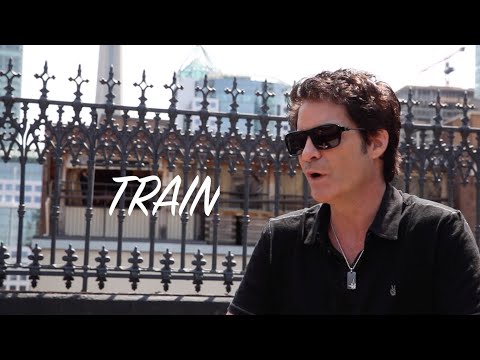
12:39 total
For licensing inquiries please contact reelinintheyears.com. How licensing works →
AUDIOListen
Episode #229 · Train (Pat Monahan)October 2010 · 00:07:53
Episode #681 · Train (Pat Monahan) #2July 2014 · 00:13:09
TRANSCRIPTRead
Show full transcript
0:04That yet, and this is Pat Monahan, Train. How you doing? Good, how you doing? I'm good. I bet you're on top of the world this week. Yeah, it's really fun, and about to get on an airplane to go to New York to be on a TV show, and man, we're just so busy that it's hard to, you know, sit and celebrate, but I plan on doing that next week when we get back from Dubai. Yeah, Dubai. So what's... and Dubai is just like a one-off thing, you play for like the sultan or something? I think that there's the Dubai Jazz Festival, the first time we've never, we've never gone there, but man, I think it's gonna be an interesting time, I think. Yeah, for sure. It's a whole... well, you must have been to that part of the world before? No, I've never been to the Middle East or any of the Arab countries at all. Now, crazy. It's gonna be crazy for me. How about you, have you?
0:51No, I haven't. Have you? You didn't even have time though to look around? I think that we'll get in a day early and have a little time on my day to look around a little bit, but basically that's it. Then the morning after the show we'll have to hit it. That's the rock star life, I suppose, in and out. Hey, are you guys excited about Arcade Fire? We are, as a country, yes. It's like the pinnacle. We've had such a good music scene up here for a few years, and it's kind of like finally it's recognized. Do you know a lot of our acts? Like, you're in Seattle, so you're not too far. No, I'm not too far. No, I just love that, man. It's just like everybody who announces they're from Canada, I go, God, man, I can't believe what a small place compared to the United States has so much talent, like when it comes to music and comedy.
1:36Yeah, rule the world. It's a work, we're coming along. We're going for you guys soon, soon enough. Amazing. Well, you were there the other day. I guess I'm gonna start off like this: how manufactured was the show? I mean, even with Arcade Fire winning, it was almost like too pre-planned that they were gonna play the last song after they won, you know? I don't know, man. I think that those guys were probably psyched to play music. I don't know that they expected to win. There were a lot of acts that performed on the Grammys that didn't win anything. I mean, Justin Bieber was up there and Katy Perry was up there, and, you know, Bruno Mars ended up winning one out of ten. But man, I don't know, I was really shocked by so many things. Best New Artist, I mean, I was shocked. Yeah. And I think that the voters of the Grammys this year were really voting for
2:25like, I don't know, something different, something very organic or something. It seemed like it was about musicianship and songwriting and kind of the basics, and not really the popularity of the whole thing. I was really blown away, even though Arcade Fire is incredibly popular, you know, and they sell out Madison Square Garden among other places, they're definitely popular, but it didn't seem like a popularity contest at all. I mean, how did it seem to you? I dug it. I thought it was one of the better put-on shows in years, actually. Like, it just worked, and, you know, sure, they don't give away many awards on TV, but I'd rather watch performances anyway, I think. Yeah, I think that as much as it's an award show, it's mostly about music, and so, you know, getting nominated and being able to perform, I mean, that's a humongous, you know, honor and
3:14privilege, and that's the win, you know. You get to perform your songs on TV, and millions of people all over the world, that's a huge win. How come it was a live cut for you guys? I was a little confused about that. Why Soul Sister live was the nominated track? I think that Soul Sister couldn't qualify because of the prior year. I think our record company really had no idea how massive the song would get, and when it was kind of big, they put it in last year. Oh. We recorded a live version of it to try to, you know, anyway, and people responded to it. So I don't know if they're really voting for the live version or just for the song itself, but I really don't care at this point. No, and you shouldn't. It doesn't matter. What I find interesting too is that, you know, Soul Sister wins pop record, but you've also won a Grammy for
4:02Drops of Jupiter, for rock song. And, yeah, okay, stylistically it's a little different, but it's still, you know, it's still that Train sound, and I wonder what you think about the difference between pop and rock, and if there is one. You know, I don't... I think that whatever they do to determine that, I'm not sure. I know that when you come out with an album, you know, it gets categorized, and I think that the Drops of Jupiter album was categorized as a rock record. I don't know who decided that. I don't know how that gets decided. I think that's a strange thing, because we're the same band, and we're categorized as rock, and then, you know, a few years later we're categorized as pop. But it may have changed over the years as well. I don't know. I mean, I feel like we're a pop rock band, you know, that's just what we do. And pop means popular, and man, I'm just excited that
4:49I'm popular on some level, you know. I know that Arcade Fire is popular on some level, but I don't think people would call them pop music, you know. No. You alluded to something in your speech about hardships in recent years. What were you talking about? What went on? I mean, you know, we've been through different bandmates and different managers and different wives and different everything you could think of, and the fact that we're still standing, the three of us, is really remarkable. Most bands, I think, would have definitely divorced by now and gone their own way. But somehow, you know, I think we saw that if we kind of wiped the slate clear and got rid of some of the baggage that was holding us back, you know, personally and also, you know, as songwriters and everything... We stopped liking music, man, you know. It's like Arcade Fire was
5:37inspirational at the end of the day, and we got it, like, and then, we like music, so we're gonna go play another song. It's like, that kind of meant a lot to musicians like me, because I get it, you know. I know what it's like to lose faith in music and go, like, you know what, it's not fun anymore, I'm just gonna go, like, make a meal for somebody. Really? You stopped liking music altogether? Yeah, I didn't really have an interest to make music. What made you get back into it then? What did it for you? Well, I feel like we got to the point where we decided we have to have fun or it's not worth it anymore. Because the reward for us was, hey, if we're gonna spend time together, because we're not happy together, we have to be successful, and that means monetarily. And that's a pretty crappy goal, you know what I mean? Saying, hey, we're gonna be psyched, but only if we're happy.
6:24And so we stopped with that attitude and went to, hey, let's be happy making music, and then if the rewards come, then they come. And that's what we decided to do, and it made a humongous difference. And, you know, here we are returning to the Grammys years later because we kind of changed our attitude. How do you guys write songs? Is it you coming with ideas or is it a group thing? You know, I wrote that song with a couple of friends in New York, but each song is different, you know. I write a lot with the guys in Train, I write a lot with people outside of Train, and, you know, we just try to constantly mix it up and, you know, try to stay diverse as much as we can, but sound like us. Yeah. How hard is that to do, to want to diversify but still...? Yeah, it can be pretty hard. So now I think I got to be quiet, because
7:12I'm about to get on this airplane with a bunch of people. Okay, then we do something real quick, all five questions. Five quick questions, one-word answers. Okay. Road or studio? Oh man, right now, studio. I'm dying for the studio, but it always changes. Lennon or McCartney? Paul, for me. Most important thing in a song: lyrics, melody or rhythm? Man, I used to be lyrics only, and now it's melody. Song you've written you're most proud of? Probably Drops of Jupiter. Why do you say it like that? Because I love all of them, and so to say one thing over another is hard, really. It's like saying what's your favorite child. Right, fair enough. Fair enough. And in one word, Train. Sincere.
0:00So cool, right? So actually, I want to start with the gun. Because I saw you tweet that that's the actual Dirty Harry gun. Yeah, they told me that when they, there was, when you have firearms on any set, a movie or a video... If you take them off, the light, I got to take them off. I don't know, I'm going to put them back on.
0:47Okay. Then I'll keep it on. I just want to see your beautiful face without the shades. Gotcha. There's always a firearm person if there's any kind of real gun on set. So he handed me the gun and he said, please don't drop this gun. This is a classic. It was the original Dirty Harry gun. And I was like, I'm not going to just not drop it, I'm going to steal this thing. Are you kidding? So, yeah. So you have it now, is what you're saying? So now I have it. Yeah. I tried to get it into Canada. No, I don't have it. That'd be a problem on an airplane. They probably don't like that so much. I don't have it. But it was so cool to be around that kind of thing, you know, history. I heard that you wrote this record, maybe even this song, like on the last run, on the last tour. You know, I've been writing... Do you typically write on the road? I've been writing for so long that I just write wherever, like on the road, or travel to places, or go home.
1:38I have a little studio there that I like to work in. But this record was brutal. Why? That's interesting. You know what? Because there's something that happens when you get older where you go, like, why am I doing this? And if the answer isn't because you want to make people's lives a little better, then you're probably not going the right direction. But to make music that might enhance people's lives is pretty difficult if that's the task. If it's like, hey man, let's get on the radio, it just changes, you know, the essence of what you would be writing for. And so I think because of where I was coming from, where I want to make music, like, I want to talk about some stuff that hurts a little bit, you know, that made it more difficult.
2:28Well, I've only heard the single from this record. So what else is going to be on Bulletproof? Well, there's a song called, that kind of stuff, there's a song called Bulletproof Picasso. I think my best writing on this record is a song called Give It All. And I just was brutally honest about, you know, what it's like to be who I am on this planet, and I would love it to be a single, because I think that a lot of people would relate to it. Is that something you learned from just being a writer and wanting to get stuff out? Is that something you've learned talking to other writers now that you're doing that podcast? No, it's not from that. It's just from, you know what, it's from having good leaders. Like, I have really good managers and they guide me. And they recognize, just like you have people in your life that go, like, here are your strengths.
3:16No one's ever told me I had a strength in my life. Well, someday. Yeah, yeah. I'm lucky. But you do have strengths, and sometimes you don't see them because you're so caught up in trying to be this thing. And to have good managers who would be like, hey, this is what you're great at. You know, maybe not so much cute on this record. Maybe more go touch people. And that meant a lot to me, because I guess, you know, writing things like hefty bag, you know, and soy latte, they just were like, you know, you don't need to do that. Let's see what would happen if you didn't. It's funny how that stuff resonates with people too, though. Like just those, maybe it's because you don't hear them in songs all the time. Like those catchphrase words or whatever you want to call them.
4:03Right. And there is a place, you know, it's like, hey, you can go that way, but just don't go so far that it becomes kitsch, you know. No, I got you. Well, even the sound, like, do you mean lyrically or do you mean melodically too? I mean more lyrically. Melodically, you know, there's such a debate about which is more important, you know, the melody or the lyric. But the real debate really is the difference between Europe and America. Or even Europe and North America, which would be like, ABBA was so massive in Europe during a time where they weren't massive here. And so right now, the biggest songwriters in the world are from Sweden and also from Norway.
4:57And it's because they built their whole listening environment around melody. You know, dancing, playing. They didn't care that the words weren't special. And so I don't know which is cooler or better or more important. Have you done any of those trips? Have you worked with the Neillons guys or tried that co-write thing? I have, with some of the producers. Co-written with a lot of people from a lot of different countries, Germany and everything else. But I find that, you know, I went to Nashville to do some writing on this record, and I wrote with some, like, weathered writers. You know, like most of the people I wrote this record with are far above the age of should be on pop radio. And I think that's kind of what's beautiful about this album. Is that what influenced the Western tones? Like, I've heard you say it's a Quentin Tarantino song,
5:44Angel in Blue Jeans. You know, that song I wrote in New York. So that's the irony, I suppose, because the other ones maybe don't sound so Quentin Tarantino, but they were written in Nashville. Do you ever write, like, when I read that quote or heard you say that quote, I think it was an interview, I wonder, do you ever write with visuals in mind? Like thinking, I mean, it gives you that feel. You know, the only time I've ever done that is if I wrote specifically for a movie or something visual that I was asked to write for, but not typically with a record. Cool. You know, I just try to write what I've already seen or what people go through. I like something about that song. Maybe it's the four to the floor. I don't know. Maybe it's a new drummer. I don't know. So what's it like working with someone else in the studio, I reckon?
6:29Because I mean, it's 20 years, right? It's weird. You know, it's weird. How does it change? We miss Scott, and we think, like, you know, this is all for the best, because it's like every other relationship, where he can be happier working with other artists and writing. And, you know, that was one of his wants in this project, where I hogged up all the writing because it was working, and he really wanted to be a part of that. And so now he gets to do that. And so we're happier because, you know, we have a fresh new thing right now and it's really fun. And so we're all having more fun. Has it changed anything in the studio? Like, has it changed, different drums or different vibes, right? You'll hear this record will sound like a different band in a lot of ways, because the drumming is just different. And so yeah, you're right. Different band, different vibe.
7:19It's being in different bands. It was the segue. Do you read Bob Lefsetz's stuff? I don't read it. Did the Zeppelin thing come across your desk? Yeah, yeah. But I don't follow him, because I've been advised not to. So people will just be like, hey, let me just send you the ones that are great. But yeah, when he wrote about me fronting Led Zeppelin, it was really an honor, because I have read a bunch of the things that he's written, and I think he knows a lot about this business. I kind of want to ask, does anything happen? Does anything go on? No. Because I want to make that a reality. I don't have any clout. I mean, even Jimmy Stafford, my guitar player, would be like, dude, that'd be amazing. Can I come backstage? I'd be like, no, probably not. But, you know, it'd be really cool for my band, too. I'd get a chance to do that for a year and go out with Jimmy Page.
8:06He's all of our heroes, you know. But at the same time, I wouldn't want to disrespect Robert Plant, because he is my idol. Yeah, of course. But I'd love a chance to get out there and sing some Zeppelin songs with that band. He is your idol? Do you actually mean that? Or is he just one of many? No, I mean that. He was the guy. He was the guy. So, okay, cool. So as a songwriter, has he influenced you? Because you're not singing about, like, monsters and that kind of thing. I tried to write like him, because I tried in the beginning and I was like, wow, I'm terrible. I don't have any chance, you know. But there are other songwriters like Van Morrison and Cat Stevens and James Taylor and, you know, that I more resemble, I think, in the songwriting. Because the Robert Plant thing, without the combination of all four of those people doing that thing, it's just like any band, right?
8:55It's maybe. Maybe. I don't think every band is like that. You know, I think that a lot of bands like, you know, Aerosmith, there's three guys. There's Steven Tyler and Joe Perry, but the real guy who was writing a bunch of those riffs was the rhythm guitar player. I can't remember his name, but he made a huge difference. Tom, maybe? Is that Senator? Whitford? Maybe. Maybe. He's the bass player. Like bands like that, you know, where it's two guys or one guy. And Led Zeppelin was all four of them. What is your partnership with Jimmy? Jimmy is a huge part of Train. You know, without Jimmy, I don't think Train could exist. You know, he's got his own thing, his own vibe, his own way of playing, and I think that adds a lot to the band.
9:45I know you got to get going, so I don't want to take up too much of your time, but I just wonder, you're in Niagara tonight playing a show, played there last night. I'm a nihilist. No, no, you're in Niagara. I'm so into The Big Lebowski right now, that's right. So good. He's a nihilist. You're hearing things. Yeah, we were at the casino. What's the setlist at the casino? Because you want to play the new songs, I'm sure. You get to get out there. Man, we played one song yesterday that no one's ever heard before called Cadillac, Cadillac. And as much as it's upbeat, you know, whatever, I just think it's best to just play what people know right now until the new record comes out. But man, we want to play all the new stuff so bad. So you're of the mindset, before the record comes out, don't let them out too much? No, it's not because we don't want to. It's because I just think people are like, look, man, you have six other records.
10:31My favorite song you didn't play because you had to go play some crap that I don't care about. So maybe they will care about it when they have the album in September, but right now they don't. So I think to respect our audience, we just need to play what they know. Where do the massive songs sit? Like, do you like to open with them, close with them? Like, where do they sit in a set? The more popular songs? Yeah, the huge hits. We usually try to play a couple of them. We'll play a couple in the front and then most of them at the end. Just because the middle section is a good time to have people up on stage. Good beer breaks. Real good beer breaks. Take a 20-minute break. We're going to play some crap up here you don't care about.
11:17But the whole thing is we've planned it out so that by the time you leave, you're just psyched. Cool. I'm going to let you go. So we do something called Five Questions. Five quick questions, one-word answers. I'll take my sunglasses off for this, because I take these questions very seriously. Okay. Road or studio? Man, I can't have one without the other. Lennon or McCartney? Without question, McCartney. When you hear a song, what usually hits you first? This goes back to one of your answers from before. Lyrics, melody or rhythm? I go with lyrics, but it doesn't make me right. Yes. If someone's never heard Train before, what song do they start with? I would always say Drops of Jupiter, or even Meet Virginia. I would start from the beginning, I think, because we've become a different version of ourselves.
12:04Yeah, Angel doesn't sound anything like Meet Virginia. They came on shuffle back to back this morning. Right. Wow. Totally different. It's like a different band. Hopefully there'll be some... Some essence of the same band. You know, I think this record might be closer to the first record than the other records have been. Okay. Except not sonically, but more in the subject. Interesting. Yeah. Interesting. In one word, Train. Authentic. That's a good one. Thank you so much, man. Thank you. Appreciate it. Check out the eyes. I don't lie. Except to women. I'm just kidding.
12:50I don't lie. I don't lie to anybody. I'm too boring to lie. But I lie to you behind the camera, 'cause you're a jerk. Awesome. All right. Might be the best ending I've ever had. You're not a jerk. And you could probably beat me up. So I'd beat you.
ABOUTThe archive
This interview is part of the Matt Schichter Interviews archive: more than 700 conversations with musicians, actors and filmmakers recorded between 2003 and 2014, beginning with The BackStage Pass, one of the first podcasts (2003). The archive also became Matt's short documentary Lennon or McCartney. Matt Schichter is now a Glasgow-based producer, line producer and music documentary director: he directed CFNY: The Spirit of Radio (PBS, TVO) and line produced Faith (TIFF and Rome 2026). His films → · UK film producer and line producer → · More about Matt →
Listen to the full archive on Apple Podcasts or Spotify.