Lennon or McCartney? Brett Dennen’s answer: Lennon. Watch the moment. See every artist’s answer. Take the quiz.
SONGSWhat Brett Dennen said about the songs
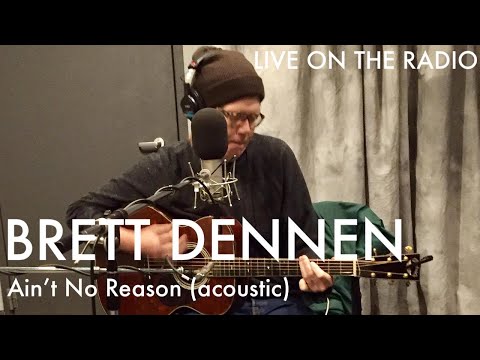
“Ain't No Reason”
Brett Dennen explained what he meant by this line.
“I think basically what I'm trying to say is there's a lot of built-up stuff... that there's a lot of anger and hatred and stuff buried down deep inside, that sometimes I feel like any minute it can erupt or fall apart or snap.”
Brett Dennen explained how the chorus answers the verses.
“in the choruses, the lines that say 'love will come and set me free,' and that's kind of like, I guess that's me, and my religion maybe, you know, if I have one. That's the faith in me, that kind of plays the advocate to the verses”
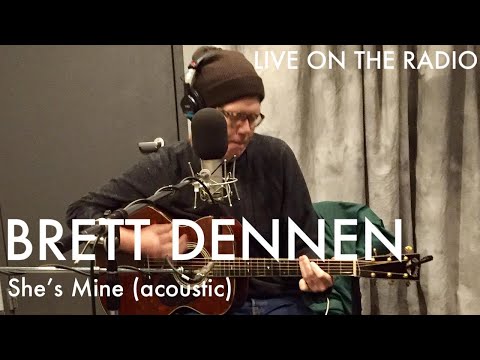
“She's Mine”
Brett Dennen explained the character in the single.
“That's just a traveler walking through the streets of, you know, any given situation, and just, I think, being tempted by lots of deception and trickery, and holding true to what you believe inside”
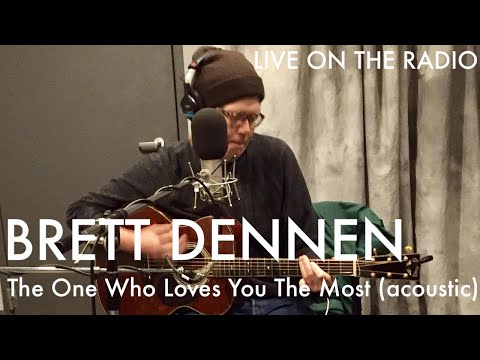
“The One Who Loves You the Most”
Brett Dennen described what kind of love song it is.
“it's a bit of a devotional song. It's a love song. It's really about loving yourself, though.”
VIDEOWatch
23:52 total
For licensing inquiries please contact reelinintheyears.com. How licensing works →
AUDIOListen
Episode #118 · Brett DennenSeptember 2007 · 00:23:51
TRANSCRIPTRead
Show full transcript
0:00Got Brett Dennen here in the studio. Thank you so much for stopping by. Hey, thanks for having me. Playing the Folk Festival today. Mm-hmm. Or you haven't been there yet, but I'm sure you've done the festival. I've done many festivals, and I've been in many beautiful cities, and I came here and I was like, wow, this is one of the most beautiful cities I've been to in a little while. So I have a feeling the festival's gonna be great. However, it's pretty hot outside. Yes, like 34 today. Oh, it's gonna be fun. Yeah. Especially for a big guy like yourself. Exactly. I'm wondering if you traveled the mountains yet? Did you come here from the west, or did you come up from the east or something? We came from the air and landed in an airport. So we saw the airport first and then drove in, and we had an early flight and a late show last night in Edmonton. Oh, okay. So I took a nap this morning.
0:48First time in Alberta? Yeah, this trip has been my first time in Alberta, and I love it. Yeah. There's a lot of places on this new tour that you haven't been yet. Are you starting to branch out into those kind of markets? Well, in terms of Canada, yeah. I mean, we went to Montreal and Toronto, but I've played both those cities before, and I've been to Vancouver before, but not to play music. So the day after tomorrow we're going to Vancouver. We're flying again. I know one of these days we're gonna do it by road, and I'm gonna love it, and I'm gonna see a moose, and I'm gonna freak out, and it's gonna be the best day of my life. I'm sure you've done the road thing in the States. Yes, and I've been, you know, I've been through all the different parts of the United States and seen all the beautiful landscapes there.
1:34So I kind of have a clue as to how it might be here, but you never really know. Exactly. You grew up in California, you know, you headlined the Fillmore the other week. That's amazing. Yeah, you know those venues? I do. I went to the Fillmore in San Francisco, though. San Francisco is probably, you know, my favorite city in the world, and I say that because I'm sort of from there and I have an attachment to it. And the Fillmore is a legendary venue, and, you know, it's kind of the epicenter of everything that went down in the 60s and the Summer of Love and the Grateful Dead, and that was the venue that everybody played at, and it was like, you know, you were nothing until you played the Fillmore. Nowadays people play, you know, big arenas and stuff like that, but the Fillmore was like the place where Jimi Hendrix would play, or Janis Joplin or Santana or something. So it's,
2:27and the Counting Crows. I love the Counting Crows. They're a great Bay Area local band. Really? Interesting. How do they do up here? Are they pretty good? Are they pretty big? They were. Really? I mean, I saw them last summer and it was sold out. It was nice, in Toronto, at the big amphitheaters. It's like 20,000 people. Awesome. Not bad. Yeah, they were co-headlining with the Goo Goo Dolls. So, the crowds. But I mean, good show. I'm more on the Counting Crows tip than I am on the Goo Goo Dolls tip. Back in the day, the Goo Goo Dolls were okay. It's kind of like, they've had some better stuff, dude. Speaking of what stuff you got. Got gray hair. Got a gray hair, dude. He does have gray hair and big arms. All buffed. He's got a nice chin. Nice chin. Your lyrics, though, amazing. Thanks. There's some stuff I just sit there and I'm like, wow. Even just that one line, I wrote it down too.
3:13"People walk a tightrope on a razor's edge." Not like a deep line, I think it's just a really cool way of saying it. Well, yeah. I mean, I think it's like a balancing act, or maybe people have a lot of pressure on them, or they build up a lot of pressure. And, you know, I mean, razor's edge means what it means to whomever. But I think basically what I'm trying to say is there's a lot of built-up stuff. You know, I feel like a lot of people have so much going on, so much built up, that there's a lot of anger and hatred and stuff buried down deep inside, that sometimes I feel like any minute it can erupt or fall apart or snap. Yeah. Are you talking about that along the record? Yeah. Just stuff. I mean, do you think the culture of the States of tension is starting to come up here?
3:58I think it is a little bit. You know, I was in Edmonton, I saw somebody with a sign on the side of the road that said, "Stop the Americanization of Canada." I was like, whoa, it's getting heavy up here. But yeah, I mean, it's a big issue in the States. You know, there's a lot of hatred, and there's a lot of unfairness and injustice going on, and there's a lot of fear, for sure. And there's a lot of demoralization of people, and that's what I like to sing about the most: giving people hope and trying to offer a bigger picture, and trying to make a positive impact on the world through positive, conscious lyrics and a good message. Happy little tunes.
4:43Yeah. You play a lot of stuff higher up on the guitar, I've noticed. You were talking before a little bit. Do you ever play stuff on the low end of the guitar too? Yeah. Because everything's kind of up here. Is that just to suit your voice, or is that just? No, no. It depends on what I'm going for. Like, most of my songs are done in the first position, which means, you know, the first three or four frets. But then other times, when I'm trying to get more like an African sound or something like that, I try to go up to the higher notes and use a capo, and get those really, really high configurations of chords. Yeah. What I'm thinking of, though, is what was the first, "Blessed," way back. "Blessed" is all done on, it's like, it's the song
5:29played with a long time. This sounds like it needs two. Really? Well, when I'm live I play with two, but really, I mean, I'm just playing it. It's in C, but I'm playing it up here, and it's a lot of, I mean, it's just different voicings, I think, of chords, of standard chords. Yeah. Thanks. It's funny, because I heard it probably about a year ago now, and not many people had heard of you at the time. Mayer was telling me, this dude, write it down, got to check him out. Yeah. It's amazing. That's cool. And then he went on tour with him. I was like, oh, no way. Wow. He really did it. That's cool. He wasn't just saying check this guy out. Thanks, John Mayer. It's John Mayer you're talking about, right? Not a Freddie Mayer or Lucinda Mayer? Yeah. Are there other Mayers out there in the world?
6:16Oscar Mayer. Mayer. Come on. Yeah. Joni Mitchell. I heard you're a big fan. What do you think of her Starbucks thing? She signed with Starbucks now, with McCartney. She did? Yeah, like three days ago. I think that's great. Really? Yeah, honestly, I do. She's one of my all-time favorite songwriters, and, I mean, you know as well as I know, the music business is crazy. I mean, I got into playing music wanting to be like all my heroes and put out a bunch of great records and do things the traditional, standard way. And now, with the managers I work with and the record label I work with, it's like every time I have an idea about what I want to do, they're like, well, that's the music industry 10 years ago, 5 years ago. That's the music industry last year. It's changing every day, and it's like labels are having, you know, less and less power,
7:06and these different models are coming forward. And Starbucks has been a huge retailer in selling actual discs, which is hard to do, because it's hard for labels to sell discs these days. You know, there's a whole generation of people who would never even consider getting their music in a store, you know, in a plastic case. It's like, music is something I either download for free, or I get it off iTunes or some other source for downloading. And Starbucks has been really successful in kind of changing the way that the music industry is, and they started a label, and Paul McCartney's on it, and he's been doing well. And it's awesome for Joni Mitchell. If she makes a big record and sells a lot and does
7:53a big tour, I'm gonna freak out, and I'm gonna bug the heck out of my manager every day and say, can I open for Joni Mitchell? Because, you know, I've told my girlfriend many, many times, the only woman I'd leave her for would be Joni Mitchell. I don't care how old she is. I just want her to sing me to sleep. Yeah, she's the best. What do you feel about that? You mentioned kids don't even buy their records and stuff. I think it's great. I mean, the new way is taking over. The old way is changing all the time. You know, pretty soon it's gonna be all digital, and for those of us who love to have
8:40the records and the artwork and everything, we're just gonna. You don't know what they mean. Yeah, but I mean, to have the album artwork, I think it's sad for those of us who like that, but I think it's gonna make the industry advance a lot more and maybe, like, you know, change shape to move towards a more digital world. I mean, it's already happening. But I mean, you've got to keep up with change and technology. I mean, if you try to fight it, then you get kind of left behind. And it's just different tools, it's different words, it's different situations. But I mean, this has been happening all throughout history. Changes always happen. So instead of trying to fight against the change, it's better to just, I think, deal with it and learn how to make the best of it and use it to
9:28your advantage, as long as it's not, you know, hurting anybody. And if it's the big giant labels that take a fall, or the big corporations or whatever, then that might not necessarily be a bad thing. Exactly. Yep. See how that works. It's awesome. We do the same five questions. Okay. Quick questions, one-word answers. iPod or CDs? I have to choose one or the other? Like on the road, what are you using right now? iPod. Lennon or McCartney? Lennon all the way. Come on. Hey, you know, there's "For No One." There's, you know, Paul McCartney is the man. I mean, what they did together, you know, it should be Lennon, McCartney or Martin, because of what they did with George Martin. I mean, but for me it's
10:15Lennon, the rugged, you know, activist and fighter for love, you know, that broke all the rules, and that's who I admire. Cool. Alcohol or marijuana? Gosh. I guess I drink alcohol more than I'd smoke marijuana, so. Drink. It's not pot. I don't drink pot, but I love a scotch. Cool. Something you've written you're most proud of? "Ain't No Reason." How come? I think it's because it's short, it's to the point, and it's got a good message, and it sums up the record pretty well. Yeah. That's not me. In one word, Brett Dennen? One word. One word. Sum up your music, not yourself. That's kind of hard.
11:03Honest. Cool. Yeah. Awesome. Tell us about the Mosaic Project. When I was in college, I was in a social justice program called Community Studies and Social Change, and it was a combination of activism and social theory and working with nonprofit organizations and activist groups. And I found out about this program that was just beginning called the Mosaic Project, and so I joined in. I was one of the founding members, and I helped write a whole curriculum with them, a whole musical curriculum. Everything we teach has a song that goes with it. And basically what we do is we bring fourth and fifth graders of extremely different backgrounds, racial, ethnic, religious, economic backgrounds, bring them together in a situation where, you know, we mix them up into different groups, around
11:54kids that they've never experienced before, and expose them to a whole curriculum of building community across our differences and celebrating diversity, and understanding that we can build community across our differences, and drawing parallels from the work that we're doing at this school to what's going on in the whole world. So we might talk about bullying on the playground, or cliques, or different racial groups that hang out together in different parts of the Bay Area, and then we draw a parallel to war or to, you know, what's happening in the Middle East or whatever. And it's a pretty phenomenal program. Yeah. You still have time to do that? I don't have time to actually work there anymore. I'm on the board of directors now, and I'm out there kind of holding the torch so the rest of the world can, you know, and doing stuff like this with
12:42you right now and directing people to the website. What is the website? www.mosaicproject.org, and I'm just trying to spread the word about it. Is it only in the Bay Area? You're trying to make it? It's only in the Bay Area. Eventually, though, we'll have a model that we can use to incorporate different places all around. Yeah. And I hear also a little portion of your proceeds from every show go to charity. Local charity? Local charities. Yeah, that's something that we did on the last tour. We haven't been able to get it together on this tour, because it takes a lot of planning. We've been bringing nonprofits out for every show and having them talk about what they're doing, having them talk about a local issue that they're working to bring change for, and just connecting the audience to this nonprofit organization, and
13:32you know, having the nonprofit organization give a list of ways they can help or get involved, and, you know, having music being played the whole time. And so. That's cool. Yeah. I'm going to see a lot of that at the folk festival today. Good. There's a lot of little booths and stuff set up, and it's awesome. You know, I mean, that's the most important thing about a community, is getting people organized and working to always make things better. So. So at the folk festival you're taking on 4:20, I heard, which is a great time. I'm on at 4:20 at a songwriters in the round, and then I'm doing a. It's like one of those, you know, you get three or four songwriters together, and they sit on a stage and take turns. Well, I think usually what happens is you take turns doing a song, and then I think usually it's encouraged that people play together, and
14:18sometimes it's happy and peaceful and nice, but then sometimes, in certain circles that I've been in, it gets pretty competitive. Yeah. So I don't think anything's going to go down like that, but there's always the possibility. I don't know. I hope not. It should be a nice, laid-back one. Yeah, I hope so. Cool. And then what else? And then tomorrow we're doing three shows. I'm going to do a band set with a drummer named Randy, who flew here with me, sleeping in the hotel. Yeah, I couldn't bring the rest of the band, because the rest of the band was also in a band called ALO, the Animal Liberation Orchestra. Yeah, well, Zach, not Zach, though, the guitar player and the bass player, and they had to go on the road. They're going on the road doing their own tour, and then they're going to do Japan or something like that. And so we have to get a new band, and the new
15:08band comes in Vancouver. So we've got a couple shows, just me and the drummer. Yeah, it's gonna be, yeah. Loop pedal? Yeah. I don't do any of that stuff. You know, I admire people that can do it. I don't admire a lot of people who do it. Sometimes it can be a little distracting, but folks like Howie Day, I really think, have a grip on it. Yeah, it's good. And he kind of makes everybody else look a little silly. I'm not a huge Howie Day fan, I can't really name one of his songs, but I saw a DVD where he did it, and I was like, wow. You know, Damien Rice, when he was first, I think, going around touring and stuff, before he had a big band, he was doing it too, and he was putting people to shame. He's the man. Yeah, I know. I love that. He is awesome. I mean, he comes, I think,
16:00he comes across a little too heavy sometimes, but that's not a bad thing, it's just my own personal taste. But that guy, man, he goes there. You played with him? Yeah, we did. Yeah, opened for him in Seattle, Washington, and it's beautiful. It's called Benaroya Hall. It's a big, beautiful symphony hall where all the wood was, you know, built a specific way so that it was made for music. And I mean, he went in there with a huge band and rocked the place, but in soundcheck I was playing acoustically and singing, and you could hear perfectly from the back row. It's pretty cool. I think so. I think it's out there somewhere. I have a website, or I don't have it, but somebody set up a website of a bunch of live shows and training,
16:50it's called messagesestray.com. So, yeah, yeah. There's the man right there. Yeah, thanks, guys. Are you gonna play some songs for us? I'd love to. Let's talk about the songs first, because I'm going to have the other one. You got it. So "Ain't No Reason," tell me about it. Well, that was one of the ones we were talking about before. I think it's just sort of an observation about things I think are building underneath people's skin, under the skin of people, and specifically in America. And, you know, I think I touch on a lot of different things, and I'm not trying to be general. I'm just trying to let everything that I thought of, in a stream-of-consciousness sort of writing,
17:38come into play when I was writing it. But then there's, in the choruses, the lines that say "love will come and set me free," and that's kind of like, I guess that's me, and my religion maybe, you know, if I have one. That's the faith in me, that kind of plays the advocate to the verses saying, you know, what are we doing, how are we going to fix what we're doing, you know. So it's kind of like a Dylan kind of style verse with a Beatles kind of chorus. Really? Well, it's the way you're writing it, the whole love thing in the chorus. Yeah. Yeah. John Lennon wrote a lot of songs just about love. "Love is real." That song is ridiculous, man. Love, God is love. Is that "God"? "I don't believe in Beatles." No, no. Well,
18:27that's "God." God is a concept, but in that song, "love is touch." Yeah, God is love. Beautiful, man. I know. "She's Mine," which is the current single, and that's the song. That's just a traveler walking through the streets of, you know, any given situation, and just, I think, being tempted by lots of deception and trickery, and holding true to what you believe inside, so that, you know, you're not going to let anybody blow your candle out, or you're not going to let anybody taint, you know, taint your purity. And I'm also going to do the song we were talking about earlier, "The One Who Loves You the Most," which is actually the song that brought me to Canada, because
19:18Rogers Wireless, or Rogers Communications, I don't even know the name of the big corporation, Rogers, yeah, used it on one of their commercials for, like, Rogers TV. And so, it's a bit of a devotional song. It's a love song. It's really about loving yourself, though. Do you see revenue from that kind of thing? Like, do you notice that? Yeah, I mean, it's usually like a lump sum, so it's not like every time it plays I get a check or something like that. It's like, I make a deal, and it was a nice deal, and it allowed me to travel a little bit more comfortably for that time being when I was on the road. Yeah, it helps. I mean, in this day and age it helps to find any kind of, like, I'm on an independent label
20:07where, and I have a world deal with them, but what they do is they contract out to different distributors in the different countries, and my label doesn't put up money for me to really travel and be out on the road, to help, you know. But it's a blessing, because I'm on an independent label, and so I have to, you know, I have to do it my way. But, you know, a lot of artists who are on a major label can get, like, you know, money to live in a bus on the road. I don't have that luxury. I have other luxuries. So when something like that comes in, like a sync licensing or something like that, on a TV show or, you know, on a commercial, it's nice, because that kind of helps you live a little bit more comfortably on the road. Yeah, it's funny, people just think about it as selling out. You know what, it's not. You know,
20:55you can still think, it depends. Selling out, maybe, if you use your music to sell a certain product that you wouldn't normally believe in. But it's happened with another one of my songs, the song "Blessed" that you were talking about earlier. In the United States it got on a Hilton commercial, and I guess you just have to value what it is that it's selling. Like, you know, how bad or how good is the company that your song is helping to sell a product for? And ultimately, though, looking beyond that, it's like, what is it really doing? It's getting my music out there. You know, I have a hard time getting songs on the radio. You know, it's picking up, right, but, you know, I've been doing this for four years, and
21:42it's just now, this last year, I've been starting to pick up. So, and John Mellencamp said, when they asked him about his song, you probably never saw the commercial here because. No, we have it. Okay, same commercial. It says, like, Chevrolet's America or whatever. Oh, really? Yeah, oh, they've just completely switched it, and he says from the east coast to the west coast and all that, like, "This is our country," whatever the song. That's great. That's awesome. Well, anyways, people were grilling him about that for a long time, because he comes across as such a blue-collar, working man's musician, and he is, I mean, in the tradition of Springsteen and all that. I heard him say, and when I heard him say this I was like, yeah, he's the man, I'm not gonna let anybody criticize me, he said, "Chevrolet has been the best
22:32record label I've ever been on." And it's true, man. I mean, he said, you know, and that was an old song from an old record a couple years back, and he heard the most recent Tom Petty record, and he goes, "Man, Tom Petty's songs can't get on the radio. If he can't get on the radio, I sure as heck can't get on the radio. So I've got to figure out some other way to get my songs out there." And luckily he found that commercial, or that commercial found him, and, you know, it reintroduced the world, or at least, you know, Canada and the United States, to that song and his music. So the Coug, the Coog, his new record's amazing, though. It is, but it's not on the radio like he used to be. Well, you know, what's your format? It's called AAA. Okay, yeah. So
23:23I love AAA, by the way. Right. There's some hot AC stations out there who are doing some good music, and, you know, there's great radio stations out there. But yeah, I mean, Tom Petty used to be, like, number one on the pop charts, you know. It's not the same. Well, yeah, but he's still a legend, and he's written some of the greatest songs ever, and he continues to do it. And no, but they're not on the radio.
ABOUTThe archive
This interview is part of the Matt Schichter Interviews archive: more than 700 conversations with musicians, actors and filmmakers recorded between 2003 and 2014, beginning with The BackStage Pass, one of the first podcasts (2003). The archive also became Matt's short documentary Lennon or McCartney. Matt Schichter is now a Glasgow-based producer, line producer and music documentary director: he directed CFNY: The Spirit of Radio (PBS, TVO) and line produced Faith (TIFF and Rome 2026). His films → · UK film producer and line producer → · More about Matt →
Listen to the full archive on Apple Podcasts or Spotify.