Lennon or McCartney? Kathleen Edwards’ answer: McCartney. Watch the moment. See every artist’s answer. Take the quiz.
SONGSWhat Kathleen Edwards said about the songs
“Asking for Flowers”
Kathleen Edwards said "Asking for Flowers" was written for a friend going through a hard time.
“it's a song that I still love playing every night, and it's a song that I wrote for a friend of mine who went through a really hard time, and I feel like I really did her story justice.”
“A Soft Place to Land”
Kathleen Edwards said "A Soft Place to Land" and "Pink Champagne" were her first songs written on piano.
“I started writing on piano for the first time, really. So I wrote A Soft Place to Land and Pink Champagne on the piano.”
VIDEOWatch
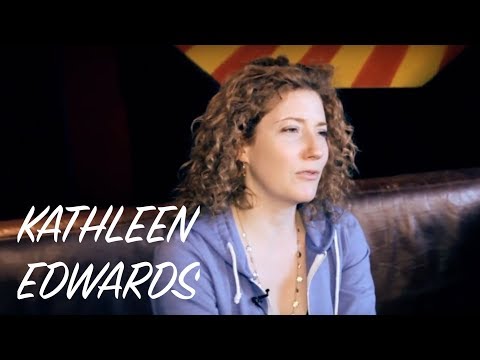
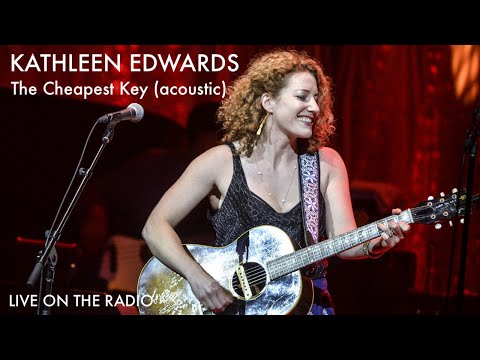
2 clips · 6:14 total
For licensing inquiries please contact reelinintheyears.com. How licensing works →
AUDIOListen
Episode #123 · Kathleen EdwardsMarch 2008 · 00:49:49
Episode #347 · Kathleen Edwards #2March 2012 · 00:05:33
TRANSCRIPTRead
Show full transcript
0:00Kathleen Edwards, thank you so much. Thank you. How are you? I'm good. Road worn. Yeah. But happily, like, it's a good numbness. It's been like three months now, maybe. Yeah, I've been on the road since about February. Wow. You know, my record came out first week of March and I was in Europe the week before doing stuff. So yeah, I've been going like a crazy girl. Yeah, almost done, festivals for the summer kind of thing? Yeah, I mean, I have a month of touring left in Europe. That'll be nice. Do you get to travel at all, or is it all hotel, venue, hotel, venue? Pretty much. Yeah. Hate to take the sexy side out of it. But on the days off, usually we try and make the most of them and be in a place where there's something to do and try and make the most of being out. But yeah, the rock and roll lifestyle is
0:50really the opposite of what everyone thinks it is. It's not like, you know, you basically wake up and you have a window of time to go have a shower and then you go to the club and they set up your stuff, and so it's business. It's a job. Sure. People don't realize it's a job sometimes. Yeah. And I'm not, you know, I'm not at that place where I can hire other people to do all my dirty work. So I do a lot of, you know, I help load in, I help load out, and I try myself. Do you want to be at a place where you... I don't. Okay, there's a visual. Yep. Thank you. I enjoy it. Do you want to be at the place where other people are working for you like that? Because then you've got to pay them and you've got to worry about that kind of stuff, and you have a whole crew with you at all times. Oh, I would love to be in that position. You want to be a diva? Well, no, it's, you know what, I've had guitar techs and extra crew people around and it really makes things
1:38really great for having good shows because it's that much less pressure to scramble every day. Yeah, it's true. You know, it's kind of like the show should be the best part of the day. And it usually, it almost always is. But all the things that lead to it are pretty draining and pretty exhausting and hard, and you're always kind of trying to chase your tail and make sure you just get everything that you've got to get done in a day. So, but it's a great way to live life too. It's a whirlwind. What's better, living in the back of your truck? I loved living in the back of the truck. Did you really? I think I had a dream about that last night, that I was sleeping in the back. Oh, yeah. Still doing it? Sure. Save you some money. I remember I spent a lot of time in Calgary on my first tour that I booked myself across the country. Oh, yeah? And I stayed in my
2:23Suburban a lot, and I remember driving around Calgary and, yeah. Summer or winter? Summer. Oh, lucky. Okay. Good. Fall. It was the fall. Oh. And I remember there was a really great thrift shop and I bought tons of warm clothes and a pillow, and isn't that weird? Pillows at thrift shops. Anyway, well, if you need one, you need one. Yeah, sure. Let's play a tune off the record to let people know what the new record, Asking for Flowers, sounds like. Your choice. What do you want to hear? You know what? I'm going to pick I Make the Dough, You Get the Glory, because I'm back in Canada and people appreciate hockey references. So here we go. Yeah, nice. Thank you. And Marty McSorley is in the video. I hear he's in the video. You've got to go to YouTube and see it. It's hilarious. He teaches me how to hip check so I can take out Jim Cuddy from Blue Rodeo. It's really funny. Yeah. He takes his hockey pretty seriously. Well, sure. Cuddy does.
3:10He's, yeah. Why not? I think I know a lot of people who do. Do you play? I do now. You'll see the video. You'll see that I actually, I mean, Paul Coffey taught me some skating moves. You're just hooked up with all the old Oilers. Yeah. Marty McSorley taught me how to hip check and, like, keep my knees bent and get it going and keep my weight low on the ice. And yeah. Awesome. That's amazing. I like it. I like all the references, and I hear it was written under pressure too.
8:07Like, it was like an overnight kind of thing. Yeah. I mean, it was one of those experiments that could have gone quite badly, where the guy I produced my record with, Jim Scott, so it was amazing. Yeah. He heard me kind of humming some stuff and working on something and he's like, what is that? And then I told him, and he's like, well, you've got to go back to the hotel and finish it tonight. And I don't ever do that. I can't. I never thought I could write in the studio or with a deadline, and I went and did it and I came back the next day and the whole band was there to record, and we just made it happen. It's pretty wild, and now it's a single. It's a hit single. It sure is. You played on Leno the other day, didn't you? Yeah, you did. Yeah, I thought I saw that. Crazy. Five questions, one-word answers. Oh. iPod or CDs? Oh, yeah.
8:54CDs. Lennon or McCartney? Oh boy. What? These are hard questions. They are hard, but everyone else has answered them. Okay, Lennon. Today. Today. Yeah. Alcohol or marijuana? Alcohol. Song you've written you're most proud of? Asking for Flowers. Oh, cool. We'll play that one next. And one word, Kathleen Edwards. Hmm. Hmm works. Oh, I have a word. It's coming to me and it is feisty. Feisty. Nice. Are you? I guess you have to be. Generally. Yeah. How come Asking for Flowers is your favorite? I think because it's a song that I still love playing every night, and it's a song that I wrote for a friend of mine who went through a really hard time, and I feel like I really did her story justice.
9:45That's how I feel. Cool. It's a good song too. I really like it. It's been, yeah, I'm certain, just seven years. I think I changed the world.
11:08Ten years. I've been cut out too long. But you were saying you write songs from your perspective, it's harder for you to place yourself elsewhere
14:46and write from someone else's. But it seems like on this record you're doing that quite a bit. Yeah, I think I really, really, like, just with time and lots of just being exposed to a lot of different songwriters and people's stories and hearing other people's approaches, you realize that there isn't one way to do this. You know, it's art, you know, and not to sound pretentious, but, you know, I read Bob Dylan's Chronicles right when I finished recording my last record, and it gave me this whole new perspective on where I thought I was going to end up going, which was to actually treat songwriting, or not be afraid to treat songwriting sometimes, as a craft, and not feel like because you didn't just write Learning to Fly or Free Fallin' in five seconds that, you know, it's not worth working on. So I have certain songs on the
15:35record where I actually contemplated the story a little more and invested more time, and not just, wow, if it doesn't just kind of ring out of my mouth really fast, then it's probably overthought. Interesting. So more fiction coming your way, you think, too? On [inaudible]. Yeah, on this record? Yeah, but in a way where it's not fiction, it's real to me. It's other people's stories, and they're people who are close to me. So it's not completely made up, but I'm channeling maybe part of myself, but through other people's stories. Is it harder to write from that perspective, or are you starting to get used to it now? It's really challenging. It's really fun. It's really rewarding because then I don't feel like I have to talk about myself all the time,
16:23or I can hide myself in other people's stories. Just things about myself that maybe I wouldn't write a whole song about, that particular experience that I've gone through, but I can fit it into somebody else's. Someone like Alicia Ross, maybe. Sure, absolutely. Was that a hard song to write? I think it'd be hard. Really hard. Did you know her, or was it just kind of from the newspapers? Yeah, just from the papers. But I think part of the reason, I mean, I think a lot of people responded to that song because people felt like they had come to know that family, because it was so open and the grief was so in front of us all, and watching this woman, you know, beg for the life of her child. You know, looking for her daughter, her daughter's missing,
17:09and it being very public. I think everyone sort of felt invested in their story. And I don't know if people out here know. I mean, I was still living in Toronto at the time. I know you're out there as well. I know that was a very big story out in Ontario. But for people who don't know it here, do you want to just explain the background a little bit? Alicia Ross was a woman in her early 20s. She still lived with her mom, and she just got dropped off by her boyfriend one night, probably pretty late, around 11 o'clock at night. And she never made it in the door. And for a long time the boyfriend was a suspect, and as it turns out, it was one of the next-door neighbors who had some kind of confrontation with her and ended up killing her right there. I think probably right in front of the house or something like that. And
17:59so she was missing for many weeks and no one knew where she was, and it was like she just vanished off the face of the earth. How long after that did you write it? I think right when the story broke that it was the neighbor who had actually come forward and confessed to killing her. And it was just one of those stories that you just, I think because I'm getting older now and I'm thinking about becoming a parent too. Are you really? Well, sure. I mean, you know, I think it comes into my mind a lot. And how my mother would have ever been able to get out of bed the next day, knowing, after all the things she took care of in her whole life making sure that I was happy and healthy and safe, to know that that's the way that your life ends is pretty... I can't imagine my mom getting out of bed every day after. No, I mean, yeah, that's crazy. So I think I really just,
18:50my heart ached for her. Yeah, for sure. It's one of the cornerstone songs on the record. Did you ever consider not using her name? Well, you know, a couple people asked me that, and someone actually told me that they thought it was really brave of me to put her name. Yeah, I agree. And I didn't really think about that, because I thought, well, this is whose story I'm telling. And, you know, the one thing that I tend to say as well is that I think this song isn't just about Alicia Ross. It's about all of the people who lose someone, you know, and never really have that chance to have any closure, or that it happens so frequently and maybe we
19:35become desensitized to it. I think the reason I saw that story and was so moved by it was because I'd been on the road for a year and a half and I wasn't really living in my community, and suddenly I got home and there was a story in the paper and it felt like it was happening in my community, and I really clung to that. And it happens in everyone's communities, and it's devastating. Yeah, it is. Let's play people the song so they can hear it. Is your darkest day?
23:05I'll never forget.
24:14Food a little bit, because you brought your guitar with you. You're going to play us a song.
25:02Yes. What do you feel like playing? Well, I'm going to play The Cheapest Key, but I'm going to play the censored version where I don't say bullshit. And now she just did. Yes. That's okay though. It's like Jane Fonda talking about a creative project on The National, the Monologues of some sort. Yeah, well, like, you can say vagina on... Yeah, I'm sure you can. It's a proper term. That would be a serious problem with the law, because that's just ridiculous. How do you feel about censorship, how they have to bleep bullshit on the radio? I just think there's such a double standard out there. I mean, Canada's way more liberal and understanding, or not judgmental of things, but, you know, it's kind of cliched, but to talk about the Janet Jackson incident really changing the level of control over censorship in the FCC in
25:53America. It was, okay, to be fair, it was a family event, and yeah, it was likely intentional. More than that. Yeah, you think so? Yeah, but it's a woman's breast, and last time I checked, all the fucking, all the men who work at the FCC were likely breastfed. So if a breast is that offensive, and I'm not trying to sound like some militant, you know... No, I like it, it's good. Crazy woman. But seriously, it's a boob, and guess what? Boobs feed babies. So that's not obscene. Breastfeeding is not obscene. Breasts are not obscene. In Ontario it's legal to walk around topless. That's true. And I take every opportunity to do that. I don't. I just think, you know, there's so much graphic, you know, look at
26:45look at a song like My Humps by the Black... Yeah, the Black Eyed Peas. Yeah. Such an example of blatant, overly sexual content that's totally, like, it's kind of slutty. Yeah. Super slutty. It's super, I don't know what the word is. It's kind of gross. Kind of leaves you with a gross feeling. Yeah, the song is hokey and cool and stuff. But at the core of it, it's about, like, check out my ass, don't you want to do me from behind? Yeah. And that's okay to put on the radio, for little nine-year-old girls to be dancing around to. Yeah. I mean, come on. That's a load of, you know what. I like how I got Kathleen
27:32Edwards to swear a few times. I swore once on The Team, the radio, you know, the sports... Oh, yeah. And I worked so hard the whole interview, because they were like, this is live, so you can't swear, you can't swear. Yeah. And as soon as the interview was done, I forgot that it was all still going on in the studio and they were all still talking, and I'm like, well, I'm already done. And they're like, yeah. And then of course it was out there. It's awesome. You can swear on Strombo's show, though. Yes. He loves people. That's kind of crazy. I don't know how he pulls that off. You know, it's really weird. I've watched his show where sometimes you hear something being bleeped or censored or muted. Oh, yeah. And other times it just goes through. Huh. You should have just gone crazy when you were on. I did. Did you? Yes. Oh yeah, The
28:18Cheapest Key. You're going to play it for us. Okay. And you always write it in the cheapest key. You always blame it on the cheapest key.
29:12You always blame me in the cheapest key. They say the sturto is the hardest part. Well not like you know baby I'm all warm and I'm done. Sometimes I want to shout your name out loud. And let them in on what you're all about. And you always write it in the cheapest key. You always blame it on the cheapest key. You always blame it on the cheapest key. Yeah yeah. This key comes my softer sub. And there it goes. Because I'm in the sympathy
30:23in the cheapest key. What is the cheapest key? See? Everyone asks me that. The key, the song's in E flat. No, I didn't, like, everyone asks me that,
31:12get a life. I meant it like it's a good question, because most people are like, well, what, I don't get what the key is. A door key? No, it's the musical key. Yeah, that's the thing. So A, B, C, D, E, F, G are musical keys. Yes. There's no H. No. It goes to G. There's no H chord. So it's A through G. But the song's actually in E flat, which I will always be mortified that I couldn't say. Well, actually, it's kind of funny, because I don't go... E flat is okay. That was cool. I've got nothing. It's my B game today. Benmont Tench played on your record. That must have been quite... Not the new record, but one of the old ones, on Back to Me. He played on this one too. Did he? How did, that's like a dream come true? Absolutely. Benmont Tench. What a...
32:01Tom Petty's keyboard player. Yeah, he's in the Heartbreakers. He was in Mudcrutch, which then became... Have you heard that record? I am dying to hear it. Yeah, I haven't heard it. It's on my computer. I just haven't gotten around to it yet. Yeah, I know. I'm a huge Tom Petty fan. I know you are. And Ben's just one of those guys, you know, you'd think after all these years he'd be, you know, kind of a tired and jaded musician, and there's nobody out there in LA who's maybe more excited about playing music. He's so cool. Really nice guy. What's your favorite song that he worked on? We did this one B-side. It's actually not on the record, called I Can't Give You Up. And it's this really soft acoustic... There's no guitar on it. It just goes. And he plays piano on it. And he sat out at the piano, and I sat at a microphone, and it's just one pass.
32:48Oh, really? Yeah. How come it didn't make it? I took it out at the last minute, and I kind of regret it. But I play it live. Yeah, okay, cool. So, and yeah, there's this beautiful thing where he's playing and I'm looking at him, we're looking at each other and I'm singing, and then it's kind of this great moment. So maybe, yeah, anyway. So I love Ben. He's great. Well, let's play a song that we can play people. Okay. That you enjoy his part on. Oh, Oh Canada. Oh, it's a rock and roll song and he plays this great thing at the end. You can't cut it off. Where he played, I asked him to play the national anthem. So the song goes like, Oh Canada, [inaudible]. And then it goes, yeah. And then at the end he goes
33:45and it's like this cool thing where he's like, I don't get it like you will. Yeah. It's like the minor of the national anthem. That's awesome. Critical song. You talk about, you've got global
37:47warming themes in there. You've also got, I don't want to say people not caring for black people, but in a way a little bit, how that kind of gets ignored by the media. And a very critical song. And I like it because, in the States you can't criticize the government, right, because then you're not patriotic. But here it's almost not frowned upon, but the complete opposite of that. Yeah, I think, you know, generally the song's about, I think, a little bit about our indifference or complacency to certain things. And as Canadians, you know, we're a great country and we do a lot of things really well, and it's a great place to live. But I think sometimes because we know that and we feel that, we tend to water down our problems, like they are less significant than the problems in other countries, like, specifically, our neighbors to the south. And I think there's a lot,
38:37maybe unintentional, but I think there's racism in media here in Canada. I think the way that we report certain stories, or like, you know, in Toronto there was, it was in the national papers, a young woman got shot on Boxing Day in Toronto on the streets, and she was a white middle-class girl, 15 years old. Terrible tragedy. She was caught in gunfire on Yonge Street and she was killed, and it was absolutely tragic. But it was a year during which so many other innocent people had been killed from random gunfire, who were black, who were of all different origins, and it was the white girl's face on the cover of
39:25the national newspaper. And I'm not in any way dismissing how terrible a tragedy that is for her family. But it just made me go, you know what, how could this be that we're talking about this? The problem isn't that. The problem happened a long time ago, and it's not necessarily all about guns. It's about us standing behind communities of people that need extra support, you know, and lots of young kids with single moms who have no place else to go or feel like there's no other path for them in life. I felt like that was the story, and it really pissed me off. I could tell it's still getting you going. And it was all about, you know, this white girl gets killed and someone's got to be held responsible, and it's like, well, yes, obviously that's true, but
40:10what about all these other things that led to this? Let's examine ourselves and how we integrate people into our communities and take care of each other so this doesn't happen. Are you going to start writing a lot more from that perspective, being angry at something you read in the newspaper? I'm not trying to be controversial or say... No, I don't mean it like that. I'm a citizen of this country and I see things that really get under my skin, and maybe my job as a songwriter is to write about them. I mean, you know, everyone can stand back and say, well, yeah, you're a white girl from Ontario, how would you know what it's like, you know, to live on East Hastings in Vancouver? Obviously I don't, but I have compassion for it, and I think as I get older I really feel the importance of taking care of each other and
41:01standing up for people whose voices maybe aren't so readily heard. Something from Neil Young's book, if you will. Sure. Rockin' in the Free World. What a great song. It's an anthem. It's an anthem about, you know, really looking at ourselves closely and thinking about what's important in life. Definitely. And what our legacy is as individuals, you know, when we get older, what have you done to help other people through life too, you know. If you could be remembered for one song, what would it be? What's your legacy? What do you want? I've never asked anybody that. I don't think I've written that song yet. I hope I haven't. I hope that I continue to write songs that mean something to people and to me. Are you constantly writing? On the road, not so much. Yeah, more when you get downtime. Yeah. Let's go back with a song
41:49off one of the older records. I'll give you the choice. What do I really like, In State or Back to Me? Oh, I don't know. I really like both of them. No, no, I'm giving this in your book. I've narrowed it down to two. Okay, Back to Me. Okay. Because there's a killer guitar solo in it. And you're playing it? No. I wish. Can you solo? Yeah. Yeah. I'm starting to solo. There's a song on the new record I did a solo on, yeah. What song's that? It's called Run. Oh, I like that one. We should play that for people too. How long is this show? You can go as long as we want. Why, are you getting bored? You want to leave? You can leave. Fine, go. I like that. I meant like, how many songs am I going to play us? I'm trying to get... I'm sorry. I don't need some stuff. It's fine, Kathleen. I understand how it is. You just want to go.
42:36You don't like it here. Let me out. So we'll close it out with Back to Me and Run. I've got ways to make you fall. Tell you all things in the Lord above. I've got ways to make you mad. Just laughing at the girls sitting on your lap. I've got ways to make you sing my songs more. I've got plans you've never seen. I've got moves. I've got ways to make you cry.
0:22All right, hey, it's Matt Schichter with MSN.ca. We have Kathleen Edwards. She put out this new record called Voyageur. It's one of the best records I've heard in a very long time. I'm not just saying that because she's sitting here. It's actually true. I love it. I love it. It runs the gamut of stuff I did not expect from you. So talk about making this record and, I guess, getting away from that old country to go more in the pop, if you will. Well, yeah. A conscious decision? Totally conscious decision. I definitely felt like the wheels had turned on that for me for a while, and I'd sort of run out of steam a little bit and wanted to do something different. And it wasn't that I feel like I did something completely different. I think I just spent more time getting a more accurate sort of sonic background to who I have always really identified
1:10myself, seen myself as, anyway, musically. So I think it just took more time to sort of work out ideas than I had in the past. I read a quote from you saying this record is more about re-examining your life from where you're at. So where were you when you were writing this? I started making this record probably in 2008. I mean, writing the songs for it at the end of that year, in 2009, and just sort of really going through some pretty big life changes, as people do. You know, I turned 30. And sometimes I didn't even see it coming. But sometimes the calendar is a good way of kicking us in the ass and reminding us of, like, hey, remember how you said you would get back to me on this one? Well, I'm here to collect your thoughts on that. So ultimately, my songs are sort of reflections of where I
1:58was emotionally and mentally. And I was ready to make a record that was way more ballsy and in your face than the record I made before. And I was just ready to do something different. Certainly it's a lot deeper at times. I mean, a lot of breakup songs, obviously. And you have Sidecar, which is more like a renewed faith in love. Yeah. So did that come writing it towards the end, after getting through everything? There are things that happen all the time where you stop and you take stock of where you've been and where you're at. And sometimes those hard truths are difficult to accept. And sometimes they're like a relief, you know. And for sure, this record is about love and enduring love and trying to find love or trying to heal love or trying to keep love together.
2:44And sometimes it's about moving forward and trying to press reset. Love and love. I started writing on piano for the first time, really. So I wrote A Soft Place to Land and Pink Champagne on the piano. And what about, what's the line, really, House Full of Empty Rooms? That was written long before any of the other songs for the record got written. It was pretty early. Was it hard to write? It sounds like, I'm thinking, like John Lennon's Jealous Guy or Marley's No Woman, No Cry. They seem like hard songs to write.
3:32Yeah, I mean, I don't know how people sit at Starbucks in Nashville and sit around at a laptop and try and write the next hit song, because the only thing I know is stuff that comes from this place inside, which sounds super cliché, but I mean, it came from a really vulnerable place, like a really true sadness. And you go out and you play them, and to be able to sing them earnestly and have people react in a way where you also feel like they're with you and they're experiencing that thing, whatever that thing is, in a way where you can see, like, I've been to shows where I've heard someone play a
4:17song and I cried, and, you know, you fill up with this thing that you can't describe, and it really feels good to do that sometimes and to see people have that reaction. It's like an affirmation that I wrote a good song. Five questions, five quick questions, one-word answers. We did this last time, we'll see if you can answer this. Oh my God, these are so hard, okay. Road or studio? Studio. Lennon or McCartney? Oh, McCartney. What's most important, lyrics, melody or rhythm? Oh, all three, sorry. I'm sorry. Song you've written you're most proud of? Asking for Flowers. And in one word, Kathleen Edwards. Whiskey. Whiskey.
5:03That's the first thing. I like that. I just said whatever came to mind first. I love it, thank you very much. There's a lot of other very bad descriptions. I really appreciate it, thank you.
ABOUTThe archive
This interview is part of the Matt Schichter Interviews archive: more than 700 conversations with musicians, actors and filmmakers recorded between 2003 and 2014, beginning with The BackStage Pass, one of the first podcasts (2003). The archive also became Matt's short documentary Lennon or McCartney. Matt Schichter is now a Glasgow-based producer, line producer and music documentary director: he directed CFNY: The Spirit of Radio (PBS, TVO) and line produced Faith (TIFF and Rome 2026). His films → · UK film producer and line producer → · More about Matt →
Listen to the full archive on Apple Podcasts or Spotify.