Lennon or McCartney? Joel Plaskett’s answer: Lennon. Watch the moment. See every artist’s answer. Take the quiz.
SONGSWhat Joel Plaskett said about the songs
“Heartless, Heartless, Heartless”
Joel Plaskett said "Heartless, Heartless, Heartless" was co-written with his father.
“we worked on the music to that together, the words, and he, and that tenor guitar line that I'm actually playing. Yeah, it was kind of the first time we've really written anything together.”
“Lightning Bolt”
Joel Plaskett talked about the words to "Lightning Bolt."
“I like the words to 'Lightning Bolt' a lot, just because there's a lot of them, and I think, I get kind of verbose, and that song reflects that, but I like the mission statement behind that song.”
“Old Friends”
Joel Plaskett called "Old Friends" his favourite lyrics on Scrappy Happiness.
“I think my favorite words on the album are on a song called 'Old Friends.'... 'Old Friends' is a song I wrote for myself and for the friends that it's about, you know. So I like the words because they're of a personal nature.”
“I'm Yours”
Joel Plaskett said "I'm Yours" and "You're Mine" are sibling songs.
“I feel like they're brother and sister. Very different songs... They're both written on the tenor guitar, and they're both in the key of C. And they both have kind of melodic turns that are quite similar.”
VIDEOWatch
8:43 total
For licensing inquiries please contact reelinintheyears.com. How licensing works →
AUDIOListen
Episode #142 · Joel PlaskettMarch 2009 · 00:08:42
Episode #468 · Joel PlaskettFebruary 2013 · 00:23:56
TRANSCRIPTRead
Show full transcript
0:03Appreciate having me in to talk, man. That's great. Oh, always. I wish we had more time to go, not go through all 27, go through a bunch of them. Absolutely. So Joel Plaskett, welcome to the studio. Thanks, man. Happy to be here. It's always a pleasure to have you. Nice to be back. And it's nice when you do something insane like this. Yeah, you've heard that from a lot of people. Yeah. Yeah, you lost your mind. Got a bit of reaction. I felt like I was losing my mind making it, but I was having a good time doing it. So yeah, there we go, new record, Three. So what does Allad Read say when you go into his office and you're like, I want to put out 27 songs, you know, I want you to distribute that? I gotta say, they were real cool about it. I mean, I've had a pretty long-standing relationship with them, and I think, you know, ever since sort of La De Da, which was kind of like a, you know, sort of left-of-center record in terms of when I delivered that to them.
0:49They're like, this is cool. But then it did really well, and they were like, hey, this is good. All right, you know, it kind of gave them a confidence in what I'm doing, and it gave me a confidence to just feel like I could create something, you know, for myself and for my audience that I know that I have, you know, and by changing, and then having a label that kind of embraces that has made it really great. So the biggest challenge was like, okay, this is cool, how are we gonna sell it? Or, you know, that's what, 'cause that's what record labels do. So, you know, they have to kind of determine how they want to price it and all that. There's big, you know, certainly it's not without its debate in terms of trying to figure out how you want to present it, when I'm like, yeah, I want to make it a triple package, three CDs and three booklets and all this. It's like, oh, okay. Oh, yeah, really? All right, interesting. But, you know, they were great, and the reaction has been really
1:37exceptional. So speaking of three booklets, if people do pick up the disc, the actual physical disc, as opposed to downloading it as kids do nowadays, they'll see a cat sitting in the drum kit. Yeah. Yeah, my kitty cat. Has she ever actually sat in while you played? No, she's not working as padding. No, she, yeah, she'll walk by it though. She's deaf, right? So she could sit, and she probably could sit, and, I mean, I imagine the thump would bother her, but yeah, it's funny. I took her down to my space. She just crawled right into the bass drum, was like, this is where I'm gonna hang out. It's a cool picture. Yeah. You're with Rose and Ana and your dad on the road. Yes. Yeah, yeah, absolutely. A different kind of tour. It's really fun. It is a different show. The band's joining us for the last four shows. In Toronto we're playing Massey Hall. The Emergency. So I'll go to Toronto and Halifax and Montreal. I got the... It's a pain to fly west for everything. Well, it's just too hard when you're trying to do things in one vehicle and stuff.
2:28You know, as soon as you start doubling your costs, you got to start doubling the amount of people that you're drawing. You know, really, that's what it boils down to. You have to. And, you know, I mean, it keeps getting better. Calgary's been, remember last time you were here was a sold-out show? Yeah, and tonight's sold out, and so it's like, boy, I'm thrilled, but it's just kind of like, you know, I'm also pretty realistic about trying to make sure that I don't, you know, just go... You know, I've never tried to get a tour bus or anything like that. Just because, like many Canadian bands do. Unless you get to a certain level. No, I mean, a lot of the time if you do see a band in a bus, if they're not drawing huge numbers of people, somebody's bankrolling it, and I just don't, you know, I don't like to take those risks. Oh, fair enough. You know, I miss having the Emergency along sometimes, but I gotta say this acoustic tour has been really fun. Yeah, it's been a good challenge for me to try and pace a show differently with different people.
3:15You know, and Ana and Rose are such great... Oh, it's phenomenal. A great player, and we're just like, it's fun because I have to kind of bring my adrenaline back a little. Normally I'm a bit like, you know, I'm kind of full-on, you know, I get run a little bit, you know, over, I overheat or something. But I try to cool off a little, playing with, you know, acoustic people who are, you know, playing a little cooler than I, have some fun. You mentioned your dad. I know "Heartless, Heartless, Heartless," you co-wrote with him. Yeah, yeah, we worked on the music to that together, the words, and he, and that tenor guitar line that I'm actually playing. Yeah, it was kind of the first time we've really written anything together. We sat down and played guitar and worked on a couple. A major influence in music? Well, I mean, you know, in a way, in terms of going back a long way,
4:04and certainly with folk music, my introduction to a lot of the songs that I love. There's a lot of British folk and Irish folk music that I love that is stuff that my dad turned me on to, and stuff that he would play, songs that he would sing and stuff. So he's been a huge influence on me in that respect. I mean, there's a lot of other music that I went off and kind of got into as a teenager, but especially now, going back and trying to make a record that definitely showcases the guitar and kind of has a folk music, you know, part, you know, having him play on it makes a lot of sense, because my guitar style, when I play in that way, is very much inherited from him. So that's cool. Yeah, and he's featured throughout the record. Yeah, he's all over the record. I wish he could have come here today. We just kind of arrived at the venue and thought about it.
4:51You know, leave him there. Let him sit. Yeah, exactly. Give him time to rest for the show. There's a bunch, you know, there's three-word title themes. There's also a Tweedledum and Tweedledee. The Berlin Wall shows up all over. Yeah, yeah, yeah. Lunenburg. Are you living in Lunenburg? Yeah, I don't live in Lunenburg. I grew up in Lunenburg. So that's on all my records. Yeah, something else. Yeah, good things come to those who blank. Yes, exactly. Yeah, "Run, Run, Run," you know, you're gonna recur a lot of themes, I guess, when you write 27 songs over the course of a... Yeah. And then once you start realizing that there are a few, because when I'm writing, I often notice similarities and I recycle phrases. Yeah, sometimes I know some people bother to say, oh, I don't want to use that line, I already used it. Yeah, but then you hear it back, you're like, oh, that's in that song too. Yeah, I embraced it on this record. Yeah, repetition would be the thing that would glue it together. Yeah, you know, and bring some kind, 'cause there's a lot of different genres of music too,
5:40folk songs and country sounds. Yeah, so by pulling the lyrics into the same world, you know, I've always loved Chuck Berry and Bruce Springsteen, guys like that. You know, when you listen to their words, they recycle a lot of phrases and they mine the same terrain, you know, in terms of they evoke a certain place. And so I love language, and I like playing with it, and I like turning some of those expressions on their ear and reusing them here and there. That's cool. I know you're in a rush, so we'll do five questions and I'll let you go. Sure. Road or studio? Boy, that's like, you know, it's like hot and cold, you know, it depends, the winter and the summer, right? Well, right now? Right now I'm really enjoying the road. Yeah, and I was kind of maxed out of the studio. I think I'm through with the studio, with 27 songs, and I just finished producing a record for Two Hours Traffic.
6:28Oh, good. Which is great, and I basically spent the last year in the studio doing stuff, you know. So I'm kind of ready for the live stage right now. I'm loving it. Speaking of studio, last time Peter Elkas was here, he said that he was going out to you to record some stuff. Yeah. Yeah, he came out. Yeah, we did two songs for a seven-inch. I have a new label called New Scotland Records. Two songs of Peter's are out on a seven-inch single, and, you know, he plays on the new record, on piano on one track, and he's joining us for the Massey Hall gig. He's nice with the Emergency. When Elkas was here, he was here with Jason Collett, and he played in his band, played like three hours on stage. Peter's a really heavyweight musician. He's amazing. Back to five questions, I know you gotta go. Yeah. Lennon or McCartney? Jeez, you know, I'm a Lennon guy. I mean, Plastic Ono Band for me is the record. You know, I actually kind of prefer both of them solo more so than in the Beatles. Really? Yeah.
7:17Sort of, even the later McCartney discs? Well, you know, like Wings and, you know, I mean, it's not solo. Yeah, I mean, once you hit, everything gets dicey once you get to the '80s. But I love Plastic Ono Band. That Lennon record for me is a really magical record. So yeah. Cool. Most important thing in a song: lyrics, melody, or cadence? You know, you kind of can't have one without the other, but for me good words make or break it. Cool. Song you've written you're most proud of? Right now I'm really happy with a song called "Lazy Bones" on the new record. Yeah, it's one of my favorites. And then if I go into the back catalog, there's a couple others. "Lazy Bones" works. "Lazy Bones," yeah, that's one of my favorites. "Light of the Moon" is another, "True Patriot Love," and it's not called "Before You Leave"...
8:05From the Thrush Hermit back catalog, those are some way back. You still pull those tunes out live? That one I do. I haven't done much else. I'd love to see if I could at some point, but right now I'm trying to cover one... One word before you go, Joel Plaskett. One word? One word. Jeez. If I had to pick one word. Yes, that's what I'm asking for. Yeah. Describe your music, maybe not you, but your music, one word. Ramshackle. There's a word. There we go. It's a good word. I like that one. Well, Joel Plaskett, thank you very much. Knox United Church tonight, sold-out show. We don't need the plug selling tickets. You can't come in if you wanted to.
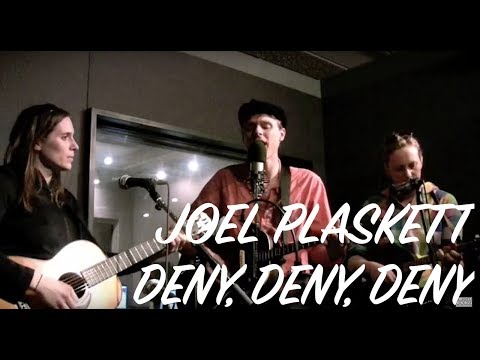
0:00Do the... Okay. We're almost there. So I listened to the record today. Oh, right. I took forever to get to it, but, you know, with my job, it's like one record for you kind of... Yeah, yeah, yeah. ...the whole thing. All right, I'm excited to talk about it. Oh, cool, man. Awesome. Not quite as daunting as Three, but still daunting nonetheless. Did we talk around Three time? Yeah, you came in and you did a sick version of "Deny Deny Deny." Oh, yeah, yeah. Right, I remember it now. Okay. Yeah, I remember it. Yeah, absolutely. Cool. Yeah, man. That's online too, right? That video? Isn't there a video of us playing that version of "Deny Deny Deny"? Yeah. Yeah.
0:45I checked out the views this afternoon, it's at like 47. Yeah, man, it's a really great video. Yeah, cool. Well, that's thanks to you, not me. I did nothing. How it ended up looking, sounded good. Yeah, it's cool. Okay, so more daunting to do this than making three records at once, or no? Different. You know, more intense, ten weeks, but then it was done. It was kind of like, you know, no, it was probably easier. Three was kind of a, like, I get pretty obsessive about any project I work on. Sure. So having at least an exit point for this project was good, you know. Okay, I'm going to work really hard for ten weeks. Was it just ten weeks though? Because it's one song a week. Did you write the songs at the same time? No, the songs were written. So I guess the thing was, most of the songs, we'd rehearsed a handful of them, played them here and there, but it was kind of like, all right, let's go to work this week on a song.
1:38And it was the first time the song was ever recorded, is what you're hearing on the record. Right, so no demos. No demos. Okay. We had done stuff live and played some songs, but I'd made a point of not demoing anything, because I didn't want to be chasing a demo. I wanted these to be the demos. You usually demo stuff though, I assume? No? Most of Three wasn't. Most of Three is all of this. Are you playing everything on Three though? I can't remember. Yeah, so it's different with the band. How did the band records get demoed as you're creating? A lot of the band records get demoed or get some pre-production or whatever, you know. But so this was an exhausting ten weeks. Like, at about week five, you're like, fuck, I got deadlines for another five weeks. Just felt like, kind of like, I was watching the video stuff and you looked like, okay. That one, yeah, and I mean, of all the songs on the record, I'd say that's probably the one that I could see my way through a lot clearer now.
2:25I went on doing it. I don't, you know, I like the song enough that I'm happy that it's on the record, but I know if I pressed record on it tomorrow, it would turn out differently. I had a question I was going to ask you about that. Now that you've been playing these songs live for almost a year now, I think, and given the fact that you had to record them so quickly, there was a Thursday deadline every time, now that you've had time to flesh them out and live with them a little more than maybe other songs in the past, are there things you would have changed? Do you play them differently live than maybe what we hear on the record? No, I mean, some of the time the record sort of guided us to the live versions, and not all of them are even getting played live. You know, there's still a few that we haven't totally tackled as a band. I play "Slow Dance" solo, but we don't do that as a band. "Old Friends," we haven't done it in a while. We were doing it a bit. But like "Tough Love" was really worked up in the studio, and that became the template on which we do it live.
3:13"Lightning Bolt"'s the one song that morphs a little bit every night. Oh, interesting. But, yeah, they're pretty, you know, what we're doing live is pretty true. I mean, I'm happy with the record, so I don't, you know. What has been happening on these shows, because Mo Kenney's opening the shows for us, has been doing a version of "Somewhere Else" where she sings it, an acoustic version. And that's pretty cool. You're just playing guitar? I'm playing guitar, and she's playing guitar. I'm playing tenor guitar, and she's playing six-string, and we just do it together, the two of us. Is that a little fun for you too? Yeah. Okay. You know, I mean, I like reinventing, I like changing things up, going electric, going acoustic, you know, kind of playing with people's expectations a little bit in terms of what they thought they were going to see. But we're digging into, you know, "Lightning Bolt"'s a big part of the set, you know, and that's why I opened the record with it.
4:04I really felt like it was kind of a mission statement. I was going to ask you that, because it's the last song you guys recorded, and the sequencing of the tracks is completely different from the way they were released. Yeah. Why is that? I thought it would make a better record. I mean, the sequence of recording week to week, I wasn't in... I knew that I wouldn't know what the sequence was until I was done the album. So I didn't want to be a slave to putting them out in the same order, because I felt that, well, this is an album, you know, at that point, you're not talking about ten singles, you're talking about an album. Sequencing just becomes a part of how to make it flow. Has there been, I wonder, because this is something new that not... Well, maybe a few bands have done something similar to this in the past, but it's still a new experiment for the industry, especially. So, single sales versus album sales? How has that worked out so far?
4:50I don't know. More people bought the songs as they were being put out there. There was more of that going on. I don't think the record has sold as much as Three had to date. But that's because people bought the singles first? I think it was because it was kind of dividing up. Yeah. You know, some people have it and they don't go and purchase the full album, or they pick the songs they like, and then maybe they don't feel like it. I'm sure I would have maybe had more initial sales of the record if I hadn't been debuting the songs. You know, if it was like, oh, finished the record, sit on it for six months. Right. But that wasn't the point of doing this. Wasn't the point. Yeah. It was the point of challenging myself and also doing something different for my audience, my core audience, who have bought the record. And I mean, I sell a lot of my records from the stage anyway. So it's like, let's go out. Yeah, most bands do, right? So I'm just kind of like, put it out, let everybody hear it, go out and tour it.
5:42And we're selling tons of vinyl. I'm selling a lot of stuff. Yeah, that makes sense. It's cool. And, you know, it's really encouraging, the reception to it. I know that it's a different record than Three. I knew it would be kind of, that was a tough record to follow, maybe, because it was just so intense. It was an intense project, and it was well received. So I knew that Scrappy had to be something kind of different. Yeah. That's like three years though. Yeah. Yeah. So I knew that it would be kind of like, oh, if I toil over an album for a year, am I going to be happy with it? No, why don't I just do it really fast? When we actually got down to it, it was like, that's just, you know... Were you writing through those three years? I guess you toured the record for a year. I'm always writing.
6:28Always writing. You know, there's always something. I mean, you know, a month can go by and there's not a new song, but then some day, you know, four ideas come and they turn into songs a year down the road. Like, I would stick to a phone and a log of just ideas that eventually flesh out into songs. I like talking to songwriters about songwriting lately in these pieces. So do you have a room? Do you have a place that you go to write most of the time? Or are you someone that can just write anywhere? I can't write anywhere, but I just, I mean, I just need some time to myself. So I'll write in a hotel room sometimes, but I'm usually too tired on tour to do a lot of writing. Sometimes I'll just get lyric ideas and document them. But I write a lot at home late at night, just in a little back room. On guitar usually, or a mando, or what?
7:14Guitar or tenor guitar. Okay. Never piano? You play a little piano, though. Not much, I'm a hack on piano. Well, enough to, you know, kind of set up. But you choose not to. Yeah, yeah. I've written a couple songs on piano, like "Television Set," you know, "Rewind," that was piano. Those are pretty much the only, and then there's a couple other ones that have never been released that I wrote on piano. They're the only ones. Everything else is guitar or tenor guitar. And I use a lot of open tunings and stuff. So I end up hauling a million guitars. I've got all these different songs in different tunings. Well, you don't want to be on stage retuning or swapping strings here and there. Try not to, yeah. Do you labor over lyrics? Are you someone who scratches out words here and there?
8:00Do you feel like what comes out of you during that initial stream of consciousness, that's what you're meant to say? Yeah, I mean, I usually edit them a little bit, but usually, once I get the meter happening in my mind, then I just, I write more than I need and then I edit out what doesn't seem as relevant. Or sometimes it's just, that was it. You seem like someone who gets rhymes really easily. Yeah, I like rhyme, and they come to me. Yeah, I've always liked the sound of language and percussion and rhymes and meter. Yeah, so I don't have too hard a time rhyming stuff. And I enjoy the challenge of, you know, trying to internally rhyme sentences, not just the end word, but working off of earlier words in the phrase.
8:49So you get more complicated rhymes, you get three words in a line that rhyme with three words in another line. What was the most daunting that way on this record? No, I really like the, I mean, I like the words to "Lightning Bolt" a lot, just because there's a lot of them, and I think, I get kind of verbose, and that song reflects that, but I like the mission statement behind that song. But I think my favorite words on the album are on a song called "Old Friends." Someone said that it was McCartney-esque in a review. Interesting. I hear it. Well, the whole tune, really McCartney. Yeah, yeah, I know. I think of it as very Neil Young-y, kind of, you know, myself, but it's sort of the one song that most people don't notice from the record.
9:37And we don't play it very much. Well, why not, if you like it so much? Slow. You know. I want to keep the set up. Yeah, or, you know, there's other songs that fill, like, you know, there's other songs that are bigger moments, like "Natural Disaster," that rock at the same tempo but maybe go... They are more direct. Sure. "Old Friends" is a song I wrote for myself and for the friends that it's about, you know. So I like the words because they're of a personal nature. Yeah, talking about rhyming, where did I read it? You figured out how to rhyme orange. Orange and gorgeous. Yeah. Yeah, orange and gorgeous. But it works. And rappers do that kind of stuff. You just mispronounce it just a little bit and it works. Yeah, well, that's kind of it. I mean, who rhymed orange one time too was Buck 65.
10:22He rhymed it with door hinge. That's right. Yeah. Yeah. I've heard him do that. Yeah. So, yeah, I mean, I love rap for that reason. I think I love the early days of hip-hop, man. Just like this really square... Yeah. Yeah. And it just, you know, go, go. You know, like that cool modey. Right. Just really, you know, went to the party too much precurting. Like, fucking right. You got the precurting wrong on this record. Yeah, I had to get that into that. I was in the middle of the lot. To the head, possibly. "Every young band wants to build The Wall, but a real rock record is like a wrecking ball." You want to make a Pink Floyd-type record like that? Was that a goal of yours when you started? No, no. Yeah, not like the... Sorry, a Pink...
11:07Yeah, I mean... A Pink Floyd lyric here. Yeah, I know. I like being asked about specifics. You know, I guess... It's all a little funny. Yeah, I like the line. I guess for me it was just the idea that it's like, you know, you're out on the road, and when you're young, there's a million bands playing. There's always young bands coming up. Sure. It's great. Everybody in every place has aspirations, or has the dream of it being something big. Right. The actual alchemy of that happening is kind of for a chosen few. It might have to do with the timing. It might have to do with the talent. It might have to... Or the reception. Are you talking about the popularity of the record or the creation of it? I'm talking about both. Okay. I'm talking about not so much the popularity.
11:53But, you know, I guess more like, I mean, in the idea of it relating to Hüsker Dü, as I mentioned in that song, you know, and then... They were a very influential band, but not everybody knew who they were, but the power that record was in is perfect. Every band wants to build, like, wants to make the perfect record. Like, uses The Wall as, like, perfect or something. Like some big composed thing. Sure. But sometimes just a punk record comes along and blindsides. You know what I mean? A rock record is like a wrecking ball. It's like, sometimes it's just like Nevermind. It just kind of blows away everything that came before. Yeah. They didn't know what they were making when they made it. They just made it. So that's for somebody else to determine. But sometimes history allows, you know, sometimes a band finds its place in that.
12:42I'm not suggesting that I'm one of those people, but I just mean, I think that there's, some things are just heavier than others. And I don't mean musically heavy, sonically. I just mean, sometimes it strikes a line in something. And what means a lot to me doesn't necessarily mean a lot to somebody else either. Sure. So it's all a personal thing. But, you know, I just believe in the power of rock music, I guess, with that line. There's a quote. There's a quote that I get in here. That's good. So your dad's on the record. I saw a video of him playing with you. Does that happen often? I mean, I know you toured with him last time. He played a lot on Three. He played on... Oh, you know the story? He sang on Three. He sang on Three. He played a bunch on... Oh, no, he didn't play a bunch.
13:27He played at the end of the Down at the Khyber record. He played on "Light of the Moon." He played on "Medical Attention." He didn't play on La De Da. He didn't play on Truthfully Truthfully or Ashtray Rock. But throughout the career he's... But he's always been... So what made you think, Dad, coming on this one? Well, I just, the nature of that song, I knew his guitar playing would complement it. Yeah, he's a really steady guitar player. Yeah, nice. Finger-picker? Good finger-picker. Yeah, he's really good at it. Obviously that's where you get everything from. Your dad was playing these around the house. He was. Yeah, that's where I get a lot of it from. When did you get a guitar for the first time? 13? 14? So a little later, but not really. Yeah, he would have taught me if I wanted to younger, but I was more interested in drums, and then saxophone. And then I said... You started as a drummer? Yeah, if you call it that. I started with a drum set. Right. Yeah, okay.
14:12Yeah. And then how do you decide to bring the guys in on a tune? Because you're playing drums on one of the songs, I saw in the video. Do I? I want to get it right. Do I play it on "Slow Dance"? I tried it on "Slow Dance," but then Dave came and saved the day. More than on the earlier ones? I remember that earlier, in terms of recording. Yeah, I tried drums on a few, but I didn't end up playing them on any of it. Any drums that are on the record are all Dave. I played all the drums on Three, you know, with the exception of the last song that the guys played on, "On and On and On." The epic one. I just, the material kind of dictates. I knew this was going to be a band record. I wanted it to be. We were all, everyone's game. And I just thought, these songs are about playing as a band, a rock record.
15:02Three was about lyrics and my story. It wasn't so much about what the bass and drums were doing. Right. And frankly, I didn't want to have to rehearse or explain what I was doing to everybody. I had a shitload of songs, and all I wanted to do was get them down on tape. And it was an experiment for me. On tape? Always on tape. Yeah. How come? Just sounds better. Sounds better, and it has a limitation. Which is more expensive. It is. Yeah. It's 400 dollars a reel. Oh, yeah. Yeah, man. It just sounds better and it's limited. It means you have to make decisions. You have to erase the guitar as opposed to tracking four more and spending nine hours editing later. You have to go, was that it? Did I get it? No. Let's start again. Yeah. That's it. Best records are made that way.
15:47I agree. Computers haven't helped anything at all. All computers have done has made more work for engineers and more work for artists to sift through their million takes. When they come back two days later because they're exhausted, and they try and sift through twelve vocal takes to determine which is the best one, and then they do a comp and realize it's not any better than the first take they did. That's my theory: for multiple choice, go with the instinct. Go with your gut. Always. "I'm Yours" and "You're Mine." That's interesting that you have both those song titles on the same record. Yeah, it wasn't lost on me. Yeah, yeah, yeah. I feel like they're brother and sister. Very different songs. Very different. But [inaudible] very similarly. They're both written on the tenor guitar, and they're both in the key of C.
16:37And they both have kind of melodic turns that are quite similar. They're arranged very differently. I actually think of them as quite similar. See, I like these. Oh, yeah, so the tour. Last couple of days you were riding off to Newfoundland. So you've been on the road for about a month? A month and a bit now. Yeah. How's it been? Well, to be fair, I've been on the road for about two weeks. I had a little break. Yeah, great. We did shows, I was out west before that. I was out in Alberta, and I had about five days at home, and I hit the road for this. And then I went for ten days, and then I was going to Newfoundland for two weeks. And did any of you guys' shows make the bass drum from this tour? No, not yet. A couple were really, really close. Huntsville almost made the bass drum, because to make the bass drum, I don't know if I've
17:24explained this to you before. No, but I know enough that I could write it in a question. Basically, to make the bass drum, it's not just about the show. It's about the circumstances surrounding the show and after the show. What might have happened later? It's about the night. Right. The show has to be off the hook, good. Great. But it also has to, there's events surrounding it, and that's what makes it. So we've played plenty of great shows that never made, that won't make the bass drum. It's usually the kind of unusual ones. It's a [inaudible], like Hobart in Tasmania. It's interesting. Just weird places that turn into a night. It's not so much the show, it's the night that makes the bass drum. I want to go with the Tasmania thing. Obviously, you're working around the world.
18:11The music. Well, yeah, we went to Australia once full band, and I went twice solo. And it was great. I haven't been back in a few years. It's a long way to go. Well, yeah, it's a long way to go. It was great. We've had some, you know, I made some fans there, and it was really good. Canada is my lobby. Have you done this? You must have tried the States a few times. Yeah, I've hammered away at the States a little bit here and there, but not in a while. The Hermit spent a lot of time there, and then we went and we opened for the Hip there. And I've gone and done some shows. But again, it's an expensive place to go. And you really got to trek on the road for that too. You got to get on the road. You don't get paid anything. And you got to slum it a little bit. And, you know, we're now having a name here in Canada, so things get a little bit easier and you can afford a little bit more comfort.
18:57So to go and eliminate that is difficult. Sure. So I'm not adverse to doing some work in other places. I do enjoy the challenge sometimes. But frankly, you know, I've no desire to retire, but what I will say, the closer the gigs get to the back door, the happier I am. I mean by the back door, I like being home too. Oh, I know what you mean. So if I don't have to go too far to play, that's all right. You know, I don't mind being a regional artist. Well, regional being of a large region. Yeah, of a large region. I mean, I have aspirations. I'm going to go to the States a little next year, and to the UK. I'm always going to dip my feet there.
19:42I want good opportunities. I'm not going to go chasing. There's no point going to the States and playing to a bunch of empty rooms. So until somebody invites you on a good opening slot, to get in front of people. That's how you need it. You need somebody promoting you, or you need somebody vouching for you, and other artists to say, hey, we want you to open. And I'm not a great opening act, because we come out and swing pretty hard. Yeah, you do. I noticed that. You can't be fun. Yeah, it would be great to play with Wilco, but I wouldn't want to be the one you're on. Don't quote me. I'll take that out. I just mean, you know what I mean? I recognize why we're not a great... We're used to headlining. So it's hard sometimes to open. The Hip was a great fit. Yeah.
20:27Well, they're such a great live show, and their fans are so hardcore. And they're really like a go live act, you know what I mean? Like, Gordon's so visceral too. So when we got out in front of them, it made sense to their fans. But if we get up in front of a band that just kind of stands there, then we look like fish in a bowl. Or we don't make sense, because the audience is used to something more chill. So if you get up there and do a really, you know... Yeah, I'd love to open for Springsteen, but he doesn't have an opening act. I mean, it's not for you, he plays four hours. Yeah. Before I let you go, because I know you got a drive to Richmond Hill. Don't put that in. I won't. I'm done in four. Maybe I'll look like a fucking asshole. We always do five questions, five quick questions, one-word answers. Road or studio?
21:13Well, you know, what's that, yin? Isn't that like apples and oranges? I mean, it's like... It's always a good answer, though. I mean, you know, you go nuts on either. You go nuts if you just do either exclusively. You know, either will drive you crazy. So you have to say both. Let's talk about the new studio just one second. Where's that at? Are you building anything? Yeah, I'm working on a new one. It's in Dartmouth, just a new location. And it's kind of being worked on while I'm gone, actually. Oh, okay. Pretty excited about it. It's going to be a lot bigger. Drywall, all done, everything? Yeah, well, it's not drywall. It's wood floors going in. It's an old vault. Yeah, so it's going to be pretty cool.
21:59Like a big old, like, fur, a furrier vault. It used to store fur coats. It's amazing. Cork on the walls. If you leave it with the fur, yeah. That'll sound cool. Yeah, it's going to be cool. It's big. It's like a thousand square feet. And obviously, it's bigger than the one you have now. Yeah, yeah. The old Scotland Yard was like 370 square feet. Oh, it was tiny. Clubhouse. But I guess that's good to keep the band tight together for the recording. Yeah, this is a much bigger space. I mean, I'm pretty excited about it. It's going to be interesting. It'll really inform the next record. Yeah. Do you know who's going to be the first band to work in it? Is it going to be you, or is it going to be someone else? No, a couple of guinea pigs. I think Sean McCann has asked me to produce his solo record that he wants to work on. Sean from GBS? Yeah, yeah. I saw him, close your eyes. So yeah, Sean wants me to produce some stuff for him.
22:44And Meredith Shaw from Toronto wants me to produce some stuff for her. I know that name. She's so talented, right? Jody Johnson produced some stuff for her. Oh, that's probably why. And she's kind of a pop writer, you know? Like, she's not indie at all. She's really pop, you know? But I really like her. I think she's talented. We wrote a song together that's really fun. I think she likes to kind of play with aspects of what I do. Sure. So it could be an interesting fit. So we're going to do that, and then start turning myself towards my own record after that, I imagine. What an incredible journey. Well, either of them solo. I love Plastic Ono Band though, if I had to pick one. Cool. Lennon's Plastic Ono Band. Right. When you hear a song, usually is it first lyric, melody or rhythm? Usually lyrics.
23:32Song you've written you're most proud of? "Lazy Bones." I think you said it last time too. You did say it last time. In one word, Joel Plaskett? Emergency. Since you're on a run with them. Alive? That's good. It's like that. That's good, man. Thank you very much. All right, man. Beauty. Thanks, man.
PRESSCoverage
- Waterloo Region RecordJoel Plaskett opens a Mason jar of memories
ABOUTThe archive
This interview is part of the Matt Schichter Interviews archive: more than 700 conversations with musicians, actors and filmmakers recorded between 2003 and 2014, beginning with The BackStage Pass, one of the first podcasts (2003). The archive also became Matt's short documentary Lennon or McCartney. Matt Schichter is now a Glasgow-based producer, line producer and music documentary director: he directed CFNY: The Spirit of Radio (PBS, TVO) and line produced Faith (TIFF and Rome 2026). His films → · UK film producer and line producer → · More about Matt →
Listen to the full archive on Apple Podcasts or Spotify.