SONGSWhat Matthew Good said about the songs
“The Fine Art of Falling Apart”
Matthew Good called this his best lyric and said the recording was a single live take.
“Lyrically, I think it's the best song I've ever written... Not only that, it's one take. It's live off the floor and one take, all over it, like, the singing in some places is just not there, because it's just brutally honest.”
“Via Dolorosa”
Matthew Good said "Via Dolorosa" was written alongside "Arrows of Desire" and carries the abandon he admires in Afghan Whigs singer Greg Dulli.
“I wrote Via Dolorosa, and quickly after that, around the same time, I wrote Arrows of Desire as well... the kind of abandon that Greg Dulli has, like, you know, when he sings completely out of tune, but he does it and it's magnificent. And in the course of that song, it's just kind of got that abandon in it.”
VIDEOWatch
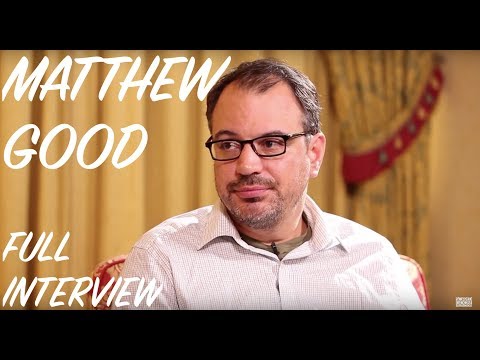
2 clips · 34:29 total
For licensing inquiries please contact reelinintheyears.com. How licensing works →
AUDIOListen
Episode #43 · Matthew GoodApril 2005 · 00:56:36
Episode #492 · Matthew Good #2March 2013 · 00:17:42
TRANSCRIPTRead
Show full transcript
0:21Do you feel it's going away? I think it's going to die soon. I think it's dying. I think that that's going to take over. Yeah, you know, it's the radio, it's like music television. So, you know, why the hell would you want to sit there and go through all the advertising? You go through everything else, and you could just get it by going online, you know. And as long as the net continues to grow and access, you know, for the majority of Canadians or whoever else for that matter, becomes easier to get, I mean, people are going to turn to it, you know, and platforms and operating systems. And I can't speak really for PCs because I don't use them, but you know, especially on Apples, it's become so idiot-proof. Why Macs? Why do I use Mac, or why is it idiot-proof? Why do you use Macs? Well, just because they're first, period. Oh, okay.
1:09Well, for recording, or just for everything in general? Just for everything in general. First of all, I like the fact that it's an open source, you know, it's an open source operating system, so that, you know, if there's anything about it that's incorrect or someone finds a problem, they can email Apple and Apple seriously addresses it, and then, you know, they'll send out an update and correct it. Where that doesn't happen with Linux-based... Well, the current Linux-based PC system. Yeah. And obviously I record with Pro Tools HD in the studio, and at home I use GarageBand just for fun, and lots of different stuff, and it's fantastic for graphics and the rest of it. I find it far better for web design. You know, you say you like Pro Tools and stuff like that. You recorded White Light Rock & Roll Review all live off the floor. Yep. Do you like doing that more than using the Pro Tools and adding all the overdubs? Is it easier to do it that way?
1:58We recorded it in Pro Tools. Oh, okay, sure. Absolutely. I mean, Pro Tools is just a format. I mean, back in the old days, when you go to two-inch, you can still overdub, right? I mean, you can still just go do the beds, like the drums and the bass, or just the drums for that matter, and then go back and do the bass, go back and do the guitars, do a million takes. You could back then, you just had to punch, right? It took the skill of a skilled engineer to punch. And not only that, too, I mean, for drums and stuff they cut tape. I mean, there's obviously that famous story of Metallica's Black record. Yeah. How every, like, you know, three quarters of an inch, the tape's cut and spliced together, drums perfect. You know, Pro Tools just makes it a lot easier for people who want to do that, and if you listen to a lot of modern music,
2:45it's very sterile, because what happens primarily is it's recorded and then a producer will send it over to the Pro Tools engineer, and he'll cut everything, you know, so it's perfect, and send it back. That's editing. It goes to an editor. So it comes back. That's very common. Not all bands do it, I'm not, you know... But I was really kind of inspired to do that record. I wrote that record to be a live record, you know, and I mean, it was more to go and play it, really, rather than sit at home and listen to it as an album. It was largely... I love listening to it. Yeah, I mean, me too, right? But it was more kind of a guilty pleasure for me, because I think that it comes across far better live than it does on disc. And I really was inspired by, we were touring Avalanche, and I had a five-piece at the time, and I'd owned it already and seen it before, but I revisited the Who's 1970 performance at the Isle of Wight.
3:36Yeah, when they go on at two o'clock in the morning. It's probably one of the greatest rock concerts ever filmed, and they're just phenomenal, and you watch these guys with just this limited technology, limited instrumentation, and they do Tommy. Yeah. And you think to yourself, how far have modern musicians gone, with all the reliance that we have on recording and everything else? Right? I mean, you know, if something goes wrong on the CD, it's easily fixable. People who don't play together. I mean, if you think about a lot of early recordings in the early '60s and that kind of thing, everyone's playing at once. And, you know, if you really took the majority of rock musicians today and made them musicians in the '40s, none of them would get work. I mean, you had to know exactly what you were doing back then, or you were out of a job. Mm-hmm. I mean, I always remember that fantastic Buddy Rich, that Buddy Rich bootleg that was floating around for a while,
4:25where he's reaming his band out backstage, and it's this... So I basically wrote the record to record specifically that way, right? I mean, I wrote all the parts knowing that everyone's just going to play at the same time. You know, it's definitely sonically a thinner album in comparison to what I've done in the past, and that's another thing I wanted to do too, you know, I mean, sonically kind of change it up. But that was kind of the motivation behind it. Did you do the vocals live off the floor too, or jam those in afterwards? Some of the songs I did, some of the songs I couldn't, because of the bleed from the drums. Yeah, right. Because if the drums, you know, you've got Pat wailing five feet away or 10 feet away from me, it basically cancels it out, or you can hear me singing through the drum mics.
5:11You know, all the amps are isolated in other rooms. So yeah, but I did, I sang Empty Road at the same time. Oh, cool. And what else did I do at the same time? I think Hopeless, I think, at the same time as well, which is a hidden track. But there's a lot of cool stuff. I mean, Blue Skies Over Badlands, we only played once, and that's that tape. We were getting sounds, and I went in and listened to it, and I just said, I'm keeping that. Just off the first take. Yeah. We just didn't do it again. Had you ever practiced it before, or was it...? Oh yeah, we'd rehearsed it a couple, yeah, of course. We'd rehearsed it, like, you know, five or six or seven times, but it was just really loosey-goosey, and I was like, forget it, I'm keeping that. Yeah. I asked a bunch of my friends, you know, a bunch of big Matt Good fans, what are their favorite tunes, and I've cut them down, and, you know, I'll just have you pick.
5:58I'm kind of... So we'll start off and play either a brand new tune from way back when, or Fearless. I'd go with Fearless. Why is that? I don't know. I think it'll last, whether it lasts or not. It's like one of two songs or three songs that I actually like. You know, I think lyrically it's a tiny bit naive, but you know, you are naive when you're, you know, 24. So I think it's kind of... I really kind of like it, its textures, I guess. You know. Cool.
9:05With Matthew Good, you just heard Fearless, from way back, off Last of the Ghetto Astronauts.
11:42I read that you started off as a folk singer. Yep. I still kind of am a folk singer. I just have a band. You ever want to go back to that, just playing the acoustic guitar in front of a crowd, stuff like that? Yeah, you know, I might next year. Oh, right. In the winter next year I might just go out and do a tour, acoustic, with coffee houses, universities, just kind of everything. To tell you the truth, I don't necessarily want it to be so much a concert as I kind of want an open discussion with people about everything. Cool. You know, about politics, but the reality, you know, of their daily lives, just, you know, kind of just an open forum. I'll play some songs and people talk, and I think that would be a kind of really neat experience. That would be cool. How do you expect to get people to talk? Just have some open mics in the crowd?
12:27Yeah. Cool. Yeah, a friend of mine, Pam Kapoor, who has worked with NGOs in Ottawa for about 15 years, and was one of the people who originally got me involved at a higher level with Amnesty in Canada years ago, we've been floating the idea for a while now. So, you know, and it would be great too, because it would just be me and a couple of guitars, and her probably handling the mic, and maybe someone else handling, you know, a web stream or something, and you could stop in a lot smaller towns. Yeah. You know what I mean? And if it was only a hundred people and that's all the room fit, then fine. That's cool. Yeah, I think it would be really, really fun, something I've wanted to do. And of course, I mean, I've got kind of a box set thing coming out, which is like a 10-year retrospective thing,
13:17before I start recording my next record. But for that record, I did nine songs acoustic, like old songs from various records, for the box set. Yeah. Oh, cool. What can we expect on that one? Let's see, on that there's one disc, I guess that's like 18 songs, like, you know, most of the singles plus two new tracks. Cool. And then another disc, which is this nine-song acoustic thing that I've done, which actually, even though it's tracked, if you let it run, it's one uninterrupted piece of music for 37 minutes. Oh, really? So all the songs are linked together? Did you record it that way? Yeah, we recorded it as one huge track, actually. And then also on that disc, the fans can get Loser Anthems and Lo-Fi B-Sides.
14:03Oh, nice. They're all on one disc. Good. And then the third one is a DVD, all the videos, audio commentary by me and Bill Morrison on all the videos. There's a special surprise, which I'm not giving away, but people will flip out. Fans will definitely flip out, I think. It's a bit of an animated thing. Then there's, I believe on that disc as well, I think they're working on, I filmed the making of that acoustic nine-song thing, so I think that's on it, and a couple other surprises here and there. That's cool. That's a huge thing coming up. Well, it's great too, because I think it's going to be around 25 bucks. Oh, that's great. Which is a steal. Yeah. You know, and that was hugely important for me, that it be that price. Do you help pick the prices for your music?
14:49Well, no. I mean, Universal has to set them, and then obviously they set them for when they go to a music store, and the music store adds, you know, what they want to on top. But, you know, you can try to say, like, listen, this has got to be affordable for people, you know. I'm not going to ask people who are working, you know, nine-to-five jobs or two jobs, you know, to pay 35 bucks for something. Yeah, I mean, it's ridiculous. $25 for that much music and all those videos. Oh, that's great. And not only that, the package is just stellar looking. So yeah, I think it's great. You know, and so I'm really super looking forward to it, to be honest with you. I think the two new tracks that I did, the full band tracks that I did, are awesome. So yeah, it'll be fun. So you're also working on a third record, for you, just the solo career? Yeah. Oh, yeah. So are you guys in the band, Ryan and Megan? Actually, I just played one show with Ryan and Megan. Oh, okay.
15:39I just did the one out there. Rich and Christian at the time. You know, being a solo artist, I have the ability to kind of just switch players up and try different people. For the two full band songs that are recorded for this package coming out in September, I used them in the studio, like Ryan plays in the studio, he plays guitar, Megan plays bass and stuff, and they had stuff to do this summer anyway for Limblifter. So, you know, the timing didn't work out at all. But in the future there's lots of people I would love to work with on record. I mean, I'd love to work with the Good brothers from the Sadies. Yeah. There's lots of people I've got to work with. So my next record is going to be kind of, I think, a little bit more bizarre than people are used to from me,
16:24which is one reason why I kind of wanted to do this kind of culmination, you know, and put out, you know, a kind of retrospective up to this point. I think that there's been a lot of years of that kind of confusion between me and the band kind of thing, and I think that it'll really help let people digest the fact that it's really over. Well, you know, there were a lot of reasons behind it. How the band was put together was very politically unsound to begin with. You know, I was always the primary songwriter in the band, and then, you know, at the end of the day, man, I had a drummer who wanted to be a lead singer,
17:10and who wanted to start writing songs for records, who had never written songs before. Yeah. You know, I had a guitar player that I had to really placate with a lot of songwriting credits, to make him, you know, to make him feel involved and in control somehow, and creatively it wasn't healthy. It was a very unhealthy relationship. It actually gave me an anxiety disorder. Oh, wow. And for the last year the band existed, I threw up every day. During The Audio of Being, that's all I did all day. Was I doing vocal takes and guitar takes? I threw up more times than in my entire life. And when it ended, it completely all stopped.
18:00When the band broke up, I remember, in like November and December of 2001, me and Rick started demoing for Avalanche, and that was probably one of the greatest two months of my life, because it was just like, you know, it was like someone had been standing on you for a long time, and all of a sudden they weren't on you anymore. And not to say that those guys aren't, in their own right, really great guys. That's not what I'm saying at all. I mean, every person's family out there has a problem, and sometimes, I'm not trying to equate it with saying that families should break up, but, you know, sometimes business relationships, and that's really what the Matthew Good Band was from day one. It was a business relationship. It wasn't friends, and a lot of people obviously kind of thought that we were. Well, I think most people think that of bands, really. Yeah.
18:46Especially with your favorite band, you want them to all be... Of course. And we weren't, really. We really never were. You know, and to be quite honest with you, for eight years that just broke my heart more and more every day, the fact that I was never in that kind of band. Do you ever pick up the record anymore, take a listen to it? Oh yeah, well, I have to. I mean, sometimes, like, you know, for this little run of dates, we're going to start doing Suburbia again. Oh, nice. So I had to go listen to the lyrics. I haven't sung that song since, like, 2000, 2001. You know, or Advertising on Police Cars. How do you go and pick it? Oh, I like that song. I argue that too. How do you go and take songs like that just randomly off the old records? I don't know. It's really tough, man, to be honest with you. Two days ago, I was doing the master list in the hotel of songs, going, oh my god,
19:34because you can't put them all in a show, you'd be there for three hours. Yeah. You know, and my voice can't handle that. So it's just really, really difficult. Obviously certain people are going to come and they're going to want to hear the songs they recognize, right? Yeah. So, you know, you play Hello Time Bomb, you play Load Me Up, and we've messed with those anyway, so it's fine. But coming up with the rest of it is very difficult, and it's going to be even more difficult for the fall, because I'm going to add even a greater amount of old stuff in there that the band right now doesn't even know, and start playing that. Which, you know, I'm going to try to do a kind of tour very reminiscent of the one I did last June, where we played multiple dates in every town. Oh, smaller places. That way I can really kind of diversify every night. Yeah. And you have to play the singles for the people who show up one time, and then, yeah,
20:23I mean, going all the way up one night. Yeah, exactly. Exactly. That one night you'll hear Deep Six, one night you'll hear something completely different. You know what I mean? And not only that, too, I can probably do, you know, a five- or six-song acoustic set in the encore as well. So, going back to those folk roots we were talking about. Now let's play another tune. Fine Art of Falling Apart, or Going All the Way? Ooh, Fine Art of Falling Apart, for sure. Why's that? Lyrically, I think it's the best song I've ever written. Really? Yeah. Cool. I love that song. Not only that, it's one take. It's live off the floor and one take, all over it, like, the singing in some places is just not there, because it's just brutally honest. Yeah. You know,
21:10and that's why I decided to keep it. When I recorded that, I just walked in and looked at Zach Blackstone, who works with me, or has worked with me for a long, long time, and I just said to him, you know, I'm all over the place, and screw it. I think it gets the point across, and I think that's far more important. So nice. Here it is, Fine Art of Falling Apart. Enough Little Kevin
23:03Matthew Good, if you're just joining us. I want to talk about your book for a second, At Last There's Nothing Left to Say.
24:55You dedicated it to your dad's stories of India. Mm-hmm. How do those stories influence you musically, or maybe even in the literary world? Well, I mean, my dad is, unfortunately, I think as far as the tradition goes in my family, my brother inherited his kind of skills. I mean, my brother has the ability to sit down and just completely mystify an entire room into silence. But my dad has that ability. He can sit down in a room and start telling a story of my family's... My family lived in India for over a hundred years, my dad's family. And, you know, he can shut an entire room up just talking about the crazy, crazy things that occurred, especially when he was young, which was in India during the Second World War.
25:45Oh, wow. So, you know, I mean, there's stories of, because they lived basically in Calcutta. So, you know, they would sit up on the roofs while the Japanese were strafing the Howrah Bridge. And, you know, he would tell how the English would just sit on the roof like they were watching a circus, and Zeros were just, like, you know, buzzing over the Howrah Bridge, and then they'd strafe the Howrah Bridge for half an hour, then they'd go bomb Chinatown, because they just hated the Chinese, and then they'd screw back off to Burma. You know, and it was just very, very bizarre. I mean, there's a lot of stuff too, obviously, my dad was very young and doesn't agree with now, but just a lot of really disgusting colonial, you know,
26:30arrogance as well, that's translated in a lot of these stories, because obviously they were English, which is definitely nothing to be proud of. He just has that ability, and I don't know, it's always translated into my love for writing things. So do any of your songs have stories that are influenced from him? No, not particularly. No, not from anything directly. You ever think about using that, maybe, for any songs, about his stories? I don't know. They're really long. No, they're really long and complicated, and, like I said, he really has to tell them. I can't tell them. Like, when I tell them, it's just like, you know, when someone tells a joke and they just completely screw it up.
27:18It's the same with my dad's stories, you know, whether he's talking about India or he's talking about living in post-war London. Of course, after India got its independence in 1947, the family all had to go back to England, which of course they'd never seen. So, I mean, he grew up most of his early life, ten years, in London before he came to Canada. And so there's stories of that, you know, and then there's stories of being an 18-year-old kid working along the Fraser River for, you know, pulp and paper companies in BC and the rest of it. So he's just great at it. Cool. What's the difference between putting out a book and a record? Well, to be quite honest with you, I mean, looking back on the book, I really wish I hadn't done it at that time. I think there's just a lot of material in there that I'm not happy with.
28:05Okay. You know, you look back and you're just kind of like... I mean, like Television, for example, I think that's a book unto itself. It was a kind of really naive story, and I really wish it wasn't in there, but for the sake of content and filling up pages it kind of had to be, you know. So, I mean, there's some stuff in there that I absolutely love, and there's some stuff in there that's stood the test of time, and there's some stuff in there that I just can't stand at all, and I wish it wasn't, you know, that I just don't think is very good. If I had to do it all over again, it would probably be somewhat smaller and a little bit more focused. But it's different in that, I mean, I can't really comment on it honestly, to be honest with you, because that was such a, I don't know, an anxiety-ridden time of my life.
28:53I mean, I went on that book tour right before The Audio of Being came out, and, you know, man, seriously, that's just like being, you know, when you're so drunk you just don't remember anything. Yeah. That's kind of what it's like, except you're not drunk. Oh. So, you know, I don't know. Let's play another tune. Everything Is Automatic or Rico? Oh, Automatic, for sure. Okay. I don't know, you feel like it? Yeah, just feel like it. All right. Matt Good on the phone. You re-released Beautiful Midnight out in the States.
33:32I know you've never been one to really want to break out in the States, not a main concern of yours. No. Why is that? Well, I mean, first of all, I think my first real problem with it was when Atlantic signed us. I mean, my first record deal in America was before I was ever signed in Canada. Oh, really? Early '90s, with BMG. That was on a [inaudible]. That was, and was the product of that. I was signed by a fantastic guy named Mike Gellie, but on a company called Private Music, from Los Angeles, which was a BMG subsidiary at the time, and the company was just fantastic. Now, they didn't have a rock band. They had everyone from A to Z, from Yanni to Taj Mahal to
34:20It's Gerald, to Leo Kottke, to just tons of people, and they wanted to start a rock band. I think Ron Goldstein was the president, and I believe he was instrumental in signing U2 to Island. Oh, wow. So they really wanted to get back, like, they really wanted to do rock, and I think maybe at the time, actually, they were completely independent. I don't really even remember. BMG might have bought controlling shares in them right after they signed me. And what happened with that was, I went in to record Underdogs, and the first day we got faxed a cease and desist. Oh. And we were told to stop. So, you know, I went on forced leave for months while I legally tried to get out of the contract with them, and then I finally did, and
35:12of course they had to buy me out of my contract, and that money I used to make Underdogs. Which is good, because now I own it. So, but my main problem, because I never had a release in America with them, I just worked with them, and they were all fantastic people. I was signed by Atlantic after Beautiful Midnight came out, like a month after Beautiful Midnight came out. We released the record and went to New York and Los Angeles to do press, and I think that's when I really first noticed it, that, you know, there's kind of a cult of celebrity in the United States, and the media knows who they make and who they don't, and it's not so much based on talent as on how much you want to kiss their ass. And I find that very wrong. That's not what being an artist is about. No. And if you think that's what being an artist is about, then I really don't want to talk to you.
35:59You know, I mean, I don't even remember who the hell it was, there was this one woman that everyone just treated like some kind of golden patriarchy, and I was interviewed by her, and she was so absolutely condescending, and just so, you know, you are so privileged to be sitting here with me, having me interview you. And of course that with me just does not work. No. I just turned into the biggest dick in the world, and, you know, the label got very frustrated with me. You know, the fact that there were certain things I refused to do, you know, certain things that I thought were extremely questionable as far as how the band would be received, and ultimately they just didn't like that, and they just shut the whole thing down. That's pretty much exactly how it happened. And ever since then, I've just not been really interested in playing that game,
36:48to be quite honest with you. Now, I mean, if I could, you know, get an independent release in the United States, that'd be fun. Yeah. You know, with a label that was cool. But it's never been a high priority with me. It's never been a high priority with me. I mean, you know, if you go and play that mainstream game, you're going to go and play, you know, radio shows for free, because that's the new payola. Really? Oh, absolutely. You go and you play huge, huge festivals for nothing, your label pays for you to get there, and blah, blah, blah, blah, and you play for nothing. Yeah. So they'll spin your record. But I mean, also, just, you know, the whole festival atmosphere, you've got to think the fans are there too, having a good time. They didn't pay to get in, you know. Well, sure, I guess. A lot of them do pay to get in, though. Oh, really? I didn't know. Isn't the KROQ Weenie Roast free? Oh, I was just saying,
37:34I went to go see the Wallflowers in Boston. It was free. And no, no, that's, sometimes I guess they are free, sometimes I guess they're pay. But I mean, ultimately you have to look at it and go, you know, I mean, what's the point in the current structure of the music industry? So you're just going to live on debt. Yeah. You know, you're just incurring thousands, tens and tens of thousands, and ultimately hundreds of thousands of dollars in debt, you know, basically playing, kiting radio stations and giving them all this crap for free, so maybe they'll spin you, maybe they won't, you know, and you're in competition with how many other bands? And at the end of the day, you owe so much money that, you know, you're never going to make anything off of record sales. The only thing you ever make money off is radio, or from your publishing, or from advances.
38:23Yeah, it's stupid. At some point, artists have to look at themselves and go, you know, why do guys with business degrees, you know, or lawyers or doctors, why are they looked upon as people who deserve to make a lot of money, or that their services are invaluable? If you look through human history, I would think that probably one of the most invaluable services, and definitely the ones that mark civilizations, are those contributed by artists. No, I totally agree. Artists or intellectuals, you know, philosophers, etc. So I think that being a musician or being a poet or being an author or being a playwright or being an actor, as long as you have your head screwed on straight about it, as long as it's your passion, as long as you would do it even if no one gave a damn, that's entirely as important a contribution to anything as, you know, being a world-renowned physicist.
39:16So, but our society doesn't look at it that way. You know, especially in rock and roll, because, you know what, you should just be glad you're living the life that everyone wants to live. Is it glamorous? Bullshit. Not at all. Not in this country, man, I'll tell you that. Not in this country. There's no way, you know. And not only that, I didn't get into it because of that. I got into it because it's intrinsically what I am as a person. It's what I do. Yeah. I have no choice in the matter. So, you know, I do it anyway. When did you first pick up a guitar? 20. Hmm, that gives me a little inspiration. It's all right, some music now. I was 20 years old when I first started playing the guitar. Before then, I was a writer first, and painted quite a bit. I went to art school. Oh, cool. And
40:04everything, as well as privately studying history and political science, because my parents and I just didn't have the money to go to university. So, you know, all those things, there was basically self-education, something of course that I continued with and do every day of my life. But, you know, I mean, as far as the United States is concerned, you know, I mean, a lot of people in Canada have always looked at the United States as, if you don't make it there, then, you know, you're basically not worth your salt. And what I want to know is, you know, why don't they have that belief in England? Why don't they have that belief in Australia? Yeah, they don't. You know, there are plenty of bands who do fantastically well
40:52in the UK that never do a damn thing. And look at Robbie Williams. Yeah. I mean, he can't get arrested in the United States, and he can sell out Wembley three nights in a row. Or in Europe for that matter, you know. And there are plenty of bands from Australia, Powderfinger, and plenty of bands from Australia, exactly the same way. So how come that isn't... I mean, that is the case in some respects in Canada, you know, with even some people such as [inaudible] or the Hip or whoever, you know. But I think that we do ourselves such a massive disservice by discrediting ourselves. We have such a potential for such an unbelievably powerful insular music community and scene in this country that if it was properly supported and actually taken seriously,
41:39yeah, it would probably be one of the world's best. Why do you think it's not taken seriously? A lot to do with the media. Yeah. In this country, a lot to do with jackasses who write for dailies. They talk about, you know, well, you know, they didn't do well in America. Yeah. Or X, Y and Z, or, you know. I mean, I have no idea why the Arcade Fire is not the biggest band in the world. I have no idea why Leslie Feist isn't Madonna. They should be. Oh, I agree. You know, it's starting, though. I mean, the Arcade Fire is starting. They're huge in Europe. Yeah, well, of course, but not America. Not in America, and really not in Canada. I mean, they do well here, but I wouldn't go as far as saying huge. Yeah, that's true. But who wants to be huge? You know, a band like that, it's very tricky.
42:25You get all the tastemakers and everybody saying you're the greatest thing since sliced bread, man, and you've only made one record. Yeah, that's dangerous. You know, and I'm sure that they're, you know, I hope that they just basically don't feel any pressure. I hope they basically just go, fuck it, we're going to do what we want to do. If people like it, they like it. If they don't... I'm sure, though, I'm sure that's what they'll do, whether it's them or Stars or whoever. You know, that's what's fantastic about a lot of these bands, whether it be Broken Social Scene or, you know, a lot of the bands on Arts & Crafts, for that matter. I mean, it's just fantastic to listen to fresh-sounding records. Yeah. I go, this is fantastic, you know, and why isn't this being far more celebrated? Why's Tom Cochrane playing Live 8? You know, and forget [inaudible] being at Live 8. I mean, it's just like, seriously.
43:14You know, what did you think of the lineup for Live 8? I think it was kind of a massive disservice to Canadian music. Like, what the hell is DMC doing on the bill? Yeah. You know, just talking from a purely musical standpoint here, because I just disagree with it as the concept of the show anyway. But you disagree with the concept of the show? Absolutely. It's giving money to Africa. It's not giving any money to Africa. Well, they're trying to get it over there. No, they're not. In May or June, 55 billion dollars of debt relief was given to the 18 poorest countries in the world. The finance ministers for the seven of the G8 countries, G7, G8 minus Russia, made sure that in that agreement there were privatization stipulations, which basically mean that they're going to make more money than the debt they forgave.
44:03When you exploit the third and developing world, that is the problem, not throwing money at that problem. What do you think's the answer? Stop exploiting the third and developing world. There's a reason why Africa is the world's most lucrative investment region. It's because, I mean, if Africans were allowed to nationalize half of their industries, you know, if Shell didn't go into places like Equatorial Guinea, or other companies, and basically take advantage of questionable governments to... You know, look at the diamond trade, for that matter. Why don't they nationalize that? Why don't those countries that have that ability nationalize that?
44:50I mean, but no, right, we get to exploit it. It doesn't matter if it's Africa, it doesn't matter if it's the Far East, it doesn't matter if it's Central or South America. Our society benefits from exploiting other people. Yeah. You go to Mexico on vacation and you pay three hundred dollars US a night to stay in a hotel, and two miles away someone's living in a house with a dirt floor, and they don't see anything from the fact that you're staying in a five-star hotel. That's the simple reality. So you can't address this problem. And with Bono and Geldof basically saying that that package was a little piece of history, it does nothing but legitimize criminals. All it does is... to those working to actually really address the problem.
45:38You know, I mean, you can't, when Africa is basically a dumping ground for European agricultural goods and farmers there can't get a fair shake, you know. We keep these people down, and not only that, you have to throw hundreds of years of colonial, you know, colonial rape and exploitation on top of that as well. You know, I mean, and then we wonder why everything is so backward and convoluted. I mean, find me one region of the world where the white man suffers from this problem. Nowhere. That's the answer: nowhere. And there's a reason for that. We're the world's foremost exploiters. Yeah. Right? It's because we went all over the world and either subjugated people or eliminated them,
46:27or forced religious and social-political beliefs on them. I mean, we live in a continent that was founded on genocide. Central and South America, same thing. Yeah. So I know you feel very strongly about that. You feel very strongly about a lot of other political things. Have you ever thought about getting into politics? Well, I've been approached about it by several people, but I don't know. I really don't know. I mean, you look at a guy like Chuck Cadman, you know, agree or disagree with the fact that he was aligned with the Conservative Party to begin with or not, but you look at a guy like that who can make a difference in certain things, and you go, well, you know, maybe being an independent MP wouldn't be that bad an idea. Yeah. You know, I can't really say. I mean, it would obviously be a massive life-affecting decision for me. It would be very interesting, too, because first of all, I would refuse the pension,
47:14because I don't believe in it. Yeah. And, you know, I would probably refuse my salary, being what it is. I would probably, basically, because why should my constituents pay for me to have some overblown salary and an overblown travel budget? Yeah. You know, basically live honestly within your means to do your job, and basically just the amount of money that you need for that, and then return the rest. All it does is raise taxes. You know. If there was an election tomorrow, who would you vote for? Oh, I don't... When I vote, I don't really adhere to looking at it from a federalist standpoint. I think of my constituency first and foremost. So basically what I do is I start emailing those people running for my riding, and unfortunately this time
48:02I voted for Kennedy Stewart, who is the NDP. That's not to say that I back the NDP. I just felt he was stronger than the Green Party candidate. I voted Green in the provincial election BC just had, but I voted for Kennedy Stewart because I believe he could have done a great job for Vancouver, and I don't think he'd fry. I, you know, I think Vancouver Centre, it's all about big business, and we have such a horrible problem with the Lower East Side in Vancouver. I mean, it's the world's largest heroin port, for Christ's sake. Oh, really? Oh yeah. You go from uptown to the Lower East Side, it's like walking into a whole other world. You know, for Christ's sake, on the Hastings corridor they park fucking ambulances on the side of the road. Oh, wow. You know, it's just [inaudible], and then the Olympics are going to come in 2010, and the same thing's going to happen to those people that happened to them during Expo 86.
48:50They're just going to get pushed further down, so slumlords can paint, you know, throw a new coat of paint on the hotels that are usually just shitholes, so people from around the world can come and pay overinflated prices, you know. There's such massive problems, and our mayor, who's fantastic, Larry Campbell, is now resigning. You know, but I think you have to think locally first. Yeah. If the person who you think can do the best job happens to be a member of the Conservative Party, then so be it, you know. But you have to go with, you know, what your gut and your heart tell you to do for your area. That's the only way that federal politics will ever be positively affected. That's the only way. Electing people of conscience is the only way that will defeat the fact that party leadership controls
49:42national policy, not individuals, not impassioned individuals, not people like Mike Pearson, not people like, you know, Pierre Trudeau. Choose another song. Let's start a protest song. Let's see, that's kind of fitting for now. Or Truffle Pigs? Ooh, Truffle Pigs. I love that. You
51:20We do something we call five questions, huh? Just five quick questions, one-word answers.
54:41iPod or CDs? Alcohol. If you could change any law in this country, what would it be? I really don't know. That's a tough question. Probably I'd raise the tax rate for corporations. Good. Song you've written you're most proud of? Avalanche. Alert Status Red video, a little bit of commotion, some controversy. You pulled it for a little while, you put it back. How do you feel about it now? You know, that video for me was just, it was, it took part in my [inaudible], but it was just a clusterfuck. It wasn't my intention to even have that footage in, to begin with. It was shot, and it was just such a calamity, because I work with people that, I mean,
55:29I mean, Bill Horace in the past, we took tons of stuff on digital handheld, right? And I've worked with people who are all used to, you know, the cushy life, shooting on 35. And when I put him in the position of trying to do it, it was very much my fault, thinking they could pull it off, and they couldn't. So at the end of the day they kind of had to make a video out of whatever they could, and they're the ones who kind of put that in there. It wasn't my intention whatsoever. And what is Buffalo 7? What is it? Buffalo 7 is in reference to a picture that I used to have hanging in my apartment. Yeah, it was a picture of seven, basically seven, like, cowboys, you know, basically from the American West, and it said Buffalo 7 at the bottom. And I used to kind of look at it. It was like the last thing I'd kind of look at before I'd go to sleep.
56:17Mm-hmm. It's just kind of a relation to one's time and one's life. It's very much kind of a personal, inside, personal comment. So let's play one more song, either Buffalo 7 or Empty Road. Ooh, I'll go with Empty Road. Cool. Awesome, Matt Good. Thanks so much. Thank you very much for having me.
0:06I'm Matt Good and you're watching MSN Exclusives. I'm watching the football. Soccer, I don't do football. Do you call it soccer? I call it football, because of my dad. Okay. Because my dad refers to it as football, he doesn't really refer to it as soccer. Right, that makes sense. Is he an Englishman? Yeah. Okay. Yeah, that way. Yeah, so which is confusing in our house, because my father's also a very die-hard Seahawks fan. So, you know, whenever he refers to,
0:53like, North American football, he'll just say Seahawks. So he just went in for the sport, he just says Seahawks. The Seahawks are playing. So that's amazing. Yeah. So, coming in here, watching you watch football, sorry, it reminds me of Giant. Like, it takes me back to that record. And I was thinking, I was listening to an interview while I was researching this, from when the last record came out, you saying, I don't do videos anymore, they're too expensive, it's not worth it anymore. But you seem to have figured out a way to do it for this record. Well, what happened was, when I went over to do some shows in England, Dave, who's shot a bunch of stuff, from like Madonna to Rihanna to whatever, like footage, concert footage and that sort of stuff, he kind of put something together, and he had contacted me privately and just said, you know,
1:39why don't we just have some fun? And then my record company got a hold of it, and they were like, how about we pay you to shoot the show? And so they shot the show, and he shot me doing some stuff, like I went out into the audience and sang Load Me Up, completely acoustic, like in the middle of the floor, and he shot that, but he also filmed me walking from the hotel to the show. So, you know, I guess, up until this time, I didn't really realize that the whole lyric video thing was a really new, popular thing. You're a big technology guy. Yeah, I know, I was just completely out of the loop on that. They were like, well, let's do a lyric video, and they came up with one and it was pretty cool, but then they put that footage together and they liked that better. So they put that out,
2:24which of course has nothing to do with the song or anything like that. But, you know, I don't know, it works. Yeah, I enjoy doing videos. I enjoy doing videos if, you know, obviously the budget's there to do them properly. You want to talk about that song? Because you're doing, like, a different... I was listening back to that song, I don't know, three or four times today, and it almost has, like, a Dylan kind of cadence to it at times, just the way you're speaking the verses. Yeah, if anything... And I mean, that is a compliment. Oh yeah, thank you. If anything influenced that song, it's Debaser by the Pixies. Okay. Right? You know, one, two, three, she's a real thing. Like, that whole verse is brilliant. Right? So if I lifted it from anywhere, it was from that.
3:10All right. I didn't mean lifting, I just meant, like, it was... Yeah. Well, yeah. Yeah, definitely. I haven't done anything like that before. Maybe 21st Century Living on Avalanche is a little bit like that. But yeah, I kind of was pretty inspired by Charles, you know. I hear also the Afghan Whigs, very inspiring on the record. Yeah, well, I mean, both of those bands have been kind of, you know, huge inspirations of mine for a long time. So, I mean, more so, obviously, the Pixies when I was, you know, younger. I mean, Doolittle came out the year I graduated from high school. So, you know, there were the EPs before that, but, you know, the Whigs didn't really arrive on the scene till about 1990, 1991. So if the Whigs inspired Via Dolorosa,
3:56how did that song inspire the rest of the record? If that was the first one, did it? Yeah, well, I wrote Via Dolorosa, and quickly after that, around the same time, I wrote Arrows of Desire as well. So they were both happening, they kind of bounced back and forth, and they were both happening at the same time. So, I don't know, for me, with regards to the Afghan Whigs, like, the kind of inspiration from the Whigs, I don't really take direct influence, you know what I mean? Like, I kind of do what I do, but certain things influence me. I mean, like, the kind of abandon that Greg Dulli has,
4:41like, you know, when he sings completely out of tune, but he does it and it's magnificent. And in the course of that song, it's just kind of got that abandon in it. I mean, I sing in tune, but I felt that it had that abandon when I demoed it. And kind of after coming off the road with Lights of Endangered Species, I just fell back into listening to a playlist that I had of a lot of bands like that, and it's just, you know, what inspired me to pick up a guitar and write what I wrote. So how long after you got off the road did you start writing for this? Like, do you always have a grace period? I mean, this is like 13 records, you know. Do you have, like, a routine now where you need a couple weeks off and then get back into it? It really just happens. Usually, I mean, when I was younger, I'd write all the time,
5:28right? But, you know, in a hotel room, wherever, I was writing all the time. Now I write, you know, like, okay, I've got to write a record, so I write a record. And so it really, it'll depend. Sometimes I'll come off the road, and it'll be between, like, being off the road and then, say, festival stuff in the summer, and then I'll start then, or, you know, coming back, like between Canada and the States, I'll maybe mess around a little bit. Or sometimes I'll leave it until I'm completely done, and then I'll just jump back into it, you know? And how it comes out is how it comes out, right? Now, talking about the old days there for a second, I got a Twitter question from someone today, and they were asking about that first, I don't even know if that first record of demos was a thing, or History Teachers, or something, that's what it was called. That's not, yeah, that's not even,
6:13that's a, that thing, that was just a thing put together from a bunch of demos by a guy I used to do some recording with, and who played piano for me for a little while. And he put that together, and I had nothing to do with it at all. Well, except for writing the songs. Well, yeah. And singing the songs. Yeah, but it's not something that I would have ever had, you know, released or accessible to people. That was the question: will you ever release it, or re-record it, was the question. I was like, I don't think he'll re-record the songs, you were only like 16 years old. No, no, I don't. You know, they're highly naive, and, you know, everyone has to start somewhere, and, you know, you learn your craft, and yeah, they're not very representative of what I...
7:00I mean, I hate my first actual album. So do you never touch the songs live, even though you know people want to hear them? Off Last of the Ghetto Astronauts, the only thing I play live, if I'm playing acoustically, I'll play Emissions of the Omen. That's the hidden track. It's the only song off that record I play. Interesting. How do you come up with a set list now that there are so many songs people want to hear? And obviously you want to play the new stuff too. With a band, it's very difficult, because you have to kind of choose your poison before a tour, rehearsing it. What I do is, with new records, we know every song from a new record. So we can play, you know, that. Do you bring the same guys that play on the record on the road? Well, on this record, they played on the record. On previous records, I played everything except the drums.
7:48And then I'd have other people come in and maybe do some guitar, like play a guitar solo that I'd written, but play it in a different kind of way, so it's not obvious. Let them get their own feel. Yeah, yeah. The band that I play with now, they played all their stuff on this album, because I produced it as well. And I've self-produced several times in the past, but I was also playing everything at the same time. So I thought this time it would be better if I would just do my bits and I could produce it. So, well, how does that change... We'll get back to what you were saying. But how does that change the process? Must be so different, then. Oh, it's a lot easier to produce. Well, I'm sure it is, right? Because you're sitting there. Yeah, because you're sitting there kind of going, you've just done a take of bass, and you're just like, well, how about that? Yeah. And I'm notoriously, especially when I self-produce and I'm
8:39working primarily by myself, I'm notoriously very fast at what I do, because I'm the only person. I'm like, okay, yeah, we got that. Okay, yeah, we got that. Okay, yeah, we got that. That felt good. I like that. I like how that sounded. Let's go. And then when you use other people, you have the greater picture in your head. So it's more, obviously, discussing and translating ideas to them, with regards to, like, I really like this, or maybe they'll put a little twist and a turnaround, and you'll be like, yeah, let's explore that. So what song changed the most on this record from the demo you had? What did the band really bring to this record? Well, a lot of Anthony's Moog stuff was on
9:27songs like Garden Knives and that sort of thing. The middle bit in Letters in Wartime wasn't piano originally, it was still guitar. And then in the middle of that I decided I didn't want to go with guitar, and I asked Anthony to play the guitar line on a piano, which he did. And so that ultimately changed. Jim came up with a couple of really great guitar ideas. And Milos came up with some interesting bass stuff as well. Nothing that really left the path of what I'd laid down originally, but that expanded on it in certain ways too.
10:14And you have to remember that it all depends on matching stuff up, like a player will always play... Milos is playing along with Pat when he's playing drums. On the demos, I'll have played the drums. So when I get a drummer in to do it, obviously I'll go through a song, produce him, and talk about what kind of fills I want where. And then someone like Milos will play to those fills and that sort of thing. Yeah. What's the fastest you've ever done a record by yourself? Like, start to finish? Well, I mean, I made Hospital Music in three weeks. Really? Oh, and there's a lot of full band songs. I always think of that as a slower record for some reason. Yeah, I know. But there's 15 songs or something like that on the record. Yeah, that's probably the most.
11:00Why did you feel so rushed to do it? I didn't feel rushed. It just did. That's just how bloody fast I did it. And that's a good answer. Okay. Now, I played everything on that record, actually, except for Rod's guitar solo on Champions of Nothing and Ryan Dahle's guitar part on Devil's in Your Details. I played everything else myself, including all the keyboards and everything. But I just, I don't know, I just came in and worked from 11 in the morning to midnight and got it done. Right. Social media. Just want to switch it up for a second, because I had that Twitter question. And I liked your post today. And yesterday, you spelled Miley Cyrus wrong and then were like, whatever, I don't care. Good.
11:45But then you defended it today. And I was totally in that same boat of, why are people talking about this? Why is this the big news story yesterday, when there's so much other stuff going on in the world? And I know, it's kind of pathetic. Really? I mean, I don't see that she did anything different than anybody else. Isn't this the point of the show, to be risque and to be the person that everyone's talking about the next day? So you have to go crazy? Yeah. Not go crazy, that's the wrong word, but go extreme. You know? I mean, we forget all these things, right? We forget that Elvis Presley was, you know, I mean, called every name in the book by everyone for simply gyrating his freaking hips. We look back at that footage now and it's the most harmless bloody thing you could imagine. You know? But it's this well-dressed kid with an acoustic guitar,
12:33you know, singing completely inoffensive songs. And, you know, I don't know. It's interesting. And of course, probably 20 years from now, they'll look back at what we thought was offensive now, and, you know, think it ridiculous that we thought it offensive in the first place. But, you know, I mean, I just find it interesting that her performance is what's critiqued. People don't look at the song or anything like that. It's just, well, what she did. And obviously that was a fact. I mean, you come out of the Disney kind of corporation of being a child star, and you've got to do something to sustain a career. And one way to do it as a young adult, obviously, is to play up on, you know, that whole sexuality thing, right?
13:22And hopefully capture, you know, a late teen, early 20s market out of it, because what are you going to be, 30 and still have the tween market following you, you know? All those kids that grew up with her that were tweens are all listening to different music now. And, you know, they don't want to hear Hannah Montana. You know, they'll be like, oh, I remember when I was eight, you know, Hannah Montana. So, but then again, it's difficult also for me to comment on it, because I have no frame of reference when it comes to things like that, you know? I didn't grow up in a place that, or with that kind of, you know, I don't even know the word for it. All I remember is, I remember when Zeppelin,
14:07the last time Zeppelin played Vancouver, all the older kids in the neighborhood came home with those blue shirts with the Zoso guy on it, right? And being so jealous that I was just a little too young to go. And, you know, that's how you learned about music back then, right? I mean, you know, Back in Black came in the mail practically, like those little samples or whatever, you know? I mean, that's how big that album was. You know, there was no them playing some music award show or whatever. And if they would have, it would have just been them playing, you know, Back in Black or, you know, You Shook Me All Night Long or whatever, right?
14:52So, I don't know. It's kind of a weird thing, you know? There's so many artists out there that do it, that people are just caught in this whole thing. Like, she was this, you know, highly controlled brand, and then now that she's grown up and can't be that brand anymore, what is she supposed to do? Like, turn to Christian gospel so everyone will be really happy about it? And, you know, I don't know. I really don't know. I don't know what to say. I mean, I like the answer. I'm happy with that.
15:38I think, and you said in there, 20 years from now, it got me thinking about that future blog post you wrote, where you talked about being in an old age retirement home at 65. I can't see you doing that, because I don't think you can... Would you be okay with never playing music again at 65 and just... Well, it doesn't mean I'm performing for the oldies in that room. Yeah. It doesn't mean that I, you know, we can go to the rec room and have a little bit of fun, but hey, man, three meals a day, you know, china service, excursions. Excursions. Oh, I'm not the only one that's in on this. Well, my wife wants to do it too. Could you, you'd be happy not making records and not going on tour again? You see, if I could live in a retirement home and just hang out, like, Cocoon style. Hell yeah. Come on. I mean, it's kind of like being on a cruise ship, but it never moves.
16:26Come on. Isn't that the goal? Isn't that what we all live to do, is to retire? Well, there's the George Burns way of just going all the way. Well, you know, you can do that too. I mean, obviously, yes, I'm an artist and I'll be an artist till the day I die, but, you know, obviously I meant that more humorously. No, I know. And I say that more in the context that I probably will just never have the financial freedom to actually ever be able to do that, because those places are pretty expensive. Yeah. Anywho, five good questions, one-word answers. We've done this before, but it was, okay, years ago. So I wonder how it'll go. Okay. Okay. Road or studio? Oh, road. Lennon or McCartney? Pardon?
17:11Lennon or McCartney? Oh, Lennon. When you hear a song, what usually hits you first: lyrics, melody or rhythm? Lyrics. Song... Oh no, we changed it up recently. If someone's never heard Matthew Good before, what song do they start with? Oh, Non Populus. In one word, Matthew Good? I'm shaking my head right now. Thanks, man. I appreciate it. My pleasure.
ABOUTThe archive
This interview is part of the Matt Schichter Interviews archive: more than 700 conversations with musicians, actors and filmmakers recorded between 2003 and 2014, beginning with The BackStage Pass, one of the first podcasts (2003). The archive also became Matt's short documentary Lennon or McCartney. Matt Schichter is now a Glasgow-based producer, line producer and music documentary director: he directed CFNY: The Spirit of Radio (PBS, TVO) and line produced Faith (TIFF and Rome 2026). His films → · UK film producer and line producer → · More about Matt →
Listen to the full archive on Apple Podcasts or Spotify.