Lennon or McCartney? Joe King, Isaac Slade, Dave Welsh, Ben Wysocki answered: McCartney, Lennon, McCartney, Lennon. Watch the moment. See every artist’s answer. Take the quiz.
SONGSWhat The Fray said about the songs
“Turn Me On”
The Fray slowed the song down after it fell flat in a stadium while touring with U2.
“It was really fast... So we went back to the studio after we played it in the stadium, and it just wasn't working. So we slowed it down and made it a little more Al Green.”
VIDEOWatch
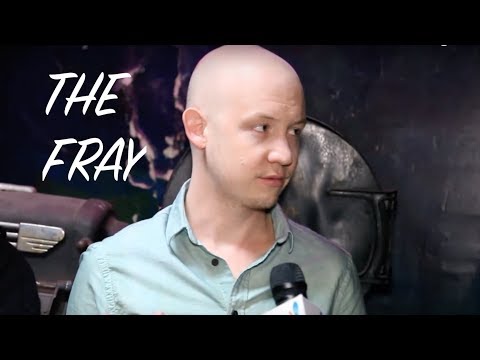
5:50 total
For licensing inquiries please contact reelinintheyears.com. How licensing works →
AUDIOListen
Episode #102 · The FrayApril 2007 · 00:08:30
Episode #318 · The FrayJanuary 2012 · 00:05:49
TRANSCRIPTRead
Show full transcript
0:00Did you see the... Yeah, good movie. Yeah, exactly. I think that kind of turned us on, really. I like the S&M stuff. Yeah, that's cool, with the symphony. Would you ever do that, do a show with the symphony? Have you been asked? We've done stuff with a quartet before. Okay, cool. Oh, yeah, for a man Wilbur. Yeah, that's cool. Yeah, you're working on new material. Would he produce something new for you? I think that'd be pretty cool, you working together. I don't know, together very much. Okay. I mean, you know, I think you're at that stage as a band where you can pretty much get anyone to produce the next record if you want.
0:48Please. Have you seen Grey's Anatomy? It's interesting you mentioned that, because, well, obviously it was gonna come up, right? I talked to Ben, I was telling you, at the Troubadour probably about a year ago. So before, you know, "Cable Car" was big, but not the way things happened over the summer. It must have just been one hell of a trip for you guys. Fast for us. You're playing amphitheaters this summer. A couple of years, and we've all gotten married, and Joe had a second kid. A lot of big changes in the span of 20 months. Yeah.
1:37You know, a couple of songs on the record are pretty old now, like "Vienna's" what, 2002 or something like that. "Hundred" is pretty old too. What's the deal with new material? You guys working on stuff? The record's been out now for what, two years now, something like that? Almost a year and a half. A year and a half. New material is slow coming. It's just a totally different animal to try and find time, not only mental time, but actual, you know, physical time during the day to write new songs and practice them. Especially when you're kind of, you know, like the tour run now is just kind of a hodgepodge rolling tour of a few random... Random, we-like-this-country cities. Random Vegas dates, a London date, go to Arizona and play a date, and then come home.
2:23It's like, you know, yeah, when they wrap tours like that, it becomes a little difficult, not to mention the strain on you guys, to be refreshed enough to write. So, but theoretically, after the summer, start to write more intensively? Perhaps. The new year's beginning, right? Something interesting happened on this last break. It was our first significant break in two years. The eternity of rest. I went to see 300. I've been home for a week or so, also really recently. Yeah, it was last... And I came home and I looked at my guitar and I wanted to play it, and I sat down and I started strumming it, and I actually started writing, which is totally rare these days because we're so, so, so...
3:09Songs and I'm playing music, and generally, you know, it's like the challenge. That's weird, I did the same thing. No way. Me and Greg had a very intimate day. Right, there you go. I called Greg the next time. I was like, Mr. Manager, here's the formula: get us off the road, we'll write. There you go. Any new stuff coming up in the set list at all? A couple, yeah. Who really knows if they'll end up on the album? Yeah, but for now I think they're... They are moments for us to keep it interesting, because they're still new for us, and there are moments for the audience to kind of take a mental break and rest from the songs that they've heard. They're still digging them, though. Sold-out shows everywhere, right? Yeah, it's great. You know, as much as we think that our fans must just be sick of us, you know, we still sell tickets.
3:59It's crazy. Yeah, if I were a fan, I couldn't stand our show. Because you hear the songs every day, day in, day out, right? So... But I bet you some of these people do too, and yet they're still here. So who knows? They probably already bought the tickets. They bought them two months ago thinking they wouldn't be sick of us, and now they are. You guys doing any covers in the live shows? I know you did "Eleanor Rigby" for that music thing, which sounded really great. I think tonight we might bust out a cover. Yeah. CCR. What's the... Home? There you go. Yeah, that'll sound good with you guys. I like how you're doing it with the grand piano. I saw it on stage. I figured it'd just be, you know, those little box keyboards or whatever, but...
4:46No, I really think it's really possible. It's definitely digital. Keep it as real as it really is. People need to know that. No, this one's just a gigantic digital, it just looks cool. Yeah, it sounds good, though. Yeah, sounds great. Nice. Playing with Dave Matthews Band in a couple weeks. You were supposed to open for the Rolling Stones? I didn't know it until yesterday. It was scheduled, but it didn't happen. Oh, that's why. Must have broken your heart. We were literally driving from some city to some other city. I don't even remember where it was, on the East Coast somewhere. Yeah, it was Atlantic City. That's where we were gonna play, and we were halfway there, if not closer, and we just got a call from our tour manager, who was at the venue already, and said, well, might as well turn the bus around, because
5:35Mick Jagger got sick, called off the show. Yeah, well, I would be too, man. They must be heroes of yours. Are they? Their heroes... Please, music. We're gonna be in place somewhere. You're at least five times as old as... My grandpa's my hero. Yeah, yeah. I mean, my hero, my grandpa's my hero. Okay, and they're my grandpa's heroes, so they're my grandfather's heroes. Yes, but it's a story. Yeah, cool. You gonna play any of his songs? Everything about that, you'd get shot. Yeah. We could maybe cover one of his songs before he plays. I don't know how fast we'd get booted off the stage. You'd get, you'd get mom...
6:26Who's playing bass right now? If he goes, there's Dan. How long's he been with you? So, no, Jimmy left for something, right? One show. One show? Wow. Yeah. Funny thing about the CCR cover is that he had never played it with us before last night. Before the show. Yeah, not even rehearsal or soundcheck. We were at dinner, like, well, we should probably play a cover. And I'm like, we didn't practice one with you, did we? No. Why would we do this one anyway? Oh, okay. So we threw him in the lion's den. He worked it, it was awesome. These were some people's favorite song, dude. Dude. Mentally, you think he'll stick around for a while?
7:15We're out of time. What's the... Players, yeah. We're trying to finish in a month. We're kind of coming into the end of the record cycle. So you'll go back into the studio this fall? Would one of you play bass, or would you bring someone in, in the studio? Yeah, we'll bring someone in. Are most of the songs you write bass-driven? You know, we get most of the song and bring somebody in. Cool. Ever do a McCartney, do some songs, just piano, play the bass notes on that, do something like that? We ask everybody five questions. Five quick questions, just one-word answers. iPod or CDs? CDs. Lennon or McCartney? Yeah. Alcohol or marijuana?
8:02Alcohol. Song you've written you're most proud of? Yeah. What's on... "Vienna." Oh, okay. Yes, cool, okay. And in one word, the Fray. I heard the vibrate. Distracted. Maybe distracted, yes. Vibration. Can't find the off button. It's just gonna keep vibrating. Cool.
0:00Hey, it's Matt Schichter with MSN. We're here at the Opera House in Toronto. We're gonna go in there and talk to the Fray. They have a new record out called Scars & Stories. It's out February 7th. It's phenomenal. We'll talk to them a little bit about how they may have spent some of their record company's money on traveling as well to make their record. We'll go inside the Opera House. We'll talk to the Fray. Well, thanks, guys. Thanks for doing this. You're welcome. So, when did you have time to make this record? I just saw you in Edmonton like six months ago with U2. Actually, we were right in the middle of making the record. We took a break to tour with U2, because that's what you do. Yes, when asked, of course. And, yeah, we spent about a month after that and finished it up last summer.
0:47Did being on the road with them change anything sonically with the record? Did you see anything and be like, oh, we gotta do stuff like that? Yeah, there was a song called "Turn Me On." It was really fast. We were trying to be kind of, I don't know if we were trying to be Foo Fighters, but if we were, we were failing. So we went back to the studio after we played it in the stadium, and it just wasn't working. So we slowed it down and made it a little more Al Green. Baby-making music. And that's how it came out on the record. I'm hearing from a lot of reviews that this record doesn't have as much baby-making music. So talk about the difference in wanting to maybe change it up a little, to make it a little heavier this time. I don't think we made a conscious effort to make it heavier. We certainly worked with a rock producer. You know, Brendan O'Brien has done a lot of our favorite rock records. So I think that affected it.
1:36Well, we just set out to hopefully make a better record, but I think by working with somebody different, having someone different mix it, it just naturally kind of, there's different energy. And at times Brendan had a lot more confidence in us than we did. And that was really contagious. So then we kind of just adopted a whole new confidence that translated into it sounding heavier, more aggressive, whatever. But this time it was just done more confidently. How was the guitar work, Dave? Joe? There was a lot of it, for sure. Which is great. Turn him up. Yeah, we turned him up. We used big amps. I bought big amps. That's great. Have you ever recorded on a Marshall before? No, this was the first record with a Marshall.
2:23Really? How come? Just because Brendan was like, why don't we try? He was like, hey, go plug into that Marshall over there. Okay. And I haven't turned back since. And then you bought one. And Joe, you played bass on some of it too? Yeah, some of them. We approached some of the songwriting a little bit differently. We'd get in a room and just kind of experiment on different instruments. Just on a few of the songs I picked up bass, and I just kind of jammed in the studio. I went to that world. So personally, I'd always written on guitar. For this record, I started writing on different instruments. Different synths or keyboards or organs. And then that would just bring out different melodies versus just your regular kind of guitar-based song. But then they turned into kind of guitar songs. So it's unique how it came together.
3:11What's also unique is that some of the songs were road tested. You had a chance to play, what, about six of them on the road before the record even got written. So you wrote half of it in the studio, half of it got written beforehand. How did they mold sonically? Did you try and create songs that sounded like the ones that you'd already been playing? Well, actually Joe had an idea in the beginning to spend some of our budget on travel. And just spent some of Sony's money. Right. In different places besides Denver. So we went all over the place. Went to New York and New Orleans and out to Africa. So we wrote in a lot of different locations and kind of went with that mentality to sort of collect images and inspiration. And I think that made its way into the songs and into the recording process. We'd come back with a bunch of different ideas and the guys would kind of sit down and listen to them.
3:57Like this, like this, don't like this, and just start with one. So it was different for us. I liked it a lot. Who came up with the "ooh" in "Heartbeat"? The thing that hooks everybody every time they hear it? I had an initial "ooh." And then Joe didn't like the melody, so he made it higher. And that is the "ooh" that you have come to know. Higher. So how's it singing it live? Good. It's higher. It's higher. It is the first single. You didn't want it to be the single, though. You wanted "Run for Your Life," you wanted a slower song to be the first single. Well, there's always a great debate every record, at least on all three of our records that we've put out. You don't want to hit them too hard with some big, huge rock song, but you also want to be kind of
4:44Fray about it. So we really let the energy kind of lead it. And I'm really excited about "Run for Your Life." I think from a songwriting standpoint, from a lyrical standpoint, it's going to be awesome to put that out. We do something that's called Five Questions. Five quick questions, one-word answers. Road or studio? Studio. Studio. Lennon or McCartney? Lennon. Lennon. Song you've written you're most proud of? "Say When." That's two words. That is two words, but that doesn't matter. That's okay. That's a lot. Most important thing in a song: lyrics, melody or rhythm? Oh no. Lyrics.
5:30And in one word, the Fray. Yep. Yeah.
ABOUTThe archive
This interview is part of the Matt Schichter Interviews archive: more than 700 conversations with musicians, actors and filmmakers recorded between 2003 and 2014, beginning with The BackStage Pass, one of the first podcasts (2003). The archive also became Matt's short documentary Lennon or McCartney. Matt Schichter is now a Glasgow-based producer, line producer and music documentary director: he directed CFNY: The Spirit of Radio (PBS, TVO) and line produced Faith (TIFF and Rome 2026). His films → · UK film producer and line producer → · More about Matt →
Listen to the full archive on Apple Podcasts or Spotify.