Lennon or McCartney? Josh Ritter’s answer: McCartney. Watch the moment. See every artist’s answer. Take the quiz.
SONGSWhat Josh Ritter said about the songs
“A Certain Light”
Josh Ritter explained why the "certain light" line appears in two songs on The Beast in Its Tracks.
“I love that line, 'a certain light,' because I do feel that sometimes the past, like Mark Twain says, you know, it doesn't repeat itself, but it does rhyme... And so I love that line, 'certain light,' so I thought, well, I'm just gonna write another song about it.”
“Evil Eye”
Josh Ritter explained the feeling behind "Evil Eye."
“there's this feeling of, you know, wanting to curse somebody, like just wanting, no matter what happens, for them to, out of the blue, you know, feel like there's a joy robbed out of their life. That's what it feels like.”
“Hopeful”
Josh Ritter said "Hopeful" came to him one morning in the studio.
“I wrote 'Hopeful' in the studio one morning while we were in there, and I woke up early and I just had it. I had a lot of swirling lines, but then it just kind of happened”
“New Lover”
Asked about the line "There are things I cannot sing for the sting of sour notes," Josh Ritter said it was true.
“there's details about a relationship which I could never sing, because they're just too painful, you know. They're pedestrian and silly, and, you know, some of them are great memories and some of them are bad, but they all have a sting to them now”
“Nightmares”
Josh Ritter explained where "Nightmares" came from.
“I was having a really terrible time sleeping, and the doctor gave me sleeping pills, which were the worst experiences I've ever had in terms of sleeping. The nightmares were so vivid and so terrifying... there was something about that melody, it was, to me, really pretty and really, really sweet, and then I liked counterposing these really graphic, kind of hallucinogenic images behind it.”
“Third Arm”
Josh Ritter said the short "Third Arm" was inspired by a Willie Nelson demo.
“that song I wrote in about two minutes. I just thought, like, you know what, there's a great Willie Nelson demos record. He wrote a song called 'I Just Destroyed the World (I'm Living In),' that's super short and super eerie and sad, and I thought, I want a song like that.”
“Wait for Love”
Josh Ritter described writing "Wait for Love" in the studio in Sweden.
“that was one of the very first ones I kind of recorded in Sweden, and I really didn't even write anything down... I wanted it to be a real kind of Buddy Holly lyric. Very cool. You know, very simple, just about, like, you know, that there's a, you know, kind of the act of love is similar no matter who you do it with”
“Bonfire”
Josh Ritter explained the central image of "Bonfire."
“it feels happy-go-lucky, but there's also, in the middle of the whole thing, the central image of this bonfire, which is really brightly burning, very hot, kind of uncontrollable thing, which is not un-violent, you know... It feels just like a colorful scrapbook song.”
“In Your Arms Again”
Josh Ritter described "In Your Arms Again" and the real car sound in it.
“I just sort of thought, that was the feeling of driving away, you know. I just felt like the car engine in the song, kind of going by. Yeah. Like a going away, you know.”
“Joy to You Baby”
Josh Ritter talked about the kind of forgiveness in "Joy to You Baby."
“what I liked about that when I was writing, and what I felt was cool about it, was that there was a lot of forgiveness in it, but there was also, you know, it didn't feel like full forgiveness. It felt like, you know, the intent to forgive was there.”
“Appleblossom Rag”
Josh Ritter explained why he kept a rough take of "Appleblossom Rag."
“there's other songs that I've recorded on a lot of records where it just feels like, this is the one. I don't care, it's not going to sound as awesome as this, like a rough-sounding, kind of ragged thing. And 'Appleblossom' feels like a real ragged song, so it felt right.”
“In Your Arms Awhile”
Josh Ritter said "In Your Arms Awhile" was inspired by Fleetwood Mac's Tusk era.
“I wrote that a while ago, and it just felt like a song I wanted, I would listen to, like, loving, like, lots of Tusk and stuff. Some of those really simple, beautiful, like, Lindsey Buckingham sort of style thumper song”
“Monster Ballads”
Josh Ritter mentioned where he recorded "Monster Ballads."
“Yeah, I recorded 'Monster Ballads' actually in Hamilton, Ontario.”
VIDEOWatch
32:58 total
For licensing inquiries please contact reelinintheyears.com. How licensing works →
AUDIOListen
Episode #121 · Josh RitterFebruary 2008 · 00:50:26
Episode #465 · Josh Ritter #2February 2013 · 00:31:58
TRANSCRIPTRead
Show full transcript
0:00Crazy. Do you have your primary yet? Oh yeah, yeah, we had it, yeah. Vote? I wasn't there, actually. They've had a caucus, but the caucus, my parents were there for. So yeah, who'd they go for? Obama. Now you're saying it too? Yeah, I mean, but that's kind of for now. You know, I'm a Democrat. Whoever it is, I'll be all about them. I'm like Obama right now. Yeah, so, man, they won't let us contribute, so I have to buy a... Yeah, it's the only way I can give money that way. I got my Obama shirts. Yeah, it's great. It's so exciting. I'm pretty excited. Yeah, it's good, 'cause it's getting high voter turnout. People are actually getting interested now. Oh, yeah, it's kind of cool. It's great. So it's just such a nice thing, 'cause I'm gonna have to look at that face in the White House. Embarrassment for your country. I feel for you. Yeah.
0:50Josh Ritter, live in studio. Thanks so much for coming in, man. Thanks a lot for having me. Appreciate it. Second time through here. You were here last year, right? Yeah, I was here. I was doing a solo tour right around this time last year, and before that I kind of got my start with Sarah Harmer, playing across. Oh, no way. Yeah. You were just playing guitar for her, piano, or what? No, my band played with her. Oh, great. We played some shows together. Nice. Beautiful. Last time here was it just you, or is it full? It was me. So we got a full band this time, in a church too. Yeah, I'm excited. Have you sound checked the wrath of God? They're all putting the stuff together, so I was able to sneak down here and avoid lifting anything. Oh, there you go. I was just thinking about the sound in the room. Oh, yeah. Yeah, must just be phenomenal. Oh, yeah, we're gonna bring in the angel choir. Oh, there you go.
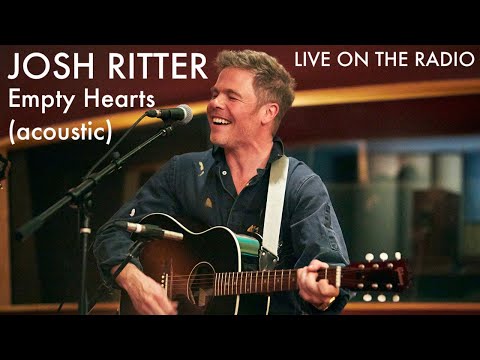
1:38Is Emm gonna sing with you at all? Yeah, definitely. Yeah. Yeah, she's a great singer. So do you know her stuff? Yeah. Well, she's coming in a little bit. Oh, she's coming at six. So I can't wait. Yeah, it'll be good. So you're gonna play some songs? Sure, yeah. It's up to you, man. Play what you want. I'll start with the, this is called "Empty Hearts." Into this year with an empty heart with an empty don't let me into this year
2:46Inside with my friends we built fires and pretend But the night could just bend on forever While outside of the frost Are the wool and we sing to the dogs? Oh Whoever Singing don't let me into this year
3:32Don't let me into this the friend that I can see all of these empties
4:18That I'm holding there too much for a man empty arms empty hands And she'll know me by the sound and I'll open I Singing don't let me into this year with an empty heart Don't let me into this year with don't let me into this year Don't let me into this you're with an empty under this year with an empty heart with an empty
5:18It's nice to get stripped down. Thank you. Yeah. Yeah, definitely. It's a big change, you know. I started playing just like, so I usually write most of my songs without anybody else around. Guitar or piano, both? I can't play piano really at all, but I play, see. You play, see, around on that? It's kind of what I do. It was a lie? I read somewhere that you wrote most of the new record on piano.
6:03Yeah, yeah, I did. Oh, yeah. I mean, I wrote almost all the songs on piano, but basically, you know, I played it real slow and recorded bits and pieces of it, and then I got Sam Kassirer, he's my keyboard player and the producer on the record, to kind of play them faster and better. There you go. He sounds like, it reminds me, when he plays like that, like that post-acoustic deal and stuff, Al Jacobs, I don't know, I think that was his name. Maybe you're thinking Al Kooper? Maybe Kooper. Yeah, Al Kooper. That's the feel I get from your records. I mean, that's nice as well. Yeah. Yeah, yeah, I was definitely going for, like, you know, I've listened to a lot of hip-hop, and I really like some of the sounds of the pianos on that, and some stuff like, you know, DJ Shadow and things. I really like that kind of dry,
6:49poundy stuff. And also there's a singer named Dorothy Love Coates. She's a great gospel singer. She has that kind of poundy stuff. I just really like that poundy piano. Yeah, it's cool. Arcade Fire-ish kind of? Yeah. Yeah, I mean, driving kick kind of stuff. Yeah, there's probably like, yeah. It definitely goes back to gospel for me. I like gospel music. It's got so much of that, big open chords. Yeah. You ever write a gospel song? Wrote a gospel? No, I don't know. I mean, I think most good music comes from religious music, but, you know, whether it's in the church, or whether it's, like, you know, the Shakers and bluegrass, or whether it's Bach. But me, you know, I just write whatever comes into my head. Maybe get a choir on the record. Yeah. Yeah, yeah.
7:36Yeah, the new one feels very live off the floor. I don't want to say that the last one was overproduced, because it wasn't, but it feels more of a live feel. Yeah, it's immediate. I wanted it to be super immediate. I wanted the writing to be pretty much instantaneous, from writing it down on pieces of paper to singing it. You know, I wanted the music to be that way as well. That just everything should be as tip of the tongue as possible, you know, having just written it. That's the moment when a song is the most exciting, is when it's being played for the very first time, for me. So I wanted to catch that moment, because I think you can hear it in a person's voice if they're excited and they're a little bit unsure of where the song is gonna go. I think that's just a really cool thing. You know, they say you catch a moment, you know.
8:21Yeah, that's what I was trying to do. Nice. I noticed you've got some sort of, like, Chili Peppers logo on your guitar. What is it? Oh, actually, no. This guitar has been with me for a really long time, and somebody dropped a pan on it and it busted through there. Oh, no way. So I'm just patching it, because I don't want to lose this thing. I understand. Pouring money into it for no real reason, but if it's your guitar, it's your guitar. Mine's been smashed in my trunk over and over. It's, you know, but it's my baby. Exactly, it's not going anywhere. It's like a paperback book. Explain to me this degree you got in university. I wrote it down: American history through narrative folk music. Yeah. Yeah. That sounds really cool. It was a lot of fun. That doesn't even sound like a real degree. It wasn't, really. I mean, it was my way of trying to stay in school and graduate, you know. So they let you stay because...
9:07Does one do this because I want to do that? Well, yeah. I was studying science, and I said, you know, I really had to do music, you know, I had to see if I could do it. So actually, to finish off college and to graduate, I strung together a whole bunch of courses that were based on the idea that songs come out of a social situation. You know, that songs come out of society. Society has a need for songs in the same way that society has a need for politics or religion or science or anything. So that if you look at a song, and then, you know, if you look closely at it and you look where it came from and what it's actually trying to say, you know, whether it's like the Andrews Sisters, or whether it's
9:55Johnny Cash, or whether it's Lupe Fiasco or anything. Yeah, yeah, totally. If you look at all those things, you see where it's coming from, you see why. You know, you can see something about the society and the history surrounding the song, and you can study that. And I always thought, you know, that nothing that I write, or nothing that anybody writes, is free from the kind of social world around it, you know. And, you know, I think it's important in this world now, in music, where every new thing is the next new thing. Yeah, especially in England. Well, and yeah, and everything came bursting out of nowhere. You know, it's important to realize that nothing comes from nowhere, you know.
10:41Everything comes from something and goes back into something as well, you know. I mean, it's just important to feel that, because it's important to feel like in your job and in your life you have some sort of roots, you know. Talking about history and all that, besides the album title, there's a lot of references on there. I mean, you mentioned Casey Jones. I'm assuming that's not the Ninja Turtle Casey Jones. I didn't even know there was one. Was he a Ninja? Well, there's a Ninja Turtle bad guy. No, he was a good guy. He was a bad guy at first, but then he became a good guy. I had no idea. Wearing a hockey mask and everything. Yeah, yeah, probably based on the old school. Yeah. Yeah, that's great. How come you decided to do basically a people's history lesson on this record? Oh, I just said what came out as I wrote. Yeah, you know, I wanted this record to be funny and pretty, like, you know.
11:30Although the lyrics I was writing, I was thinking a lot about how you could basically use these historical figures as action figures. You know, you could just throw them all together into a song. And so Casey Jones and Casey at the Bat, who are two people that are so similar in my idea. Like, Casey Jones, he died trying to get the train going so fast. You know, he was the one who said, I'm the guy that can get this train into Canton on time. I'm the only one. I can go so fast. And then he ran it off the tracks. And then there's Casey at the Bat, who basically kind of struck out. Struck out, you know, not swinging at the curveballs. You know, I just thought it was really interesting that the two of them are so similar. And, you know, there's these little things about it that I just, you know,
12:16I was just kind of cracking myself up for no real reason. You know, it wasn't a record that I thought a huge amount about philosophy on, like The Animal Years. I thought, I just want to make a record that's gonna be really fun, really fun to play live, and it's not gonna dilute the message of The Animal Years, which was much more kind of, a little bit more of a heady mix, you know. Yeah, I could see that. Oh, you look like you were having fun on Letterman. Yeah, man. Playing the song about Casey Jones. Yeah, let's play that recorded version. Okay. 'Cause I know it kicks off the record. It's got a big bang to it. Right, and perfect. Let's see. That sounds cool. Swings come to hand with the blade
14:03Boy We can wait to the war don't need to tell me to the fire sweet in the sword both the Love the rocks of the shore Funny stuff on the record. There's that line in the song you're about to play us: "kiss you where the sun don't shine."
15:58I mentioned it earlier. If I was writing the tune and I wrote that down, I'd second-guess myself after that. You'd be like, that's going somewhere different. My mom's gonna hear the record. Yeah, exactly. Did you think about that? I always think about stuff like that, and I usually think of, like, yeah, my mom is usually first in my head. But I just wrote it because I thought it was the goofiest line that I could think of. And it's a funny, it's just a funny line. It was one of the first songs that I was writing in the studio. And sometimes with a line like that, you think, well, am I gonna allow this line? That's kind of stupid. Stupid, it's like, it's a little different than everything else. Goofy. Yeah, and so you think, well, if I'm gonna allow this, then that opens up the scope of what else I can allow
16:45in terms of my lyrics on this record. And that was kind of a cool thing. Plus, like, you know, that's one of the most fun things about love, kissing where the sun don't shine. Agreed, at times. Yeah, at times. Play the song. I was gonna say something. I...
18:56I... Thanks, man. Appreciate it. Thank you. So Joan Baez has covered one of your tunes. Yeah, that must have been a thrill. Yeah, it was. It was an old tune too. It was pretty cool. She's an awesome lady.
19:45Did you meet her? She took me on tour with her when I was first getting started, all over the world. And I taught her how to play Grand Theft Auto on the bus. My first time on a tour bus and everything. That's an exciting time. And she's a rock and roller, man. Oh, I think she partied with Dylan. She's, yeah, I'd say that you would have a hard time keeping up with her still nowadays, man. She's amazing. That's awesome. I ask everybody that comes in five questions. Yeah. One-word answers. Yeah. iPod or CDs? Oh, I mean, definitely iPod, because I travel about eight months of the year, so I can't take all the records on the road. Fair enough. Yeah. Lennon or McCartney? Oh, well,
20:31this whole record, one of the major influences was Paul McCartney's Ram, I'd say. Oh, yeah, I can see that. Live off the floor kind of. Yeah, yeah, I'd say, you know, but it's like a, that's a good one that not many people know. That's one of the best records. And I'd say it's hard to, I couldn't, you know, it's hard to say, but I certainly love Ram, man. It's an amazing record. And, you know, there's "I Am the Walrus," it's hard to beat that, or "Across the Universe" as well. But so it's a toss-up. All right. Alcohol or marijuana? Oh, geez. Okay, I wasn't raised in the lush green forests of British Columbia. I know. Song you've written you're most proud of?
21:20Oh, I don't know. I never like to say, because I'm afraid the other ones will get jealous. There you go. Good. I've never heard that before. I like that one. One word: Josh Ritter. Is that okay? Yeah, yeah, that works, man. I'm a brick wall, people, look, hamburger. Okay, you know, the most random stuff. One word: rocks. Good. It's rock and roll music. It's good old-fashioned. All right, let's play something off, "Monster Ballads." That's one of the songs I like off The Animal Years. All right. What's your favorite off the record, maybe what comes up live the most for you from that one? I play all that stuff. These days I'm playing most of the stuff off The Animal Years. Let's see. How about a...
22:06Let's do "Monster Ballads." Yeah, I recorded "Monster Ballads" actually in Hamilton, Ontario. Oh, no way. Yeah, I'm from Waterloo, so that's close. Great, the home of Tim Hortons. Oh, yeah, you know it, man. We don't have enough of them out here. No, it's true. It's too bad. You gotta dig for them. But they're so good. You made me want one. I'm gonna have to go get one of them. Yeah, so let's play that, "Monster Ballads." Good tune. And where's the wire?
23:06Monster ballots and stations I'm just a gold me peers are now But they're a steamboat like you're gonna give us a cover too? Sure. Yeah. Of what? Hank Snow. Yeah, I'll do a Hank Snow song.
26:24I love Hank. "I've Been Everywhere," man. All right. It's a good tune. Do you want me to do it right now? Tell me about The Cake Sale while you're tuning up. What's that all about? Well, it's some friends of mine in Ireland. I went over to Ireland in 2001, in January, my first time, and it was kind of this bunch of people there that were just kind of getting started, kind of getting known outside of Ireland and playing around. And, you know, it was a time to meet a whole bunch of people. Like a few years later, when everybody was a little bit more successful, it was cool to make this Cake Sale record, which is just basically for Oxfam, which is a tremendous charity. And we just,
27:12a bunch of people traded songs, and that's how I met Emm. A bunch of people traded each other songs and were singing other people's songs that they liked, you know, and we just put a record together. It was just basically like the idea, it's kind of a thrift store charity sale record. Like, instead of selling brownies and chocolate chip cookies, you know, you sell this record. And it's done amazingly well around... So it was cool to be involved in it. And that's how I met Emm. She sings a Cardigans song. Is it all covers? Yeah. Okay. Yeah, what are you singing? I'm singing a song by one of my favorite bands from Ireland called Bell X1. Oh, I didn't know they were Irish. Yeah. Yeah, I love them. What's that, "Rocky Took a Lover"? That's a sweet tune. They're great. They're a great band, and, like, you know,
27:59Damien Rice sings on it, and I think Lisa Hannigan. And Glen, who brought me over to Ireland, Glen Hansard, who actually just had a big night for him the other night. So it's just a really cool idea. And how can people pick it up? Is it like an online-only kind of thing? No, you can pick it up anywhere. You should be able to pick it up here in Canada, and you can get it off of, I believe, my site, off of the Oxfam site, you know, anywhere, on iTunes you can pick it up, and the money goes to support, you know, Oxfam's projects around the world. It's awesome. Yeah. Yeah, it's awesome. Emm's amazing too. Yeah, I can't wait for her to come in. It'll be nice. Yeah, and Bono was praising one of her songs as something he wished he wrote. Yeah. Doesn't get much higher than that. It's,
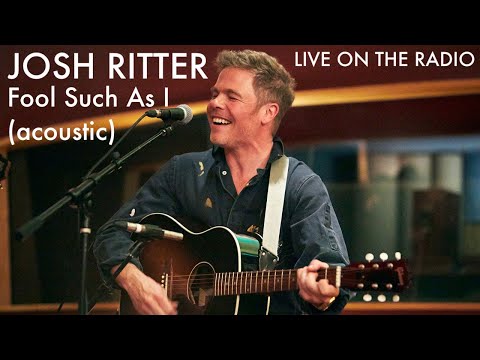
28:44it's like Dylan saying, man, I wish I wrote that. Really? Yeah, it's crazy. So you're gonna give us a song that maybe you wish you wrote? Yeah, there's a good segue. I was thinking about Valentine's Day songs that I could sing this Valentine's Day, and so that song has been running through my head. I have this old recording, I think of Vassar Clements, fiddle player, I think, just playing the violin to it, and Hank Snow wrote it, and he's from Brooklyn, in Nova Scotia. Yeah. So, one of the fastest talkers ever. I think you got a little fast talking on the record here. On your new one. All right, it's called "A Fool Such as I." Please forgive me if I'm sentimental
29:39When we say goodbye Don't be angry with me If I cry now you're gone Still I'll dream a little dream Just years go by Now and then There's a fool Such as I now and then there's a fool Such as I am Over you it taught me how The lover now you say that we are through I'm on food
30:26But I love you to do Until the day I die And now man There's a fool Such as I am now
31:15There's a fool Such as I am Over you it taught me how to love but now you say that we are through I'm a fool, but I love you I die And then there's a fool such as I am now There's a fool Such as I Sounds like one of those tunes when you see like the old the old school vinyl players just spinning and very crackly sound in the background
32:03It's a beautiful song. Nice little love song. Yeah, that's cool. I want to go through a couple of tunes on your record though, so we can play them and talk about them kind of thing. "Wait for Love." Yeah, I wrote down, like nothing I've ever heard from you before. Oh, it's just different. It's more falsetto. It's very different. Yeah, tell me about writing it. Well, that was one of the very first ones I kind of recorded in Sweden, and I really didn't even write anything down. I never even wrote, I was just, you know, the room was big and echoey, and I was just kind of sat there. I had nothing else to do, and, you know, I looked at Sam through the glass and I just kept on playing, you know, just kept on. There were a couple ideas in my head. I wanted it to be a real kind of Buddy Holly lyric. Very cool.
32:50You know, very simple, just about, like, you know, that there's a, you know, kind of the act of love is similar no matter who you do it with, but it's about maybe the generosity of it changes, you know. Nice. So was it always a falsetto tune? Yeah, it was. Okay. It was just something that, I just really liked the way it felt. I just liked the melody. It felt really like a different sort of melody than anything I'd done, and I was just trying to write something that was in kind of a blues feel but was just slowed down. That's kind of ballroom. It'd sound nice tonight. You can play it tonight? I hope so, in the church.
37:13Yeah, I think it'd be really cool. Yeah, totally, a place like that. Is that how most of the venues are on this tour? It's been a real change. You know, we were playing in Kelowna in BC, and it was like, it was like the Wild West bar. Oh, really? Like one of these old-school legions kind of. People were packed so tight, and there were little tiny balconies and stairways. It looked like a place where you'd have a sword fight. I do well. Yeah, and then we played the Commodore Ballroom, and that's a nice room. Oh, that's a beautiful place. And then we played a church as well in Victoria. So it's cool. I like the changes quite a bit. Yeah, yeah, definitely. You thinking about shooting a live DVD or something like that? Definitely. I mean, definitely, we've been doing, I try and shoot as much as I can afford, and
38:03do my, I just really love doing them. You know, yeah, fun. I just did a kind of sort of an outdoor video to "Empty Hearts" and to a song called "Overnight," which is just sort of a bonus on my record. Okay. And, well, we kind of pulled a bunch of cars together in a really rundown section of Brooklyn in New York, and it got dark, and it was looking out at the New York skyline, and I just kind of sat in the middle of the street and played this song. And it was a really cool moment. You could hear the sound of the city coming across the river. It was cool. Yeah. Nice. Talk about another tune. "Next to the Last Romantic." Crazy slide guitar,
38:50whatever the hell that thing, what is it? It's a whistle almost. It's actually an opera singer. Really? It's a person? Yeah, it's not, yeah, she's just got this amazing voice, and she, all the way, and she's like, this is amazing, just beautiful, like, singer, you know. She just kind of lets it rip. It has the real spaghetti western feel, I think. Yeah. Really fun. So the right city for that kind of stuff. Calgary can get down with all that stuff. Totally. Well, that's, yeah, actually I brought Corb Lund over to play with me. Oh, yeah. Oh, yeah, it was just this weekend. Yeah, he's a terrific guy. I just really love his stuff too. So is he coming out with you tonight? No, I don't think so. I think he's still on tour. I think he's out. Oh, yeah, he's probably the dog of the lights ahead of us on this whole tour. Fair enough. Horses and horses when hearts can't be found
40:37On how I see one how to one He and wares to be dying of her tell us not to do it and yeah
42:22And American comes up. I was like, yeah, I'm gonna do it. You know, I think the colder it gets, the more I like it. I just did a tour up in, you know, the Outer Hebrides and Shetland Islands up in Scotland. And I just like those places where, you know, I grew up in a small town, and it's pretty far away from a lot of stuff. And when it gets cold, people pile in together, and that's when the real stories happen, and the real, like, you know, community like that, without sounding like a hippie as much as possible. It's like the community, I think, is always stronger in the wintertime, you know. Yeah, definitely. It makes me think of the folk stuff, and I know the narrative folk music degree and whatnot. You can't write songs about what's going on now, like you write about trains and stuff, and I'm thinking as I'm writing songs as well,
43:08what are kids into now? Computers and internet? That just doesn't sound good in a song, to say computer. Yeah, you know, all the words, the things of the big technology, you know. Do you feel like, I don't even know what the question is. I just find it kind of weird. I always thought that some of the people, I think that there's a rare group of musicians or songwriters that can make technology sound romantic, or, well, not maybe romantic, but can give it that kind of mystery. I think, you know, OK Computer is one of the... Yeah, okay. Yeah, there's an exception. Yeah, fair enough. OE has always been, he's really been like... But I mean, you know, other than, you know, there's Aphex Twin. I mean, there's people that use technology in an incredible way, but I think, you know,
43:53I think when it's useful in a song, it can be interesting. But if it's not useful, like, you know, writing about a cell phone is like writing about a current presidential candidate, you know, or whatever. It's an ephemeral thing that will only last so long as the technology that it describes is out there and being used. It's kind of like when you look at Star Trek. You know, when you look at the set, they look kind of like, it's amazing that these guys can travel around the galaxy. We're using these Toshibas. But, yeah, I don't really write too much about stuff like technology, but I don't, I try not to avoid it, you know. I think it's like, I'd rather not...
44:41I don't want to be nostalgic, but I don't want to be like... Maybe science fiction, science fiction music would be kind of cool to work on. That'd be fun. Lots of phasers in the cue. Yeah, yeah. Well, you know, just writing about the future would be really interesting, actually. Think about it. You got sound check time to start, right? Yeah, totally. I want to play my favorite tune, "Good Man." I love it. I don't even know why I love it so much. It's just great. It just hits you. It's nice. And House used it on TV, I heard. Yeah, man. Do you think that's the future? That's how musicians are gonna make money, is selling to TV shows and commercials? I mean, yeah, you know, there's a lot of older artists who kind of look askance at using your music in commercials and things, and I have to say, you know, before I ran into the financial things about keeping a band on the road... Yeah.
45:31It can be pretty necessary, [inaudible], to be able to take your band out on the road. And you're a five-piece? Yeah, yeah. So, but I mean, I think it's great, and, you know, people hear my music. People heard that song on House, and there was something that just kind of exploded that song, and, like, you know, it helps. Yeah. And, you know, I also think that, once you write a song, it's there and it's always gonna be there. You know, maybe 10 years down the line, a song like that will be used in something, and people will wonder where it came from, you know, but it's never gonna go away, which is what I really think is cool. It's the cool thing about recording. Yeah, yeah, for everybody, forever. Yeah, yeah. Nice. Thanks for coming in, man. Appreciate it. Yeah, it's been fun.
46:18These chords are old but we shake hands I believe that they're good We can use all the help we can So many minor chords outside I fell in love with the satins we kicked around
47:05Song We got a bucket that they're bad All those glances that we stole
48:04Sometimes it was both that even his horse had disappeared. I got run down by
0:00I like how you just played "Rumors." That made me happy. Thanks. Thanks. So what's weird is that I got an email from some dude in, like, Germany or Denmark or something, asking me for a WAV file of that radio session, for a record you were going to do, I guess, of a whole range of radio sessions. Yeah. Is that happening or something? I think, like, it's definitely the sort of thing that would be awesome to do, that I don't have enough time to work on. But he wants to collect them all, and I'm sure that that'll happen. Okay. So nothing's happened with it. I was like, I wonder if the guy just wanted the song. I think it was like, you know, they want to do this thing, but it's like, I have to decide what I want people to focus on, you know, and the record coming out and stuff like that. I just don't have the, I just
0:46don't want to overstay my welcome. Absolutely. You know what I mean? You can only have so much time, right? Yeah, yeah, yeah. You can only have so much time to listen to a record. Exactly. But let's go through this one. Let's start. So the last record, I loved doing it. So Runs the World Away, you said, marks the beginning of a new period in your life. Yeah. So you put out the record, you put out a book, and now this record. So where are we in that period of your life? Well, I was thinking, you know, it's weird because it really does relate. You know, and I apologize if I haven't really talked about a lot of this stuff, so I'm really kind of rambling. That's fine. That's fine. I think one of the things I was really thinking about with So Runs the World Away was that I had just gotten married, you know. I felt like a full-fledged adult, you know. I felt like I was totally like, I was not just a kid on the road traveling
1:33anymore. I was like a man with a profession and a career, you know. And I felt like this was the moment when I started to feel very, very comfortable in that choice, and those choices that I made in my life. I felt like I put some things aside, like other things in my life. I felt like I was a songwriter, that was a big deal, you know. I felt like I was also a married man, so it was a great feeling, you know. And, you know, I wouldn't have said that out loud, because, you know, it doesn't feel necessarily pertinent in a lot of ways, but it does matter when you get married. You are saying, this is what you're doing. You're on stage doing a thing that you love to do because you love to do it, not for any other reason, you know. Not out looking for chicks.
2:20All that stuff, you know. Are you, I mean, you must be a little maybe excited or hesitant, I'm not really sure where you're at in your life, but now you're going to have to talk about the divorce a lot and talk about that relationship because of this record. I thought about it a lot as I was working on it, and mostly not because I'm afraid of talking about it. I mean, it wasn't something that was my fault or anything, you know. I feel like I was wearing the white hat in that situation. But I do believe that there is an autobiographical element of stuff, which, you know, it's fine to talk about it, but I also feel that, you know, what I do is a thing that, you know, I write about stuff, and that's what I do. And writing about myself is not what I really believe is
3:07the great goal of writing. I think writing is about exploring all kinds of stuff and having fun with your own imagination, not dealing with things that immediately happen to you. So I did think about it in that way. I felt like writing about a divorce, that was something where it was important to do it, because it was the experience that happened to me, and hopefully it won't ever happen to me again, you know. Like, this is my moment to write about something that was one of the largest experiences in my life so far, and I felt like it would be a waste not to, you know. Or, you know, when I was writing the songs anyway, to not put them on a record felt like going to the Grand Canyon and pretending that you've never seen it, you know what I mean? So you weren't worried about putting your heart on your sleeve too much? No. I mean, it came to you and you said, the hell with it. My motto in life has always been that you
3:55should get embarrassed and move on, you know. So, like, I think that happens almost every show, you know. Things happen, you get embarrassed, and you move on. And that's sort of, I think, what makes the whole thing doable. It's like, you know, rather than being in fear that something will go wrong and you'll look like a fool, assume you will, and then just keep on going. I've never seen you look like a fool. I've seen you play like ten times. You're always the happiest, smiliest performer I've ever seen. I don't feel, well, it feels pretty, like, you know, once you feel like anything can happen and it'll be okay, then you feel invincible, you know, which is a great feeling. Not because of any other reason than you're accepting that things will not go as you planned, you know, which is awesome. Yeah. Talk about songwriting, though. Do you have a place that you write? Do you have a room that you go to? Do you write on your phone? Do you write on a computer,
4:41on a typewriter? Like, what is your situation? Well, I like to think that you should be able to write anywhere. Like, certainly I do write on the computer. Some of my longer songs, I'll write bits and pieces of on paper and then move them to the computer when I need to move them around a whole bunch, you know. And then I will have ideas that I'll jot down on my phone, if I'm out running especially. I'll have an idea. I think something about running, just the rhythm of running, gets cool ideas, and stuff kind of bubbles up, you know. Just phrases, mostly. And then I do most of the writing on paper, though, you know, the bulk. It's not always the most organized writing, but it's your catch-all, you know. Do you know
5:27Ron Sexsmith? You played with him a little bit. Oh, yeah, yeah. He told me the other day that he does it while swimming in the mornings, because it's that mind-numbing activity that you can focus in on other stuff. That's awesome. So funny you say running, because it's kind of similar, I guess. First thing in the morning kind of thing. Totally, yeah. I think you probably are smartest at that, in the early morning, and get dumber throughout the day. Is that when you typically write your songs, first thing? Well, I think, yeah. Well, actually, I find that it ends up being, it happens in two major, like, in the morning, when I'm really working, when I've really got something, I've got some time, something going, I like to write in the morning with coffee. And then at night the less rigorous things will come, you know. You're kind of like, you know, if you're making a snake and you're designing it in the morning, it's the nighttime when it starts
6:12to really wriggle, you know. And that's the good stuff, the magic stuff happens at night, but the clean lines happen in the morning. I feel like this one might have been a little more nighttime, just with the somber tone of it. And the last record was really adventurous. Yeah. You went out there and you just put everything on the record. Yeah, yeah, yeah. This one is really stripped down. It's a lot of acoustic guitar. Yeah, totally. Lots and lots of it in the shows as well. Like, you know, we went from having three guitars to having about 12 guitars on the road, because there's so many different ways that we want to, as a band, play with that sound, you know. Have you been pulling these songs out? I mean, I heard you check a few of them, but... Yeah, yeah. The record's not out yet, so the fans aren't gonna know the songs yet. Yeah. But you still just want to get out there and try them. I do. I mean, I think that, you know, it's really, yeah,
7:01it's important to go out there and try the songs, mostly for us, you know. Like, you know, the band will be playing something just perfectly, and I'll be listening to them, and I'll forget, such as I did upstairs, I'll just forget exactly how I need to come in for the song. And when that happens in sound check, it makes me realize that I really need to pay attention. You know, you can fly off into the crowd, into the music, all over the place, but you've got to come back to land on something, so you can remember to do that one thing right, you know. Not that the crowd will notice, but I'll notice, and it'll bug the hell out of me until the next day, you know. So that's been the great thing about doing all these. Plus, you know, you're introducing a whole bunch of new kids at a school, you know. They've got to learn how to fit in and where to go and
7:49what, you know. Like, you've got to learn where the new songs best fit in, because they each have their own personality that needs to be slotted in to showcase what they do. And I love doing setlists. That's one of my favorite things to do, is a setlist. Figuring out the rise and fall and the narrative of a show is so important to how the show feels to people and how the show plays for us, you know. Like, somebody can't have a bass in their hand and then be expected to jump over and play the piano and then jump over and play guitar. You've got to make it so that they can move around the stage easily, and the crowd can feel that they're not getting jilted left and right, you know. It's not up, down, you know, in terms of dynamic. It's fun. It's really fun. Are there songs you feel you have to play every night? Ah, yeah, I do. I think, you know, rather than think about that as
8:35some sort of prison, I think that, you know, I didn't mean it that way. But I do think that there are songs that we love to play every night, because they're songs we just feel comfortable playing, and there's still new things that come out of them. I think it's like a restaurant, you know. If people come, you know, they chance by and they eat something, you know, and they love it, they come back and they bring a friend, and that same dish tastes totally different, you know. Like, you know, it doesn't make you a great musician, you know, it just makes you kind of an asshole, like, stealing the things that people want. So there are some songs that I really believe in, been playing almost every night, you know. What are people gonna hear in Toronto in April? Well, I think likely, I mean, aside from
9:22a lot of cool new things that I'm really proud of, there's stuff like "Girl in the War" or "Kathleen" or "The Temptation of Adam," or, you know, there's just one from every record there. Yeah, there's some of the songs that kind of jump up out of nowhere, that really, I think, are important. And I love playing them because, you know, especially when there's new songs and there's a lot of brand new stuff for all of us to think about in the show, it's so great to be able to land on a fence post and say, this is something I know, and people know it, and it gives everybody a chance to reconnect. I don't know, it's an amazing thing. Like, you know, when I go to a show,
10:07and, you know, I saw Tom Petty recently, and I loved that show. In the middle of the show he played three new songs, and it was so amazing, because suddenly there was all this new stuff to listen to. I knew everything else, you know, and he was playing all kinds of stuff, but it was so great to be able to hear those three brand new songs, but also great to be able to fall back into this kind of, you know, "Even the Losers." And yeah, it's funny, the next vinyl I'm gonna buy is Full Moon Fever. I'm sorry, yeah, I'm full of... sorry, Damn the Torpedoes. Full Moon Fever is on there too, though. Yeah, yeah, yeah. I mean, I decided that yesterday, so it's funny you mentioned it today. Okay, so let's go through the record. "Third Arm." Longing for the past, like, the whole record is kind
10:54of longing. It's 56 seconds. So were you like, yeah, I'm good, that's enough? Yeah, I kind of, I was thinking, you know, I have a song called "In Your Arms Again," "In Your Arms Awhile," I thought, yeah. And that song I wrote in about two minutes. I just thought, like, you know what, there's a great Willie Nelson demos record. He wrote a song called "I Just Destroyed the World (I'm Living In)," that's super short and super eerie and sad, and I thought, I want a song like that. Cool. "Evil Eye." It seems like someone, they kind of have, like, a disdain for you? Well, I was for them, I think. Like, yeah, I think that it's more like, I'm telling you what, I'm taking over these songs for no reason. Yeah, it's like that. Well, there's, yeah, it's like there's this feeling of, you know, wanting to curse somebody, like just
11:40wanting, no matter what happens, for them to, out of the blue, you know, feel like there's a joy robbed out of their life. That's what it feels like. And there's like no apologies in these songs for that. I'm telling you maybe what I wanted, you know, at the time. You know, over time those feelings change, and by the time I wrote it, it was an angry, bitter song about, you know, the next love coming along and there being no joy in it. There's a lot of that. And it's a very mature breakup record, I noticed listening to it. Like, there are times you're saying, I hope you find your love, and things like that. Yeah. It's in fact one of the most mature breakup records I've heard in a long time. Well, I think that it's easy
12:28to want to, I mean, and I did, I wrote a lot of songs that were pretty mad and shouty, that were just not honest and didn't feel right, you know. It feels like those temper tantrums are sometimes not as effective as a few quiet words. And, like, you know what, you know, I'll be in the bouquet, you know. "A Certain Light" has a line, "only looks like you in a certain kind of light," which comes back in another song, "New Lover." Yeah. And "New Lover," so that's interesting that you chose to use the same line. Well, I like this. Yeah, I like "A Certain Light." It was like, you know, if you're suddenly on your own and you're looking around at all these people and all these potential people you see in a bar, or girls
13:13you talk to, you know, like, yeah, and you see, you think, well, look at that, I'm going down, have I learned anything? I've gone down the same road again, you know. But I love that line, "a certain light," because I do feel that sometimes the past, like Mark Twain says, you know, it doesn't repeat itself, but it does rhyme, you know. Like in those moments when you feel a rhyme happening. Like Stephen King talks about that too, the resonance. One of your fans. He's, yeah. And so I love that line, "certain light," so I thought, well, I'm just gonna write another song about it. So it's cool. Yeah. "Hopeful" is the first tune that has drums. That's when the band comes into the record. And you're talking about crafting
14:02a live show and the setlist, really important, so I assume the track listing and the order of a record is also equally important. Yeah. How come "Hopeful" is when the band decides to come in? Well, I just wanted to make sure that the feeling of the record turned out to be, I mean, I wrote "Hopeful" in the studio one morning while we were in there, and I woke up early and I just had it. I had a lot of swirling lines, but then it just kind of happened, because, I think, you know, there was a lot of writing happening, or there was a lot of playing. I was starting to get the idea of the record, and that really came together really magically. And I didn't, you know, I don't want to start off with a bang, especially with a record like this. I wanted it to creep in, you know, so that there's somewhere for it to go. Because to start off with drums at the beginning would mean that there would be a lot without, and bring it in, and
14:51there was a lot I wanted, you know. Initially I thought it would be cool to do a track listing that was very centered on the path of a relationship, you know. But then I started to realize that it just didn't work out on the record like that, and that it was more fun to mix them all up, so the emotions were all kind of all over the place, which is how it normally feels. Yeah, I noticed that. It must be hard to sing. There's a lot of words packed into every line. Like, you really make sure every syllable is used up. It's not really... But yeah, that's a really hard one to sing. Well, we've had a good time practicing that. They've been patient, the band. So yeah, it's very patient. How do you write something like that, with that many words coming? Is that just what came out of you and you said, yeah, okay? Yeah, like, you either decide, I feel like sometimes, it's usually
15:37for me harder to limit than it is to explode, you know. When you've really got a pocket and you've got something you want to say and you've got a few lines, then to fill up the rest is, for me, much easier, especially when you've got a rage about something. You sound angry in them. Yeah, yeah, yeah. Yeah, then it's really an angry song, and it's more, you know, than something like "Third Arm," where it's very, I feel like what you want is the simplicity and few lines. Even "Nightmares," the next track on the record, is very simple too. Yeah, yeah. It's funny it's called "Nightmares," because it's got dreamlike instruments. Yeah. I wrote down the whistly synth, the dark horn at the end. I really wanted it to be nightmares. I was, you know, when I was really going, when
16:29I was really in the teeth of all that stuff, you know, I was having a really terrible time sleeping, and the doctor gave me sleeping pills, which were the worst experiences I've ever had in terms of sleeping. The nightmares were so vivid and so terrifying, and it was so unexpected, and I was having so much trouble sleeping to begin with, that, I mean, I stopped taking them immediately. Like, man, you couldn't pay me to take those things again. It would be worse. But I also wanted, like, there was something about that melody, it was, to me, really pretty and really, really sweet, and then I liked counterposing these really
17:16graphic, kind of hallucinogenic images behind it. It felt like a real tension in this, and that was really a lot of fun. I liked that people might drift into the tone of the melody and then come back and hear about, like, you know, these nightmares down in hell. I love his bass tone on that too. I was listening to it in the car. It's amazing. Thanks. Yeah. Great bass sound. Yeah. I mean, I'm not going to get into how, because no one's going to care, but I thought it was really cool. Yeah, it's really cool. They're all talented guys. I know. "New Lover." Rhythmic acoustic strumming, and then I wrote down a shit ton of lyrics, because I just like the words in the song. Thanks. "There are things I cannot sing for the sting of sour notes."
18:01So are there songs that you, is that a truthful line? Totally. Are there songs you can't sing anymore because you think of her? Well, there are things that I think, you know, there are details, I guess, in terms of songs. I don't know if, like, you know, you sing songs, or you have favorite songs, you know, your whole life, and then something happens to you that so closely relates to, or mimics, the experience in the song that you realize it's just been a loaded gun the whole time, you know. You never really realized how important, like, for me, a song like "Alexandra Leaving" or "Famous Blue Raincoat," two great Leonard Cohen songs. Like, I never realized what desolating songs those were until I had an experience that made those things seem like, he got this, he was so close to the bone
18:47that they were almost painful to listen to, you know. I feel that way there, you know. So there's that about songs. But then I also thought, you know, there's details about a relationship which I could never sing, because they're just too painful, you know. They're pedestrian and silly, and, you know, some of them are great memories and some of them are bad, but they all have a sting to them now, you know. Does that make sense? Absolutely. Yeah, you know, I know all too well. I think everyone who's been through a relationship. Exactly, totally, yeah. Yeah, yeah. The last words, about you having, oh, this certain kind of light thing, "I hope you have a new lover too." Yeah. We mentioned that a little earlier, but I thought, like, that's a really mature point of
19:33view. Yeah. And I think we already covered that a little bit, though. A little bit. Never mind. Yeah, you know. The next page. Unless you want to talk about it. No, that's great. I definitely thought that was one of the very first songs I wrote for the record, where I wrote it, you know, and it felt like, wow, I'm coming out of this whole thing. It was really early days, but I thought that I was totally moving on. And I like the kind of, you know, you give and you hope for something, and then, you know, you also want to take it back, you know, which is where I feel like there can never be a total forgiveness in that way, you know. Bring up the Leonard Cohen thing with Jian tomorrow morning. Oh, yeah. He's a huge fan. Yeah. Yeah. I feel like that. Awesome. "Heart's Ease." I like the way the two acoustics kind of, they're each in command of each speaker, they're kind of panned, and it's just, I guess, finding the way to get ease in your heart.
20:20Yeah, yeah. Yeah. I'm going to talk about that one a little bit. I think that was one where I just thought there was, it felt like there were a few verses in there that felt like kind of high romance, and I felt like, fun, I felt like an old, old, old song. And then, you know, to me that was just kind of a whimsical song. I just had fun writing. Cool. Yeah. The second of the arm songs, "In Your Arms Again." That one also feels like there's a lot of kind of whimsy, or, like, wishful, you know, just kind of a reverie or something, about what it was like to be with somebody, and then, you know, to realize that all your
21:10plans that you ever made were based on this, and that they were really kind of holding you down. And I just sort of thought, that was the feeling of driving away, you know. I just felt like the car engine in the song, kind of going by. Yeah. Like a going away, you know. So how did you get a car? Like, where did you find it, online? Did you actually go wait for a car? Yeah, we just stood out on the road and waited. Like, really not very many cars go by, but around five o'clock, man, on this little road. I think people must be driving, I don't know where they're driving to, because there's nowhere out there, you know. Holding a little microphone out there. Sam did it. Yeah, it was great. Well, the next, speaking of microphones, around the place, it's like all this kitchen clacking sound in "Appleblossom Rag."
21:57Yeah, it was. Well, Sam's Great North studio is just a big old house, big old farmhouse, and we were up there, Sam and I and Josh Kaufman, who's recording the guitar part on that, and some of our friends, and what's Sam's last name, just, like, throw a kiss here, right? Yeah. And so we were just all up there, and we were just sitting around, and there was a beautiful kind of feeling. It was really warm in there, and it was just really nice, and we were just playing, and Sam just threw up a, I don't know what, a mic, threw it up and around for Calvin, and threw something up for me, and
22:43Calvin played and I sang, and there's stuff going on in the background, but it wasn't something I really wanted to, like, I would say it was nothing that I wanted to do in the studio way, you know. It just felt like, and I've done that before, like with "Idaho," there's other songs that I've recorded on a lot of records where it just feels like, this is the one. I don't care, it's not going to sound as awesome as this, like a rough-sounding, kind of ragged thing. And "Appleblossom" feels like a real ragged song, so it felt right. I think all those folk fans are going to dig it, though, because it feels like one of those takes, like, that was the magic take, just let it go, it doesn't matter what's happening.
23:29Yeah, yeah, it is. And, like, you know, it really is. And sometimes you get lucky, you know, and that's what our records should, I mean, nowadays we're so lucky. We have all these incredible ways to record, and there's possibilities for no wrong notes ever in it. But there's nothing that's so biological as the one-take song, you know what I mean? Yeah. Well, I mean, that's funny. I mean, you just wrote it, and it's still exciting, you know. Yeah, and you capture that. I was going to say, when you capture that magic, like I was saying, you know, I'm sitting there listening, being like, I wonder if he chose to put that stuff in afterwards or if it was just that right take. Yeah, I'm glad. Yeah, yeah. I figured, knowing you a little bit, that it would be that way. It's cool. Yeah, it's really fun. Yeah. I'm going to talk to, that's what I'm going to say, Pete Townshend about that on Wednesday. Awesome. About...
24:15Yeah. I've got 300 pages of his book to read, which will be fun to do tomorrow. But, I mean, they kept all that crap in too. Yeah, just little flubs here and there. Doesn't matter, that's what it's supposed to sound like. Well, they often, they probably didn't have a choice. I mean, they weren't gonna be able to go back, and, like, you'd have to lose so much. Yeah, it's so exciting that way. I can understand why working on tape is so exciting. I'm really glad that we have the ability to work quickly with, like, Pro Tools and everything, but there is something about just fucking jumping in. Like, when did you make this record, when did you record it? I made it over about a month, sorry, over about a year, you know, two or three days at a time. Oh, okay. Yeah, this would have been last year, 2012. Yeah. Well, just while everything was, like, you know, we're doing a little
25:03touring, and then doing a lot of writing. And so the songs were written in spurts, and then you'd have the desire to go in the studio, everything kind of written, and then try to fit in studio days? I wrote a lot of it all together. Like, I recorded a ton of stuff that was just little bits and pieces, and then kind of started from there to flesh out things that felt really good. Okay. Yeah. "Bonfire," which I think should be a single, if it can be, not that I'm saying... Lots of words again. Yeah, it's like a White Stripes "We're Going to Be Friends" kind of melody on everything. It's a cool tune, and it reminds me a little bit of "Lark" from So Runs the World Away. So you want to talk about that one a little bit? Yeah. I think that's one of those songs that, you know, like a John Prine song or something like that, where they say, like,
25:49there's, it feels happy-go-lucky, but there's also, in the middle of the whole thing, the central image of this bonfire, which is really brightly burning, very hot, kind of uncontrollable thing, which is not un-violent, you know. And really fun. But I mean, it's still fun. It feels just like a colorful scrapbook song. Like, you cut out a bunch of stuff out of a magazine and you paste it all on a piece of paper, and it's really colorful and just fun, you know. Like "To the Dogs or Whoever," that sort of style of thing. I love doing that. Yeah, you're right, the way the lyrics come out. That's true. Yeah. And it inspired a poster too, right? I saw some poster. Yeah. Okay. Yeah. Nice. I guess which will be for the tour starting in a couple of days, during a month?
26:38Yeah. So I thought, when these dates went on sale, and these are random cities you've chosen. Yeah, this little February tour. Yeah, totally. What is this thing? Why are you doing these shows? Well, I wanted to play a bunch of those places that the band has never played. Like, they haven't been with me to some of these places. And then mostly, you know, I wanted to make sure that when we're first starting out, you know, we rehearse in a place, and then, you know, we did a bunch of rehearsing, and then we came out on the road so that we could play these songs and see how they worked, you know. And it felt like just the best way. We can go to, like, Wakefield, and we can go to, you know, those places. Yeah, yeah, yeah. It's fun. You know, we'll go to Montreal and all these places and just see how it all
27:25fits together. And, you know, it's not like, I mean, the last couple tours we've done, it's been, you know, you finish the record, the record comes out, and the first show seems to be New York, you know. It's terrifying. Yeah. Really, you still get scared? Oh, yeah. With that stuff, it's always, you know, definitely. Yeah. And I feel like, you know, you can be scared about stuff, but it's also, to forget the music and to be in the show is the most important thing, you know. And to not be thinking about what you're doing. If you're thinking about all the stuff going on, then you forget your place in the song. Yeah, exactly. Yeah, yeah, yeah, totally. Yeah. Hey, man, that's where it is. No, no, no, good. "In Your Arms Awhile." Yes. A little harmony. Yeah, Liam, the Liam who's playing drums, sang that low harmony. So he's super, yeah, yeah, yeah,
28:14super low voice, which was the surprise. I think that's the first time singing on the record. That was just so, really, I was like... I wrote that a while ago, and it just felt like a song I wanted, I would listen to, like, loving, like, lots of Tusk and stuff. Some of those really simple, beautiful, like, Lindsey Buckingham sort of style thumper song, you know. I like those. Yeah. Have you seen the Sound City documentary? No, I haven't. I saw it yesterday. It's really good. Is it? Yeah. But it's just Lindsey's in it, a lot, just sitting back. I couldn't tell, though, if the song is you talking with the new girl about the old girl. I don't really know either. It's like, that's good, though. Yeah, yeah. Okay. Yeah, I'm not sure. It's ambiguous. Yeah, there's a few things in there, though, I just don't know. Yeah. Okay. "Joy to You Baby," which is a single? Is it a single?
29:04Yeah, it is. Okay. I wrote a huge line there, but... Oh, yeah. Okay. So it could end the record. Like, it sounds like it ends the record. Yeah. "Lights" is like an encore. Yeah, yeah. And was that on purpose, or something that I heard? Well, I always think that your last couple songs are really important. I don't believe in stacking the record. I never think that. I think that now, and I believe that it plays out less and less, is it important where you necessarily put a song on a record? People, if they hear a song they like, they can buy it on its own. But I really believe that there's a thing about a record, that it needs to lift off smoothly and land gently. And I don't believe in ever ending a record
29:52with an unambiguous emotion. I think that "Lights" had the emotion of, like, kind of, this is, you know, everything, you're beginning again, you're apologizing to someone if you're acting strange because you're kind of wowed by them. And the things you've moved on. And "Joy to You Baby," what I liked about that when I was writing, and what I felt was cool about it, was that there was a lot of forgiveness in it, but there was also, you know, it didn't feel like full forgiveness. It felt like, you know, the intent to forgive was there. It was just really, like, and for some reason I just didn't feel like it
30:41quite had the landing that I wanted. But, you know, I don't know. There was just something about that that made those two feel really important to put at the end. That's a good closer, I think. Oh, yes. Five questions, five questions, one-word answers. Great. Same as last time. One-word answers. One-word answer. Road or studio? Road. Lennon or McCartney? Lennon or McCartney? Yeah. McCartney. Oh, hands down? Really? Yeah, totally. Nice. When you hear a song, what usually hits you first: lyrics, melody, or rhythm? Lyrics. Song you've written you're most proud of? I'm sorry...
31:32"Another New World." In one word, Josh Ritter? Psyched. That's a good one. Thank you so much, man. I really appreciate it. I hope that's cool, not too much stuff. No, dude, if we haven't talked about the record enough... Yeah, this is perfect. It's good, man. Thank you. Thank you. Have you done stuff with...
ABOUTThe archive
This interview is part of the Matt Schichter Interviews archive: more than 700 conversations with musicians, actors and filmmakers recorded between 2003 and 2014, beginning with The BackStage Pass, one of the first podcasts (2003). The archive also became Matt's short documentary Lennon or McCartney. Matt Schichter is now a Glasgow-based producer, line producer and music documentary director: he directed CFNY: The Spirit of Radio (PBS, TVO) and line produced Faith (TIFF and Rome 2026). His films → · UK film producer and line producer → · More about Matt →
Listen to the full archive on Apple Podcasts or Spotify.