Lennon or McCartney? Serena Ryder’s answer: McCartney. Watch the moment. See every artist’s answer. Take the quiz.
SONGSWhat Serena Ryder said about the songs
“Stompa”
Serena Ryder said "Stompa" was the first song written for the album and that the title came from the wordless sounds she makes while singing.
“That was the first song that we wrote for this entire record... Stompa came because I make sounds when I'm singing. Like, I make noises that aren't words... And Stompa, it just sounded right.”
“What I Wouldn't Do”
Serena Ryder said the song came quickly and was her first written in open D tuning.
“that was a really fast one to write. It was the first song that I'd written with an open D tuning... It's like when you're falling in love, and you just kind of let yourself go down that river.”
“For You”
Serena Ryder explained where the string part on "For You" came from.
“It's Nina Simone's version of I Put a Spell on You. So we took the strings from that... we took the string part, which is just a few bars, and then John wrote the rest of the track.”
VIDEOWatch


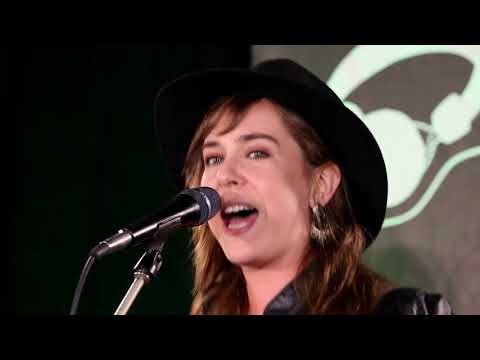

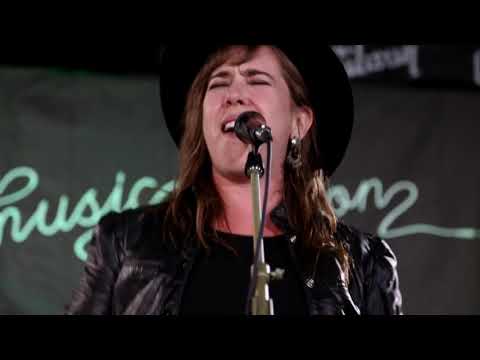
2 clips · 25:54 total
For licensing inquiries please contact reelinintheyears.com. How licensing works →
AUDIOListen
Episode #480 · Serena RyderFebruary 2013 · 00:09:05
Episode #598 · Serena Ryder #2September 2013 · 00:17:40
TRANSCRIPTRead
Show full transcript
0:00Hey there, I'm Serena Ryder and you're watching MSN Exclusives. Gotta get up. MSN.ca. Serena Ryder, how are you? How are you? I'm really good. It's all good. You can grab what you want. It's crazy. So I was just telling you, the first time I saw you was many moons ago in this very room. Exactly. With Hawksley Workman. That's right, he's amazing.
0:45How did that come about? Because I mean, that's a big person to get started your career with. Yeah, no, it was huge. Working with Hawksley was integral to my career as a musician because he is such a phenomenal performer and such a phenomenal singer, artist. He heard me on CBC Radio, and him and my now manager got in touch with the radio station and brought me out to Toronto. I was 19 and I was super excited, super starstruck, and like, oh my god, what's happening? And yeah, I became one of his biggest fans musically and learned so much of what I know now about performing from him, because we got to tour with each other all of the time and he's one of the best live performers.
1:31Do you do the big dinosaur steps that he does? No, no, I left the dock. He left the dock. Well, yeah, for sure. I didn't do any copying necessarily, but. Took stuff and worked with it. Well, this record kind of reminds me of a Hawksley record only in the sense that it spans everything. Like you're just throwing everything out there. There's like a gospel tune, that little short one at the end. Obviously, the big hit song, Stompa, and maybe we'll start there. Where did that, like, I mean, I know what it means, stomp your feet. Yeah. Stompa, but to make a word up. Yeah, yeah, yeah. That's cool. That is cool. I never thought about that. I did. I mean, where did it come from? Why Stompa? That was the first song that we wrote for this entire record. That was the first one, and it was the first writing session that I had with Jerrod Bettis, who ended up producing half of this record.
2:17And I came in with a guitar riff, I just had the guitar riff, and then he did the drums and he put it on there. I started singing. Stompa came because I make sounds when I'm singing. Like, I make noises that aren't words, and I know a lot of musicians do this where they just start singing and then the sounds will come out and be like, what was I saying? You'll play back the recording and you're like, what? And Stompa, it just sounded right. Like, okay, so I'm like, this song makes me want to get up out of my seat. Like, I was listening to it and I was like, gotta get up. It just happened right there. Did you have that dirty guitar sound on that demo? No. You were running away there. I come from it. Yeah, well, the dirty guitar sound came from Jerrod. Okay. Yeah, it was a pretty phenomenal sound. But I just wrote it on my acoustic guitar.
3:03I heard this record was written less on guitar than ever before. Is that true? Okay. So that tune was written on guitar, but a lot of the other stuff wasn't, I guess. Well, the thing is, I would write lines, but I wouldn't sit down and write an entire song while I'm playing guitar. So I would write a riff, record it, and then I would start singing without a guitar. Which I think is what changed this entire record from the other stuff that I've done before. Because I'd always write with a guitar in my hands, and so I would always write songs that sounded like how I learned how to play guitar. Who I learned to play guitar from. Neil Young, Tom Petty, Fleetwood Mac, Tracy Chapman, Ben Harper, all of those people. That's how I learned how to play guitar, listening to that over and over again. But I learned how to sing from Ella Fitzgerald and Nina Simone and Roger Miller and AM radio,
3:55you know, when I was little. So I feel like a lot of those influences came as well, because I set the guitar down and just sang. So I went Ella Fitzgerald, there's that one tune. Oh, For You. For You. It's like this old, like, it's strings. Yeah. It's like this little James Bond kind of, you need to sell that to the Bond people. Oh my gosh. It's Nina Simone's version of I Put a Spell on You. So we took the strings from that. It sounded familiar. Okay. Yeah. So I was gonna ask you how you arranged it, but I guess you just took it. Well, we took the string part, which is just a few bars, and then John wrote the rest of the track. Years ago he wrote this track for me to write to. It was so super rad. He played it for me when we were writing with each other and I was like, this is awesome. So you're saying Stompa was the first song written for this record, but there are 65
4:43or some odd tunes that I keep hearing that you had written, and said some of the best songs you've ever written, but not on this record. Yeah. Why did you want to hold off on that many songs that are good and not put them out? Well, it was really the intuition of my manager. She has, you know, really, really amazing intuition and really good gut sense and a feeling, and so I had all of these songs and I was ready to make a record. I thought I was ready to make a record, and she didn't think I was ready to make a record, and so I just kind of stopped, and I was freaking out. Like, I was like, what are you talking about? I've written all of these songs, like, dude, I'm ready to make a record. She's like, well, I just have a feeling this isn't the record. I don't feel like this is what we should be doing right now.
5:29The songs, like, what was it about? She just had a feeling. It was a vibe, you know, and I trusted her, and I went to LA and started working with Jerrod, and something else happened. It was almost like I had to write all of these songs, all of the 65 songs, to get out something, so I had this blank slate to start from. It was almost like, you know, clearing out a lot of things that I needed to clear out first so I could start fresh again. And did songs come quickly after that? Yeah, yeah, they came so quickly. Literally, I would start writing a song in the daytime with Jerrod, we would record it, and it would be finished by the end of the day. And I was like, okay, this is how I want to work. It's like Beatles style, real quick.
6:15This is how I want to work, and this is so much fun, because I'd never written like that before. And I want to do that more, you know. I feel like there's something really cool about that first piece of inspiration, of starting and finishing it in the same moment that it was created. That just makes it really, really fun. So I kind of want to do something with you. I hear you mimic voices and you can do accents. A little bit, yeah. What's your specialty? I don't know, I can do like Jamaican and British. Oh yeah. Yeah. You want to answer the next question in an accent? Yeah, sure. You have a Sarah Silverman story. I'd love to hear it in a different form. Okay, I'll tell it with a Jamaican accent then. I was in a hotel right in Los Angeles, California. Me look over the corner and we see right in front of me Sarah Silverman, and I freaked right out, you know.
7:04I look at her, I love her. Oh, you make me laugh so much, you know. I walk right up and I say, you make me laugh, I love you. She kind of gives me a weird, strange look, but I run back to me room, grab me CD. Say, I got some music for you, Sarah. I give her the CD. She looks at me strange but says thank you anyways. That was about it, you know. But I really love her. She's great. You're incredible. Thank you so much for doing that. You're welcome. That was a little uncomfortable for me, but you're welcome. Did you ever hear from her after that? I never heard from her. No, but maybe I should have waited for this record to come out. For the big hits. Yeah, well, just, you know. Where's it sit in the set? Like, now that you have this massive single.
7:50Like, where do you play that one? Do you start with it? Do you throw it in the middle? I switch it around a little bit. Okay. I would like to keep it near the end because it's really cool, you know, to have that explosion at the end. It's really fun. Speaking of explosions at the end, five quick questions, one-word answers. Okay. Road or studio? Studio. Lennon or McCartney? McCartney. When you hear a song, what usually hits you first: lyrics, melody, or rhythm? Melody. This one might take you a second. Song you've written you're most proud of? Stompa. Oh, and in one word, Serena Ryder. Love. That's a good one. Thank you so much. I didn't even think about what I was saying. I actually prefer Lennon. And also, what did you, so it was the first one. Road or studio. Road, right now. So it was pretty funny.
8:36I like it. You clarified. I just let everything kind of, I just answered you without thinking. More fun. I like it when it's quick. Right. Yeah. There's no wrong answers. You're awesome. Thank you. Amazing. Thanks. That was fun.
0:06I've got a whack-load of questions for you. Oh my gosh. I know. Well, every time I see you, we end up doing accents together. So maybe we'll get one. Maybe. We did the thank you, the Adele one. Yeah. And you gave me a Jamaican Sarah Silverman story once. That's right. So I thought, okay, we'll start there. I heard you saw Sarah at the airport the other day. I did. And you didn't say hi. I didn't. Even though you once gave her a CD years ago. I did. Why didn't you say hi? Because she looked kind of mad that I gave her the CD when I gave it to her years ago. Like, she was just like, just don't bug me. And I could understand. She was in, I think, LA, and I was staying at this hotel or whatever, and there's a diner in it, and I saw her, and I ran to my room to get my CD to bring it to Sarah, because she's so awesome and funny. And then she just was like, thanks.
0:53So I was like, ah, you know, I don't want to feel really bad today. But maybe it's a good story. Yes. No, sorry, I got confused. I noticed a guitar pick. Your logo's on the guitar pick. It does, yeah. And I've noticed this logo everywhere recently. Where did this come from? What does it mean? What is it? It means harmony. So it's the four different elements, earth, air, fire, water, and the symbols put together into one symbol, which means harmony, which is what my record's called. This could be a bad question. I don't know, which do you most closely relate to out of those four? Oh, no. I relate to all four. Good thing. Earth, air, fire, and water. Okay, fine. You need them all. You need them all. You need them all. We've got a bunch of fan questions here that we took on Facebook, and maybe we'll start with this one. I don't know what this one means.
1:39I emailed a mutual friend of ours this morning. I'm sure they mean. Well, I don't know what this one means. I emailed a mutual friend of ours this morning, Hawksley, we talked about him last time, and I said, give me a question for Serena. Okay. And his response, I don't really get this: is there anybody prettier than Terepai Richmond? No, there's nobody prettier than Terepai. Who is this? He is a perfect person. Yeah, he's a perfect person. Is there anybody prettier than Terepai? No, there's not. Who is this person? He's gorgeous. No, no, no. He's a drummer that lives in Australia, and he's a surfer and a drummer, and he's, yeah. I think he's of like Maori descent, and his mom's Irish and his dad was like Maori, and he's got like green eyes,
2:25and he's like perfect in every way. So he surfs. All right, let's keep going. He's like, I'm bored. I'm bored. No, it's just, it's not me. So it's fun. Now let's talk about the video for [inaudible] shot yesterday. Yeah, for sure. Justin Broadbent won a Juno for Metric, and now he's working with you on this. So what's the video? What can you say? The video was a lot of fun to do. The song is about loving yourself first and not having to hurt yourself to be in love, and so that's kind of what the video is about. It's about falling in love, obviously, which is what the song's about too. So it has a lot of kind of youthful, fun energy. We had a lot of fun. We had popcorn fights in a movie theatre in the East End. Like, gigantic popcorn fights.
3:11It was really fun. And then there's a bunch of fun scenes too. There's a little girl who's in the video, her name's Violet. She's been in all my music videos for this record. And yeah, it was really fun. When did that idea come, to have the same person in all the videos? Well, I had her in the first one, and I just love having her around. So I was just like, you have to be in all my videos, because she's so cool. That makes sense. She actually might just do my next one. Oh. I'm not joking. It's an interesting idea. Yeah. Talking about Justin winning the Juno, where's your Juno? Last time I saw you was at the Junos. Where do you keep that triple Juno? It's in my manager's office. Okay. Yeah, for sure. I mean, they're the ones that work their butts off all the time. Not saying that I don't, but I think
3:56that it's important that they're there so that they can see all the awesome stuff that they're doing for me. That's really nice. Yeah. Let's take some fan questions, shall we? Okay. Karmin Iacono, I hope I'm saying that right: I'd like to know how you came up with the terms stompa and clappa. I think it is so cool how that makes it work. Oh, that's cute. When I write songs, I kind of write them without really knowing what I'm saying. I make sounds, and that's how I've always written songs. It's just kind of based on sounds and having fun. Like scatting kind of? It's kind of like scatting, yeah, for sure. It's like you start saying different words and you hear something that sounds really good and you keep on going with it. And I feel like, I don't really quite understand songwriting from an intellectual perspective.
4:43I feel like I understand it like a child, where I feel like I just want to have fun and I want to make sounds and noises. And so that's how Stompa came. Because I always stomp my feet when I'm singing, and I have a song called Sing Sing, too, which is just me stomping my feet and clapping my hands. And that's kind of where it started, I feel like, the subconscious idea. But what's the clapping thing that you guys do, like counting to seven before going on stage? Oh, yeah, yeah. So it can be any number. But before I go on stage, I get my band together and we listen to Lean on Me by Bill Withers, and we clap in a circle. So there's a beat that you have to stick to, and depending on however many people want to clap with us, it could be like two to 12 people.
5:32And you have to clap on the beat. So it's like, one, two, three, four, five, six, seven, eight, nine, ten. One, two, three, four, five, six, seven, eight, nine, ten. And you can't stop. So when somebody screws up, you have to start again. So that's why you're late for stage sometimes. That's why I'm late sometimes. It's like, the claps aren't working. Leave. Beat four, leave. Amy Snowsmith: it's admirable how you invite young local artists to join you on stage and give musicians a share of your spotlight. Do you do this because you were given the opportunity as a kid or because you weren't? I invite anyone to sing with me, not just young people or any kind of people. It's whoever wants to come up and sing with me. And I understand that kind of passion and that kind of wanting to be on stage. And it's exciting, right?
6:18Like, doing something like that is so exciting, especially for someone who wants to pursue it as a career, or even not, just wants to have fun. I had a three-and-a-half-year-old sing Stompa with me a few weeks ago in Banff, and it was amazing. She was so great. She's like, clap your hands, stompa! Like, she just screamed. It was so awesome. That's good. Pierre Cormier: you have a French version of Stompa, right? I do, yeah. That's why. Well, not why. Maybe that came out wrong. I'm from Montreal. I'm from Montreal. I'm from Montreal. I can say that. You're on camera. No, no, no, not why in that way. But not everyone releases, it's not tricky, it's scary. Not everyone releases a French version of their song. You do a Stompa. I wanted to release, well, French,
7:05I kind of know how to speak French just a little bit. And Quebec is a really, really awesome market to play for, and they have such a passion for music, and I wanted to do a version just for them. So that it's more special when it's in your language, you can hear. And also, it was really fun for me to be able to learn how to sing it in another language. It's pretty cool. It's a lot different. Toulement d'uatre vais joure nui. Aunce d'anjamais d'a. And I kept the chorus. How do you translate stompa, clappa? I was like, they don't exist anyway. So it's not English or French, it's Serena, really. Okay, so Pierre Cormier's question, that
7:51got me thinking of Quebec. What, when and where was the most memorable concert that you've played, and who was the most memorable person that you played with? Oh my gosh, that's so hard. Those questions are so hard. We can skip them. Yeah, skip those. Okay. Do you believe in love at first sight? Kevin Stewart. Do I believe in love at first sight? Yeah, of course I believe in love at first sight. I believe in hate at first sight. I believe in everything. That's my problem. Hate at first sight. Don't give people a chance. Just not, only. Yeah. That happens sometimes. You look at somebody like, no. No, not you. No, there's just something about you. And I'm like, yeah. You know? No. I'm out of a sign film on me. Yeah, you totally not. No, I do. I don't. He's been trying to make up for that French comment. Yeah, I'm scared to talk now.
8:38Les Burons is wondering what you do when you're not playing or creating music. Are you outdoorsy, into camping, kayaking, hiking? City or nature girl? Yeah, I love camping. I love being by the ocean as much as possible. I feel like the ocean's really awesome. I love hanging out there. I was just in LA for some time off a couple weeks ago, and my favourite thing to do was go to Malibu and hang out on the beach. I also like hanging out with my friends' kids, little kids, and chilling out. Like, we were on the beach and I was hanging out with one of my producers from the record and his wife and his kid, and we were hanging out on the beach painting rocks. So we painted like 12. I like doing stuff like that. Another one of the questions was, who chose the producer for your last record, and how come?
9:25I did, because I like him. That is a very good answer. Yeah. I liked what we did together. So initially, my A&R guy put us together to write with each other at Fraser Hill, and we wrote Stompa. And I was like, well, this is really good. So let's just, like, I don't know. You knew it was really good for that. More records. Yeah, for sure. Is it a career-making song? Like, do you think you'll be able to play for people forever because of that tune? I hope so. But I don't know anything. Fair enough. You never know. It must have been a crazy year. Like, when we spoke last time, March or February or something. Yeah. And the song just keeps getting bigger and bigger and bigger. Yeah, no. It's been a crazy year for you. It's been amazing. It's been so much fun. And I'm really glad I wrote that song.
10:12I feel very happy about it. And if I can play to people forever because of it, that's an honour, for sure. I guess this kind of goes to the songwriting process. Nishita Menon: you've been writing songs since you were very young. Tell us about the songwriting process then and now, and how has it changed as you've matured as an artist? Yeah. So when I first initially started writing songs, I would write them about something. Like, I'd sit down before and have an idea of what I wanted to write about. It's like, I have this crush on this person, or I'm feeling this way inside and I want to put it on paper. And really thinking about what the songs meant about me when I was writing them. How does this portray who I am, and is this true to who I am, and all these things.
10:58And over the years, and now especially, I write, like I said before, for fun and to have fun, and to write from a really primal place of music that I love, and the things that I think are great are things that make me want to move and dance, and I can relate to them. So I don't really put as much thought into my writing. I just put more heart into it now. Are you writing? Do you write constantly? I just wrote a song last week and I thought it was really shitty, but it's actually awesome. And I played it last night for a bunch of friends and they put it on repeat like six times and danced to it. I'm pretty excited about it. Maybe it'll come on this Michael Franti tour. Try it out. Maybe. Yeah, that's true. That's a good idea. Yeah. I love Michael Franti.
11:44Yes, so I hear you're a juicer. I do juice. Yeah, so what's a good juicing recipe for everyone at home? Well, I feel like juicing fruits. Yeah. Just in case you don't know what juicing is. Juicing fruits. Yeah. You're a juicer. I am a juicer. I'm a juicer. Sorry. It's okay, this is great. It's got stuff in it. Yeah. It's good stuff. So we'll get a recipe. It's like he's like, come on. Come on now. I think a good recipe, if you're kind of just starting juicing, is celery, apple, and mint. It's really, really, mmm. See, everyone's like that. I could do that. Celery, apple, and mint. And it's fabulous for you. It's really cooling too for your system.
12:30You can add some cucumber in there, and it's quite good too. Rick Zaughtsman: what is your reaction when watching a show like Grey's Anatomy and whammo, there is one of your songs playing? Is it shocking? Do you blush a little bit? Or is it almost like, oh, commercial time, I can go to the bathroom? I get really excited. I was in an airport a couple months ago, and Stompa has been on a Cadillac commercial for a while. And I was by myself, and I was sitting down, and it came on. I kind of recognized it. I was like moving. I was like, what? I got up and I was kind of looking around. Like, is there anybody I can say that that's me on the? There's a lot of, like, I think I called you.
13:18I think I called one of my managers just to be like, guess what? Because they play it over and over again too. In airports, you know, they have a certain amount of, they don't think someone's going to be there for like three and a half hours, which I was. So I got to see the commercial about 55 times or something. I get excited about it, and I want to tell people. Sometimes I do. Hey, that's me. I'm like, that's me. And they're just like, leave me alone. Yeah, they're like, no, it's not. Go away. If it was you, you wouldn't be saying that. Yeah, but you don't know me. I know me. Oakley Mishlin: you have a lovely voice. Will you be doing any more of? You have a lovely name, Oakley. Yeah, I like that name too. I like that name too. I'm using it first. Oh, I like it too.
14:03I saw it first. Yeah. Well, will you be doing any more of Leonard Cohen's works? The ones I heard you do were so well done. Oh, that's nice. Possibly. Yeah, I haven't thought about it, but now I am. Oakley wants some more Leonard Cohen. I've done a version of Hey, That's No Way to Say Goodbye with his son Adam Cohen, which was pretty cool. Edward Larson: what has been your best musical accomplishment? This record. Well, that's nice. For sure. Cool. Easy answer. Jessica Bemister: what has been your greatest struggle as an artist, on the flip side? Greatest struggle, I think, is everybody's greatest struggle. It's being happy. Being satisfied, satisfaction, I feel like,
14:48is always the thing for everybody, where it's like, you're always looking to do something else or a piece of more, instead of just kind of being there with yourself, which is pretty intense when you're traveling and touring and always going somewhere. But I think the greatest struggle is just to be satisfied with right here. What I'm doing right now. With you guys. Are you satisfied? I am pretty satisfied. Those are pretty rocking parties on stage. You guys were dancing and singing. It's pretty cool. Tuesday night, rock and roll. I know. I love it. That's how we do it, Emma, send in TD. I feel bad, I said What I Would Do earlier. Now it's all that I have in my head. What I Wouldn't Do is what I would do. You said What I Would Do.
15:33Now I'm confused because of it anyway. I know What I Would Do. But we haven't talked about it at all. We've talked about Stompa, but I don't want to leave that one. Yeah, What I Wouldn't Do. Yeah, that was a really fast one to write. It was the first song that I'd written with an open D tuning, which is basically, what was a woman's name, and one, the guitar. Stacey Keoh. Stacey, just tune it, I'll tune it for you before I leave. Tune it to open D, and then it's always a chord. It's like, strum it. It's pretty cool. I don't know why mine is, but it's not here anymore. But yeah, you don't even need to know how to play it. You just strum it open. That's what What I Wouldn't Do was about for me. It was like, you didn't even really have to think about the song. It's like when you're falling in love, and you just kind of let yourself go down that river.
16:21And that was the open D for me. Stacey, do it. Write a hit. Give it to me. You're doing pretty well yourself, right? Oh, thank you. So we did this last time. Five quick questions, one-word answers. You didn't think about them last time. You just answered as quickly as you could. Yeah, that was weird. So give a little thought this time. I'll give it a little thought, yeah, because it was really awesome. Yeah, you reneged on every answer. Give it a little thought this time. Road or studio? You don't need to be thinking about it. No, I was thinking about it. What did you say, studio? I said studio. Lennon or McCartney? Oh, yeah, you asked me this one last time. I know. I just said that. McCartney. When you hear a song, what usually hits you first: lyrics, melody, or rhythm? Rhythm.
17:07If someone's never heard Serena Ryder before, what song do they start with? Baby, Come Back. And in one word, Serena Ryder. Smiley. Smiley. I like it. Thank you so much for answering, Serena. Thank you. Thank you.
ABOUTThe archive
This interview is part of the Matt Schichter Interviews archive: more than 700 conversations with musicians, actors and filmmakers recorded between 2003 and 2014, beginning with The BackStage Pass, one of the first podcasts (2003). The archive also became Matt's short documentary Lennon or McCartney. Matt Schichter is now a Glasgow-based producer, line producer and music documentary director: he directed CFNY: The Spirit of Radio (PBS, TVO) and line produced Faith (TIFF and Rome 2026). His films → · UK film producer and line producer → · More about Matt →
Listen to the full archive on Apple Podcasts or Spotify.