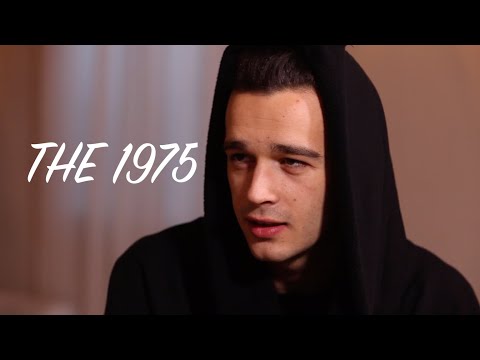
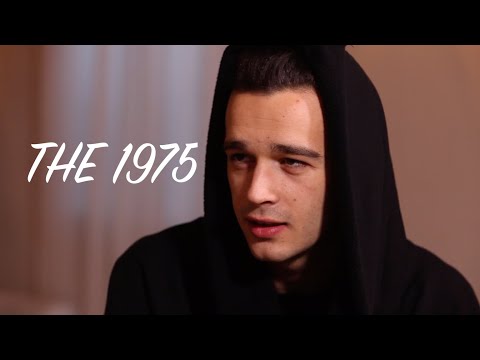
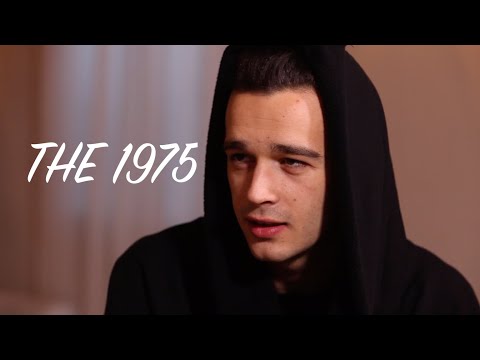
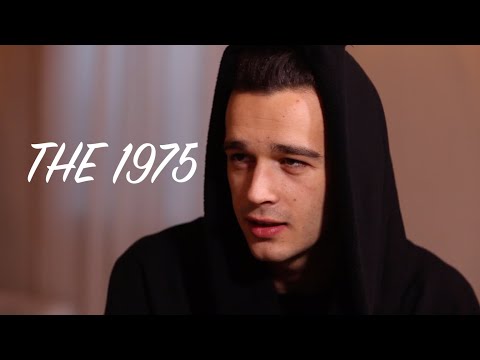
Lennon or McCartney? Matty Healy’s answer: Lennon. Watch the moment. See every artist’s answer. Take the quiz.
VIDEOWatch
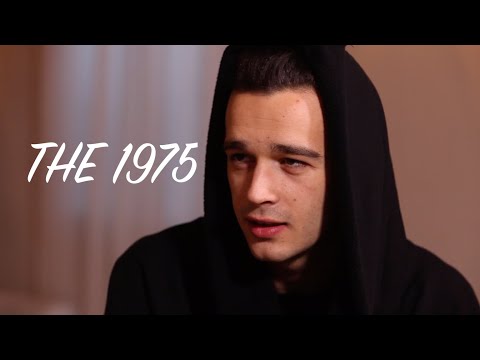
0:29 total
For licensing inquiries please contact reelinintheyears.com. How licensing works →
AUDIOListen
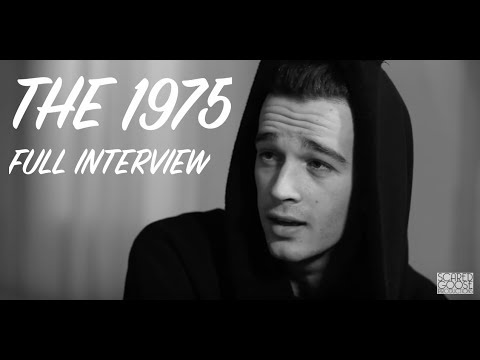
Episode #624 · The 1975 (Matthew Healy)November 2013 · 00:13:04
TRANSCRIPTRead
Show full transcript
0:06Hello, I'm Matt from The 1975, and you are watching MSN Exclusive. So let's say I love "Chocolate" in the video. Small town, small-town boredom tune. That's kind of what it's about. It's, O'J
1:06With bored places, bored kids, certain interactions kind of ensue. Yeah, I never thought about that song... It's been like a hit record. We never, ever projected it, especially for that song. So it's nice that it's been so embraced, and that kind of really specific part of our life is kind of out there. It's cool. Where does it sit in a set now that you have this massive hit? Do you try and open with it, or do you save it for the end? Does it go in the middle? Yeah, it goes near the end. Okay. It's a big song. It's where everyone goes. You've got to save it for near the end. So okay, because something has to open it to get everyone going. No, we're very fortunate that we've got a lot of material. I mean, this is just the regular edition, but the deluxe has what, like, 39?
1:5139 on the deluxe, yeah. So there you go. And we have a very hardcore fan base. So, I mean, if we open with 80% of that record, kids go crazy. It's good fun. What I'm trying to understand is the EPs. So you guys wrote songs around what you felt were going to be the hit songs, I suppose, or the anchor tunes of the record. Yeah. Yeah. So how did you know which ones would be the anchors to write around? Well, I don't know. It was kind of peculiar. We pretty much had this set of songs, and then said that we were going to take tracks off it, yeah, to have a single, but we didn't want to just do, like, a single, because that's boring and not really reflective of what we're like or who we are. So we just wanted to write records around particular songs.
2:38So we kind of took three songs that were, like, polarizing ends of our identity, kind of sonically, stylistically. So you have "The City," "Chocolate" and "Sex," "Sex" being, like, very straight-up kind of rock. Yeah, rock anthem, for sure. And "The City" is, I don't know, it's like big beat, shoegaze-y kind of thing. But that was the plan. And then we kind of kept ourselves on our toes with these EPs as well, because we gave ourselves, like, a week for each EP to write and record it. So we wrote and recorded Facedown in a week, same with the Sex EP, same with Music for Cars and then IV. So the EPs came out first, so they were kind of like our first album, but we wrote them after we wrote our debut album.
3:25So they're kind of like our second album, but they came out first. But here you're already, like, seven, eight songs into another record. You guys were writing over the summer. Well, we don't really... Do you ever stop writing? Or are you just constantly jotting stuff down on your phone or whatever? Well, it's not even like that. That's why I like the whole thing. It's why this whole thing's amazing, because this is what we've always done, like, indulgently. It had quite a detrimental effect on relationships with people, because of our sheer lust to actually create music. Now that's been validated. I don't know what I mean. I suppose if we have a laptop and an evening, then we'll make a record. That's what we do for fun. So we always find it a bit weird when bands say they went off somewhere at a certain time to record something, because it feels like it should be more...
4:10Maybe they just... maybe they need that release from everything to be able to think of things to say. Maybe you just have a lot to say right now. Maybe so. I don't know what I'm saying. Definitely musically, I've always got a lot to say. I don't know lyrically. I'm a bit more... I take my time a bit more. But musically I could. Are you someone who really scratches out words and really wants every word to mean something? Or do you just let it flow and then... Well, this is what I said, so this is what goes on paper. Yeah. It's very conversational. My obsession with the situation is very apparent in the record, and the idea of interaction and obvious conversation. I think that lyrics for me... I don't really know. Like I said, nobody knew about our band for ten years. So when I first started writing lyrics, I wasn't restrained or harbored by any of the questions of "Am I being too honest?" or "Am I being relatable?"
5:05It was a genuine form of creative expression. I think that's kind of why people have embraced it to a certain extent. I don't know. It's quite earthy, I suppose, lyrically. George has said, I think it was George, that said the album is a search for identity. I think it is. Well, it's the whole... I've said it before a couple of times: searching within oneself to acquire a true understanding of who you want to project, or what you want to project. Were you able to find that? Well, that's something that a lot of people can relate to. So I don't think I needed to find it. I think just the expression of that idea is really, really relatable, because people know how that feels. They know how it feels to not really know who you are or what you're doing. I know how that feels. I think with this record, it's quite sweet, because it is a very self-deprecating kind of neurotic
5:59searching record in its narrative. But once people started hearing this music, and we had all the fans who... now we have a response from people after 10 years of nothing. We've had eight months of having a number one album. So no response to the biggest response you could have. So what's that been like? Well, it really... like, catalyzes a progression in your understanding of who you are and what you're doing and why you're doing it. I think that everybody who has a career, especially if you're doing it in a band, you have this kind of imaginary ladder of success, where the material things are the kind of sole measure of what you're doing.
6:46And I think once you start to acquire those things, like number ones and all that kind of thing, it's amazing and it's very flattering and it is very validating. But it's quite brittle in regards to the stuff that I'm talking about on here and the kind of salvation that I want to find. You think it's going to change you as a person, and it doesn't. And what it's made me really do is embrace our little fans, because that's all that really matters. You can have so many statistical things, you can have so many... I'm not trying to be, like, really like a hippie, but I genuinely believe that, like, the only thing that's actually going to happen is like this, regardless of whether you're religious or whether you're in fear or you live in...
7:34The only thing that's ever going to happen is, like, a genuine human connection, a human interaction with somebody. So that's the only thing that I really care about now, after everything that's happened. Which is quite a nice place to be, because I'm allowed to make music now without hurting anybody, and it's kind of being endorsed. Talking about your fans there, I just need to mention your Jagger story, because that's insane, talking about the craziness and all the highlights and everything. So he's standing on the side of the stage, singing along to your song and taking photos of you? Yeah, like, getting his wife to take photos of him with us in the background. Photobombing your set. Yeah, essentially. I didn't have my glasses on, so I just saw this figure and I thought, no, it's not Jagger. I turned around to look at George, and I saw him, like, mouthing to me. It was funny, man. That's one of those moments that you just...
8:25You really think that you can take it in at the moment, but you can't. I was saying things like, for weeks after, I was like, wow. Because he asked for us to support them. I was in Philadelphia the day that I got that phone call. I was actually there yesterday. I walked past the same place where it happened, and I remember that, actually, the day we got that offer to support the Rolling Stones. It was amazing. I mean, what can I say? Of course it was as rewarding as you would imagine it. I was looking at the tour dates. You're literally playing the world, and your schedule is mapped out into March. I think you have two weeks to go home for Christmas, and you're having a moment again. It's mapped out to December... the only ones we've revealed are up until March. So that's a big change from ten years when you had nothing. That's a massive change. Then a year of non-stop. So are you enjoying life on the road?
9:10I'm very much enjoying life on the road, especially the fact that it is so on the road now. And where the name comes from, in On the Road. You're talking about Kerouac? Yeah. Well, Kerouac was a big deal for me. Well, that's the whole 1975 story. I don't want to get you to tell your band name story again, but okay, go for it. Very, very quickly. I got given a copy of, I think it was On the Road. I can't remember if it was that or if it was Fuzz Against Jump, but I think it was On the Road, and somebody had used it as a diary. Somebody gave it to me, and then I just acquired it, and somebody had dated this diary "1st of June, the 1975." So that was the story. But, yeah, the whole Kerouac thing, when I was 19,
9:57I was very impressionable, very naive. You kind of think you want to be as decadent as that. It's just that whole thing, you know, "nothing behind me, everything ahead of me, as is ever so on the road." And that's genuinely how it feels now. It's funny, because a lot of the time we're just, like, really making sure, really finding solace in our relationships with one another, being really kind to each other, expressing it, making sure that we're always aware of how amazing it is that we've come this far. And it's also just ridiculous. Like, the new video for "Girls," people are probably going to freak out about it. Why, because it's in colour? Well, not just because it's in colour. The last one was in colour, and then everybody started saying, like, "Are they conforming to a major label? They're not staying true to the aesthetic." I thought, right, I'm going to make a video about that.
10:49Okay. So we made a video about how ridiculous everything is, and the fact that when we came out, everyone takes things so seriously. People take our band, like, so seriously. It's a great thing about that. It's a great thing. We do. We take our music very, very seriously. But the industry that we're in... we just wanted to make a video that summed up exactly what we would never do. That's good. It's kind of weird. It's funny now. I kind of want to go off that, but you also said something that I want to... and I know we don't have too much time. If I can't dance or cry, then we can't finish a song. It's the whole thing of, like, my idea of a perfect song, right? I always say it would sound like "I Wanna Dance with Somebody" by Whitney, but convey the conviction of Leonard Cohen.
11:43That juxtaposition of an amazingly uplifting, danceable piece of music that really, really gets into your core in the way that certain pop music does, juxtaposed with a narrative that provokes you to be more introspective, and that kind of thing. That's my idea of a perfect song. If I don't feel like we're acquiring that to a certain extent in different ways, then we should leave it and then maybe evolve. But there's no point. If the piece of music doesn't take you somewhere immediately, it's simply just going to be lost on you. Let's get there. We do something called Five Questions: five quick questions, one-word answers. Road or studio? Studio.
12:29Lennon or McCartney? Lennon. When you hear a song, what usually hits you first: lyrics, melody or rhythm? Rhythm. If someone's never heard The 1975 before, what song do we start with? "Chocolate." You sure? Look at it. I don't know. I'm obviously sure. I was genuinely trying to do that thing of not thinking about it. Okay, cool. In one word, The 1975. Awesome. Nice, man. Thank you very much. Appreciate it.
ABOUTThe archive
This interview is part of the Matt Schichter Interviews archive: more than 700 conversations with musicians, actors and filmmakers recorded between 2003 and 2014, beginning with The BackStage Pass, one of the first podcasts (2003). The archive also became Matt's short documentary Lennon or McCartney. Matt Schichter is now a Glasgow-based producer, line producer and music documentary director: he directed CFNY: The Spirit of Radio (PBS, TVO) and line produced Faith (TIFF and Rome 2026). His films → · UK film producer and line producer → · More about Matt →
Listen to the full archive on Apple Podcasts or Spotify.