Lennon or McCartney? John K. Samson’s answer: McCartney. Watch the moment. See every artist’s answer. Take the quiz.
SONGSWhat John K. Samson said about the songs
“Night Windows”
John K. Samson said the song came from an Edward Hopper retrospective he saw at the Tate in London.
“the idea for it came from, I was in London, England, and I went to the Tate Gallery, saw this retrospective of Edward Hopper paintings, and I came out thinking that I would write 12 songs about Edward Hopper paintings... But I got two of them done, Night Windows and Sun in an Empty Room.”
“Sun in an Empty Room”
John K. Samson said this was one of two songs he finished from a planned set about Edward Hopper paintings, and that they shaped the album's themes.
“I got two written, and then I just thought, at that point, I couldn't really... I'd kind of written myself around into a corner... But they laid the foundation for the record, and I think the themes kind of emerged from those two songs.”
“Relative Surplus Value”
John K. Samson explained the Marx theory behind the title and how the dot-com crash started the song.
“it was kind of the reflected blast from the internet bubble burst, was what really started me thinking about it a long time ago. And then it took me years and years to write it... it's a theory of Marx's about how... it's just about how capitalists derive profit from technological advances.”
“Elegy for Gump Worsley”
John K. Samson said he wrote the song around the time of Gump Worsley's death, and that the closing line borrows Worsley's own saying.
“that was a quote actually from him. Well, his was, my face is my mask. Like, he always said that... I wrote it right around his death.”
“Tournament of Hearts”
John K. Samson said he writes about localities rather than Canada as a whole, and that this curling song is set in small-town Manitoba.
“I feel the need to write about localities and regions, but I don't think about it in a national context, really. I think about it in the context of Winnipeg... that song's probably set in a smaller town than Winnipeg, in Manitoba somewhere.”
VIDEOWatch
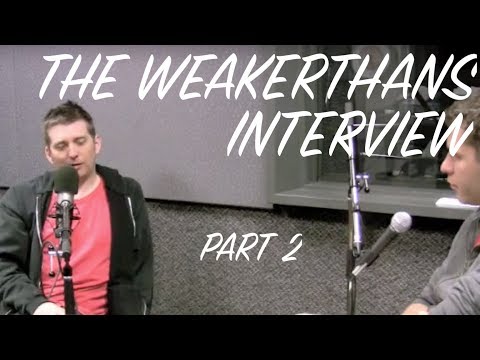
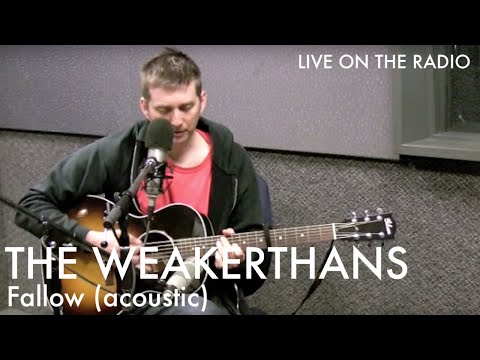
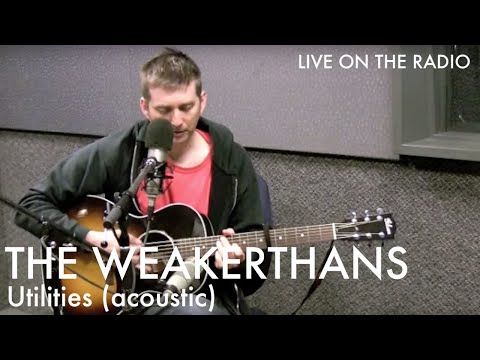
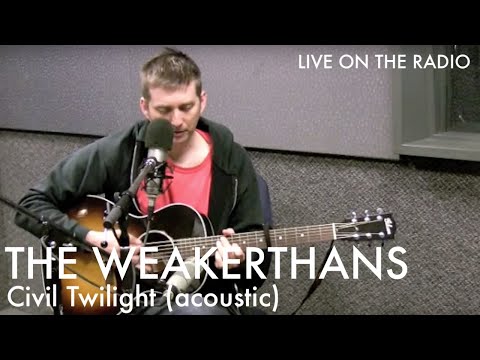
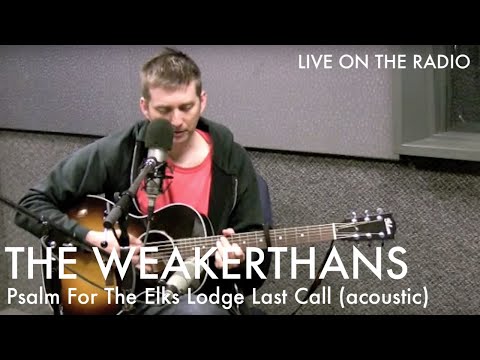
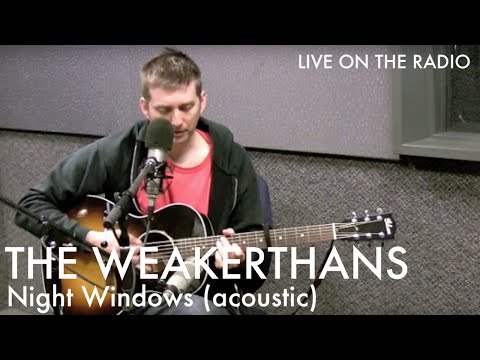
2 clips · 18:57 total
For licensing inquiries please contact reelinintheyears.com. How licensing works →
AUDIOListen
Episode #117 · The WeakerthansSeptember 2007 · 00:18:53
Episode #137 · The Weakerthans #2November 2008 · 00:19:03
TRANSCRIPTRead
Show full transcript
0:00John and Stephen from the Weakerthans, live in the studio. How are you guys? Very well, thanks. Yeah. Where are you guys coming from? You're coming from out west, right? Yeah, we were playing Victoria, Vancouver, that area there. How were those shows? Are those the first shows with the new record? No, we just did kind of the whole left-hand side of the continent there. Nice. We started on September 25th in Minneapolis, on the day of the release of the record. No Winnipeg show for the day of the release? No, we're saving that for last. Yeah. Yeah, I noticed you're skipping over, you're doing like Regina and then taking a little break during the States, Europe, and then Winnipeg. Yeah, yeah. Hometown. Great big hometown Christmas show. Yeah, a couple of days before Christmas, so that'll be nice. Big show tonight? Yes, Mac Hall. Have you played it before? Yes, we have, a couple. Oh, yeah, okay. Yeah, and big shows tomorrow and Wednesday. Is tomorrow Wednesday? It's Tuesday. Mm-hmm. The holiday screws everything up. Yeah, Wednesday, big sold-out show in Edmonton tomorrow. Yeah, tonight's sold out, I think. Is it really?
0:50That's amazing. I think they're all sold out. That's nice. All the Canadian dates are selling out. Hmm, awesome. Last time we talked, John, you said it's gonna be a while, and this was like last summer, it's gonna be a while before you hear anything new, we're not doing anything. Mm-hmm. And then this comes out. Yeah, yeah. Was it all just written and recorded super recently? No, I mean, we'd been working on the songs for a while, but didn't think we really had a whole record. We weren't kind of certain that we did. But we went into the studio and kind of came out with a full-length. So it was quick for you, right? It was like two weeks. Some two weeks, yeah. 15 days, I think we did. 15. Yeah, yeah, 15 days of tracking. Anything written in the studio, or was everything... No, everything was pre-written, but I guess arranged in the studio quite a bit. Yeah, actually. So Gump Worsley was basically... Oh, yeah, that was a studio creation.
1:39That's a different song for you guys. It's the first like spoken-word tune, almost. And are you playing banjo, Stephen? Jason? Jason, the drummer, is playing banjo. I didn't realize. You're playing Dobro on that one? Yeah. What's a Dobro? I know it's a resonator guitar. Oh, yeah, okay. Yeah, the metal pan. Mm-hmm. Yeah, it sounds cool. It's different. Why did you decide to do that? And the last line of the song is my favorite line on the record. I think it's just so ballsy: my face is my mask for a goalie. It's amazing. Well, that was, yeah, that was a quote actually from him. Well, his was, my face is my mask. Like, he always said that. He was the last goaltender, Gump Worsley was the last goaltender to not wear a mask. Oh, really? In the NHL. That's awesome. So I think it was the last one, but yeah, one of them. Yeah, so... But yeah, it was just kind of a fun thing to do.
2:28Yeah, it's kind of always something we've thought about doing, and we were kind of working on this instrumental thing, and then it just kind of fit with the poem. So that's cool. What was I gonna say about that too? He died last winter. Is that what made you write the song? Yeah, it was already kind of written and it all just worked out? No, I wrote it right around his death. Were you a big fan, or just something you read in the... I was, and also the obituaries were really good, and I was really interested in George Plimpton, a writer who I reference in the song as well, in the poem, and he died last year as well. So I'd been kind of reading him, and then it all kind of came together. Just seemed like the right thing to write about. So cool. Yeah. This record's different. So was the last one. I mean, there was a song, like I mentioned earlier, Hospital Vespers, with the tape loops and stuff going backwards.
3:15But even the single, Civil Twilight, on this record, you got that weird intro. What is the intro? It's guitar fed back through... It's just a Micro Korg. Yeah, I think it's not a Micro Korg, it's just a synthesized guitar. Yeah, sounds cool. What made you kind of take different sounds on this record, instead of the straight-up stuff that you guys are usually known for? Just for kicks, just for fun? Not a conscious decision, just kind of like, oh, we're just kind of having fun this time. Yeah, I think a lot of that stuff was just improvised in the studio. I remember when we actually cut that little guitar riff out ourselves while the producer was out of the studio and threw it on the front, huh? And he came back and goes, I can't believe you're doing that. Well, it's Relative Surplus Value. I love that tune, and it kind of reminds me of Jackson Browne's Running on Empty.
4:03It's like the perfect road tune. You're talking about going on a flight, sleeping through the flight, you don't even wake up till the cab driver comes. Mm-hmm. Are you a Jackson Browne fan? Running on Empty, like, did that go through your mind? That's just me. Yeah, I can't recall that song. No, I don't know that one. For the road, you guys should listen to it on the bus one of these days. We'll do it, for sure, on the bus. Yeah, we will. Running on Empty. Running on Empty, okay. I'll check it out. Yeah, you should. Almost John Prine-ish. Oh, you're a big... well. Yeah, for sure. Virtute returns on this record, the first character I've seen you kind of follow along. Yeah. How come? I'm not sure. I just kind of kept thinking about that cat, and thought about... Yeah, well, I guess, and I just thought it fit in with this record. It's kind of our most realistic record. It sounds, I think the sound, it sounds like us, and also I think the lyrics are kind of,
4:51I don't know, I think of them as kind of realist, and I was thinking about this cat that would probably leave. So the cat doesn't really come back. Yeah, well, she explains her departure, right? Yeah. How come she left? I guess because her owner couldn't change and recognize the things that were good in his life. And Virtute returns as well. Yes, I think he brought that back too. You said the record sounds like you the most, right? As we just said. Well, I think it sounds like us. Yeah, I think, yeah, I think all the ones do. Oh, yeah, they do. Yeah, but I think this was the one where we kind of really caught our stride and kind of figured out just what we sound like as a band, for better or worse, in the studio. And this is it. There's not a lot of polish on it. It's just really straightforward,
5:39and it's who we are. Okay. It's because we worked with... the last time we worked with Ian, and we were kind of refining the process of working with each other, almost. And then we returned to have Darryl Smith, who mixed Left and Leaving, mix the record. Oh, okay. I think we didn't work with him on the last one. When we brought the record back to him, we sort of had, I think we gave him just a slight direction. I think he knew what he wanted out of the record, because he was familiar with working with us. Mm-hmm. Perhaps that's how we came to this sort of refinement or something. Yeah, right. You're right. Is that why you felt the need to bring Jim, Jim Bryson's on the road with you guys now? Yeah, he is. To add, I guess, all the stuff that's been added on this record. Mm-hmm. Is it nice to have a... What's the number now? Five? Yeah, but yeah, it's really nice to have Jim with us, and it's been a real kind of
6:25pleasure to have that extra aspect on stage, and also just the camaraderie. And he's opening a couple shows for you, right? He's on the east coast of the United States, he'll be opening the show. Okay, not tonight? And Europe. Yeah, yeah. Not tonight. Oh, come on, let him play some songs, guys. No answer. I guess we can do that. All right. So we have to bump up like this third time. We'll play later. No, what time does he get on tonight? I'm not sure. What time are we on, 9? 9 p.m. Yeah, we might push it a little bit, because we're gonna go for dinner. We're going for dinner. Yeah, nice. So if the audience notices... Patiently, we're like, yeah, we're waiting for a coffee. Utilities, re-recorded completely different than the... Yeah, the War Child, what's it, Help: A Day in the Life?
7:11Yes, yeah. How come? What'd you guys... Did we talk about it and redo it kind of? I thought it was kind of a nice closer for the record thematically, and it kind of... I think, yeah, and it was just a fun song to experiment with. We've been playing it for many years. Oh, yeah? How old is it? Hmm, three, three years old? Oh, so almost Reconstruction Site time? Almost, not quite. Yeah, but yeah, it was around, it was in the works around there. We didn't actually have a good arrangement of it. Yeah, we didn't have a good arrangement at that time, and I like the arrangement of it now. It's got like a 50s number, almost kind of feel. Yeah. Yeah, almost slow tempo. Yeah. You write lyrics or melody first, or different each time? Yeah, yeah, there's no real formula for it. I didn't think so. But yeah. No, it's an interesting question, and I ask that of other songwriters, but for me, it's, yeah, I don't know, it's
8:02every time is different. So on this record too, every song is kind of a bit... Yeah. Yeah, it was different for each one. How's it work for you guys, the melodies, at least like the guitar melodies? Do you come up with stuff, Stephen, or is it all you, John? No, it's everyone, but again, it's different every time. It's like for every song there's a different approach for the writing. So yeah, everything. So it comes out in different ways. Like this record, I know Jason had some keyboard parts that he played, and that influenced what I played. Mmm. Yeah, that's true, right? Sometimes, John, like, I always look for my parts within what John's playing. He always has it, there's always a melody. Jason plays with Broken Social Scene sometimes too, doesn't he? He does. Yeah. Have you guys ever thought about that, if they ever asked you to join with them? Yeah, 13 people on stage. I don't think that's punk rock. Let's do punk rock.
8:48Kind of gotten away from that a little bit, though. I mean, you got old songs like Aside and Watermark, and I guess Relative Surplus Value kind of has it. Yeah, it's... and the theme of the lyrics are, but the music isn't as much as it used to be. Yeah, it's hard for us to say. Yeah, no, I know. To say, it's kind of, having a perspective on that is really difficult, because we're in the midst of it. But yeah. And I guess it's punk rock if you say it's punk rock, right? That's the whole mentality of it. But most people think of that heavy Sex Pistols, Clash kind of stuff. That's punk, right? Right, right. Yeah. The Clash had like reggae. The Clash were everything. The Clash, the greatest, well, not the greatest of all time, but they could be more than the Beatles or Zeppelin. Definitely Zeppelin. More than Zeppelin, definitely more than Zeppelin, but not the Beatles. And maybe not the Beatles.
9:34Who else is up there for you? Beach Boys? Yeah, sure. Limited Beach Boys. Limited, Brian Wilson stuff. Yeah, Pet Sounds and the kind of surrounding records. Yeah, yeah. You heard the new stuff? Yeah. Did you like the new Brian Wilson? Yeah, Smile, a bit of it. Yeah. Oh, yeah, the Smile box. I had that at home. Oh, yeah, it's cool. Yeah. Night Windows, right, one of the first songs, I remember you played it last summer. Tell people about that song, because we're about to play it. Sure. This was a song that, well, I wrote the lyrics for it when... I started... the idea for it came from, I was in London, England, and I went to the Tate Gallery, saw this retrospective of Edward Hopper paintings, and I came out thinking that I would write 12 songs about Edward Hopper paintings.
10:22Oh, really? But I got two of them done, Night Windows and Sun in an Empty Room. So it's inspired by a painting. Yeah, yeah. That's cool. I know it. Sun in an Empty Room, you mentioned that. I don't know how this got me thinking about it, but the cover of the record looks like ice floating away, kind of like a global warming thing. Yeah. Is that what it's for? Well, there's certainly part of that in there, I think. But yeah, it's also, yeah, the ice breaking up, I think of it as. Kind of, yeah. How are you feeling about stuff lately? I know your publishing company is pretty left-wing, and I'm very left-wing as well, but do you think Harper's doing a good job? You think we're in a good state right now? No. I don't want to go to politics, but yeah, it'll be fun. We'll talk about it later. Sure, sure. What are you reading at the moment?
11:11I'm reading, oh, I'm reading the new Gary Shteyngart novel called Absurdistan, which is great. It's great. Absurdistan. I'd like to... cool. Yeah, it sounds like it's very good. Yeah. How do you decide books for the publishing? Are you still day-to-day with the publishing? Yeah, yeah, still day-to-day. It's a process that's kind of like songwriting, almost. It's really hard to say how a book arrives. But you know, you find people, you have an idea for a book and you get people to write it, or you find books that people have written and sent to you. And yeah, it's always different and exciting. So has it always been something you wanted to do, like politically at least? Mm-hmm. Yeah, I think there's a real politics to just books in general. I think that they're
11:58great objects for change. Yeah, because we don't see many humor novels under the publishing company. I guess not. There's possibility for one, though. Oh, yeah? Well, my dad wrote one. I'll send it your way. Oh, you should. Yeah. Hey, well, no, no, I was interested anyway. And remember, last time we were talking about it, and I asked you last time too if you'd ever considered writing a book. You said no. What about a collection of the songs, or short stories, or the meaning behind the songs, that kind of thing? I think people would be interested. No. Just talk about it on the radio here and there. The songs are what they are. I think they... I wouldn't want to kind of have any... I wouldn't want to say anything about them more than I've said, really. I mean, I like speaking about them. Mm-hmm. You wouldn't want... yeah, it's because some musicians do, some don't. No, I really, I enjoy it.
12:46I mean, it's fun to talk about the songs, but yeah, I don't think that... I think they, I wouldn't want them published in a book form or anything like that. I think that, yeah, I write poems that perhaps would fit into that, but at a glacial pace. You mentioned, you know, talking about the songs, you enjoy it. Some of the meanings of the songs, at least when you're playing them live, or when you're thinking about them, God, I got to remember the lyrics, have they changed for you at all? Yeah, like, I think that's the great thing about being in a band, is you get to play them every night, and every context is different. You know, the context you put them in in the set changes their meaning, and the audience you're playing for
13:34changes something about the songs. And that's a real privilege that I think is one of the great things about writing songs, is that you get to do that. I mean, a lot of other art forms you don't. So it's gonna be fun that way. I don't know, for you, Stephen, this is like, when he brings lyrics in and, you know, you hear them and you think about them, and then as time progresses, does this change for you as well? Or do you not even think about it, just tell your riffs? It's weird. If I... The context of the songs over time, do they change, or do you change your riffs around at all? Or do you try and stick true to form to the record? Oh, I think when we play them live, it feels like we're reliving the process of creating the songs once again, and we're finding them a second chance, you know. Almost like you make a recording,
14:20yeah, play them live, and you actually almost... you're like, the recording's an example of them, and the live performance is another rendition with other opportunities. And I don't know, it's, and it all, I think it changed. Also interesting how the songs will change. Improvise, like we improvise on small parts, and they'll develop themes that are just made up on the spot between us live. Oh, that's cool. Your brother did the artwork, is that right? My brother does the graphic design. That's cool. For all the records? It's not just the new one, all of them? He's done them all, except for Fallow. Oh, yeah, that was way back when. Oh, and Jake... don't know. Yeah, Jake, Left and Leaving. So the last ten years now, isn't it, Fallow? Is it your ten year? And over, yeah, it is. Yeah. Is there big plans for that, or is it just... Last year, I...
15:06It was last... it was last February, was our actual ten-year anniversary. Yeah. From the first practice or from the first record? From the first show. The first show in Winnipeg. Yeah, yeah, that's the hometown gig. Still funny. I'm going back to school. I don't know, someday. Yeah, maybe in my 50s. Your 50s, someday, 20 years from now. Yeah, it's cheap. Yeah, I got the scene just kind of waiting for that. Five questions. I want to see if you answer the same as last time. We get you to answer them, too, just five quick questions, one-word answers. Okay. iPod or CDs? CDs. iPod. Lennon or McCartney? McCartney. You were embarrassed to say it last time. I was. I still am, but it's still true. Stephen? Alcohol or marijuana? Alcohol. Alcohol. Song you've written you're most proud of? I wonder... I want to say, as a distance, I would say that I'm more, I like
15:56Oh, yeah, really? Okay. He hasn't done anything as good since. Yeah, that's right. I'm gonna go for Our Tournament of Hearts. I like Night Windows these days. Yeah. Yeah, it's cool. I want to talk about Tournament of Hearts in a second. I'm glad you brought that up. In one word, the Weakerthans? Rock confusion. Rock confusion. Rock and confusion. Tournament of Hearts, it's always that one song on the record that's uniquely Canadian. One Great City last time, obviously, and this time it seems like it's Tournament of Hearts, because it's curling. Sure. You talk about the 50/50 in it. I think that's uniquely Canadian. Do you feel the need to write about Canada? No, I don't know, it just kind of comes out. Yeah, no, I feel the need to write about localities and regions, but I don't think about it in a national context, really. I think about it in the context of Winnipeg.
16:43Specifically that song, or actually, that song's probably set in a smaller town than Winnipeg, in Manitoba somewhere. But yeah, I don't really think of it in that national character way, but I'm sure it probably fits in that way somehow. Yeah, I'm sure the fans think it. And yeah. Yeah, I'm excited every time. I hope so. Yeah. I wonder if that works as well for fans in the States, or if they don't even care, does it just go over their heads, kind of thing? We talk about it in the States, so we're kind of missionaries for curling in the States. Oh, yeah, yeah. Do you guys curl, or is it just happen to be something you wrote about now? We both curl. Yeah, yeah. Are we good? No. We were put on the same team for a couple years,
17:35basically, and last year we got tied for first in our division. B division. B division. In our after-work league that we play in with my dad. Yeah. And John was trained by Connie Laliberte, Connie Laliberte, who's a champion coach. Wow. So step off. Yeah, we're missing a lot of the curling right now. I'm gonna squeeze off again. I'm officially on my dad's team as a fifth for this year, even though I'm kind of absent. Mm-hmm. Well, you'll be back soon enough, right? You got a couple weeks' break. Yeah, well, we got like 10 days off, or seven days or something, off between each leg of this tour, but after Christmas we'll be able to curl. Yes. What are the plans for the rest of the... or I guess for next year now? Curling. Just curling still. Just sit at home and curl.
18:21Nice. What's Christine doing? I heard she's got a record coming. Yeah, she's got a record coming out in November, November the sixth. You play on it, or just a little bit on it? Yeah. Yeah, and our sound man Cam produced it, and our bass player Greg played all over it. Oh. Yeah, we're excited about it. It's really great. Yeah, can't wait to hear it. Yeah. Yeah. Guys, thank you so much. Thank you. No more four years between records. Okay. And hopefully you'll be back in the spring for the Junos, because they're here, and alternative album of the year kind of thing. We'll see what happens. It'll be great. Always a pleasure. Thank you, sir. Sweet.
0:01Well, John K. Samson, welcome. Thank you. Thanks for having me. Always like when you come in, because there's different songs for us that I wouldn't expect you to play. It's fun. I get to play songs that we don't usually play live. Well, you can't really. You're not going to just bust it out. Have you ever done that in a show, just play acoustic? No. Actually, no, I never have. A lot of people do. You never have? No, I'm better, I'm more comfortable with electric guitar. Well, you come from the punk rock genre. Yeah. Yeah. No, it's true. I don't feel as comfortable on a stage with a... and you usually have to mic it and put it through an amplifier. It seems like a hassle. You got to put your electric through an amplifier. Well, yeah. But I mean, electrics are meant to go through an amplifier. And acoustics, I always feel like, eh,
0:47just be on the beach. Yeah, exactly. Or on a cliff or something, just playing. Yeah, yeah. In a little room like that, I like it. Well, Mac Hall tonight, along with your favorite band in the world, so I'm told, the Constantines. Right, yeah, yeah. So tell me about them, and how you hooked up with them, and why you're such a big fan. We did a tour with them of the States, probably, I want to say, like 10 years ago. It was a long time ago. It was right after their first record came out, I think. Could have been later than that. Oh, a while ago. Yeah, a while ago, quite some time ago. And I was just really moved by their live performance, and then sat down with their records for a long time, and was really excited about them. And just had a great artistic relationship with their work for a long time, and then got to know them.
1:34And now we have a great friendship with them as well. So it's always inspiring to watch them play every night. So this tour goes from St. John's to Nanaimo, and up to Whitehorse, and everywhere in between. It's a long haul, so having something like being able to see them every night to get you through is really important. That's nice. I heard you kind of had a hand in naming, not the new record, but the last record. Well, I was one of many people consulted. Yeah. They asked people what they thought of the title. And of course they went with the curling. I said, I love the title. And then I was writing a song about curling, and decided I just had to use it as well. So that's kind of nice to have that connection with them. Google both. Yeah, exactly. After Scotties comes you.
2:20After Scotties, and then it's the Cons, and us. It's nice to be linked together. It's cool. Well, we'll play that song a little bit later, because you just shot a video for it a little while ago. But it's cool nonetheless. It must have been a thrill for you. It was fun. And we'll get you to play a few songs. Actually, why don't we start with a song? Sure. Why don't you play... well, what do you feel like starting with? What do you want to play for us? About when we don't play live anymore, what's it called? Utilities. Try that one. Forgetting your own song titles. It's a cool tune, because it came out on that compilation disc for War Child. Yeah. And then you guys kind of took it back in the studio, I guess, played around with it. Yeah, we messed around with it so much that we can't figure out how to play it anymore. So now it's just an acoustic song. There we go. We were talking, last time you said Reunion Tour sounds the most like you. Yeah, I guess it's true.
3:06It's been about a year and a half now. Yeah. You still feel that way, now that you've had some time to separate yourself from the record? Well, I don't know, because I haven't heard the record since it came out. You play the songs live. Yeah, playing the songs live. I mean, I think the songs fit well with our... I'm very comfortable with the new songs. They seem to fit well with the rest of the repertoire, and I feel pretty confident about what they are, and I like them. Yeah, so we play quite a few of them every night. So they fit in well. What are some of the ones that, because I know you make a record, you dig all the tunes, then eventually, like Utilities, they kind of fall away. What are some of the ones that have fallen away? Fallen away. Jeez. If you can remember the titles, I guess, from your Utilities. Well, Utilities has fallen away,
3:52and it might come back. Sometimes they resurrect themselves somehow. Trying to think of the other songs on the record. I can't think of... That's fine. Hymn, Gump Worsley. Yeah, Hymn for the Medical Oddity, much as I like it, I find it very difficult to play. It's a crazy story. It is a crazy story. I think you should tell people the story, because I just read about it yesterday, and I was like, wow, that takes on a whole new thing. There's a song on the record called Hymn of the Medical Oddity. Can't remember what we settled on, Hymn of or Hymn for the Medical Oddity. And it's about this guy named David Reimer, who was born in Winnipeg in the late 60s, and he became a world-famous, anonymous medical case
4:39study, because when he was young, there was a terrible circumcision accident, and it was decided by some doctors from Johns Hopkins in the States that he should be raised a girl. And so this was going to prove this one doctor's theory that gender is entirely nurture, as opposed to nature. So that if you bring someone up a girl, they will be a girl, or a boy, or whatever, and that gender is just an environmental construct that we've invented. Yeah, which is very interesting, but destroyed this young person's life. I mean... Okay, thanks. Yeah. So she was a girl until her teens, and then decided
5:27that he would be a male. And it's this very, very interesting story, and also very interesting to me because it was set in Winnipeg, in the St. Boniface area, which is a really working-class area, and full of factories. And it just seemed like it was another one of those stories where I think one of the reasons all of this happened to him, one of the many reasons, was that he was from a place like Winnipeg, a place that isn't always able to stand up for its own citizens, it isn't always able to stand up for itself, because it's off on the margins, and it's a place that people think is the sticks. So I think we, people from small towns, are often more willing to let people from the big cities
6:13tell us what we should do with our lives. So that, I thought, was an example of this. And it's a very tragic story. He killed himself in the end. But not before he wrote a really excellent book with a New Yorker writer named John Colapinto called As Nature Made Him. It's a brilliant, brilliant book, which I encourage you to pick up. And so, yeah, so that was... I read that book, and another person I knew was writing about him, and so I thought I would try and write a little song about him. So I just tried to take a little corner of just the smallest few moments of his life and try and extrapolate from that. But yeah, so that one is also, it's kind of structured
6:59like a church hymn, and I find it really tricky to play live. Fair enough. Cool. Well, let's play it off the record then, because it's a cool song. It's different for you guys. And, well, I remember Wayne from Cuff the Duke came in. We were talking about, because the first time I saw them play was opening for you, and it was just after Reunion Tour came out and they had their new record out. And we just got talking about lyrics, and we started talking about Civil Twilight, December tries to assemble the length of my working day, or whatever that lyric is. And he goes, I just live in his shadow all the time. I can't write like that. But Wayne's a great writer. He is a fantastic writer. But he was just... you're kind of like the lyricist for Canada. So I have a question for you, which I just argue with my friends about all the time. Cadence, melody, or lyrics? What's the most important thing in a song? Well, I want to say lyrics, but it's probably cadence.
7:46You think so? Yeah, I think so. I think probably it's cadence. I mean, cadence is really important. And that's what, I think cadence is actually what, yeah, what punches through the ear into the brain and actually sews itself into the brain, is the cadence. I mean, melody is mysterious and beautiful and emotional, but without cadence it's kind of... And I mean, lyrics, I think lyrics are very important to me, and the thing I obsess on most. Oh, I'm sure. But, you know, I think the best songs are the ones that have cadence, to me.
8:33When you write a song, are you pretty satisfied with it? Do you know when it's done, kind of thing? You know when it's done, yeah, generally. I'm not always satisfied with it when it's done, but usually I know what it is. Like when it becomes the best it's going to be, I guess. I generally know, yeah. It takes a long time, usually. And that's not entirely true. I mean, there's still songs that we've made that I think there's a couple lines where I go, eh, could have been better. Like what? Off of Reconstruction Site, I'd actually kind of wish I had a chance to rewrite a little bit. That's the beauty of playing live, though. You can rewrite a little on stage. That's true, yeah. And I like that idea that your body of work
9:20is a living thing that you can change. Like one of my favorite poets, W.H. Auden, great 20th-century poet, did that. He was rewriting his work right up until he died. He was rewriting his entire body of work that he carried around with him. But now people read the original stuff. Like the stuff he rewrote, no one really reads that anymore. So that's kind of interesting. There is something to be said for a time and a place and what you made. But I don't know, a song like Benediction that we still play, I hear lines in there and go, ah, could have made that better, made more sense. But yeah. It's all right, it happens. You were talking about time and place,
10:07and songwriters have their time and place, and revolve around the world, and what's going on around the world influences everything. You wrote Relative Surplus Value, and now everything that's happening, very timely tune. But it wasn't at the time. Well, it sort of was. I think it was kind of the reflected blast from the internet bubble burst, was what really started me thinking about it a long time ago. And then it took me years and years to write it. And just that idea of relative surplus value, it's a theory of Marx's about how... it's just about how capitalists derive profit from technological advances. That's relative surplus value.
10:53And so I was thinking about the internet, and how it was this wonderful force that was immediately taken over by the ambitions and greed of capitalism, and how it still has the chance to be this wonderful thing. But it also kind of destroyed, I think, a lot of the best and brightest minds of my generation, for sure. Got kind of sucked into that. And I think some of them were frankly destroyed by this kind of fantasy of endless money. And certainly that all snowballed into the mortgage crisis and the economic collapse of recent months. So that was just kind of fortuitous, I guess.
11:40But I think if you read enough Marx, it's always coming around to that. Cyclical, right now, everything's cyclical. It's going to happen. You read a lot of Marx? You call me? Well, sure. I mean, I haven't read Marx in a long time, actually. But for writing that song, I read quite a bit of him. And I like to read about him, perhaps, more than I actually read him. I think Capital is a pretty rough slog. But The Communist Manifesto, I think, is a beautiful work of literature, and I reference it a lot. I think it's got wonderful phrases and wonderful images and sentiments. It's good in theory. I just don't see it being applicable. That's the problem, right? Well, it just causes chaos. Well, I'm not sure that that's true.
12:25I don't think it's ever been really applied. So I think, yeah, yeah. It's been done in dictatorships, which obviously is not going to work. Yeah, it's not going to work. But I think more of the point is the kind of ethic and actions that a piece of literature like that can provoke. And I think, yeah, I mean, I wouldn't follow The Communist Manifesto, but I think that the language itself can be really inspiring, and also just make people think about who they are and how they fit into a society. I think that's the great thing about Marx, is that he makes the individual think about how they fit into this giant structure that we all live in,
13:13and the injustice of that structure, and how we can perhaps try and become less alienated and more fair. I think it's just a real... I mean, I think the New Testament does the same thing. Communism, Jesus. Yeah, yeah, there you go. And we'll play a song, Relative Surplus Value. Are you writing for a new record? It's been about a year and a half. Well, you know what, I haven't been writing yet. I've been kind of taking things in, I hope. Reading a lot? Yeah, reading a lot. And there's a few things I want to do. I want to do some traveling this summer around small-town Manitoba, I think. Oh, yeah? Yeah, there's something,
13:58there's just something I've been thinking about, that I want to write about contemporary small-town life. Not the kind of, you know, Canadiana small town, you know, much as I love like Corner Gas and stuff. I mean, I want to kind of get at just the real small town, I guess, because small towns are always in trouble. And Winnipeg itself is a series of small towns. I mean, so many people who live there are from small towns. And also, it seems like the city itself divides itself into small towns. All of them seem to know... Yeah, I guess they do. Yeah, it's true. It's just something I've been thinking about in relation to...
14:46It's true everywhere, I'm sure. But yeah, so I want to think about small-town life, I guess. You never moved out to the big cities, though? No, I didn't. How come? You love it that much? Yeah, I guess. I mean, I've got family and friends, and when I'm in Winnipeg, I can do what I want to do and not have to scramble for work. And Winnipeg's one of those places where you say you're something and you can be, you know, and that's kind of half of it. So, 2D art, I wonder how it changes into a song, because you got a couple of songs from Edward Hopper paintings on the record. All right. You look at a painting and a song comes out. Now, obviously, not the whole song right away, but why those two paintings? You know, I don't know. They were just, they both were... I had a list of kind of 10. I thought originally, when I first started writing the record,
15:31it would be all about Edward Hopper paintings. So, from this exhibition that I saw in London back in 1984... maybe not. It took a while to generate the songs. Yeah, oh, for sure. Yeah. Or no, 2004, 2005. Oh, okay. Yeah, sorry. 90s. It's not the 90s anymore. No. It's almost the 10s. Yeah, it's almost the 10s. Perhaps, like... But yeah, so I saw these wonderful pieces, and they just moved me. And I thought that they lent themselves to narrative, and they kind of begged to be written about. And then I did a lot of reading about Hopper and about the paintings, and discovered that maybe that wasn't
16:19such a good idea. And I had all these kind of different issues with it. But I got two written, and then I just thought, at that point, I couldn't really... I'd kind of written myself around into a corner. So I kind of had to... But they laid the foundation for the record, and I think the themes kind of emerged from those two songs. That was kind of lucky. Let's play one of them, your choice. Let's go Sun in an Empty Room. I like that one. Should have been a single, that's what I think. Wow. Thank you. I really dig it. I know a lot of people do too. So we'll do five questions. We've done it a lot of times, but we'll do it again, because we've got a camera, and we'll get it on there. Road or studio? Road. Lennon or McCartney? McCartney. iPod or CDs? iPod. Really? You bought one? I did, yeah.
17:05Most times you had CDs. I know. I did buy one, and I adore it. It's amazing. Yeah, it's really amazing for my life. You don't want to love it, but then you just... it's amazing. I know. It's amazing. It's so great. Song you've written you're most proud of? I'm going to go with Pamphleteer. Okay. And one word, the Weakerthans? One word. One word. Fractious. Fractious. What does that mean? It means, you know, kind of a... It's one that just wandered into my head yesterday. Fractious. It means like there's like fractions? No, like conflict, isn't it? Okay. There's some conflict, but it's...
17:51So like friction. Yeah, maybe. More. Okay. It works. I've never heard it. I like it. People are diving towards their computers to Google it. Yeah, probably. I'm wrong, send them emails. John K at weakerthans.com. I don't know why I'm here. I like larky, too. Larky? That's a word. I think, you know what, it's from a John Cheever. I was reading a John Cheever. That's what it is. It's from the end of a John Cheever book called The Wapshot Chronicle, and the character says, not all in life is larky and fractious. There you go. There you go. Random words from John K. There are some random words. Love it. He's going to play one more tune for us and close us out, a song that I haven't heard in years, and I don't know, unless they go back to Fallow... Right. ...if people have heard it recently. Yeah, it's the title track from Fallow. It's called Fallow.
18:36And yeah, I wrote it a really long time ago, and just kind of pulled it out the other day. And we've been trying to play it live, but we haven't been doing it that much. And it's kind of just a fun one. Amazing. Tonight, Mac Hall. It's going to be fun, as it always is. I love the shows. So it'll be good. And the Constantines are on. What time are you on? We're on, I think, at 10. 10. So the Cons will be on, like, 9-ish. Amazing. Just come on down. Thank you. Thank you. Appreciate it.
ABOUTThe archive
This interview is part of the Matt Schichter Interviews archive: more than 700 conversations with musicians, actors and filmmakers recorded between 2003 and 2014, beginning with The BackStage Pass, one of the first podcasts (2003). The archive also became Matt's short documentary Lennon or McCartney. Matt Schichter is now a Glasgow-based producer, line producer and music documentary director: he directed CFNY: The Spirit of Radio (PBS, TVO) and line produced Faith (TIFF and Rome 2026). His films → · UK film producer and line producer → · More about Matt →
Listen to the full archive on Apple Podcasts or Spotify.